Semaglutide

Search documents
Triple-G Agonist UBT251 Lowers HbA1c By Up To 2.16% In Chinese Phase 2 Diabetes Trial
RTTNews· 2026-03-25 11:06
Core Insights - United Laboratories International Holdings Ltd. and Novo Nordisk A/S have reported positive topline results from a phase 2 trial of UBT251, a triple agonist for type 2 diabetes treatment [1] Group 1: Trial Overview - The phase 2 trial involved once-weekly injectable doses of UBT251 (2 mg, 4 mg, and 6 mg) compared to placebo and Semaglutide 1 mg in Chinese patients with type 2 diabetes [2] - The primary endpoint was the change in HbA1c from baseline after 24 weeks, with baseline averages of HbA1c at 8.12%, body weight at 80.1 kg, and BMI at 29.1 kg/m² [2] Group 2: Efficacy Results - UBT251 achieved a mean reduction in HbA1c of 2.16%, outperforming Semaglutide (1.77%) and placebo (0.66%) [3] - UBT251 also resulted in a body weight reduction of up to 9.8%, compared to 4.8% for Semaglutide and 1.4% for placebo [3] Group 3: Secondary Endpoints and Safety - UBT251 showed improvements over placebo in key secondary endpoints, including waist circumference, blood pressure, and lipid levels [4] - The safety and tolerability profile of UBT251 was consistent with previous clinical trials of triple-G agonists [4] Group 4: Future Development Plans - United Biotechnology plans to initiate two phase 3 trials with UBT251 in Chinese patients with type 2 diabetes [5] - Novo Nordisk intends to start a global phase 2 trial with UBT251 later this year, alongside an ongoing global phase 2 trial in weight management with results expected next year [5] Group 5: Competitive Landscape - Eli Lilly's Retatrutide is noted as the most advanced triple-G agonist, having shown significant reductions in HbA1c and weight in its phase 3 trial for type 2 diabetes [6] - In the TRANSCEND-T2D-1 study, Retatrutide reduced HbA1c by 1.7% to 2.0% and participants on the 12 mg dose lost an average of 36.6 lbs (16.8%) [7]


Hoth Therapeutics Reports Positive Female Preclinical Data Showing HT-VA Restores Cholesterol Levels and Improves Lipid Metabolism in MASLD Model
Prnewswire· 2026-03-10 12:13
Core Insights - Hoth Therapeutics reported positive preclinical data indicating that HT-VA restores cholesterol levels and improves lipid metabolism in a model of metabolic dysfunction associated with obesity and MASLD [1] Group 1: Study Findings - The second phase of the study evaluated serum liver biochemistry and hepatic molecular pathways in female mice fed a western diet, showing that GDNF improved lipid metabolism biomarkers compared to controls and Semaglutide [1] - GDNF treatment restored cholesterol concentrations to levels comparable with control diet-fed mice, indicating improved lipid metabolism [1] - GDNF-treated mice maintained lower triglyceride levels, while Semaglutide increased triglycerides, demonstrating a more favorable lipid profile for GDNF [1] Group 2: Liver Function and Autophagy - Analysis showed no significant change in alkaline phosphatase (ALP) or albumin (ALB) levels across treatment groups, indicating stable liver synthetic function [1] - GDNF treatment did not increase p62 expression, while Semaglutide increased p62 levels, suggesting GDNF preserved normal cellular recycling pathways in the liver [1] Group 3: Molecular Signaling - No changes in CD36 or PPAR expression were observed in GDNF-treated mice, indicating improved metabolic biomarkers without activating lipogenic pathways [1] - Semaglutide treatment resulted in increased phosphorylation of AKT (pAKT) in liver tissue, while GDNF did not significantly alter pAKT signaling, highlighting a distinct molecular signaling profile [1] Group 4: Study Design - The study design included evaluation of serum liver biochemistry and hepatic protein expression related to lipid metabolism, autophagy, and apoptosis over four weeks of treatment with GDNF, Semaglutide, or vehicle [1]

Hims & Hers Catapults After Settling Its Bloody Saga With Novo Nordisk
Investors· 2026-03-09 13:53
Core Insights - Hims & Hers Health (HIMS) stock surged over 37% after announcing a deal to sell Novo Nordisk's branded weight-loss drugs on its platform, marking a significant turnaround for the company [1][1][1] Group 1: Company Developments - The deal allows Hims to sell FDA-approved GLP-1 drugs for type 2 diabetes and weight loss, while still offering compounded semaglutide on a limited scale [1][1] - Hims' CEO Andrew Dudum noted that the weight-loss industry has evolved, with FDA-approved treatments becoming more accessible and affordable, shifting consumer demand towards branded medications [1][1] - Hims reported a 29.4% growth rate in the fourth quarter, the lowest in at least 16 quarters, indicating challenges in maintaining growth [1][1] Group 2: Market Reactions - Leerink Partners analyst Michael Cherny described the deal as a positive surprise for Hims, especially given the high short interest in the stock, which is nearly 40% [1][1] - The partnership is expected to enhance Novo Nordisk's market reach, as the company seeks to collaborate with various digital pharmacies [1][1] - Despite the positive developments, questions remain regarding Hims' pricing strategy and the potential impact on profit margins from selling branded products [1][1]

Hims stock jumps 50% as Novo Nordisk ends lawsuit, strikes deal
Invezz· 2026-03-09 13:23
Core Insights - Hims stock surged by 50% following Novo Nordisk's decision to end its patent infringement lawsuit and establish a distribution agreement for semaglutide drugs [1][1][1] Legal Developments - Novo Nordisk has withdrawn its lawsuit against Hims regarding alleged patent infringement related to compounded semaglutide versions, while retaining the right to revive the case if necessary [1][1] - Under the new agreement, Hims will distribute Novo Nordisk's branded semaglutide products, including Ozempic and Wegovy, through its telehealth platform at prices comparable to other telehealth services [1][1] Market Dynamics - The dispute arose due to Hims introducing a copycat version of Wegovy at a lower price, which led to legal action from Novo Nordisk amid rising demand for semaglutide medications [1][1] - Hims had previously exploited a regulatory loophole to sell compounded semaglutide during supply shortages, which has since been resolved by Novo Nordisk increasing its manufacturing capacity [1][1] Telehealth Industry Trends - The collaboration between Hims and Novo Nordisk highlights the growing trend of telehealth platforms becoming significant channels for distributing popular weight loss medications [1][1] - Hims is currently in discussions with biotechnology and pharmaceutical companies to expand its offerings on its telehealth platform [1][1]

Hims & Novo Call a Truce, Hims Gets Exactly What It Wanted
Yahoo Finance· 2026-03-09 13:07
Core Insights - Hims & Hers and Novo Nordisk have resolved their patent infringement lawsuit, opting for a partnership that allows Hims to sell Novo's branded drugs Ozempic and Wegovy at competitive prices [2][3] - Hims' stock surged nearly 50% following the announcement, indicating strong market reaction to the news [3] - The agreement includes Hims ceasing the advertisement of compounded GLP-1 drugs and limiting their use to clinically necessary cases [4] Company Developments - Hims had previously sold a compounded version of Wegovy, which led to legal action from Novo, but the new partnership marks a significant shift in their relationship [3][5] - Novo's CEO expressed confidence that the litigation will not be reopened, suggesting a definitive resolution to the conflict [4] - Hims' CEO is now focusing on adapting to a "rapidly shifting landscape" and exploring new therapies for their platform, framing the partnership as a growth strategy [6] Industry Context - The U.S. patent for Semaglutide, the active ingredient in Ozempic and Wegovy, is valid until 2032, and regulatory changes are tightening loopholes for compounding [6] - Novo has resolved its supply shortages, which previously allowed Hims to exploit legal gaps in the market [6]
Hims & Hers shares surge 50% after Novo Nordisk ends legal feud over compounded weight loss drugs
CNBC· 2026-03-09 12:52
Core Viewpoint - Novo Nordisk has resolved its legal dispute with Hims & Hers, allowing Hims to sell Novo's branded semaglutide products, leading to a significant increase in Hims' stock price and a modest rise in Novo's stock price [2]. Group 1: Legal and Business Agreement - Novo Nordisk has dropped its patent infringement lawsuit against Hims after both companies agreed on a new business model where Hims will sell Novo's branded medicines [2][5]. - Hims will no longer advertise compounded GLP-1 drugs and will reserve compounding versions only for rare cases where necessary [6]. Group 2: Market Dynamics and Product Offerings - Hims previously profited from selling copycat versions of semaglutide due to a regulatory loophole, but Novo has since resolved supply issues, allowing for the sale of its branded products [4]. - The patent for semaglutide is protected in the U.S. until 2032, indicating a long-term competitive landscape for weight-loss drugs [5]. Group 3: Demand and Future Prospects - Hims CEO Andrew Dudum noted that the demand for anti-obesity drugs is expected to accelerate with new product assortments that cater to affordability and personalization [8]. - Hims is actively seeking partnerships with biotech and large pharmaceutical companies to expand its therapy offerings [9].

海外制药企业2025Q4&全年业绩回顾:2026会是下一个BD大年吗?
Guoxin Securities· 2026-02-26 14:35
Investment Rating - The report maintains an "Outperform" rating for the pharmaceutical industry [2] Core Insights - 2025 saw a record high in innovative drug asset transactions among multinational pharmaceutical companies, with 142 cases and a total transaction value of $264.5 billion, marking new highs since 2015 [3][9] - Eli Lilly's revenue for 2025 increased by 44% year-on-year, driven by GLP-1 drugs, with Tirzepatide achieving $36.5 billion in sales [3][39] - Novo Nordisk's sales growth was impacted by increased competition in the weight loss drug market, with a projected revenue decline of 5% to 13% for 2026 [3][40] Summary by Sections 1. Innovative Drug Asset Transactions - In 2025, the number of innovative drug transactions reached 142, with mergers and acquisitions (M&A) and collaborations at 36 and 106 respectively, both setting new records since 2015 [3][9] - The total transaction value was $264.5 billion, with M&A accounting for $106 billion and collaborations for $158.4 billion, also new highs since 2015 [3][9] 2. Performance Review of Pharmaceutical Companies - Eli Lilly's total revenue for 2025 was $65.2 billion, with a guidance of $80 billion to $83 billion for 2026, indicating a projected growth of 25% [3][39] - Novo Nordisk's revenue for 2025 was 309.1 billion Danish Krone, with a guidance for 2026 indicating a decline of 5% to 13% [3][40] - Other companies like AbbVie, AstraZeneca, and Roche reported single-digit growth, while JNJ and Gilead faced challenges due to patent expirations [3] 3. Factors Influencing M&A Decisions - Demand for acquisitions is driven by the need to address revenue gaps from expiring patents and declining R&D efficiency [3][19] - Financial capacity for M&A is supported by free cash flow after shareholder returns, allowing for smaller acquisitions [3][20] - Pricing considerations are crucial, as the valuation of innovative drug assets significantly impacts the internal rate of return (IRR) for acquisitions [3][21]


Veru Reports Fiscal 2026 First Quarter Financial Results and Clinical Program Progress
Globenewswire· 2026-02-11 11:30
Core Insights - Veru Inc. is advancing its Phase 2b PLATEAU clinical trial, which evaluates enobosarm in combination with semaglutide for older patients with obesity, set to initiate this quarter [1] - The company reported financial results for Q1 FY2026, showing a significant reduction in operating loss and net loss compared to the previous year [10][11] Clinical Development - The Phase 2b PLATEAU trial aims to address the weight loss plateau experienced by 88% of patients on GLP-1 receptor agonists, with enobosarm potentially aiding in fat loss while preserving lean mass [2][8] - Enobosarm has demonstrated the ability to burn fat and preserve muscle, which may help patients achieve incremental weight reduction beyond the plateau [2][3] - The trial will involve approximately 200 older patients (age ≥ 65) and will assess various endpoints including total body weight, fat mass, lean mass, physical function, and bone mineral density [7][8] Financial Performance - As of December 31, 2025, the company reported cash and cash equivalents of $33.0 million, a significant increase from $15.8 million at the end of September 2025 [10] - Research and development expenses decreased to $1.3 million from $5.7 million, while general and administrative expenses also saw a reduction [11] - The net loss for the first quarter was $5.3 million, or $0.26 per share, down from $8.9 million, or $0.61 per share in the same period last year [11][21] Regulatory Insights - The FDA has provided regulatory clarity for enobosarm in combination with GLP-1 RA, indicating two potential pathways for approval based on weight loss outcomes [4][5] - The FDA confirmed that enobosarm 3 mg is an acceptable dosage for future clinical development [5] Research Highlights - The Phase 2b QUALITY trial demonstrated that enobosarm combined with semaglutide led to greater fat loss while preserving lean mass, indicating a higher quality of weight reduction [3][14] - The FDA has recognized total hip bone mineral density as a validated surrogate endpoint for drug development in postmenopausal women with osteoporosis, which could be relevant for enobosarm's development [6]

Generic Ozempic Will Upend the Global Weight-Loss Drug Market
Bloomberg Television· 2026-02-06 20:45
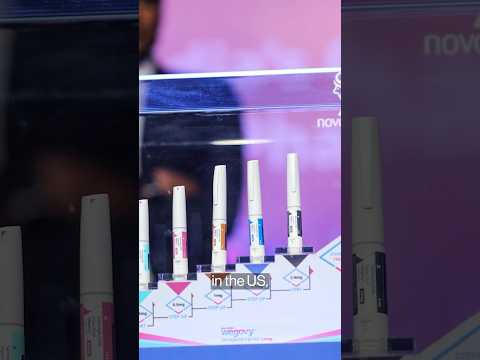
Nam, could you just tell us about the shift that's taking place right now in the global market for for weight loss drugs. >> So, I mean, we're we're going really from a few years where Novon Nordisk couldn't make enough semiglutide to supply the market um in the US, let alone in the rest of the world. um to a time when um in a growing number of countries there will be a lot of generic competitors on the market and people will suddenly have access that they never had before to super powerful obesity medicine ...
PharmaZee GLP-1 Prescription Information Updated as Novo Nordisk Raises Compounding Concerns and Consumer Interest in Telehealth Semaglutide Access Grows in 2026
Globenewswire· 2026-02-06 00:53
Core Insights - The article discusses the growing consumer interest in telehealth platforms for prescription weight management treatments, particularly through PharmaZee, which connects patients with licensed clinicians for evaluations and prescriptions [5][9][21]. Group 1: Company Overview - PharmaZee operates as a telehealth platform that facilitates access to prescription weight management medications through evaluations by U.S.-licensed physicians [4][21]. - The platform provides compounded semaglutide formulations, which are prepared by licensed pharmacies and are not FDA-approved finished products [22][24]. - PharmaZee emphasizes that it is not a healthcare provider but a technology platform that connects patients with medical professionals [23]. Group 2: Market Context - Novo Nordisk raised concerns about "illegal mass compounding" and "deceptive advertising" in the GLP-1 telehealth market, highlighting issues consumers face when researching compounded GLP-1 access [7][8]. - There is an increasing trend of consumers researching telehealth-based weight management medications, indicating a shift in how individuals approach weight management options [5][9]. Group 3: Consumer Considerations - Consumers evaluating GLP-1 telehealth platforms consider factors such as clinician licensing, prescription approval clarity, and whether the platform provides FDA-approved medications or compounded formulations [16][20]. - Transparency regarding contraindications, ongoing medical supervision, and pharmacy sourcing standards are critical factors for consumers when choosing a telehealth service [18][19]. Group 4: Regulatory and Clinical Insights - GLP-1 receptor agonist medications, such as semaglutide and tirzepatide, require physician evaluation and ongoing medical supervision, with specific contraindications outlined by the FDA [12][27][28]. - The distinction between FDA-approved medications and compounded formulations is crucial for consumers to understand, as compounded medications are not subject to the same regulatory scrutiny [24][25].