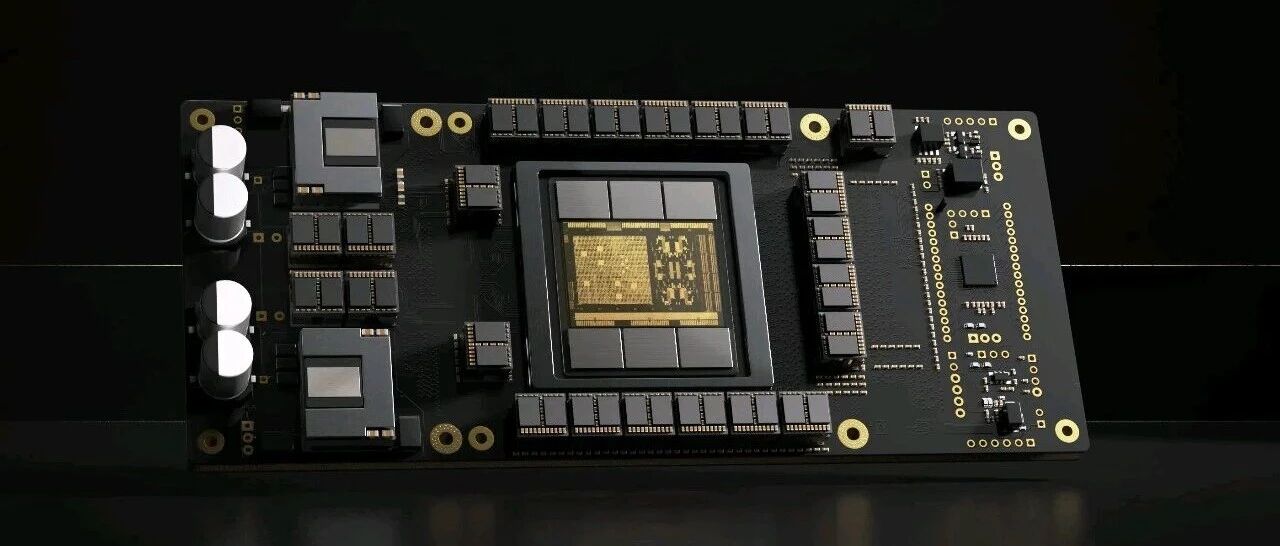
Sohu芯片

Search documents
开年全球AI独角兽大增,9家新贵总估值达224亿美元
Sou Hu Cai Jing· 2026-02-07 10:17
Core Insights - In January 2026, the AI sector saw the emergence of 9 new unicorns, contributing to a total of 24 unicorns globally, with a combined valuation of approximately $224 billion and total funding of nearly $30 billion for the AI companies alone [2][4]. Group 1: New AI Unicorns - The 9 new AI unicorns include companies like Etched.ai, Humans&, and Waabi, with valuations ranging from $10 billion to $50 billion [3][4]. - The majority of these companies are based in the United States, primarily in Silicon Valley, with only Waabi located in Toronto, Canada [3]. - The business focus of these unicorns spans various segments of the AI industry, including chip design, cloud computing, and autonomous driving [3][6]. Group 2: Funding and Growth - The funding amounts for these new unicorns are significantly higher than typical early-stage financing, with notable rounds such as Humans& securing $480 million in seed funding and Etched.ai raising $500 million in Series A+ funding [4][10]. - The rapid growth of these companies is evident, with some achieving unicorn status within months of their founding, such as Humans& and Ricursive Intelligence [5][6]. - The concentration of top-tier talent from prestigious institutions and tech giants like Google and OpenAI has contributed to the swift capital recognition of these startups [6][5]. Group 3: Company Profiles - **Etched.ai** focuses on designing ASIC chips optimized for Transformer architecture, claiming significant performance improvements over traditional GPUs [7][8]. - **Humans&** aims to develop an AI collaboration system, with a founding team comprising members from leading AI organizations [10][12]. - **Waabi** specializes in L4 autonomous driving systems, leveraging advanced AI technologies for both freight and robotaxi applications [16][18]. - **LMArena** operates an AI model evaluation platform, utilizing a unique double-blind testing method to assess model performance [20][21]. - **Higgsfield** is an AI video generation platform that achieved rapid revenue growth, reaching an annualized revenue of $200 million within nine months of launch [23][24]. - **PaleBlueDot AI** provides cloud computing services optimized for AI workloads, recently raising $150 million in funding [27][28]. - **Upscale AI** focuses on network infrastructure for AI computing clusters, raising $200 million in its A round [30][32]. - **LiveKit** offers real-time audio and video communication infrastructure, recently achieving a valuation of $1 billion [33][35]. Group 4: Investment Landscape - Over 50 investment firms participated in funding these new unicorns, indicating a strong interest from both traditional venture capital and industry players [36][38]. - Notable investors include Felicis Ventures, Lightspeed Venture Partners, and NVIDIA, reflecting a trend towards investing in foundational technologies and applications that can deliver real value [36][38]. - The investment climate shows a shift from merely pursuing growth to a fear of missing out on the next major AI breakthrough, leading to higher valuations even at early stages [39][42].

开年全球AI独角兽大增,9家新贵总估值达224亿美元
创业邦· 2026-02-07 10:09
Core Insights - In January 2026, the AI sector saw the emergence of 9 new unicorns, with a total of 24 unicorns globally, marking a significant increase in both concentration and financing scale compared to previous years [3][5][6]. Group 1: New AI Unicorns - The 9 new AI unicorns collectively raised nearly $3 billion, with a total valuation of $22.4 billion [3][6]. - The majority of these companies are based in the United States, primarily in Silicon Valley, with only one, Waabi, located in Toronto, Canada [4]. - The companies span various segments of the AI industry, including chip design, computational services, model evaluation, and autonomous driving [4][8]. Group 2: Financing Trends - The financing amounts for these early-stage companies are significantly higher than typical for their stages, with notable rounds such as Humans&'s $480 million seed round and Etched's $500 million A+ round [6][8]. - In January 2026, no new unicorns emerged from China, although several Chinese AI companies secured substantial funding, with the top financing amounting to nearly 10 billion RMB [6][42]. Group 3: Company Profiles - **Etched.ai**: Founded in 2022, specializes in ASIC chips for Transformer architectures, recently raised $500 million at a valuation of $5 billion [9][10]. - **Humans&**: Established in 2025, focuses on AI collaboration systems, raised $480 million in seed funding, achieving a valuation of $4.48 billion [12][13]. - **Ricursive Intelligence**: Founded in 2025 by former Google DeepMind researchers, aims to streamline AI chip design, raised $300 million in its A round, reaching a valuation of $4 billion [15][16]. - **Waabi**: Founded in 2021, develops L4 autonomous driving systems, recently raised $750 million, with a valuation of $3 billion [17][18]. - **LMArena**: Established in 2025, operates an AI model evaluation platform, raised $150 million at a valuation of $1.7 billion [19][21]. - **Higgsfield**: Founded in 2023, focuses on AI-generated video, achieved $200 million in annual revenue within 9 months, raised $80 million at a valuation of $1.3 billion [22][24]. - **PaleBlueDot AI**: Founded in 2024, provides cloud computing services optimized for AI workloads, raised $150 million at a valuation of $1 billion [25][27]. - **Upscale AI**: Launched in 2025, addresses network bottlenecks in AI computing, raised $200 million at a valuation of $1 billion [28][30]. - **LiveKit**: Founded in 2021, offers real-time audio and video services, raised $100 million at a valuation of $1 billion [31][33]. Group 4: Investment Landscape - Over 50 investment firms participated in the funding rounds for these new unicorns, indicating a strong interest from both traditional VCs and industry capital [35][38]. - Felicis Ventures emerged as the most active investor, participating in multiple funding rounds for several new AI unicorns [36][37].
哈佛辍学“三剑客”,做AI芯片,刚刚融了35亿
创业邦· 2026-01-24 04:10
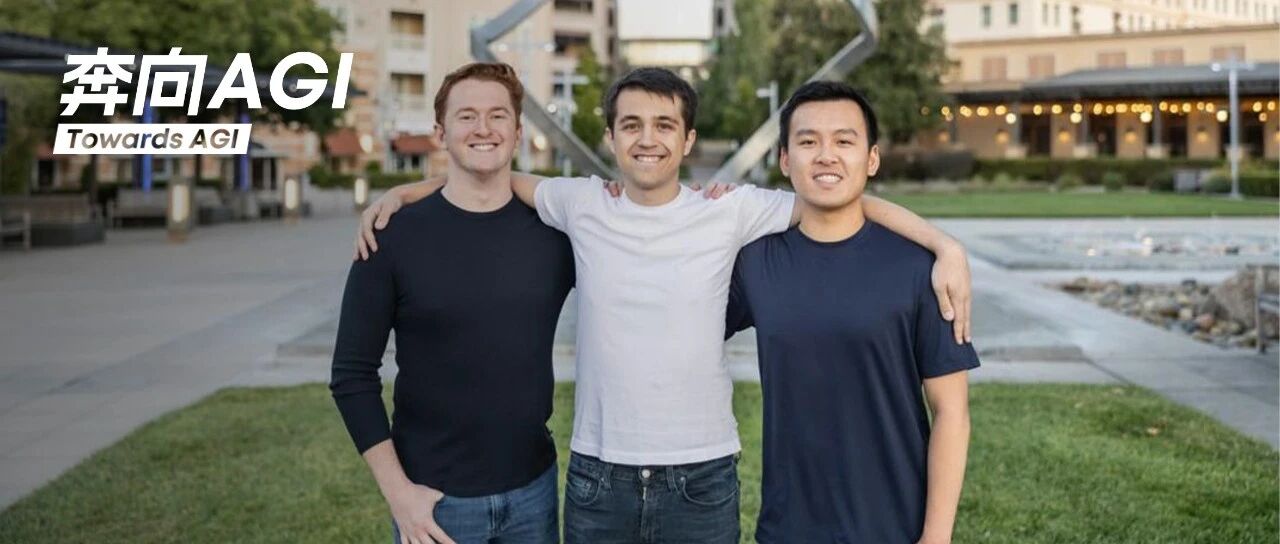
Core Viewpoint - The rise of specialized chips, particularly ASICs designed for AI models based on the Transformer architecture, is challenging the dominance of general-purpose GPUs like those from NVIDIA. Etched.ai, a startup founded by Harvard dropouts, has recently raised $500 million, bringing its valuation close to $5 billion, and aims to revolutionize the AI hardware landscape with its dedicated chips [4][19]. Company Overview - Etched.ai was founded by Gavin Uberti, Chris Zhu, and Robert Wachen, all of whom dropped out of Harvard to focus on developing ASIC chips specifically for Transformer models, distinguishing themselves from general-purpose GPU manufacturers [4][8]. - The company has attracted significant talent from the semiconductor industry, including experts from Intel and other tech giants, to enhance its capabilities in chip design and development [13]. Technology and Product - The flagship product, the Sohu chip, is designed to run Transformer models with significantly higher efficiency than general-purpose GPUs, achieving a hardware utilization rate of 90% compared to the average 30% for GPUs [18][22]. - The Sohu chip's performance is equivalent to 160 NVIDIA H100 GPUs while consuming less power, making it a more economical and efficient choice for enterprises needing specialized AI processing [18]. Market Position and Strategy - Etched.ai aims to capture a niche in the AI inference market by focusing solely on the Transformer architecture, which is expected to dominate the AI landscape. This strategy allows for optimized performance and reduced energy consumption [15][22]. - The company has successfully raised multiple rounds of funding, indicating strong investor confidence in its technology and market potential. The latest funding round was led by Stripes Group and included notable investors like Peter Thiel and Palantir [19][20]. Competitive Landscape - The emergence of specialized chip companies like Etched.ai, Groq, and others represents a shift in the industry, where the focus is moving towards dedicated AI accelerators rather than general-purpose GPUs. This trend is driven by the realization that most computational power is being used for similar model architectures [22][23]. - Etched.ai is positioned among a new wave of companies that are challenging established players like NVIDIA by offering chips that are specifically optimized for AI workloads, particularly in inference tasks [23][27].

哈佛辍学生拿下5亿美元融资:不造GPU,也要“绕开”英伟达
是说芯语· 2026-01-15 23:37
Core Insights - Etched, an AI chip company founded by Harvard dropouts, has raised nearly $500 million in a new funding round, achieving a valuation of $5 billion and total funding close to $1 billion [1][12] - The company aims to optimize the cost-performance ratio of AI computing, specifically focusing on running Transformer models more efficiently rather than competing directly with Nvidia's general-purpose GPUs [1][4] Market Context - Nvidia dominates the GPU market, with projected data center sales exceeding $500 billion by the end of 2026 [3] - Etched's analysis indicates that computational density has only improved by about 15% over the past few years, highlighting a need for more efficient solutions [3] Product Overview - Etched has developed a custom chip named Sohu, designed specifically for Transformer architecture, claiming it to be the "fastest AI chip ever" [3][10] - Under specific testing conditions, Sohu can process over 500,000 tokens per second when running the Llama 70B model, outperforming Nvidia's Blackwell GB200 GPU by an order of magnitude [3][4] Competitive Advantage - A server composed of eight Sohu chips can replace 160 H100 GPUs, offering a more economical, efficient, and environmentally friendly option for enterprises requiring specialized chips [5] - Sohu's design focuses on reducing energy consumption while achieving higher efficiency in running Transformer models, distinguishing it from general-purpose GPUs [5][10] Financial Implications - The cost of training AI models exceeds $1 billion, with inference applications potentially surpassing $10 billion; even a 1% performance improvement can justify a custom chip project costing between $50 million to $100 million [5][7] Future Prospects - Etched's chip is manufactured using TSMC's 4nm process and is integrated with HBM memory and server hardware to support production capabilities [10] - The company has plans to expand its technology beyond text generation to include image and video generation, as well as protein folding simulations [16] Industry Landscape - Other companies, such as Meta and Amazon, are also developing specialized AI chips, but Etched's approach focuses solely on Transformer models, avoiding unnecessary hardware components and software overhead [10][17] - The success of Etched hinges on the continued relevance of Transformer models in the AI landscape; a shift away from this architecture could necessitate a reevaluation of their strategy [18]