Supreme

Search documents
Investment Manager Sheds $10.6 Million VFC Shares, According to Recent SEC Filing
Yahoo Finance· 2026-02-17 15:05
Core Insights - Segall Bryant & Hamill sold 654,898 shares of V.F. Corporation for an estimated $10.61 million, reflecting a strategic reduction in their stake during the fourth quarter [2][10] - The fund's remaining stake in V.F. Corporation is valued at $77.44 million, down $6.18 million from the previous quarter, influenced by price movements [2] - V.F. Corporation's stock price as of February 13, 2026, is $20.30, which has decreased by 18.7% over the past year, underperforming the S&P 500 by 30.5 percentage points [3] Company Overview - V.F. Corporation reported a total revenue of $9.59 billion and a net income of $223.94 million for the trailing twelve months [4] - The company offers a dividend yield of 1.77% and operates a diversified business model that includes wholesale distribution and direct-to-consumer sales [4][6] - V.F. Corporation is recognized for its iconic brands such as The North Face, Vans, Timberland, and Supreme, targeting a global customer base across various demographics [9] Market Context - The recent sale of shares by Segall Bryant & Hamill comes after V.F. Corporation's stock experienced a significant recovery, rising approximately 112% since hitting a multi-year low in April 2025 [11] - The current stake in V.F. Corporation now represents 1.05% of Segall Bryant & Hamill's reported U.S. equity assets, indicating a strategic shift in their investment portfolio [3]

VF集团完成出售Dickies,现有品牌表现明显分化
Xi Niu Cai Jing· 2025-11-19 07:07
Core Insights - VF Corporation has completed the sale of Dickies to Bluestar Alliance for $600 million in cash, reflecting a strategic shift within the company [2] Financial Performance - Dickies reported total sales of $542.1 million for the fiscal year ending March 31, 2025, a decline of 12.3% from $618.4 million the previous year and a 35.2% drop from $837.2 million in fiscal year 2022 [6] - VF Corporation's revenue for the second quarter of fiscal year 2026, ending September 27, 2025, was $2.8 billion, representing a 2% year-over-year increase but a 1% decrease when adjusted for constant currency [6] - The North Face and Timberland brands showed positive growth, with revenues increasing by 6% and 7% respectively, while Vans experienced a 9% decline [6] Strategic Direction - The sale of Dickies and Supreme indicates VF Corporation's ongoing strategic transformation [7] - The company anticipates a revenue decline of 1%-3% for the third quarter of fiscal year 2026, with adjusted operating profit expected to be between $275 million and $305 million [7]


威富集团忙化债
Bei Jing Shang Bao· 2025-09-17 16:24
Core Viewpoint - VF Corporation is selling its workwear brand Dickies for $600 million to Bluestar Alliance to alleviate its debt crisis, which currently stands at approximately $4 billion as of March 29, 2023 [1][3][4] Debt Crisis - VF Corporation's outstanding debt is around $4 billion, and the company acknowledges that debt and interest payment obligations could significantly impact its business and financial condition [3] - The sale of Dickies is aimed at reducing net debt levels and is seen as a necessary step to improve financial health [3][4] - Analysts suggest that the urgency of the sale indicates the severity of VF Corporation's debt crisis [3][4] Brand Performance - Dickies has experienced a revenue decline of 14% in fiscal year 2025 and 15% in fiscal year 2024 [4] - Despite the decline, Bluestar Alliance sees potential in Dickies and aims to leverage consumer insights to support its growth [4] Strategic Brand Management - VF Corporation has a history of buying and selling brands to align with market trends, having acquired Dickies for $820 million in 2017 and previously sold other brands to streamline its portfolio [5][6] - The company has shifted its focus towards brands that emphasize professional outdoor attributes, moving away from purely trendy labels [7][8] Transformation Efforts - VF Corporation has initiated a "Reinvent" plan aimed at improving North American performance, transforming the Vans brand, and strengthening its balance sheet [8] - Recent financial reports indicate that the transformation efforts are beginning to show positive results, with total revenue stabilizing and operating losses narrowing [8] Future Recommendations - Analysts recommend that VF Corporation should focus on cultivating a strong main brand to support revenue growth and cash flow [9] - There is a suggestion for a "brand portfolio restructuring" strategy to concentrate resources on high-potential brands, particularly The North Face, while considering the future of Vans [9][10]
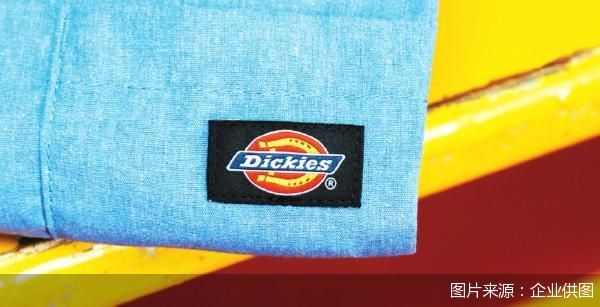
债务压力不减,威富集团再卖子品牌
Bei Jing Shang Bao· 2025-09-17 14:06
Core Viewpoint - VF Corporation is selling its workwear brand Dickies to Bluestar Alliance for $600 million to alleviate its significant debt burden, with the transaction expected to be completed by the end of 2025 [1][4]. Group 1: Financial Situation - As of March 29, 2025, VF Corporation's outstanding debt is approximately $4 billion, and debt repayment obligations may significantly impact its business and financial condition [4]. - The sale of Dickies is part of VF Corporation's strategy to reduce net debt levels and is seen as a necessary move given the company's serious debt crisis [4][6]. - Dickies has experienced a revenue decline of 14% in fiscal year 2025 and 15% in fiscal year 2024 [6]. Group 2: Brand Analysis - Dickies is a well-known American brand that has been recognized for its durability and authenticity, distributing in 55 countries [4]. - The brand has a strong presence in the domestic market, with good sales performance across online and offline channels [5]. - Analysts suggest that the sale of Dickies reflects VF Corporation's need to convert assets into cash and reduce leverage, aligning with rational choices during high-debt periods [6][10]. Group 3: Market Trends and Strategic Shifts - VF Corporation has been adjusting its brand portfolio in response to market trends, having previously acquired Dickies for $820 million in 2017 and sold other brands to focus on high-growth opportunities [7][9]. - The global trend towards casual and streetwear has slowed down, impacting VF Corporation's revenue, which fell by 10% to $10.5 billion in fiscal year 2024 [9]. - The company is now emphasizing professional outdoor attributes in its branding strategy, moving away from purely trendy labels [10][11]. Group 4: Future Outlook - VF Corporation's "Reinvent" plan aims to improve North American performance, achieve brand transformation, and strengthen its balance sheet [11]. - Recent financial reports indicate that the company's restructuring efforts are beginning to show positive results, with total revenue stabilizing at $1.8 billion in the first quarter of fiscal year 2026 [12]. - Analysts recommend that VF Corporation focus on building a strong main brand to support future growth and cash flow [12][13].

街头潮牌“退烧”,谁在转型谁又在掉队
Di Yi Cai Jing· 2025-08-12 11:25
Core Insights - The streetwear brand model, which relied on hype and celebrity endorsements, is losing effectiveness, exemplified by the bankruptcy protection filing of the Italian brand group New Guards Group (NGG) [1][2] - The shift in consumer preferences, particularly among Generation Z, is moving towards brands that resonate with their cultural values rather than just hype-driven marketing [2][6] - The luxury market is experiencing a slowdown, with a projected decline in growth rates, indicating a broader challenge for both niche and major brands [7][9] Group 1: Market Dynamics - The New Guards Group, which once thrived by launching brands like Off-White, has faced significant challenges, leading to its bankruptcy protection filing and the departure of several brands seeking independent operations [1][2] - The acquisition of NGG by Farfetch for $675 million in 2019 did not sustain growth, resulting in Farfetch selling its stake to Coupang in 2023 due to NGG's underperformance [1] - The luxury goods market in China is projected to see an 18% decline in growth in 2024, reflecting a global trend of slowing sales across major luxury brands [7] Group 2: Consumer Behavior - Generation Z consumers are increasingly favoring brands that align with their personal values and cultural beliefs, moving away from the previous model of limited editions and celebrity endorsements [2][6] - The focus has shifted from exclusive products to practicality and meaningful experiences, with consumers seeking items that reflect their lifestyle [6] - The concept of "silent hits" has emerged, where products fail to generate buzz or discussion, leading to poor sales despite good design [9] Group 3: Brand Strategies - Brands like Madhappy are redefining success by emphasizing emotional health and community engagement rather than rapid product turnover or celebrity collaborations [10][12] - Madhappy's approach includes a focus on quality over quantity, with prices ranging from $175 to $300, and a commitment to social causes, resulting in a 30% year-over-year sales increase [12] - The global streetwear market is expected to grow from $2.1 trillion in 2025 to $2.576 trillion by 2030, indicating ongoing demand despite a cooling market environment [12]