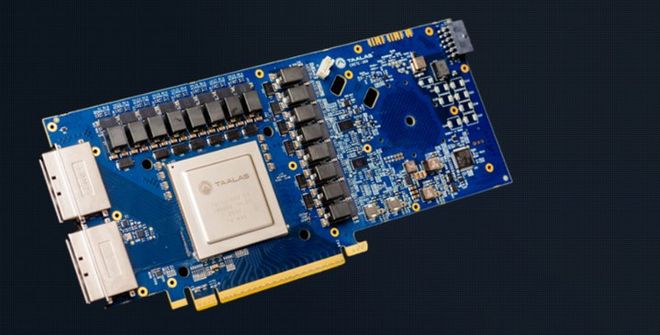
Taalas HC1芯片

Search documents
AI发展驶入“回归商业本质”阶段 国产芯片迎“推理机遇”
Shang Hai Zheng Quan Bao· 2026-02-26 17:59
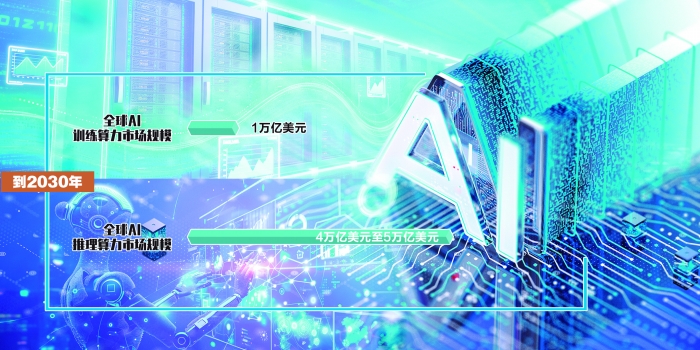
Core Insights - OpenAI has significantly reduced its AI infrastructure spending target from $1.4 trillion to $600 billion by 2030, focusing on pure computing power expenditures, which has sparked widespread discussion in the industry [3] - The reduction in budget is viewed positively by the industry, indicating a shift towards a more pragmatic approach in AI development, emphasizing revenue and profit [3][4] - North American cloud providers continue to invest heavily in data center construction, with Meta and NVIDIA entering a multi-billion dollar chip procurement agreement [5] Investment Opportunities - The AI industry is transitioning from a "computing arms race" to a "commercial validation phase," with companies that can efficiently utilize computing power and demonstrate profitability likely to benefit first [6] - There is a growing focus on AI applications in various sectors, including healthcare, marketing, enterprise services, programming, and entertainment, suggesting potential investment opportunities in these niches [6] - The demand for AI inference is becoming a new focal point, with predictions that the global AI inference market could reach $4 trillion to $5 trillion by 2030, significantly outpacing the AI training market [7] Technological Advancements - The introduction of specialized AI chips, such as the Taalas HC1, which utilizes ASIC technology, is gaining attention for its efficiency and cost-effectiveness in AI inference tasks [7][8] - Domestic AI chip manufacturers are establishing competitive advantages through ASIC and full-stack optimization technologies, with significant order growth reported by companies like Chipone [8] - The landscape for AI chips is evolving, with several companies, including Cambrian and Moore Threads, making strides in the domestic market and preparing for public listings [8]


“邪修”AI芯片的Taalas,成色如何?|AGI焦点
Tai Mei Ti A P P· 2026-02-23 13:51
Core Viewpoint - Taalas, a Canadian startup, has launched its HC1 chip, claiming to potentially disrupt Nvidia's dominance in the AI chip market with significant performance and efficiency improvements [2][5]. Group 1: Product Launch and Performance - Taalas released its first product, the HC1 chip, optimized for the Llama 3.1 8B model, achieving an inference speed of 12,000 tokens per second with a 50-fold efficiency improvement over traditional GPU solutions [2]. - The HC1 chip's peak inference speed is close to 17,000 tokens per second, which is nearly 10 times faster than current leading technologies, with construction costs reduced to 1/20 and power consumption to 1/10 of existing solutions [2]. - In tests, Taalas's HC1 outperformed Nvidia's H200 and B200 chips by 48 times, with performance figures of 230 tokens per second and 353 tokens per second respectively [3]. Group 2: Technology and Innovation - Taalas employs a unique ASIC technology that allows for a two-month chip customization cycle, contrasting with the traditional GPU approach [2][5]. - The company aims to eliminate software dependencies by directly embedding models onto chips, which enhances performance and reduces costs significantly [8][9]. - Taalas's approach is described as "Total specialization," where each model has a dedicated chip, potentially leading to lower inference costs and faster speeds [8][9]. Group 3: Market Position and Future Prospects - Taalas has raised a total of $219 million in funding, indicating strong investor confidence in its disruptive potential [2][8]. - The company plans to release a new product for medium-scale inference models in 2024, which will be closely watched for its performance [14]. - Analysts suggest that Taalas's chips may find significant applications in edge computing scenarios, such as robotics and autonomous vehicles, due to their low latency and power consumption [20]. Group 4: Challenges and Industry Context - Despite the excitement, Taalas faces challenges in adapting its technology to larger models, as it currently focuses on the smaller 8B version of Llama 3.1 [13]. - Concerns have been raised about the practical utility of Taalas's chips, particularly regarding their ability to keep pace with rapidly evolving large models [17][18]. - The competitive landscape remains dominated by Nvidia, which has a robust software ecosystem that Taalas aims to disrupt [21].