英伟达B200

Search documents
英特尔投资SambaNova3.5亿美元挑战GPU在AI推理领域的主导地位
Sou Hu Cai Jing· 2026-02-25 10:36
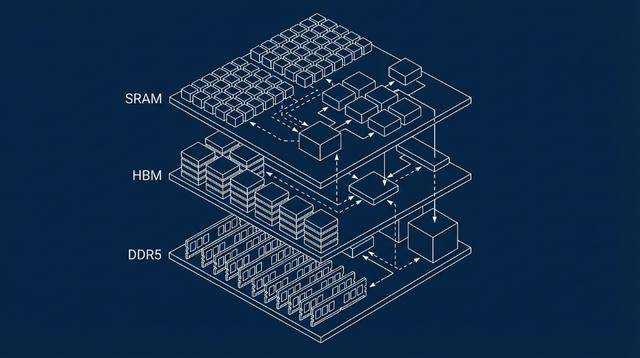
Core Insights - SambaNova has successfully raised $350 million to advance its dataflow architecture technology, positioning itself as an alternative to GPU-based AI systems [2] - The funding round included Intel Capital, which dispelled rumors of Intel's acquisition of SambaNova, and established a long-term partnership aimed at providing GPU alternatives for generative AI deployment [2][8] - SambaNova plans to release the SN50 accelerator later this year, with significant performance improvements over its predecessor, the SN40L [3] Funding and Partnerships - The funding round was backed by investors including Vista Equity, Cambium Capital, and several venture capital firms anticipating returns from SambaNova's upcoming reconfigurable dataflow units (RDU) [2] - Intel's partnership will involve collaboration on hardware-software co-design and the use of Intel's Xeon processors in SambaNova's new RDU [2][8] Product Development - The SN50 accelerator will deliver 2.5 times the 16-bit floating-point performance and 5 times the FP8 performance compared to the SN40L, achieving 1.6 and 3.2 petaFLOPS respectively [3][7] - Each RDU will feature 432MB of on-chip SRAM, 64GB of HBM2E memory with a bandwidth of 1.8TB/s, and 256GB to 2TB of DDR5 memory, enhancing flexibility amid rising memory prices [3][4] Competitive Landscape - Despite significant improvements, the SN50's specifications may not appear as impressive compared to modern GPUs, offering about 64% of the dense FP8 computing capability of Nvidia's Blackwell architecture [4] - SambaNova claims its dataflow architecture reduces data movement overhead, allowing for lower power consumption and potentially higher user generation speeds compared to Nvidia's B200 [4][8] Market Positioning - SambaNova's SN40L accelerator has been recognized as one of the highest-performing inference service providers, capable of processing up to 378 tokens per second for large language models, outperforming GPU-based services [5] - The company aims to optimize its products for better inference economics, focusing on selling infrastructure rather than building dedicated inference clouds like competitors [6]

“邪修”AI芯片的Taalas,成色如何?|AGI焦点
Tai Mei Ti A P P· 2026-02-23 13:51
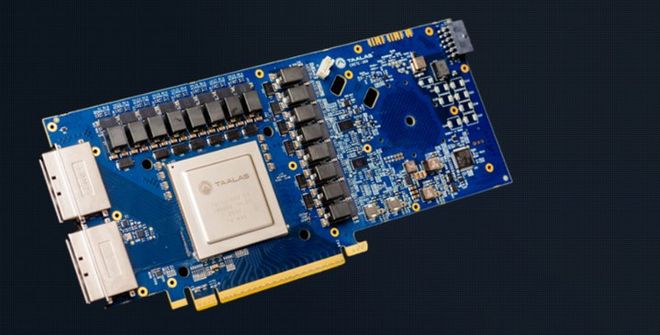
Core Viewpoint - Taalas, a Canadian startup, has launched its HC1 chip, claiming to potentially disrupt Nvidia's dominance in the AI chip market with significant performance and efficiency improvements [2][5]. Group 1: Product Launch and Performance - Taalas released its first product, the HC1 chip, optimized for the Llama 3.1 8B model, achieving an inference speed of 12,000 tokens per second with a 50-fold efficiency improvement over traditional GPU solutions [2]. - The HC1 chip's peak inference speed is close to 17,000 tokens per second, which is nearly 10 times faster than current leading technologies, with construction costs reduced to 1/20 and power consumption to 1/10 of existing solutions [2]. - In tests, Taalas's HC1 outperformed Nvidia's H200 and B200 chips by 48 times, with performance figures of 230 tokens per second and 353 tokens per second respectively [3]. Group 2: Technology and Innovation - Taalas employs a unique ASIC technology that allows for a two-month chip customization cycle, contrasting with the traditional GPU approach [2][5]. - The company aims to eliminate software dependencies by directly embedding models onto chips, which enhances performance and reduces costs significantly [8][9]. - Taalas's approach is described as "Total specialization," where each model has a dedicated chip, potentially leading to lower inference costs and faster speeds [8][9]. Group 3: Market Position and Future Prospects - Taalas has raised a total of $219 million in funding, indicating strong investor confidence in its disruptive potential [2][8]. - The company plans to release a new product for medium-scale inference models in 2024, which will be closely watched for its performance [14]. - Analysts suggest that Taalas's chips may find significant applications in edge computing scenarios, such as robotics and autonomous vehicles, due to their low latency and power consumption [20]. Group 4: Challenges and Industry Context - Despite the excitement, Taalas faces challenges in adapting its technology to larger models, as it currently focuses on the smaller 8B version of Llama 3.1 [13]. - Concerns have been raised about the practical utility of Taalas's chips, particularly regarding their ability to keep pace with rapidly evolving large models [17][18]. - The competitive landscape remains dominated by Nvidia, which has a robust software ecosystem that Taalas aims to disrupt [21].
股价大涨近10%!美光公开辟谣HBM4没拿到单!大摩“暴力”上调目标价至450美元!(美光小会全文)
美股IPO· 2026-02-11 23:46
Core Viewpoint - Micron Technology's stock price surged by 9.9% after CFO Mark Murphy announced the mass production of the highly anticipated HBM4 memory chips, addressing concerns about losing market share to competitors like Samsung [1][4]. Group 1: HBM Market Dynamics - Micron confirmed that its HBM capacity for 2026 is fully booked, indicating a supply-demand imbalance that is expected to persist until at least 2028, countering fears of market share loss to Samsung [1][4]. - The total addressable market (TAM) for HBM is projected to reach $100 billion by 2028, tripling from $35 billion in 2025, highlighting significant growth potential [2]. - The company emphasized that the HBM market is characterized by incremental growth rather than a zero-sum game, suggesting a favorable environment for all players involved [1][4]. Group 2: Financial Projections and Valuation - Morgan Stanley raised Micron's target price from $350 to $450, indicating a potential upside of approximately 28.6%, driven by strong demand in the AI sector [2][7]. - Analysts predict that Micron's earnings per share (EPS) could exceed $52 in the calendar year 2026, reflecting a significant increase in profitability due to supply constraints and pricing power [7][10]. - The current market conditions have led to a re-evaluation of Micron's valuation, with a new cross-cycle EPS estimate of $18, suggesting a price-to-earnings ratio of 25 times, which supports the revised target price [11][13]. Group 3: Supply Chain and Production Insights - Micron's production of HBM4 is on track, with initial shipments expected to ramp up in the first quarter of the calendar year, ahead of previous guidance [4][18]. - The company is experiencing a supply shortage across various memory types, impacting sectors like personal computers and smartphones, with tight supply conditions expected to continue beyond 2026 [6][10]. - The demand for high-bandwidth memory is driven by AI applications, necessitating higher performance and efficiency in memory solutions, which Micron is well-positioned to provide [20][22]. Group 4: Competitive Landscape and Market Sentiment - Concerns regarding competition from Chinese memory manufacturers and the potential impact on HBM4 production have been deemed exaggerated, with Micron maintaining confidence in its technological execution [15][46]. - The market has underestimated the extent of the current memory chip shortage, with significant price increases observed across DRAM and NAND products, further solidifying Micron's market position [8][10]. - The ongoing AI supercycle is reshaping traditional valuation frameworks, positioning Micron favorably for both profitability and valuation expansion [2][7].

下周(1月26日-2月1日)市场大事预告
Sou Hu Cai Jing· 2026-01-25 12:41
Group 1 - The upcoming week will see a total reverse repurchase maturity scale of 11,810 billion yuan, with specific maturities on each day from Monday to Friday [1] - On January 26, a press conference will be held by the State Council Information Office regarding the 2025 business work and operational situation [2] - On January 27, China will release the year-on-year profit data for large-scale industrial enterprises for December 2025 [3] Group 2 - A press conference on January 28 will introduce the high-quality development of state-owned enterprises [4] - On January 30, preliminary GDP data for Hong Kong for the fourth quarter will be published [5] - On January 31, the official manufacturing PMI data for January will be released, with December's PMI recorded at 50.1%, an increase of 0.9 percentage points from the previous month [6] Group 3 - A total of 30 companies will have their restricted shares unlocked next week, with a total market value exceeding 40 billion yuan, with January 27 being the peak unlocking date [6] - The companies with the highest unlocking market values include Haibo Shichuang (23.154 billion yuan), Fostar (5.367 billion yuan), and Yifang Biotechnology-U (4.251 billion yuan) [6] - Three new stocks will be issued next week, including Beixin Life on January 26 and Linping Development and Electronic Science and Technology Blue Sky on January 30 [6] Group 4 - The upcoming week will feature a "super earnings week" for U.S. stocks, with major tech companies like Microsoft, Meta, Tesla, Apple, and others reporting earnings [8] - The Federal Reserve is expected to announce its interest rate decision on January 30, with a low likelihood of rate cuts in the first quarter [8] - The U.S. government faces a risk of shutdown by January 31, with a 75% probability of closure due to recent political tensions [9]


1.22犀牛财经晚报:算力市场供需失衡 “假内存”乱象滋生
Xi Niu Cai Jing· 2026-01-22 10:28
Group 1: Consumer Lending and Interest Rates - Personal consumption loan rates are currently in the range of 3%-6%, with some banks offering rates around 3% after a 1% subsidy, potentially lowering effective rates to around 2% [1] - This effective rate of 2% is lower than the current rates for newly issued housing loans [1] Group 2: Copper Market - A notice has been issued prohibiting the production and sale of copper bars in the Shui Bei market, indicating a regulatory response to market practices [1] - No copper bars were found for sale during a recent market visit, suggesting compliance with the ban [1] Group 3: Sulfur Prices - The price of solid sulfur at Zhenjiang Port has surged to 4358 yuan/ton, an increase of nearly 180% from under 1600 yuan/ton at the end of 2024 [1] - China's reliance on imported sulfur remains around 50%, with increased demand driven by new industries like Indonesian nickel wet-process smelting [1] Group 4: Semiconductor and Memory Market - The domestic computing power market is experiencing severe supply-demand imbalance, with high-end GPU chips becoming scarce and mid-range GPU prices rising significantly due to raw material costs [2] - DDR5 memory prices have seen increases exceeding 300% for some large-capacity models, while there are reports of counterfeit memory products emerging in the market [2] Group 5: Industrial Display Panel Market - Global industrial display panel manufacturers are projected to achieve revenues of $3.4 billion in 2025, reflecting a 24% year-on-year growth [3] - Despite a slight decline in shipment volume due to regulatory changes in Europe, revenue growth remains a key performance indicator for this niche market [3] Group 6: Battery and Solar Market - Prices for Topcon183N solar cells are currently between 0.4-0.42 yuan/W, with market activity indicating a potential price increase to 0.45 yuan/W [4] - The reduction in upstream inventory of solar cells is attributed to increased overseas demand, which is also boosting domestic sales [4] Group 7: Energy Storage Market - The China Energy Storage Alliance (CNESA) forecasts that by 2030, cumulative installed capacity for new energy storage could reach over 370 million kilowatts under conservative scenarios [4] - The expected annual growth rates from 2026 to 2030 are projected at 20.7% in conservative scenarios and 25.5% in ideal scenarios [4] Group 8: Corporate Developments - Alibaba's chip subsidiary, Pingtouge, is reportedly planning to go public, marking a significant move for the company since its establishment in 2018 [5] - Various companies, including Huachang Electronics and Hualing Steel, are announcing significant investments in new projects, indicating ongoing growth and expansion in their respective sectors [9][10]
AI人工智能ETF(512930)涨超1.4%,谷歌将上市TPUV7重塑AI芯片竞争格局
Xin Lang Cai Jing· 2025-12-19 05:27
Core Viewpoint - The upcoming launch of Google's TPU v7 chip represents a significant advancement in AI computing power, with performance metrics comparable to NVIDIA's B200, which is expected to drive demand in the ASIC chip and related industries [1][2]. Group 1: Market Performance - The CSI Artificial Intelligence Theme Index (930713) rose by 1.59%, with notable gains from constituent stocks such as Jingsheng Electronics (600699) up 7.92% and Desay SV (002920) up 7.38% [1]. - The AI Artificial Intelligence ETF (512930) increased by 1.43%, with the latest price at 2.13 yuan [1]. Group 2: Technological Advancements - Google's TPU v7 chip, named "Ironwood," features a peak computing power of 4614 TFLOPs (FP8 precision), 192GB of HBM3e memory, and a memory bandwidth of 7.4TB/s, with a power consumption of approximately 1000W [1][2]. - Compared to its predecessor, the Ironwood chip's computing power has increased by 4.7 times, and its energy efficiency has reached 29.3 TFLOPs per watt, doubling that of the previous generation [1]. Group 3: Industry Implications - The TPU v7 chip focuses on AI inference scenarios and utilizes a 100% liquid cooling architecture, which is expected to significantly reduce the cost of large model inference [2]. - As Google Cloud accelerates its commercial deployment, major overseas companies like Meta are planning to access computing power through rental agreements, which will further stimulate growth in the ASIC chip and supporting industry chain, including liquid cooling, power supply, and PCB sectors [2]. Group 4: Index Composition - As of November 28, 2025, the top ten weighted stocks in the CSI Artificial Intelligence Theme Index include companies such as Zhongji Xuchuang (300308) and Hikvision (002415), collectively accounting for 63.92% of the index [2].
中国银河证券:谷歌(GOOGL.US)将上市TPUv7 重塑AI芯片竞争格局
Zhi Tong Cai Jing· 2025-12-19 01:35
Group 1 - The core viewpoint is that the upcoming launch of Google's TPU v7 series is expected to enhance its market share in the AI chip sector, amidst increasing competition in the AI chip market [1][2] - The TPU v7, named "Ironwood," features a peak performance of 4614 TFLOPs (FP8 precision), with a memory capacity of 192GB HBM3e and a memory bandwidth of 7.4TB/s, representing a 4.7 times performance increase compared to its predecessor [1] - The TPU v7 is designed for AI inference scenarios, supporting low-latency applications such as chatbots and smart customer service, while also being scalable for large model training [2] Group 2 - The launch of TPU v7 is anticipated to drive a transformation across the entire AI industry chain, impacting upstream demand for ASIC chips, PCBs, packaging, HBM, optical modules, cooling, and manufacturing [2] - Google aims to make its cloud services more cost-effective, faster, and more flexible to compete with Amazon AWS and Microsoft Azure, leveraging its TPU v7 for training and service of models like Gemini [2] - The competitive landscape in the AI chip market is expected to intensify, with Google positioned to increase its market share through the TPU v7 series [2]


昇腾950全解 全新自研HBM
2025-12-16 03:26
Summary of Key Points from the Conference Call Company and Industry Overview - The conference call discusses Huawei's upcoming 950 series chips, set to launch in 2026, which will support mid to low precision computing and include two versions: 950PR (equivalent to HBM2~2E) and 950DT (equivalent to HBM3) [1][3][4]. Core Insights and Arguments - **Chip Development Direction**: Huawei aims to enhance interconnect bandwidth and memory capacity in its future chips, with the 960 series expected to achieve 9.6TB/s memory bandwidth, comparable to NVIDIA's B200. However, domestic manufacturing technology may slow the growth rate of interconnect bandwidth [1][4]. - **Performance Comparison**: The 950 series is designed with a more complex architecture than the 910C, featuring two compute and two IO lanes, leading to improved mid-low precision computing performance. The 950 is expected to achieve approximately 1,000 TFLOPS in FP8, while the 920C achieves around 800 TFLOPS in high precision FP16 [2]. - **Production Capacity**: Huawei's design optimizations and manufacturing processes are projected to enhance production capacity, with estimates indicating that a single wafer can yield 18 NPU chips, 17 I/O chips, 9 HRS chips, and 70 CPU chips [6]. - **Market Impact of NVIDIA's H200**: If NVIDIA's H200 enters the domestic market, Huawei's chips may struggle to compete directly in single-chip performance. The adoption of a super-point architecture may be necessary for Huawei to compete effectively, significantly increasing the demand for switch chips [9]. Additional Important Insights - **Self-developed HBM Technology**: Huawei's self-developed HBM technology includes two upcoming generations: "Egrets" (first generation) and "Zhuque" (second generation), aimed at enhancing supply chain autonomy and optimizing power management and cost control [10][13]. - **Industry Growth Projections**: The year 2026 is anticipated to see a significant increase in domestic GPU shipments, with Huawei's 950 expected to require substantial quantities of self-developed HBM, indicating a booming demand for related supply chain components such as packaging materials and solder balls [14]. - **Comparison with NVIDIA's B Series**: While Huawei's future products like the 960 and 970 may match NVIDIA's B series in certain aspects, overall performance gaps remain, particularly in computational power, where the 970 is not expected to match the B200 until 2028 [7][8]. This summary encapsulates the key points discussed in the conference call, highlighting Huawei's strategic direction in chip development, performance comparisons with competitors, and the anticipated growth in the domestic GPU market.
英伟达H200如果放开,中国会接受吗?
傅里叶的猫· 2025-11-22 15:21
Core Viewpoint - The article discusses the potential release of the H200 GPU in China, highlighting the ongoing discussions and uncertainties surrounding this issue, as well as the implications for the domestic AI chip market [1][3][22]. Summary by Sections H200 GPU Specifications - The H200 GPU features significant improvements over the H100, including 141 GB of HBM3e memory and a memory bandwidth of 4.8 TB/s, compared to the H100's 80 GB and 3.35 TB/s [10][11]. Market Context and Usage - The H200's performance is currently superior to domestic AI chips, and its potential release could impact the Chinese market significantly. The article notes that the H200 is already widely used in overseas cloud services, with high utilization rates due to legacy workloads [13][20]. Pricing and Demand - In terms of rental pricing, the H200 is priced at $3.50 per GPU-hour, slightly lower than the B200 at $5.50, but higher than the H100 at $2.95. This pricing reflects its suitability for high-precision computing tasks [15][18]. Supply Chain Insights - The article provides insights into NVIDIA's domestic supply chain, detailing various companies involved in the production and supply of components related to liquid cooling and power supplies for GPUs [23][24]. Conclusion on Release Potential - The article concludes that if the U.S. does indeed release the H200, it is likely that China would follow suit, indicating a potential shift in the domestic AI chip landscape [22].

国产推理芯片,赢了英伟达?
雷峰网· 2025-11-19 06:38
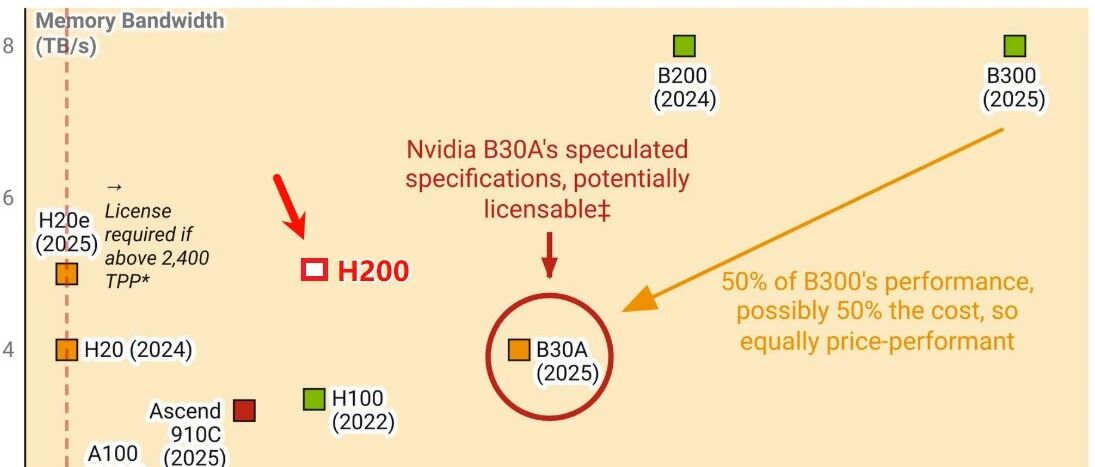
Core Viewpoint - The article discusses the shift in the computing power market towards domestic solutions, highlighting the decline in profitability for NVIDIA products and the rise of domestic computing power projects supported by substantial subsidies [1][6][10]. Group 1: Market Dynamics - The computing power market is witnessing a transformation, with domestic solutions gaining traction as NVIDIA's products fail to maintain their previous popularity [2][4]. - Major internet companies are adapting to domestic chip solutions, indicating a collective industry shift towards supply chain security and business development needs [2][3]. - The domestic computing power projects are becoming commercially viable due to policy support and increasing market demand [3][10]. Group 2: Financial Support and Subsidies - Financial institutions are actively supporting domestic computing power projects, with significant subsidies available, reaching up to 80% of project costs [6][8]. - The government is providing targeted assistance to domestic computing power projects, including lowering funding barriers and offering substantial financial incentives [7][10]. - The cost of domestic computing power is becoming more competitive due to these subsidies, which help bridge the price gap with NVIDIA products [8][9]. Group 3: Technological Advancements - Domestic chip manufacturers have made significant advancements, achieving performance levels comparable to NVIDIA's mainstream products [12][16]. - The demand for inference tasks is expected to drive the growth of domestic computing power, with a notable increase in token usage for AI models [13][20]. - The development of supernode products is emerging as a key trend, enhancing efficiency and reducing costs in the deployment of AI infrastructure [26][27]. Group 4: Market Competition and Strategy - The domestic chip market is entering a competitive phase, with the need for rapid commercialization and efficient deployment becoming critical [25][30]. - Pricing strategies are evolving, with manufacturers willing to offer discounts to penetrate the market and expand application scenarios [28][29]. - The lack of a unified standard in the software ecosystem poses challenges for the adoption of domestic chips, highlighting the need for improved interoperability [29][30].