UFS 4.1

Search documents
Can Silicon Motion's Automotive Storage Solutions Fuel Future Profits?
ZACKS· 2026-03-30 16:00
Core Insights - Silicon Motion Technology Corporation (SIMO) is increasingly focusing on automotive applications to support advanced systems and data needs as vehicles become more data-driven and software-defined [1][5] Group 1: Product Offerings - Silicon Motion provides high-performance, automotive-grade storage controllers and embedded solutions, including Solid-State Drives (SSDs), Embedded Multimedia Card (eMMC), and Universal Flash Storage (UFS) devices for modern vehicles [2] - The portfolio includes advanced automotive SSD controllers like the SM2264XT-AT and single-chip storage solutions such as FerriSSD and Ferri-eMMC, which are widely used in entertainment and navigation systems [3] - Products meet strict automotive standards such as AEC-Q100, ISO 26262, and ISO 21434, ensuring safety, reliability, and cybersecurity [4][9] Group 2: Market Position and Competitors - Silicon Motion faces competition from Western Digital Corporation (WDC) and Micron Technology, Inc. (MU), both of which are expanding their automotive businesses with high-performance storage solutions [6][7] - Western Digital has achieved ASPICE CL3 certification, ensuring strong software quality and compliance with automotive safety standards [6] - Micron's automotive memory and storage portfolio includes LPDDR5, LPDDR4, UFS, and e.MMC, focusing on safety and high performance [7] Group 3: Financial Performance - Silicon Motion shares have increased by 117.6% over the past year, outperforming the industry's growth of 91.6% [8] - The company's shares currently trade at a price/earnings ratio of 17.44, higher than the industry's 9.3 [10] - Earnings estimates for 2026 have risen by 19% to $5.80, while estimates for 2027 have increased by 20.5% to $7.88 [11]



M31完成4纳米MIPI M-PHY v5.0硅验证,加速布局UFS 4.1高速存储与车载市场
Huan Qiu Wang Zi Xun· 2026-02-24 06:38
Core Insights - M31 Technology has successfully completed silicon validation of its MIPI M-PHY v5.0 IP on a 4nm process and is advancing research on the 3nm process, indicating its capability to support UFS 4.1 technology [1][2] Group 1: Product Development - The MIPI M-PHY v5.0 IP achieves a maximum single-channel transmission rate of 23.32 Gbps in HS-G5 mode, doubling the performance of the previous HS-G4 generation [2] - The IP incorporates Adaptive EQ technology and supports multi-level signal transmission, maintaining excellent signal integrity and low bit error rate under high-speed conditions [2] - An optimized hibernate design in the MIPI M-PHY v5.0 IP effectively reduces system power consumption, balancing high performance with low power usage [2] Group 2: Ecosystem and Solutions - M31 has built a comprehensive UFS solution ecosystem, integrating PHY IP, JEDEC-compliant UFSHCI v4.1 controller IP, and UniPro control layer IP to simplify system integration [3] - The platform includes ISO 26262 functional safety design processes and certifications, meeting stringent safety and reliability requirements for automotive and high-reliability applications [3] - M31 aims to be a trusted technology partner in building next-generation high-speed storage platforms, leveraging its long-term R&D strength in high-speed interface IP [3]
内存价格暴涨,手机厂商决定「复活」SD卡,但可能会让手机变卡
3 6 Ke· 2026-02-12 03:26
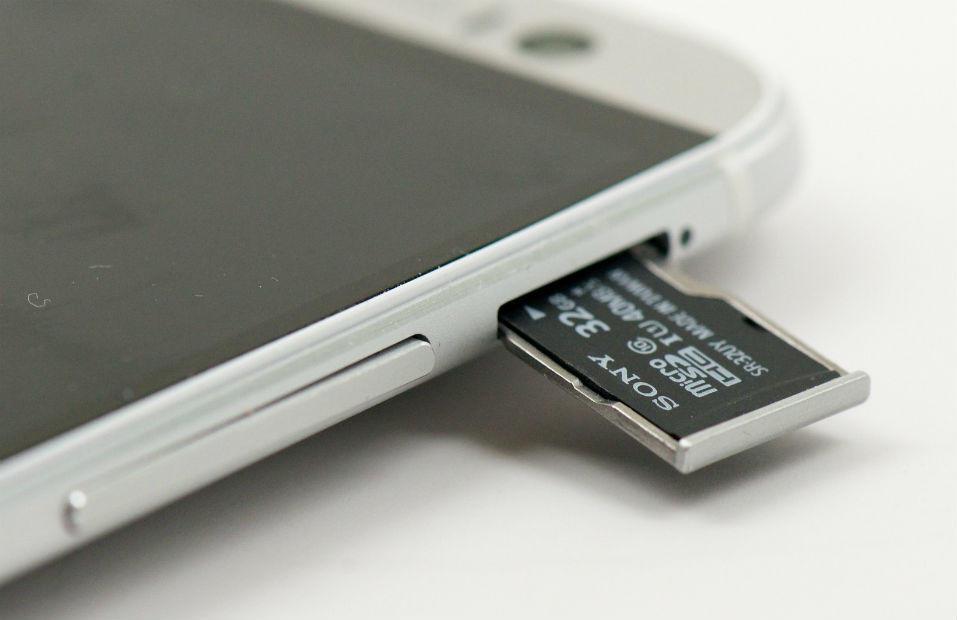
Core Viewpoint - The revival of external storage card designs in smartphones is a response to the rising memory prices in the PC sector, allowing consumers to expand storage independently and potentially alleviating some of the pressure on manufacturers [1][7][18]. Group 1: Memory Price Trends - Memory prices have surged significantly, impacting the PC industry, while the smartphone sector has not seen a corresponding increase in new device prices due to sufficient inventory [1]. - Some smartphone brands are considering reviving external storage options to manage memory consumption amid rising costs [1][7]. Group 2: Historical Context of External Storage - The concept of external storage cards, like MicroSD, was popularized in the early 2000s but has been phased out in recent years due to design changes aimed at maximizing internal space and enhancing waterproofing [3][4]. - The initial purpose of MicroSD cards was to alleviate storage pressure rather than replace internal storage, which has evolved significantly with advancements in technology [6]. Group 3: Consumer Benefits - Reviving external storage options allows consumers to choose lower internal storage capacities while focusing on other hardware features, potentially offering better value for money [7][18]. - Flexibility in memory options can cater to diverse consumer needs, from heavy users requiring large storage to casual users who need less [8]. Group 4: Technical Challenges - The integration of external storage cards requires significant adjustments to smartphone designs, which have become more compact and complex [9][15]. - Issues such as waterproofing, internal structure adjustments, and the reliability of external cards pose challenges for manufacturers [9][12]. Group 5: Market Implications - The revival of external storage could stimulate growth in the storage card market, which has been largely supported by other devices like drones and cameras [16]. - If smartphones reintroduce external storage, it may shift the focus of the storage card industry towards stability and speed, potentially leading to a new market expansion [16][18].
江波龙20251031
2025-11-03 02:35
Summary of Jiangbolong Q3 Earnings Call Company Overview - Jiangbolong is the largest independent memory manufacturer in China and the second largest globally, focusing on the research, design, and production of memory-related products [4][5][6] Key Financial Highlights - Q3 revenue reached a record high of 6.539 billion RMB, with a gross margin recovering to 18.92% and a net profit attributable to shareholders of 698 million RMB [2][6] - R&D investment for the first three quarters was 701 million RMB, maintaining a high intensity [2][6] - Inventory at the end of the period was 8.517 billion RMB, expected to rise to around 10 billion RMB in Q4 due to increased procurement demand [2][16] Industry Dynamics - The storage industry entered an upward cycle in September 2023, with significant growth in demand driven by the server market, which accounts for 31% to 36% of applications [2][7] - The price increase cycle for storage began in Q3 2023, primarily due to supply-side capacity adjustments and a doubling of NAND Flash demand in the ESSD sector [5][15] - Supply-demand tension is expected to persist until at least the end of 2026, with limited new capacity investments anticipated [15][22] Business Segments Enterprise Storage - Enterprise storage revenue was 922 million RMB last year, expected to exceed 2 billion RMB this year, with significant orders from Alibaba and Tencent [10][29] - Jiangbolong aims to capture 10% to 20% market share in the trillion-level enterprise storage market [11][29] High-End Embedded Business - Focus on UFS 4.0 and UFS 4.1 markets, with successful breakthroughs in UFS 4.1 technology [12] - Mid-term target to achieve 30% to 40% market share in high-end embedded storage [12] Overseas Business - Melissa's business grew by 40% in the first three quarters, while the Brazilian subsidiary ZLIA grew by over 30% [5][14] - Combined overseas revenue is expected to reach over 7 billion RMB this year, with a sustained growth rate of over 30% [14] Supply Chain and Procurement - Jiangbolong primarily sources memory products from Samsung and Hynix, with a supply ratio of nearly 30% [20][21] - Flash memory supply is prioritized for large customers, leading to reduced availability for smaller firms [19] Market Outlook - The company anticipates continued price increases in the storage market due to ongoing supply constraints and rising demand, particularly in the AI and server sectors [15][18] - The expected HDD supply gap in 2024 is projected to reach 20 billion GB, further exacerbating supply issues [7] Product Development and Innovation - Jiangbolong has launched several self-developed controller chips, with a focus on high-performance products [6][12] - The company has implemented a TCM (Technology Contract Manufacturing) model to stabilize wafer price fluctuations and secure high-end business from major clients [10][26] Conclusion - Jiangbolong is well-positioned to leverage growth opportunities in the enterprise and high-end embedded storage markets, supported by strong financial performance and strategic partnerships with major tech companies [2][10][29]
跨代领先,不止性能,iQOO 15标准版都强成这样了?
Hu Xiu· 2025-10-22 02:00
Core Insights - The article highlights the launch of the iQOO 15 smartphone, which is the first flagship device to feature the Snapdragon 8 Gen 2 processor, showcasing significant performance advancements [1] - iQOO 15 is equipped with top-tier specifications including LPDDR5X Ultra Pro and UFS 4.1, indicating a strong focus on high-performance components [1] - The device excels not only in performance but also in display, battery life, and imaging capabilities, positioning it as a leading product in its category [1] Performance - The iQOO 15 features the Snapdragon 8 Gen 2 chipset, marking a generational leap in performance [1] - The integration of LPDDR5X Ultra Pro and UFS 4.1 enhances the overall speed and efficiency of the device [1] Comparison with Peers - In a horizontal comparison with similar products, the iQOO 15 stands out in various aspects such as screen quality, battery endurance, and camera performance [1]
存储行业的好日子回来了?国产厂商想讲“新故事”
Jing Ji Guan Cha Wang· 2025-09-25 15:52
Core Viewpoint - The storage chip sector in the A-share market has shown strong performance despite increased volatility in the overall market, driven by price hikes from international giants and positive forecasts for NAND Flash prices [2][3]. Group 1: Market Performance - From September 4 to September 25, the stock prices of Demingli (001309.SZ) and Jiangbolong (301308.SZ) surged from approximately 86 yuan to 177 yuan and 144 yuan respectively, reaching historical highs [2]. - The price increase expectations were ignited by SanDisk's announcement of a price hike of over 10% for some products, marking the second price increase this year [2]. - Morgan Stanley's report suggests that NAND Flash prices may continue to rise into Q4 2025 and persist into 2026, with CFM forecasting a comprehensive price increase in the storage market during that period [2]. Group 2: Financial Performance of Major Players - Micron's Q4 2025 revenue reached $11.32 billion, a 46% year-on-year increase, with net profit soaring 158% to $3.47 billion [3]. - For the entire fiscal year 2025, Micron's revenue hit a record $37.4 billion, up nearly 50% year-on-year, primarily driven by demand from data centers and AI servers [3]. - Micron's high-value business segments, including HBM and high-capacity DIMM, generated $10 billion in revenue, five times that of the previous fiscal year [3][4]. Group 3: Domestic Manufacturers' Challenges and Strategies - Domestic storage manufacturers like Baiwei Storage and Demingli reported negative net profits in the first half of 2025, reflecting the lingering effects of the previous downturn [6]. - The traditional business model of relying on purchasing storage wafers from international suppliers has limited profit margins for domestic firms [6]. - Domestic manufacturers are shifting focus towards upstream technology to capture higher value, particularly through the development of proprietary controller chips [6][7]. Group 4: Technological Advancements - Jiangbolong has shipped over 80 million units of its self-developed controller chips, with its UFS 4.1 products outperforming market standards [7]. - Baiwei Storage has successfully mass-produced its first domestic eMMC controller chip and is developing UFS controller chips, expected to be ready for production in 2025 [7]. - Demingli has also achieved mass production of its SATA SSD controller chip, which is the first in China to utilize RISC-V architecture [7]. Group 5: Investment and Market Expansion - Baiwei Storage raised 1.871 billion yuan for expanding its advanced packaging and manufacturing facilities, indicating a strategic shift towards higher-value manufacturing [9]. - Domestic firms are targeting enterprise markets, such as data centers and AI servers, where profit margins are higher and customers prioritize reliability over price [10]. - Jiangbolong's enterprise storage revenue reached 693 million yuan in the first half of 2025, a 138.66% increase, while Baiwei Storage has secured core supplier status with major AI server manufacturers [10].