
Uber应用程序

Search documents
谁在布局全球出行的宏大叙事?
Xin Lang Cai Jing· 2026-02-26 08:39
Core Insights - The article discusses the evolution and globalization of China's ride-hailing industry, highlighting key players like Didi and Cao Cao Mobility, and their strategies for international expansion [1][4][8]. Group 1: Ride-Hailing Platforms - Didi has been expanding internationally since 2015, initially through capital investments in platforms like Grab and later acquiring local companies such as 99 in Brazil, marking a shift from mere investment to deep market penetration [4][5]. - As of now, Didi has 55 million active users and 1.5 million drivers in Brazil, covering over 3,300 towns, and has extended its reach to 14 countries across Latin America, Asia-Pacific, and Africa [5]. - Didi's international business saw over 20% growth in Q3 2025, with order volume increasing by 24.3% year-on-year to 1.162 billion orders, indicating its significant global presence [6][5]. - Cao Cao Mobility, backed by Geely, has also made strides in international markets, achieving a total transaction volume (GTV) of 17 billion yuan in 2024, with a market share of 5.4% [6][7]. Group 2: Autonomous Driving - The autonomous driving sector is a critical extension of the ride-hailing industry, with companies like WeRide and Pony.ai aggressively pursuing global expansion [9][10]. - WeRide received approval to operate a fully autonomous Robotaxi service in Abu Dhabi, marking a significant milestone as the first city-level L4 autonomous driving commercial license outside the U.S. [10]. - Pony.ai has also made progress in the Middle East, conducting successful Robotaxi road tests in Qatar and obtaining testing permits in Dubai [10][11]. - Baidu's Apollo Go has initiated public autonomous driving services in Abu Dhabi and is exploring partnerships in Europe to navigate regulatory challenges [11]. Group 3: New Entrants - New players like Hello Bike are emerging in the market, leveraging support from Ant Group to expand their business model beyond bike-sharing to include four-wheeled transport and local services [14][15]. - The ride-hailing industry in China is projected to grow significantly, with the market size expected to reach 10 trillion yuan by 2029 [13]. - The article notes that the demand for mobility solutions is driving innovation and competition, with various companies exploring new technologies and business models [13][16]. Group 4: Industry Trends - The article emphasizes the importance of digital mapping and location services in the ride-hailing industry, as companies adapt to new technologies that reduce reliance on high-precision maps [15]. - The rise of eVTOL (electric vertical takeoff and landing) vehicles is highlighted, with companies like XPeng and Tsinghua Technology securing significant orders for eVTOL aircraft [15][16]. - The overall narrative suggests a burgeoning global landscape for the ride-hailing and mobility sectors, with Chinese companies poised to play a significant role in shaping the future of transportation [17].

Uber持续扩展业务版图,宣布收购停车应用SpotHero
Huan Qiu Wang Zi Xun· 2026-02-24 07:30
Group 1 - Uber plans to acquire SpotHero, a company that provides parking reservation applications for urban centers, sports events, and concerts [1] - The acquisition aims to integrate SpotHero's parking reservation experience into the Uber app, enhancing user convenience when driving [2] - Uber reported better-than-expected revenue for Q4, but provided a conservative profit outlook for the current quarter, leading to a decline in stock price [2] Group 2 - The strongest growth segment for Uber in the last quarter was its delivery business, which has expanded from food delivery to include groceries and retail [2] - Uber's expansion into new markets and regions has solidified its position as the leading ride-hailing company in the United States [2]


2亿用户,撑不起Uber的自动驾驶梦
汽车商业评论· 2026-02-05 23:06
Core Viewpoint - Uber's recent financial report highlights significant growth in user engagement and bookings, but concerns over profitability and market competition have led to a decline in stock price despite positive operational metrics [6][12][13]. Financial Performance - In Q4 2025, Uber reported a 22% increase in ride-hailing trips to 3.8 billion, with total bookings also rising 22% to $54.1 billion, and revenue growing 20% to $14 billion [6]. - Monthly active users reached a record 202 million, an 18% increase year-over-year, doubling from 100 million in 2019 [7][8]. - Operating profit for Q4 2025 was $1.77 billion, a 130% increase, but fell short of analyst expectations of $1.85 billion by $80 million [18]. Growth Drivers - The growth in bookings was attributed to new products and services, including the Uber One subscription service and expanded offerings in holiday travel and airport transportation [17]. - The food delivery segment also performed well, capturing market share from competitors by introducing more non-food merchants and increasing discounts [17]. Profitability Concerns - Despite revenue growth, Uber's profitability remains a concern, with significant losses from investments in companies like Lucid and Grab leading to a $1.6 billion write-down [19]. - The company anticipates a higher effective tax rate of 22%-25% in 2026, which could further pressure profit margins [22]. Autonomous Driving Strategy - Uber views autonomous driving as a key future growth area, investing heavily and forming partnerships with various technology firms [25][26]. - The company plans to deploy 25,000 autonomous vehicles on its platform and expand services to 15 global markets by the end of 2026 [28][30]. - Uber argues that its existing user base and operational experience will allow it to achieve better utilization and economic benefits from autonomous vehicles compared to independent operators [31]. Market Competition - The autonomous vehicle market is competitive, with companies like Waymo and Tesla advancing their own technologies, which poses a threat to Uber's strategy [42][44]. - Regulatory challenges in major cities may delay the rollout of autonomous services, impacting Uber's ability to capitalize on high-margin markets [46]. Investor Sentiment - Investor confidence is wavering, as the potential impact of autonomous vehicles on Uber's core business remains uncertain, leading to stock price volatility [47].

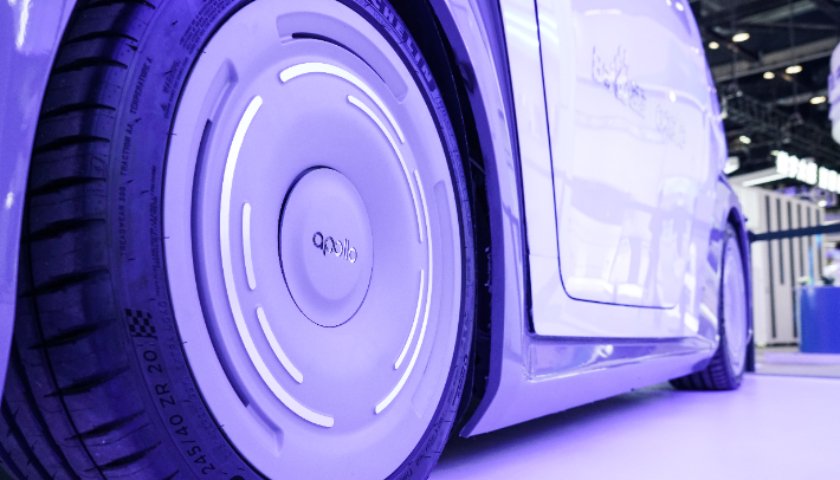
苹果称软件和应用程序导致新iPhone过热 会尽快修复
Xin Lang Ke Ji· 2025-11-26 09:14
Core Viewpoint - The recent overheating issue with the new iPhone is attributed to software and application-related bugs, which the company is working to fix promptly [1] Group 1: Software and Application Issues - The overheating problem is linked to a vulnerability in the latest iOS 17 software and certain third-party applications that caused system overload during initial setup and data restoration [1] - The company is collaborating with developers of the applications that caused the overheating, including Instagram and Uber Technologies Inc., to implement fixes [1] - Instagram has already improved its application to address the overheating issue as of September 27 [1] Group 2: Hardware and Design - The company denies that the overheating issue is related to the hardware of the iPhone 15 Pro series, stating that the new design has improved heat dissipation compared to previous stainless steel models [1] - The upcoming software fix will not involve reducing the processor speed [1]
