共享出行

Search documents
盈利与转型双突破:曹操出行首次调整后Q4盈利,Robotaxi规模化提速
第一财经· 2026-03-28 01:34
Core Viewpoint - Cao Cao Mobility has achieved its first annual financial report since its listing, highlighting continuous revenue growth and a significant milestone of turning adjusted net profit positive in Q4 2025, marking its entry into a profitable growth trajectory [1][2]. Financial Performance - In 2025, Cao Cao Mobility's Gross Transaction Value (GTV) and revenue both experienced double-digit growth, with GTV increasing by 38% to 23.4 billion yuan and revenue reaching 20.2 billion yuan, also up by 38% year-on-year [3]. - The company's gross margin improved significantly, rising from 8.1% in 2024 to 9.4% in 2025, a 1.3 percentage point increase, while losses narrowed by 50.8% year-on-year [3]. - Operating cash flow saw a substantial increase of 60.3% year-on-year, and the company achieved its first positive net profit in Q4 2025, indicating a sustainable improvement in profitability [3]. Business Model and Operational Efficiency - The improvement in profitability is attributed to the expansion of Cao Cao Mobility's operational scale and brand recognition, leading to economies of scale [5]. - The implementation of AI technology, particularly through its transaction engine "Cao Cao Brain," has optimized driver dispatch efficiency, enhancing profitability [5]. - The average monthly active users reached 41.3 million, a 43.9% increase year-on-year, while the average monthly active drivers grew by 35.4% to 631,000, indicating improved unit economics and operational efficiency [5]. Supply-Side Barriers - Cao Cao Mobility's cost advantages stem from its customized vehicle strategy, which features a leading fleet of vehicles designed specifically for shared mobility, addressing operational challenges faced by traditional private cars [8]. - The total cost of ownership (TCO) for Cao Cao's customized vehicles is approximately 36.4% lower than typical electric vehicles used in shared mobility, with the Cao Cao 60 model achieving a TCO as low as 0.47 yuan per kilometer, about 40% lower than mainstream electric models [10]. Future Growth Prospects - The Robotaxi market represents a significant future growth opportunity, with projections indicating a potential market size of 83.1 billion yuan by 2030 and over 709.6 billion yuan by 2035 [12][19]. - In 2025, Cao Cao Mobility initiated its Robotaxi strategy, launching pilot programs in Suzhou and Hangzhou, and has deployed over 100 Robotaxis [14]. - The company's strategy integrates smart customized vehicles, intelligent driving technology, and smart operations, leveraging its extensive operational experience across 195 cities [16]. International Expansion - Cao Cao Mobility aims to replicate its successful domestic model internationally, leveraging its partnership with Geely to expand into markets like Abu Dhabi and Hong Kong [20]. - The company anticipates deploying 100,000 Robotaxis globally by 2030, with overseas markets expected to become a new growth driver [22].


哈啰!永安行吗?创始人杨磊亮相资本市场这一年
经济观察报· 2026-03-19 14:23
Core Viewpoint - The article highlights the recent exposure of violations in the operations of Hello Bike's electric vehicle rental business during the CCTV "3.15" gala, leading to significant scrutiny and potential repercussions for the company and its founder, Yang Lei [3][12]. Group 1: Violations and Company Response - On March 15, 2026, CCTV's "3.15" gala revealed multiple violations by Hello Bike, including unauthorized speed decoding, where vehicles were found to exceed the legal speed limit of 25 km/h, reaching up to 75 km/h [3]. - The company admitted to management oversights and initiated a special investigation, promising to rectify the issues, remove non-compliant vehicles, and enhance merchant oversight [3][6]. - Hello Bike's market share is significant, being one of the top players in the two-wheeled shared mobility sector alongside Yong'an Xing [3]. Group 2: Financial Performance and Control Changes - Yong'an Xing, under Yang Lei's control since 2025, has been experiencing continuous financial losses, with a projected net loss of between 160 million to 200 million yuan for 2025, following a loss of 147 million yuan in 2024 [7][8]. - The losses are attributed to fixed asset impairments and receivables [8]. - Yang Lei's acquisition of Yong'an Xing involved a significant financial commitment, totaling nearly 1.51 billion yuan for a 38.21% voting power stake [6]. Group 3: Competition and Future Plans - Yang Lei has made a written commitment to avoid conflicts of interest between Hello Bike and Yong'an Xing, which operate in overlapping sectors such as shared bicycles and rental services [10][11]. - Despite speculation about asset integration between Hello Bike and Yong'an Xing, Yang Lei clarified that there are no current plans for such arrangements [11]. - Following the "3.15" gala exposure, Yong'an Xing's stock experienced a slight decline, dropping from 20.25 yuan per share to 19.47 yuan, a decrease of 3.85% [13].


哈啰出行,扩张更难了?
36氪· 2026-03-17 13:35
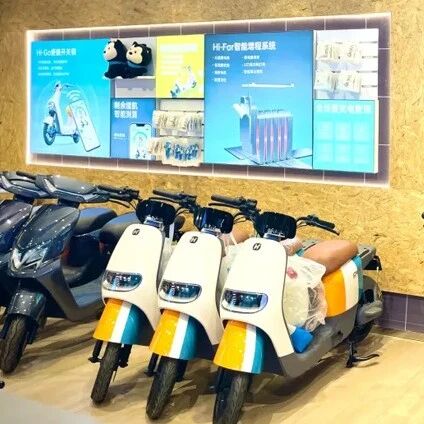
Core Viewpoint - The article highlights the issues surrounding Hello's electric bike rental business, particularly the violation of national standards regarding vehicle speed and safety, which has led to increased scrutiny from regulatory authorities and potential impacts on the company's market position and future IPO prospects [4][6][30]. Group 1: Regulatory Issues - Hello was named in the CCTV 3.15 Gala for its electric bike rental service, where some vehicles exceeded the legal speed limit of 25 km/h, reaching speeds of up to 75 km/h [4][11]. - The investigation has expanded beyond the rental service to include issues related to licensing, recruitment, and vehicle deployment [5][6]. - Regulatory bodies, including the Shanghai Market Supervision Administration, have initiated on-site inspections and investigations into the company’s practices [5][19]. Group 2: Business Model and Expansion - Hello, founded in 2016, has evolved from a bike-sharing company to a comprehensive mobility platform, expanding into various services including electric bike rentals and Robotaxi [5][30]. - The company has faced challenges in its IPO journey, having withdrawn its application in 2021 and now exploring potential backdoor listings through acquiring a public company [5][34]. - The rapid expansion of Hello's services has raised concerns about its management and compliance capabilities, particularly in light of recent regulatory scrutiny [30][37]. Group 3: Market Perception and Future Outlook - The 3.15 incident has prompted a reevaluation of Hello's business fundamentals, governance, and market prospects, with potential implications for its valuation [6][35]. - The company’s response to the regulatory issues emphasizes its role as a platform provider, shifting responsibility to merchants while acknowledging management oversights [17][19]. - The combination of regulatory challenges and operational issues, such as the Robotaxi accident and the 2G network shutdown affecting its electric bikes, has compounded the difficulties Hello faces in maintaining user trust and compliance [22][30][36].
从百辆验证到10万辆定制车规划,曹操出行已搭好整套Robotaxi运营系统
21世纪经济报道· 2026-03-17 01:10
Core Viewpoint - The article emphasizes that the successful commercialization of Robotaxi relies not only on autonomous driving technology but also on operational capabilities such as efficient pick-up/drop-off points, fleet management, and cost control [1][2][15] Group 1: Operational Infrastructure - Cao Cao Mobility has launched over 3,600 virtual pick-up and drop-off points in Hangzhou, indicating a shift from testing to actual operations, aiming for a ride-hailing experience with higher density and frequency [1][3] - The deployment of these points is based on extensive travel data analysis, focusing on high-demand areas to enhance user experience and operational efficiency [2][3] - The establishment of a dense network of pick-up/drop-off points allows for improved passenger experience, reduced empty driving rates, and more stable dispatching, which are crucial for the success of Robotaxi operations [3][11] Group 2: Cost Control and Fleet Management - Total Cost of Ownership (TCO) is a critical factor for the sustainability of Robotaxi services, with vehicle costs significantly impacting profitability [6][7] - Cao Cao Mobility has emphasized a customized vehicle strategy, owning over 37,000 customized vehicles across 31 cities, which helps optimize service cost structures [6][8] - The average TCO of Cao Cao's customized vehicles is approximately 36.4% lower than typical electric vehicles used in shared mobility, demonstrating enhanced operational efficiency [7][8] Group 3: Technological Integration and Future Planning - The company is developing a fully customized Robotaxi model in collaboration with Geely, aiming to deploy 100,000 units by 2030, which will be designed specifically for autonomous operations [14][15] - The integration of smart driving technology, customized vehicles, and intelligent operations is crucial for achieving long-term operational success and cost efficiency [14][15] - The establishment of ground operational support and cloud-based safety services is essential for transitioning to a fully autonomous service model, addressing daily operational challenges [11][12]

最坏情况预期:滴滴
citic securities· 2026-03-16 11:49
Group 1: Company Performance - Didi's Chinese ride-hailing business saw a 10% year-on-year increase in order volume, reaching 3.6 billion orders, with a total transaction value (GTV) of 87 billion yuan, up 11% year-on-year[5] - Adjusted EBITDA for the Chinese ride-hailing business was 2.6 billion yuan, with a GTV profit margin of 3.0%[5] - Didi maintains its GTV profit margin target of 4.2% for 2026[5] Group 2: International Business and Strategy - Didi's international food delivery business experienced a 25% year-on-year growth in order volume, with GTV growth accelerating to 47% (38% excluding exchange rate effects)[6] - The company aims to achieve a quarterly food delivery GTV of $2 billion in Brazil by Q4 2026, positioning itself as the second-largest platform in the region[7] - Despite significant losses of 3.4 billion yuan in Q4, the international ride-hailing and fintech businesses have reached breakeven[6] Group 3: Market Outlook and Risks - The management is confident in the current food delivery strategy, indicating that the worst period may soon be over if Q1 2026 can achieve both scale expansion and controlled losses[4] - Investment risks include intensified competition, macroeconomic slowdowns, regulatory risks, and challenges related to international expansion and autonomous vehicle development[9] - Didi's market share in China remains stable at 70-75%, with ongoing operations in ride-hailing, food delivery, and fintech[10]

滴滴出行:25Q4财报点评:中国出行增速及利润保持稳健,巴西外卖业务加大投入
CMS· 2026-03-15 07:57
Investment Rating - The report maintains a "Strong Buy" rating for Didi Chuxing, indicating a positive outlook on the company's stock performance [1][3]. Core Insights - Didi Chuxing reported a revenue of 58.4 billion yuan for Q4 2025, representing a year-on-year increase of 10.5%, while adjusted net profit decreased by 6% to 530 million yuan [1]. - The company's domestic ride-hailing business showed stable growth, with a Gross Transaction Value (GTV) of 87.2 billion yuan in Q4 2025, up 11.2% year-on-year, and a projected EBITA margin improvement from 3.7% in 2025 to 4.2% in 2026 [1][3]. - Internationally, Didi's food delivery business in Brazil is expected to incur larger losses in 2026, although quarterly losses are anticipated to improve [1][3]. - The report highlights the potential for long-term profit growth in Didi's ride-sharing market, supported by operational efficiencies and reduced user subsidies [1][3]. Financial Performance Summary - For the fiscal year 2024, the main revenue is projected at 206.8 billion yuan, with a year-on-year growth of 7% [2]. - Adjusted net profit is expected to rise significantly by 804% in 2024, reaching 5.6 billion yuan, before declining in subsequent years [2]. - The earnings per share (EPS) is forecasted to be 0.26 yuan in 2024, decreasing to 0.05 yuan in 2026, before rebounding to 5.52 yuan by 2028 [2][8]. - The company's total assets are projected to grow from 143.9 billion yuan in 2024 to 205.5 billion yuan by 2028 [4]. Market and Operational Insights - Didi's international business GTV reached 36.59 billion yuan in Q4 2025, marking a 47.1% increase year-on-year, with a significant rise in order volume [3]. - The report notes that Didi's other business segments experienced a revenue decline of 7.9% year-on-year, with an adjusted EBITA loss of 1.29 billion yuan [3]. - The company has initiated a share buyback program, reflecting confidence in its operational performance, with a total of 3.436 billion yuan repurchased between November 2025 and February 2026 [3].
国内稳底盘,海外拓增量,滴滴交出一份稳健答卷
Feng Huang Wang Cai Jing· 2026-03-13 14:19
Core Insights - Didi's Q4 2025 financial report shows a 13.5% year-on-year increase in core platform order volume, reaching 4.844 billion orders, with a peak daily order volume exceeding 65 million [1] - The total transaction value (GTV) for Q4 2025 increased by 19.9% year-on-year to 123.8 billion yuan, while the annual GTV for 2025 grew by 14.8% to 450.8 billion yuan [1] Domestic Business Performance - In Q4 2025, Didi's domestic ride-hailing orders grew by 10.1% year-on-year to 3.578 billion, with an average daily order volume of 38.9 million [2] - The annual order volume for domestic ride-hailing increased by 10.8% to 13.735 billion [2] - Didi's domestic GTV for Q4 rose by 11.2% to 87.2 billion yuan, with a 10.7% increase for the full year to 333.8 billion yuan [2] - The company attributes its growth to enhanced efficiency and a focus on user needs, driver income, and user retention [2][3] International Business Expansion - Didi's international business saw a 24.5% year-on-year increase in Q4 orders, totaling 1.265 billion, with GTV rising by 47.1% to 36.6 billion yuan [4] - For the full year 2025, international orders reached 4.505 billion, up 24.7%, with a compound annual growth rate of 32% over three years [4] - Didi's strategy includes significant investments in new overseas markets, focusing on delivery services, user acquisition, and local fulfillment capabilities [4][5] Unique Approach to International Markets - Didi's international strategy emphasizes local adaptation rather than direct replication of domestic models, focusing on technology and system output [5][6] - The company has successfully integrated its safety capabilities into local markets, as seen in Brazil, where it has become a leading ride-hailing platform [6] - Didi's international operations now cover 14 countries and regions, with over 100 million global users, moving towards a comprehensive local life app ecosystem [7] Investment in Autonomous Driving - Didi is strategically investing in autonomous driving technology, maintaining a low-profile yet focused approach [8][9] - The company has initiated all-weather, fully unmanned passenger testing in select areas, marking a significant advancement in its autonomous driving capabilities [9][10] - Didi plans to increase investment in autonomous driving research and operations, aiming to promote its technology globally [10] Conclusion - Didi's domestic market remains robust with steady growth in orders and users, while its international business is in a phase of investment and expansion, showing long-term potential [11] - The ongoing investment in autonomous driving provides a broad space for future development amid the AI wave [11]
Uber (UBER) Up 0.3% Since Last Earnings Report: Can It Continue?
ZACKS· 2026-03-06 17:36
Core Viewpoint - Uber Technologies reported mixed fourth-quarter 2025 results, with earnings missing estimates while revenues exceeded expectations [3] Financial Performance - Quarterly earnings per share were 71 cents, missing the Zacks Consensus Estimate of 79 cents, and declined 77.8% year over year [3] - Total revenues reached $14.3 billion, surpassing the Zacks Consensus Estimate of $14.2 billion, reflecting a 20.1% year-over-year increase [3] - Adjusted EBITDA surged 35% year over year to $2.48 billion, within the guided range of $2.41 billion to $2.51 billion [5] Revenue Segmentation - Mobility segment contributed 57.1% of total revenues, with revenues increasing 19% year over year to $8.20 billion [4] - Delivery segment revenues rose 30% year over year to $4.89 billion [4] - Freight revenues were $1.27 billion, nearly flat year over year, down 1% on a constant currency basis [4] Gross Bookings - Gross bookings from Mobility improved 20% year over year to $27.44 billion [6] - Gross bookings from Delivery increased 26% year over year to $25.43 billion [6] - Total gross bookings ascended 22% year over year to $54.14 billion, exceeding the guided range of $52.25 billion to $53.75 billion [7] Cash Flow and Debt - Operating cash flow was $2.88 billion, while free cash flow was $2.80 billion [8] - Cash and cash equivalents at the end of the quarter were $7.10 billion, down from $8.43 billion in the previous quarter [7] - Long-term debt was $10.5 billion, slightly down from $10.6 billion in the prior quarter [7] Future Guidance - For Q1 2026, Uber expects gross bookings of $52.00 billion to $53.50 billion, indicating year-over-year growth of 17-21% on a constant currency basis [9] - Adjusted EPS is projected to be in the range of $0.65-$0.72, reflecting a year-over-year growth of 37% at the midpoint [9] - Adjusted EBITDA is estimated to be between $2.37 billion and $2.47 billion [9] Market Sentiment - Estimates have trended downward, with a consensus estimate shift of -6.99% [10] - Uber has a subpar Growth Score of D and a Momentum Score of F, but a value score of C [12] - The stock holds a Zacks Rank 3 (Hold), indicating an expectation of in-line return in the coming months [13]


中银晨会聚焦-20260303
Bank of China Securities· 2026-03-02 23:43
Core Insights - The report highlights a focus on various sectors, including real estate, transportation, and renewable energy, with specific stock recommendations for March 2026 [1][4][5][10][13]. Stock Recommendations - The report lists a selection of stocks for March 2026, including Poly Real Estate Group (0119.HK), CITIC Hainan Airlines (000099.SZ), and Mindray Medical (300760.SZ) among others [1]. Market Performance - The Shanghai Composite Index closed at 4182.59, up by 0.47%, while the Shenzhen Component Index decreased by 0.20% to 14465.79 [1]. - The performance of various industry indices shows significant gains in sectors like oil and petrochemicals (up 7.95%) and coal (up 3.77%), while sectors like media and computer saw declines [1]. Renewable Energy Sector Insights - The report anticipates a robust growth in global electric vehicle sales in 2026, which will drive demand for batteries and materials [4][9]. - The report notes a significant price increase in lithium carbonate due to Zimbabwe's ban on lithium ore exports, emphasizing the importance of monitoring the supply chain [4][9]. - The solar energy sector is expected to see increased investment driven by trends like "anti-involution" and "space solar power," with a focus on domestic manufacturers [4][9]. Transportation Sector Insights - The report discusses the impact of geopolitical tensions, particularly the U.S. military actions against Iran, on global oil transportation, predicting increased shipping costs due to supply chain disruptions [5][13][14]. - The introduction of Tesla's Cybercab is noted as a significant advancement in autonomous vehicle technology, marking a shift towards dedicated Robotaxi services [5][13][14]. Investment Recommendations - The report suggests focusing on opportunities in the shipping sector due to geopolitical tensions, recommending stocks like China Merchants Energy (601872.SH) and COSCO Shipping (601919.SH) [16]. - It also highlights potential investments in the low-altitude economy and autonomous driving sectors, recommending companies like CITIC Hainan Airlines and others in the logistics space [16][17].


交通运输行业周报:以美对伊朗发动军事打击,霍尔木兹海峡关闭对全球油运市场造成深远影响-20260301
Bank of China Securities· 2026-03-01 10:52
Investment Rating - The report rates the transportation industry as "Outperform" [2] Core Insights - The military strike by the US against Iran and the closure of the Strait of Hormuz have profound impacts on the global oil transportation market, potentially leading to supply chain disruptions and increased oil transportation costs [3][15] - Tesla's Cybercab, designed for fully autonomous driving, has been launched, marking a significant step towards the original dedicated era of Robotaxi services [3][17] - A strategic partnership between Youjia Innovation, Didi, and Wall Street Technology aims to advance the large-scale deployment of driverless logistics vehicles, filling a market gap for vehicle-grade autonomous logistics [3][32] - The pre-sale ticket prices for economy class flights during the 2026 Spring Festival have shown a year-on-year increase, indicating stable industry performance as demand is released [3][34] - Uber has launched the Uber Air service supported by Joby, integrating ground and air travel booking, which validates the commercial viability of eVTOL [3][41] Industry Dynamics - The Baltic Air Freight Price Index has decreased month-on-month and year-on-year, while domestic air freight flights have seen a decline [4][44] - The shipping and port sector has experienced an increase in domestic shipping rates, while dry bulk freight rates have also risen [4][52] - The express logistics sector reported a 2.30% year-on-year increase in business volume and a 0.70% increase in revenue as of December 2025 [4] - The average number of international flights operated daily in the last week of February 2026 was 1992.86, reflecting a month-on-month increase of 3.73% and a year-on-year increase of 19.22% [4] - The number of trucks passing through national highways decreased by 40.04% from February 9 to February 15 [4] Investment Recommendations - Focus on opportunities in the shipping sector, particularly oil transportation, dry bulk, and container shipping due to geopolitical tensions, with recommendations for China Merchants Energy Shipping and COSCO Shipping [5] - Consider investments in low-altitude economy and autonomous driving sectors, recommending CITIC Offshore Helicopter and monitoring Cao Cao Mobility [5] - Explore investment opportunities in the travel sector driven by increased demand during the Spring Festival, recommending Air China, China Southern Airlines, and China Eastern Airlines [5] - Look into international market expansion opportunities in express logistics, recommending SF Express and Jitu Express [5] - Pay attention to investment opportunities in the highway sector, recommending Sichuan Chengyu Expressway and other major expressway companies [5]