Vbot机器狗

Search documents
OpenClaw爆火之后,AI硬件终于能来点“真AI”吗?
虎嗅APP· 2026-03-13 10:18
Core Viewpoint - The article discusses the rapid growth of AI hardware ecosystems driven by OpenClaw, highlighting the transition from AI merely "speaking" to "acting" in the physical world, and the potential for significant innovations in AI products like glasses and robots [5][10]. Group 1: OpenClaw's Impact - OpenClaw addresses the limitations of previous smart hardware, enabling AI to move from "generating content" to "operating in the physical world," which could lead to breakthroughs in product interaction and user experience [10]. - Current products like Rokid glasses, Vbot robotic dogs, and the MimiClaw open-source project are examples of how OpenClaw is expanding the possibilities for AI applications [10]. Group 2: Industry Opportunities - The article questions whether the development of AI hardware has reached a turning point following the explosion of AI software, and whether OpenClaw can help create widely recognized benchmark products in the AI hardware space [10]. - It discusses the potential for investment focus to shift towards platform companies versus product companies, and the implications for both large enterprises and smaller teams or makers in the AI hardware landscape [10]. Group 3: Event Information - An exclusive closed-door meeting is scheduled for March 18, 2026, aimed at discussing the real opportunities presented by OpenClaw and the future of AI hardware [16]. - The event invites entrepreneurs, investors, and industry observers to engage in meaningful discussions about the challenges and opportunities in the AI hardware sector [13][14].


Vbot机器狗预订量突破6500台 具身智能从“秀技术”走向“拼实用”
Zhong Guo Jing Ying Bao· 2026-01-12 17:38
Core Insights - The "Vbot" from Chinese company VITADYNAMICS gained significant attention at CES 2026, showcasing its practical applications and winning the "Best of CES" award [1] - The product achieved impressive sales figures, with 6,540 units ordered and nearly 100 million yuan in pre-sales revenue by January 10, 2026, setting records for smart products priced over 10,000 yuan [1][3] Group 1: Product Features and Market Response - Vbot demonstrated various functionalities such as carrying loads, guiding users, and providing companionship, positioning itself as a valuable "smart home agent" rather than just a high-end toy [2] - The product's successful pre-sale performance indicates a strong market demand for consumer-grade embodied intelligence products [6] Group 2: Technological and Consumer Insights - The success of Vbot is attributed to the convergence of three key technologies: large model technology for rich interactions, edge AI for real-time perception and decision-making, and advancements in reinforcement learning for stable mobility [4] - There is a growing consumer demand for emotional companionship and assistance, which Vbot addresses, reflecting a shift in social needs [4] Group 3: Pricing and Market Strategy - Priced at 9,988 yuan, Vbot represents a significant reduction compared to previous high-end robots, making it more accessible to ordinary households [4] - The company has established a comprehensive fulfillment and user engagement system, achieving a 93% connection rate with users on WeChat and extensive one-on-one communication [6] Group 4: Future Challenges and Global Expansion - While initial sales validate market interest, challenges remain in scaling production, ensuring long-term reliability, and addressing privacy concerns [6] - The company plans to expand into North America and Europe in the second quarter of 2026, focusing on local adaptation, regulatory compliance, and channel development [7]
AI已从神坛进入硬件的重力井,做得“无聊”才有钱赚|2026 CES观察
3 6 Ke· 2026-01-11 23:35
Core Insights - The CES 2026 reflects a significant shift in the AI landscape, moving from a peak of enthusiasm in 2024 to a more subdued reality where AI is less prominent in product showcases [3][11] - Major companies like LG and Panasonic are still promoting AI products, but the novelty and excitement have diminished, with many offerings appearing outdated [5][6] - The industry is experiencing a "trough of disillusionment" as the initial hype around AI has faded, revealing unfulfilled promises and consumer fatigue [11] Group 1: Industry Trends - The AI hype has receded, with many once-prominent products, such as Samsung's Ballie robot, no longer present at CES 2026 [8][10] - Companies are now focusing on integrating AI into existing products rather than introducing groundbreaking innovations, leading to a more pragmatic approach [16][26] - Startups are leveraging AI to fill specific market gaps, moving away from grand narratives to practical applications in niche areas [16][34] Group 2: Product Developments - AI integration in health monitoring and sleep technology has become prevalent, with products like Sleepal's AI Lamp utilizing advanced sensors for comprehensive data collection [17][21] - The emergence of "Semi-AI Native" products, such as AI recording pens and portable recorders, demonstrates a trend of enhancing existing functionalities with AI capabilities [26][27] - AI play products are gaining traction, focusing on entertainment rather than companionship, indicating a shift towards gamifying AI experiences [41][47] Group 3: Consumer Insights - Consumers are increasingly skeptical about the practical benefits of AI products, with many expressing a desire for tangible utility rather than abstract promises [13][19] - The market for AI products is evolving, with a focus on enhancing user experiences through practical applications rather than relying solely on AI's perceived magic [48][49] - The shift from a "magical" perception of AI to a more business-oriented approach signifies a maturation of the industry, where real-world applications are prioritized [49]

CES 2026,这20个产品有亮点
3 6 Ke· 2026-01-09 01:17
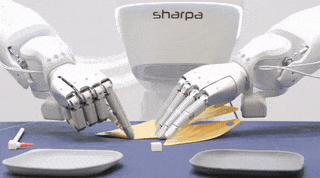
Core Insights - The CES 2026 event in Las Vegas showcased over 4,500 exhibitors, with around 1,000 being Chinese companies, highlighting the significant presence of Chinese enterprises in the consumer electronics sector [1] - A major theme at CES 2026 is the integration of AI capabilities into physical products, moving beyond screens into the real world [1] Group 1: Notable Exhibits - Sharpa introduced the humanoid robot Sharpa North, capable of performing tasks like playing table tennis and folding origami, showcasing advanced dexterity and AI capabilities [2][3] - Boston Dynamics' Atlas robot made its public debut, announcing plans to work in Hyundai's factories, with a production goal of 30,000 units annually starting in 2028 [4][6] - Vbot, a machine dog from Weita Power, can understand human language and navigate autonomously, demonstrating its ability to interact with users [6][7] Group 2: Innovative Robotics - Chasing introduced a stair-climbing robot that can carry a vacuum cleaner upstairs, enhancing cleaning capabilities in multi-level homes [9][11] - Hesai showcased a mini robot community using their JT series 3D LiDAR for autonomous movement and obstacle avoidance [11][13] - Onero H1, a household robot, can perform various tasks including cooking and organizing, and can coordinate with other smart devices [13][15] Group 3: AI and Smart Devices - LG's CLOiD robot can perform household chores and interact with users through voice and expressions, marking a significant upgrade from previous models [15][18] - Samsung's Ballie robot, despite previous delays, continues to be presented as a smart home assistant capable of monitoring health and controlling devices [18][20] - Fraimic, an AI "artist," can create new artwork based on user input and environmental factors, showcasing the blend of technology and creativity [22][24] Group 4: Health and Lifestyle Innovations - BreakReal introduced an AI cocktail machine that generates personalized drink recipes based on user preferences, aimed at enhancing social experiences [24][26] - Skyris presented a flying companion robot that can recognize emotions and respond accordingly, targeting the personal assistant market [26][29] - Satellai launched an AI collar for pets that tracks health and behavior, providing insights to pet owners [29][31] Group 5: Emerging Technologies - Teeni.AI introduced a camera for children that uses AI to enhance their understanding of the world through photography [31][33] - Plaud AI upgraded its recording device with physical buttons to improve usability, addressing previous design flaws [33][35] - Mui developed a wall-mounted device that monitors sleep and controls smart home appliances, integrating health tracking with home automation [39][45]
CES 2026首日结束,这20个产品有亮点
3 6 Ke· 2026-01-08 03:15
Core Insights - The CES 2026 event in Las Vegas showcases over 4,500 exhibitors, with around 1,000 being Chinese companies, highlighting the significant presence of Chinese enterprises in the consumer electronics sector [2] Group 1: Robotics Innovations - Sharpa introduced the humanoid robot Sharpa North, capable of performing tasks such as playing table tennis, taking photos, and folding origami, utilizing its advanced dexterous hand and self-developed models [3] - Boston Dynamics' Atlas robot made its public debut, designed for practical applications in Hyundai's factories, with plans to produce 30,000 units annually starting in 2028 [4] - Vbot, a machine dog from Weita Power, can understand human language and navigate autonomously, showcasing its ability to interact with users in multiple languages [5][6] - ZhiMi unveiled a stair-climbing robot that can carry a vacuum cleaner upstairs, enhancing cleaning capabilities in multi-level homes [8] Group 2: AI and Smart Home Devices - HeSai presented a "mini robot community" featuring various robots equipped with their JT series 3D LiDAR for autonomous navigation and obstacle avoidance [11] - Onero H1, a household robot, can perform multiple tasks including cooking and organizing, and can coordinate with other smart devices [13] - LG's CLOiD robot can perform household chores and interact with users through voice and expressions, marking a significant upgrade from previous models [15] - Samsung's Ballie, a spherical robot, aims to manage home electronics and monitor health, despite previous delays in its release [17] Group 3: AI-Driven Personalization - Fraimic, an AI "artist," can create personalized artwork based on user input and environmental factors [21] - BreakReal introduced an AI cocktail machine that generates custom drink recipes based on user preferences, set to launch on Kickstarter [24] - Skyris showcased a flying companion robot that can recognize user emotions and respond accordingly [26] - Satellai's AI collar for pets tracks health and behavior, providing insights and recommendations for pet care [32] Group 4: Innovative Gadgets - Teeni.AI's Mooni Pro camera encourages children to explore and express their creativity through photography [34] - Plaud AI upgraded its NotePin device with physical buttons for easier operation, addressing previous usability issues [36] - Mui's wall-mounted device monitors sleep patterns and controls smart home appliances, integrating functionality into a discreet design [44]