Vera

Search documents
Nvidia: Can AI Inference Really Drive a $1T Revenue Opportunity?
Investing· 2026-03-17 09:07
Core Insights - Nvidia is focusing on AI inference demand as a key driver for achieving a projected $1 trillion in revenue by 2027, moving beyond just AI training [1][2][3] Group 1: Company Strategy and Product Development - CEO Jensen Huang announced new products and a strategic shift towards CPUs, entering Intel's territory, and introduced chips utilizing Groq technology [2][3] - Nvidia's strategy includes selling complete systems, open-source models/software, and expanding into new markets such as data-center CPUs and space-based data centers [3][4] - The company aims to position itself as a comprehensive ecosystem provider, similar to Apple's integrated approach, by offering a full suite of AI models, tools, and services alongside its hardware [5][6] Group 2: Market Demand and Financial Projections - Huang highlighted a dramatic increase in compute demand, which has surged "a million times" in two years, asserting Nvidia's unique position to meet this demand [3][4] - Nvidia's data-center sales reached $192 billion in the past year, reflecting a 66% year-over-year increase, and the revenue target for data-center hardware has been raised from $500 billion to $1 trillion for 2025-2027 [4][6] Group 3: Competitive Landscape - Despite the positive outlook, Nvidia faces rising competition from AMD and customers developing in-house chips, leading to cautious investor sentiment [3][7] - The company has entered a licensing agreement with Groq for AI chips optimized for applications like chatbots, indicating a focus on enhancing its inference capabilities [6]


Nvidia GTC 2026: How To Watch Jensen Huang's Speech And Why Now Is 'Golden Opportunity For Patient Investors'
Benzinga· 2026-03-16 15:43
Core Viewpoint - The upcoming keynote speech by Huang at the GTC 2026 Conference is anticipated to be a significant event, potentially unveiling new products and updates on AI chips, software, and partnerships, which may present investment opportunities for shareholders [1][2][3]. Group 1: Keynote Details - Huang's keynote is scheduled for March 16 at 2 p.m. ET and will be available for viewing on Nvidia's YouTube page [1]. - The speech is expected to cover updates on products like Rubin and Vera, as well as the company's growing backlog of revenue opportunities and new partnerships [2]. Group 2: Investment Opportunities - Investors are looking for insights into Nvidia's latest AI chips, software ecosystem, and long-term plans for data centers and robotics, which could provide a buying opportunity for shares [3]. - The market is particularly interested in hearing about aggressive spending on AI from hyperscalers, with three key focus areas being chip updates, capital expenditure commitments, and demand from major partners [4]. Group 3: Stock Performance Insights - Despite strong quarterly earnings, Nvidia's stock has shown minimal gains since last summer, indicating a disconnect between technical performance and fundamental growth [5]. - Historical patterns suggest that Nvidia shares may remain stagnant for a period following record results before experiencing a breakout, reminiscent of trends observed in 2022 [6]. - Current stock performance shows Nvidia shares at $184.24, up 2.2% on the day, with a year-to-date decline of 2.4% in 2026, but a significant increase of 54.2% over the last 52 weeks [8].
Nvidia Q4 earnings: Can it push the AI trade higher — again?
Yahoo Finance· 2026-02-24 10:00
Core Viewpoint - Nvidia's upcoming earnings report is highly anticipated, with the market expecting significant results that could influence broader market sentiment and stock performance [1][5][27] Financial Expectations - Zacks Consensus Estimates predict Nvidia's fiscal Q4 2026 sales to reach $65.56 billion, a 66.7% year-over-year increase, with EPS at $1.52, up 70.8% [5] - Nvidia's own guidance includes revenue of $65 billion ±2%, with a gross margin of 74.8% GAAP and operating expenses of $6.7 billion GAAP [5] - Analysts are increasingly focused on Nvidia's April quarter, with expectations for revenue in the $74 billion-$75 billion range [7] Market Sentiment and Reactions - The stock's movement is heavily influenced by market expectations, with options traders anticipating a 6% price change following the earnings report [3] - There is a growing skepticism about the AI sector, which could lead to negative reactions to Nvidia's report, even if results are strong [10][18] Competitive Landscape - Nvidia faces increasing competition from companies like Alphabet and Meta, which are developing their own AI chips, potentially impacting Nvidia's market share [21][24] - The AI trade is broadening, with investor attention shifting to other AI leaders and adjacent beneficiaries, which may dilute Nvidia's perceived market leadership [24] Supply Chain and Demand Dynamics - Nvidia's growth is tied to the supply of high-bandwidth memory (HBM) chips, with increased production from suppliers like SK Hynix potentially easing supply constraints [20] - Customer leverage is becoming a concern, as major clients like Meta are exploring alternatives to Nvidia's chips, which could affect future sales [21][22] Future Guidance and Market Expectations - The market is looking for Nvidia to provide a narrative of acceleration in its guidance, rather than just maintaining current levels, to sustain investor confidence [6][11] - A strong forward guide that indicates demand outpacing supply is crucial for Nvidia to maintain its stock price and market position [14][28]
Nvidia Projects Sales of $65 Billion, AI Demand Strong
Youtube· 2025-11-19 21:46
Core Insights - The company has met buy-side expectations with a revenue of $57 billion and guidance for mid-sixties, which aligns with market anticipations [1][2] - Data center revenue for the third quarter reached $51.2 billion, exceeding expectations, indicating strong performance in this segment [2] - Concerns about spending peaking are alleviated by guidance suggesting continued growth, with targeted gross margins in the mid-seventies for Q4 [3] Financial Performance - The company reported a top-line revenue of $57 billion, with expectations for future revenue in the mid-sixties [1] - Third quarter data center revenue was $51.2 billion, significantly ahead of expectations [2] - The company is targeting gross margins in the mid-seventies for the upcoming quarter, indicating strong profitability [3] Product and Market Strategy - The company is focusing on adjacent products to GPUs, such as Grace and Vera, to drive revenue growth without relying solely on the total addressable market (TAM) [5] - Growth in networking products is seen as a positive indicator for the company's future performance [6] - The company is likely to benefit from new cloud solutions and sovereign data centers, which may lead to increased sales of comprehensive video solutions [6] Future Outlook - The CEO's ambitious projections for the company's future, including a $3 trillion market by 2030, are viewed with cautious optimism [8] - There is a desire for validation of revenue generation from inference applications, which are crucial for driving overall revenue [9] - The company is navigating challenges related to restrictions on advanced chip shipments to China, but is still performing well in the global market [10][12]
BlackLine(BL) - 2025 Q3 - Earnings Call Transcript
2025-11-06 23:00
Financial Data and Key Metrics Changes - Total revenue grew to over $178 million, up 7.5% year-over-year [38] - Subscription revenue increased by 7%, while services revenue grew by 13% due to accelerated project delivery [38] - Annual recurring revenue (ARR) reached $685 million, up 7.3% [39] - Non-GAAP operating margin was 21.4%, reflecting improved productivity [43] - Non-GAAP net income attributable to BlackLine was $38 million, representing a 21% margin [44] Business Line Data and Key Metrics Changes - New customer bookings increased by 45%, with the average new deal size more than doubling by 111% [7] - Strategic products accounted for 36% of sales, up from 32% last year [42] - SOLEX revenue accounted for 26% of total revenue, remaining steady [42] Market Data and Key Metrics Changes - Customer count reached 4,424, reflecting a strategic resegmentation away from lower-end customers [41] - Revenue renewal rate was 93%, up from the previous year, driven by strong enterprise performance [41] - Net retention rate for the quarter was 103%, despite a headwind from foreign exchange [41] Company Strategy and Development Direction - The company is focused on accelerating revenue growth and margin expansion as it transitions to a platform-based pricing model [6][12] - Emphasis on winning larger, more strategic platform deals against major competitors [7] - Continued progress in the public sector, with expectations for FedRAMP approval in early 2026 [11] - The company is modernizing its technology stack to support scalable, efficient, and AI-powered innovation [18][20] Management's Comments on Operating Environment and Future Outlook - Management expressed confidence in delivering sustained profitable growth, supported by a strong pipeline and operational improvements [36][48] - The macro environment is currently stable, with potential tailwinds from corporate job layoffs creating opportunities for efficiency discussions with customers [100] - The strategic transition to platform pricing is expected to take time but is viewed positively for long-term customer commitment [13][72] Other Important Information - The company returned approximately $113 million to shareholders through share repurchases, reflecting confidence in long-term value [44] - The planned churn from the strategic de-emphasis of lower-end market customers is nearing completion [14] Q&A Session Summary Question: Impact of large customers pausing user ads - Management acknowledged that some deals slipped into Q4, costing a couple of million dollars, but noted an increase in larger enterprise deals [53][54] Question: Automation and customer attrition - Management explained that success-based attrition is occurring as customers achieve higher efficiency with fewer licenses, which is a positive long-term trade-off [72] Question: Factors driving expected bookings growth - Management highlighted the importance of changing conversations to focus on digital finance transformation and deepening relationships with partners [85][86] Question: Competitive takeaways - Management noted an uptick in competitive wins, attributing it to the company's proven track record and improved implementation quality [88][89] Question: SAP relationship and pipeline building - Management confirmed a solid relationship with SAP, focusing on joint customer success and reducing attrition [96][97] Question: Macro environment characterization - Management indicated that the current macro environment is stable, with no significant impacts from tariffs, and noted potential tailwinds from job layoffs [100]

Arm服务器芯片,太猛了
半导体行业观察· 2025-09-13 02:48
Core Insights - Arm's presence in the server market is rapidly increasing, with its CPU market share reaching 25% in Q2 2025, up from 15% a year prior [1] - The growth is primarily driven by the widespread adoption of Nvidia's Grace-Blackwell architecture-based computing platforms [1][2] Group 1: Grace-Blackwell Platform Impact - Each NVL72 system, consuming 120 kW, is equipped with 72 Blackwell GPUs and 36 Grace CPUs, optimized for data transfer using Nvidia's custom NVLink-C2C interface [2] - The initial systems were shipped in small quantities at the end of last year, with upgraded versions based on Blackwell Ultra architecture starting delivery in Q2 this year [2] - Arm's server market share previously relied heavily on custom cloud chips like AWS Graviton, but now revenue from Grace is comparable to cloud GPUs [2] Group 2: Cloud Vendors and Arm's Strategy - AWS has invested in custom Arm chips since 2018, while Microsoft and Google have recently launched their own Arm CPUs, Cobalt and Axion, respectively [3] - Despite rapid progress, Arm's 25% market share is still significantly below the 50% target set for the end of 2025 [3] Group 3: Future Outlook - Arm's market share is expected to continue growing, with Nvidia developing a new Arm CPU codenamed Vera and Qualcomm and Fujitsu advancing their next-generation server chips [4] - Arm's ambitions extend beyond the server market, with predictions that by 2029, half of all Windows PCs sold globally will be powered by Arm chips [4] Group 4: Market Growth Driven by AI - The server and storage component market is projected to grow by 44% year-on-year by Q2 2025, driven by AI investment expansion [5] - Sales of SmartNICs and Data Processing Units (DPUs) have nearly doubled, benefiting from the trend of AI clusters migrating to Ethernet architectures [5] - Custom AI ASIC shipments have reached parity with GPUs, although GPUs still dominate revenue in the accelerator market [5]


Prediction: This Artificial Intelligence (AI) Stock Could Hit a $10 Trillion Valuation by 2035
The Motley Fool· 2025-08-01 09:00
Group 1: AI Industry Potential - The world is entering a golden age of artificial intelligence (AI), with a potential total addressable market of $40 trillion [1][4] - Companies are investing billions in AI infrastructure, indicating strong belief in AI's transformative potential [1][4] - Data center investments are projected to reach $7 trillion over the next five years, supporting the growth of AI technologies [5] Group 2: Nvidia's Market Position - Nvidia has a dominant share of chips used in AI data centers, significantly boosting its financial performance [2][6] - The company's market capitalization has reached $4.2 trillion, with predictions of it growing to $10 trillion in the next decade [2][11] - Nvidia's revenue is expected to grow from $200 billion in fiscal year 2026 to $618 billion by fiscal year 2035, reflecting a sustained growth trajectory [11][12] Group 3: Future Developments and Sales - Nvidia has received U.S. government approval to resume selling H20 chips to China, potentially adding $15 billion in sales in the latter half of the year [9] - The company is advancing its superchip, Rubin, and its first custom CPU, Vera, which are expected to enhance performance in AI applications [10] - Analysts estimate Nvidia's sales will increase by 53% in fiscal year 2026 and 26% in fiscal year 2027, indicating strong ongoing demand [11] Group 4: Valuation Insights - Nvidia's current price-to-sales (P/S) ratio is 29, with expectations that it will need to trade at just over 16 times its estimated 2035 sales to achieve a $10 trillion valuation [13][14] - The stock's valuation has fluctuated between 20 and 40 since the AI boom began in early 2023, reflecting market volatility [13]
NVIDIA GTC 2025:GPU、Tokens、合作关系
Counterpoint Research· 2025-04-03 02:59
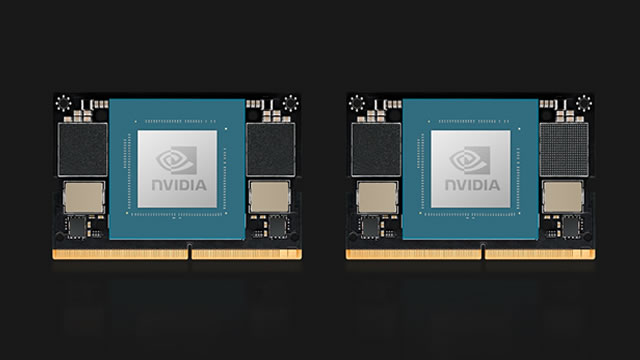
Core Viewpoint - The article discusses NVIDIA's advancements in AI technology, emphasizing the importance of tokens in the AI economy and the need for extensive computational resources to support complex AI models [1][2]. Group 1: Chip Developments - NVIDIA has introduced the "Blackwell Super AI Factory" platform GB300 NVL72, which offers 1.5 times the AI performance compared to the previous GB200 NVL72 [6]. - The new "Vera" CPU features 88 custom cores based on Arm architecture, delivering double the performance of the "Grace" CPU while consuming only 50W [6]. - The "Rubin" and "Rubin Ultra" GPUs will achieve performance levels of 50 petaFLOPS and 100 petaFLOPS, respectively, with releases scheduled for the second half of 2026 and 2027 [6]. Group 2: System Innovations - The DGX SuperPOD infrastructure, powered by 36 "Grace" CPUs and 72 "Blackwell" GPUs, boasts AI performance 70 times higher than the "Hopper" system [10]. - The system utilizes the fifth-generation NVLink technology and can scale to thousands of NVIDIA GB super chips, enhancing its computational capabilities [10]. Group 3: Software Solutions - NVIDIA's software stack, including Dynamo, is crucial for managing AI workloads efficiently and enhancing programmability [12][19]. - The Dynamo framework supports multi-GPU scheduling and optimizes inference processes, potentially increasing token generation capabilities by over 30 times for specific models [19]. Group 4: AI Applications and Platforms - NVIDIA's "Halos" platform integrates safety systems for autonomous vehicles, appealing to major automotive manufacturers and suppliers [20]. - The Aerial platform aims to develop a native AI-driven 6G technology stack, collaborating with industry players to enhance wireless access networks [21]. Group 5: Market Position and Future Outlook - NVIDIA's CUDA-X has become the default programming language for AI applications, with over one million developers utilizing it [23]. - The company's advancements in synthetic data generation and customizable humanoid robot models are expected to drive new industry growth and applications [25].