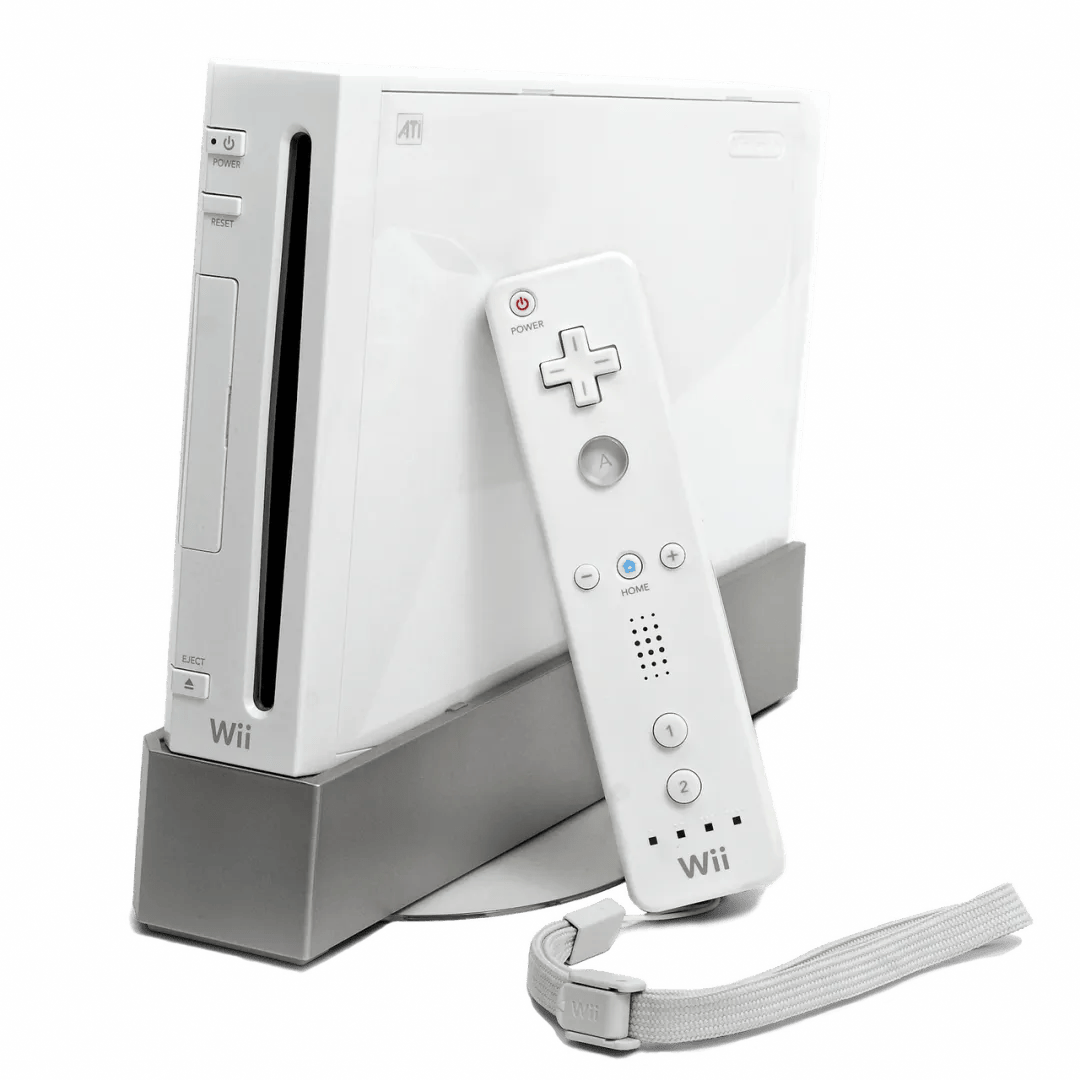
Wii

Search documents

Nintendo Switch becomes the gaming giant's best-selling console ever
CNBC· 2026-02-03 11:31
Core Insights - The Nintendo Switch has become the company's best-selling console of all time, with lifetime sales reaching 155.37 million units, surpassing the previous record held by the Nintendo DS [3] - The Switch's success marks a significant turnaround for Nintendo, which faced challenges following the poor performance of the Wii U, leading to a tripling of the company's valuation since the Switch's release [2][3] Product Evolution - The Switch was launched in March 2017, following the Wii U's failure, which sold only 13.56 million units compared to the Wii's 100 million [5] - The Switch combines the features of both handheld and traditional consoles, allowing users to play on a large screen or on the go, thus merging Nintendo's dual product strategy into a single offering [6][7] Market Timing and Strategy - The timing of the Switch's release was crucial, as it countered the rising popularity of mobile gaming, which had negatively impacted the sales of previous consoles like the 3DS and Wii U [8] - Nintendo's strategy included leveraging its popular franchises and characters, with titles like "Mario Kart 8 Deluxe" selling over 70 million units, contributing to the console's popularity [9][10] Expansion of Intellectual Property - Nintendo has broadened its intellectual property reach beyond consoles, engaging in collaborations with theme parks, movies, and toys, which helped maintain interest in the Switch [11] - The recent success of the Super Mario movie in 2023 also revitalized interest in the Switch, demonstrating the effectiveness of this strategy [10][11] Future Prospects - Nintendo aims to replicate the success of the Switch with the recently launched Switch 2, which has already sold over 14 million units, making it the fastest-selling console in the company's history [12]



什么样的人,能在这个时代里活得很好?
Sou Hu Cai Jing· 2025-12-12 21:13
Core Insights - The current era rewards stability and prudence in business practices [2][27] - Companies with strong cash reserves can navigate challenges more effectively [18][27] Group 1: Case Study of Nintendo - Nintendo revolutionized the gaming industry with the launch of Wii, selling over 100 million units and significantly increasing its market value [5][24] - The failure of Wii U led to substantial losses, with stock prices plummeting back to 10,000 yen and market value evaporating by over 85% [9][10] - Despite pressure from the market to cut costs and pivot to software, Nintendo's leadership maintained a conservative financial strategy, preserving cash reserves of over 1 trillion yen [17][18] - This financial stability allowed Nintendo to retain talent, invest in R&D, and explore innovative ideas without immediate pressure for profitability [20][21][22] - The successful launch of the Switch in 2017, which sold over 140 million units, marked a significant recovery for Nintendo [24][25] Group 2: Principles of Stability - Companies should maintain a robust cash reserve to ensure operational flexibility during downturns [27][35] - Stability encompasses three key aspects: capability stability, financial stability, and mental resilience [33][34][35] - The ability to adapt and learn new skills is crucial for long-term success in a changing market [34] - Financial stability provides the freedom to make choices without immediate economic pressure [35] - Mental resilience allows individuals and companies to navigate challenges while maintaining a clear strategic vision [36]
Why Nintendo Stock Got Rocked Today
Yahoo Finance· 2025-09-17 20:33
Group 1 - Nintendo's U.S.-listed equity faced a decline of over 3% following a downgrade by Wedbush Securities, while the S&P 500 index only slid by 0.1% [1] - Analyst Alicia Reese lowered her recommendation on Nintendo's Japan-listed equity from outperform to neutral, setting a price target of 14,000 yen ($95.36) per share [2] - The downgrade was influenced by high expectations for the recently released Switch 2 hybrid video game console, which has seen strong initial sales but faces challenges in meeting inflated sales estimates [3][4] Group 2 - The Switch 2 is priced 50% higher than its predecessor, making it difficult to surpass the sales records of the original Switch and the Wii, which are the top-selling consoles of all time [5] - The Motley Fool Stock Advisor has identified 10 stocks they believe are better investment opportunities than Nintendo, indicating a cautious outlook on Nintendo's future performance [6][7]
好好的大公司,怎么就病了?
3 6 Ke· 2025-07-23 02:45
Core Insights - The concept of "big company disease" refers to large, once-successful enterprises that gradually lose vitality and competitiveness, leading to stagnation or decline [2][14] - The article discusses the symptoms of "big company disease," including strategic misalignment, organizational dysfunction, and innovation stagnation [2][11] Strategic Misalignment - The first symptom of "big company disease" is strategic misalignment, where companies lose focus on their core mission and begin to expand into unrelated markets without a unified strategy [2][5] - Frequent changes in strategic direction can lead to confusion and resource misallocation, as seen in companies like HTC and Meituan [3][5] - Companies that maintain a clear strategic focus, like Nintendo, are more likely to succeed [2][5] Organizational Dysfunction - The second symptom is organizational dysfunction, characterized by slow decision-making processes and a lack of effective communication within the organization [7][8] - As companies grow, their decision-making structures can become cumbersome, leading to missed opportunities, as illustrated by Giordano's slow response to e-commerce challenges [7][8] - Internal competition for resources can create inefficiencies, as seen in companies like Vanke and Wang An Computer, where departments operate in silos [8][9] Innovation Stagnation - The third symptom is a decline in innovation capabilities, where companies become risk-averse and fail to pursue groundbreaking ideas [11][12] - Companies may continue to release new products, but these often lack true innovation and merely extend existing lines, as demonstrated by Blackberry and Sony [11][12] - The article emphasizes that true innovation requires a willingness to explore new possibilities rather than relying solely on past successes [16][21] Underlying Mechanisms - The article identifies three interrelated mechanisms that contribute to "big company disease": success traps, internal drive imbalance, and short-termism [14][18][21] - Success traps occur when companies become overly reliant on past successful strategies, leading to a decline in adaptability [15][16] - Internal drive imbalance arises from bureaucratic structures that prioritize risk avoidance over value creation, resulting in a lack of responsiveness to market changes [18][19] - Short-termism manifests as a focus on immediate financial performance at the expense of long-term strategic goals, stifling innovation and growth [21][23] Conclusion - The article concludes that while "big company disease" is a real phenomenon, it is not insurmountable. Companies can still become great by embracing self-renewal, maintaining customer sensitivity, and fostering a culture of innovation [23][24]