Windows 3.1

Search documents
Microsoft Stock: How To Find & Own America's Greatest Opportunities
Investors· 2026-03-25 12:00
Microsoft Stock: How To Find America's Greatest Opportunities | Investor's Business Daily Microsoft Stock: Windows Evolves Microsoft then offered Windows 3.0 on May 22, 1990. Along with Windows 3.1, announced in 1992, they sold 10 million copies in the first two years. Microsoft broke out of a 28-week cup-with-handle chart basein early September 1989 at about 20, adjusted for all the stock splits that occurred. We note thereafter times not to buy and why, as well as times to not get scared out and sell, plu ...

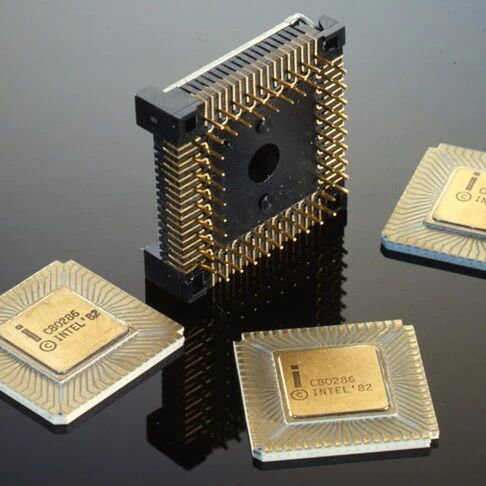
44年前的今年,英特尔286面世
半导体行业观察· 2026-02-02 01:33
Core Insights - The Intel 80286 processor, launched in 1982, significantly improved performance and architecture compared to its predecessors, the 8086 and 8088, and became widely used in personal computer systems until the 1990s [2][6]. Group 1: Development and Features - The development of the 80286 began in 1978, following extensive customer research to determine the next generation of CPUs [2]. - The 80286 featured 134,000 transistors, a 16-bit architecture, and a 24-bit internal operation, making it the first x86 CPU with a protected mode and memory management unit (MMU) [4]. - Memory support increased from a maximum of 1MB in the 8086 to 16MB in the 80286, and it could be paired with the 80287 math coprocessor for enhanced performance in applications requiring fast floating-point calculations [6]. Group 2: Performance Improvements - The 80286 CPU achieved significant performance and energy efficiency improvements, reportedly being 100% faster than the 8086 at the same clock frequency [6]. - The operating frequency of the 80286 was higher, with Intel and AMD eventually pushing it to 25 MHz, compared to the 8086's maximum of 10 MHz, resulting in performance improvements of 300% to 500% over its predecessor [6]. Group 3: Market Impact and Legacy - The introduction of the IBM PC/AT in 1984, which utilized the 80286 processor, significantly boosted its market presence and led to a wave of clone machines [7]. - By May 1988, Intel's Fab 3 factory had produced and shipped 10 million 80286 chips, indicating its widespread adoption in personal computers [7]. - The transition to the next generation, the 80386, was gradual due to the 286's competitive pricing and sufficient performance, although the dominance of DOS limited the 386's potential [8].


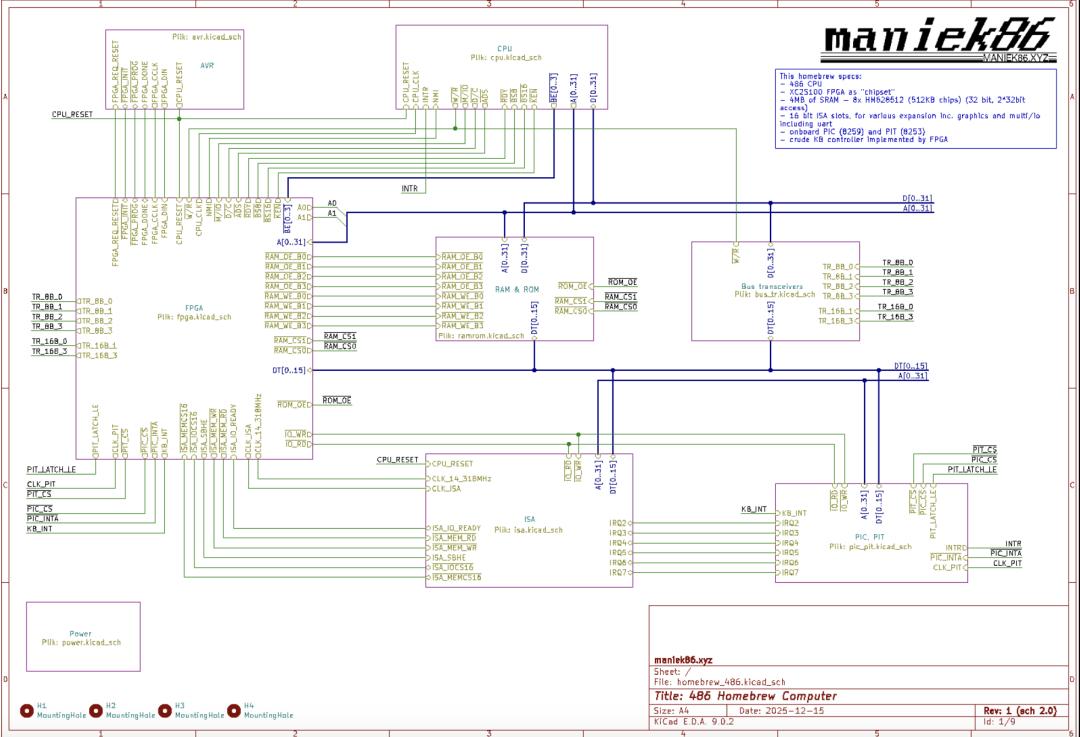
硬核:程序员爆肝6个月从零手搓486主板,画原理图、焊芯片全搞定,Linux、DOOM、Win3.1都跑起来了
3 6 Ke· 2026-01-26 13:25
Core Insights - The project led by Maniek86 resulted in the creation of a fully functional Intel 486 architecture motherboard, named M8SBC-486, designed from scratch in under six months [1][4][5]. Project Overview - The initial goal was to create a retro motherboard capable of running Linux and the classic game DOOM, which evolved into a comprehensive PC replication experiment [4][5]. - The M8SBC-486 motherboard is open-sourced, allowing enthusiasts to participate and contribute to its development on GitHub [3][13]. Technical Specifications - The M8SBC-486 measures 150 × 150 mm, smaller than the Mini-ITX standard, and features a PGA-168 socket supporting 5V 486 processors [9]. - It includes a Xilinx Spartan II XC2S100 FPGA as the chipset, 4 MB SRAM, and 256 KB ROM for BIOS [9]. Software Compatibility - The motherboard successfully runs various operating systems, including MS-DOS, FreeDOS, and Linux, and can partially support Windows 3.1 [10][11]. - Classic DOS games such as DOOM and Wolfenstein 3D run smoothly, demonstrating its capabilities [11][12]. Future Prospects - Maniek86 aims to enhance PC compatibility and improve ISA expansion in future iterations of the project [15].