XBC电池

Search documents
光伏首家“A+H”股!该企业成功在香港主板上市
Sou Hu Cai Jing· 2025-05-09 06:34
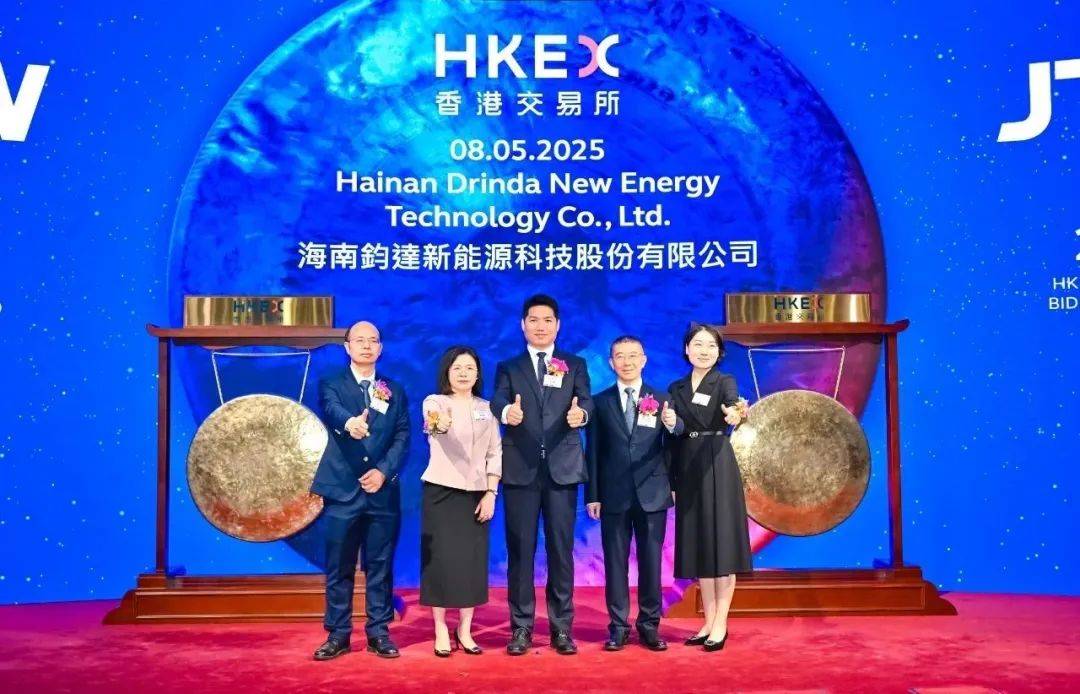
Core Insights - The third XBC Battery and Component Technology Forum 2025 will be held on May 15-16 in Jiaxing, focusing on advancements in photovoltaic technology and market trends [6][13]. Company Developments - JunDa Co., Ltd. officially listed on the Hong Kong Stock Exchange on May 8, becoming the first photovoltaic company to operate under an "A+H" dual capital platform [2][4]. - The company issued 63.43 million shares at a price of HKD 22.15 per share, with proceeds aimed at establishing overseas photovoltaic cell production bases and enhancing technology research and development [4]. - JunDa's N-type battery technology has achieved a conversion efficiency of over 26.3%, with a 30% reduction in non-silicon costs, establishing a competitive edge in the market [4][5]. Industry Trends - The global demand for photovoltaic products is increasing, with JunDa's overseas sales rising from 23.85% in 2024 to 58.00% in Q1 2025, indicating strong market penetration [5]. - The XBC battery technology is gaining traction, with significant advancements in efficiency and production capacity expected in 2025, driven by leading companies in the industry [12][14]. - The market share of XBC batteries is projected to increase significantly, with estimates suggesting a market share of approximately 5% in 2024 compared to 2023 [12]. Forum Agenda Highlights - The forum will cover topics such as the competitive landscape of XBC, TOPCon, and heterojunction batteries, as well as the advantages of XBC components in distributed applications [13][14]. - Key discussions will include advancements in TBC, HBC, and HTBC technologies, cost reduction strategies, and the application of advanced conductive pastes and metallization techniques in XBC batteries [14][15].

光伏电池片行业深度研究
2025-04-15 14:30
Summary of Conference Call Transcript Industry Overview - The focus is on the photovoltaic (PV) industry, specifically the solar cell segment, which is a core technology in the solar power generation chain. The efficiency of solar cells directly impacts the overall cost of solar power generation [1][2]. Key Points and Arguments - **Technological Advancements**: The solar cell segment has undergone several technological revolutions over the past decade, significantly impacting the efficiency and cost of solar power generation [1]. - **Capital and Technical Intensity**: The solar cell industry is characterized as both capital and technology-intensive, with high barriers to entry. The investment per unit capacity for solar cells is significantly higher than for downstream components [2]. - **Global Capacity Expansion**: There has been rapid expansion of overseas production capacity for solar cells, particularly in the US, India, and Turkey, leading to increased import demand for solar cells [3]. - **Export Trends**: In 2022, China's exports of solar cells, wafers, and modules saw a mixed performance, with solar cell exports increasing by 46% year-on-year, while wafers and modules experienced declines [3]. - **Price Dynamics**: Despite increased export volumes, the price of solar cells has significantly decreased, with a projected 37% year-on-year drop in export value for 2024 [4]. - **Trade Barriers**: Countries like India and Turkey have imposed tariffs on imported solar cells, while the US has complex tariff structures that have limited imports from China [6][9]. - **Market Dynamics**: The US market for solar cells is particularly lucrative, with prices significantly higher than in other markets, making it an attractive target for Chinese manufacturers despite trade barriers [9][10]. Additional Important Insights - **N-Type vs. P-Type Technology**: The industry is shifting from P-type to N-type solar cells, with N-type cells expected to dominate the market due to their higher efficiency [11][12]. - **Market Concentration**: The market for N-type solar cells is more concentrated than the overall market, with leading companies holding significant market shares [17][18]. - **Profitability Challenges**: The industry is currently facing overcapacity, leading to declining profit margins. However, leading companies are expected to maintain their competitive advantages and potentially recover profitability by 2025 [19][24]. - **Government Policies**: Recent government policies aimed at stabilizing the market and preventing excessive competition are expected to positively impact the industry [22][23]. - **Investment Opportunities**: Companies like Topcon and Junda are highlighted as key players with strong market positions and potential for future growth, particularly in the N-type segment [25][26]. Conclusion - The photovoltaic industry is experiencing significant changes driven by technological advancements, trade dynamics, and market shifts towards N-type solar cells. Despite current profitability challenges, leading companies are well-positioned for recovery and growth in the coming years.
【国金电新】光伏新技术25Q1跟踪:TOPCon优势进一步强化,金属化工艺变革在即
新兴产业观察者· 2025-04-06 11:12
Investment Logic - The article highlights investment opportunities in the photovoltaic sector, particularly focusing on new technologies. Three main lines of investment are suggested: 1) Leading TOPCon battery companies expected to achieve profit recovery; 2) New technology equipment manufacturers with growth potential; 3) Suppliers of low-silver or silver-free metallization paste solutions [2][3][4]. TOPCon Route - The profitability of battery components is continuously recovering, with leading companies expected to accelerate capacity upgrades. As demand improves, prices in the supply chain have risen, with silicon wafers, batteries, and components increasing by 7%, 13%, and 7% respectively since mid-February [2][6]. - By the end of 2025, the non-silicon cost of leading companies' TOPCon batteries is projected to drop below 0.13 yuan/W, enhancing competitive advantages among top firms [2][22]. XBC Route - The market interest in XBC technology has significantly increased, with an estimated production capacity nearing 50GW and construction capacity close to 45GW. Major companies like Longi and Aiko are leading this development [3][28]. - The price premium for BC components over TOPCon components remains around 0.05 yuan/W, indicating a competitive edge for BC technology [3][38]. HJT Route - The HJT technology is gaining market share, with a total planned capacity exceeding 100GW and actual capacity around 40-45GW. The efficiency of HJT components is expected to improve significantly, with projections of reaching 750W by early 2026 [4][47]. - HJT components are currently priced at a premium of approximately 0.05 yuan/W over TOPCon components, with cost differences narrowing as production scales up [4][55]. Metallization Process - The trend towards low-silver or silver-free solutions is becoming prominent, with silver paste prices rising significantly. The introduction of silver-copper paste is expected to reduce metallization costs by over 0.01 yuan/W [5][58]. - The industry is focusing on reducing silver consumption, with silver-copper paste already being applied in HJT batteries, indicating a shift towards more cost-effective solutions [5][63].