
光伏技术升级

Search documents
奥特维(688516):0BB/多分片等推动国内外订单放量
HTSC· 2026-03-16 12:08
Investment Rating - The investment rating for the company is maintained as "Buy" with a target price of RMB 92.40 [1]. Core Views - The company has seen a gradual increase in orders for its 0BB, multi-slice string welding machines, and other battery and component equipment since 2025. The upgrade of domestic TOPCon 0BB and multi-slice technologies, along with the expansion plans of Tesla and SpaceX, are expected to drive continued order growth for the company [1][2]. - The company has secured multiple orders for multi-slice and 0BB technologies, including a contract worth approximately RMB 700 million for string welding machines, which will be delivered starting December 2025. Additionally, the company has launched a copper paste/silver-coated copper printing solution aimed at next-generation battery technologies [2]. - The company maintains its leading position in the multi-busbar string welding technology and has developed various technologies such as SMBB, 0BB, and multi-slice. This technological advancement is expected to enhance the company's competitive edge in overseas markets, particularly with the expansion of solar capacity by Tesla and SpaceX [3]. - The company's platform layout is accelerating in areas such as optical modules, semiconductor equipment, solid-state batteries, energy storage, and perovskite technology. This diversification is anticipated to open a second growth curve for the company [4]. Financial Forecast and Valuation - The company's net profit forecasts for 2025-2027 have been revised downwards to RMB 444 million, RMB 663 million, and RMB 782 million, respectively, reflecting a cautious adjustment due to the slowdown in revenue recognition during the photovoltaic industry downturn [5]. - The company is expected to benefit from domestic technological upgrades and the expansion of overseas enterprises, which will likely enhance future photovoltaic orders. The target price is set at RMB 92.40, corresponding to a PE ratio of 44 times for 2026 [5].

被誉下一代光伏路线的技术再获突破,行业关注“技术驱动的新一轮扩产窗口”
Xuan Gu Bao· 2026-02-26 23:29
Industry Insights - The photovoltaic industry is undergoing a critical technological iteration phase, with TOPCon prices declining, compressing profit margins and necessitating the introduction of new technologies [1] - By 2026, the photovoltaic equipment industry is expected to enter a new structural expansion window driven by technological upgrades, supported by favorable policies for high efficiency and low energy consumption routes [1] - The global share of China's photovoltaic main industry chain has increased to approximately 90%, showcasing its core competitiveness in equipment technology and mass production capabilities [2] Company Developments - Jincheng Co. has successfully entered the semiconductor field with its PERTOP + HJT + perovskite + component equipment, alongside successful shipments of horizontal PVD equipment [3] - Jiejia Weichuang is focusing on the development and process optimization of equipment suitable for space environments, leveraging its self-developed PECVD and PVD core equipment [3]
东吴证券:光伏设备商基本面筑底 看好太空算力应用场景打开&海外地面需求增长
智通财经网· 2026-02-24 06:24
Core Viewpoint - The solar photovoltaic (PV) industry is expected to undergo a significant adjustment in 2025, with a recovery in equipment orders anticipated in 2026 as supply-side improvements and demand from overseas markets emerge [1]. Group 1: Industry Outlook - The fundamental aspects of the solar PV market are expected to be fully cleared by 2025, leading to a phase of deep adjustment characterized by increased losses among main chain companies and a slowdown in capacity expansion [1]. - Leading equipment manufacturers are enhancing cash flow management through collection models like "3421/3601," focusing on receivables from top clients, which mitigates operational risks [1]. - The acceleration of the elimination of outdated capacity and the gradual optimization of industry standards and pricing mechanisms signal clear improvements on the supply side [1]. Group 2: Technological Advancements - The application of space computing is accelerating, transitioning solar energy from ground-based systems to orbital energy systems, which opens up long-term growth potential for the industry [1]. - The shift from high-cost gallium arsenide to more cost-effective and scalable silicon-based technologies is expected during the scaling phase, with HJT technology showing advantages in weight reduction and adaptability [1]. Group 3: Demand Drivers - The overseas ground demand is projected to be a significant source of incremental growth in 2026, driven by the U.S. and Middle East markets [2]. - The U.S. is maintaining high installation levels, with domestic manufacturing policies enhancing supply chain security and cost control, particularly benefiting HJT technology due to its lower operational costs [2]. - Middle Eastern countries are increasing their installation plans, with Chinese main chain companies accelerating local factory setups, leading to a clear trend of rising overseas revenue [2]. Group 4: Technological Iteration - The ongoing price decline of TOPCon technology is compressing profit margins, necessitating the introduction of new technologies [3]. - The Ministry of Industry and Information Technology is promoting advanced capacity to replace outdated capacity, favoring high-efficiency and low-energy consumption routes [3]. - HJT technology is achieving breakthroughs in production efficiency and silver consumption, further enhancing cost advantages amid rising silver prices [3]. Group 5: Investment Recommendations - The company recommends focusing on leading firms in HJT technology, low-oxygen monocrystalline furnaces, automated components, and ultra-thin silicon wafer cutting equipment as key investment opportunities [4].




光伏产业链技术升级与新场景机会
Dongguan Securities· 2026-01-30 07:31
Group 1 - The report highlights a transition in the photovoltaic (PV) industry from scale competition to efficiency and structural optimization, driven by the implementation of anti-involution policies. The focus is shifting from mere installation scale to cost reduction paths and structural increments under different technology routes [6][15][50] - The global cumulative installed capacity of photovoltaic systems is projected to increase from 1.6 TW in 2023 to over 2.2 TW by the end of 2024, with an additional installation of over 600 GW [13][14] - The report indicates that the profitability of the main PV industry chain is gradually stabilizing, with a shift in focus towards efficiency improvement and quality development, moving away from low-efficiency competition characterized by price wars [15][22] Group 2 - The report identifies the current technological landscape in the PV industry as a coexistence of multiple technologies, with TOPCon as the main route, supported by BC and HJT technologies. TOPCon is expected to dominate with a projected capacity of approximately 967 GW by the end of 2025, accounting for 83% of global battery capacity [26][29] - BC technology is gaining traction due to its advantages in distributed and high-end markets, with a projected capacity of 83 GW by the end of 2025, while HJT technology, despite its efficiency advantages, faces challenges due to high costs [29][30] - The report emphasizes the acceleration of perovskite technology towards commercialization, with the first GW-scale production line expected to be operational in early 2025, marking a significant milestone in the industry's transition to large-scale production [31][33] Group 3 - The report discusses the emergence of extreme application scenarios, such as space solar power, which require stringent performance standards for PV products, including lightweight design and radiation resistance. The market for space solar cells is expected to grow from $1.38 billion in 2025 to $1.55 billion in 2026, with a compound annual growth rate of 12.3% [35][36] - The report outlines the importance of the North Exchange related companies, such as Liancheng CNC, which has established a strong R&D barrier and a global production network, providing integrated services in the PV and semiconductor equipment manufacturing sectors [39][42] - The investment strategy suggests focusing on three key areas: equipment and materials benefiting from TOPCon technology, key processes and auxiliary materials in the upgrade of BC and HJT technologies, and forward-looking targets in perovskite and space solar applications [50]
海外需求与技术升级助力光伏,光伏ETF嘉实(159123)聚焦光伏全产业链机遇
Xin Lang Cai Jing· 2026-01-12 02:31
Group 1 - The core viewpoint of the news highlights a strong performance in the photovoltaic industry, with the China Securities Photovoltaic Industry Index rising by 1.83% and key stocks such as Dongfang Risheng and Maiwei shares experiencing significant gains [1] - The National Development and Reform Commission and the National Energy Administration have jointly issued guidelines to promote the consumption and regulation of renewable energy, establishing a systematic framework driven by market and innovation [1] - The recent "2025 Photovoltaic Industry Annual Conference" focused on strategies to address "involution" competition, releasing initiatives for standard application and supply chain quality, signaling a strong commitment to institutional development and unified rules [1] Group 2 - As of December 31, 2025, the top ten weighted stocks in the China Securities Photovoltaic Industry Index include TBEA, LONGi Green Energy, and Sungrow Power, collectively accounting for 55.11% of the index [2] - The photovoltaic ETF managed by Harvest (159123) tracks the China Securities Photovoltaic Industry Index, providing a convenient tool for investing across the entire photovoltaic industry chain [3] - Investors can also access the photovoltaic ETF through an off-market connection (014605) to capitalize on investment opportunities within the photovoltaic industry chain [4] Group 3 - According to Zheshang Securities, the power equipment industry is expected to benefit from increased overseas demand, particularly optimistic about exports to the U.S. amid easing trade disputes, which may lead to growth in exports related to power and renewable energy equipment [1] - The photovoltaic equipment sector is entering a bottoming phase, with the worst period already experienced, but the themes of "cost reduction and efficiency enhancement" and "technological innovation" remain crucial [1] - The industry is advised to pay attention to the potential changes in competitive landscape due to the promotion of "anti-involution" policies and the localization of overseas renewable energy industries [1]
隆基绿能(601012):BC产能稳步推进 Q4有望实现扭亏
Xin Lang Cai Jing· 2025-09-16 12:28
Core Insights - The company reported a revenue of 32.813 billion yuan in the first half of 2025, a year-on-year decrease of 14.8%, and a net profit attributable to shareholders of -2.569 billion yuan, a reduction in losses of 50.9% year-on-year [1] - In Q2 2025, the company achieved a revenue of 19.161 billion yuan, a year-on-year decrease of 8.1%, but a quarter-on-quarter increase of 40.3% [1] - The company is focusing on enhancing its BC (Bifacial Cell) technology and expanding its production capacity to create a differentiated competitive advantage in a challenging market environment [3] Revenue and Profitability - The company experienced a significant reduction in losses in Q2 2025, with a net profit of -1.133 billion yuan, reflecting a year-on-year reduction in losses of 60.7% and a quarter-on-quarter reduction in losses of 21.1% [1] - The company's gross margin improved quarter-on-quarter, indicating signs of recovery in profitability [4] Production and Sales Performance - In the first half of 2025, the company shipped 52.08 GW of silicon wafers and 41.85 GW of battery components, with BC component shipments around 4 GW [2] - The company is actively working on the second generation of BC capacity and has begun production of HPBC2.0 battery capacity, which is expected to exceed 60% of total production by the end of 2025 [3] Technological Advancements - The company has developed the HIBC (High-Temperature and Low-Temperature Composite Passivation Back Contact) technology, achieving a component power output of over 700W and an efficiency of 25.9% [4] - The introduction of HPBC2.0 technology products is expected to enhance the company's market penetration and competitive edge [3] Future Outlook - The company forecasts net profits attributable to shareholders of -2.687 billion yuan in 2025, 2.752 billion yuan in 2026, and 5.088 billion yuan in 2027, indicating a potential recovery trajectory [4]

钧达股份(02865.HK)中期亏损达2.64亿元
Ge Long Hui· 2025-08-25 08:42
Core Insights - The company reported a revenue of RMB 3,655.6 million for the six months ending June 30, 2025, a decrease of approximately 42.5% compared to RMB 6,355.4 million in the same period of 2024 [1] - The decline in revenue was primarily due to a 67.9% decrease in the mainland China market, attributed to reduced sales of photovoltaic cells and a drop in current market prices [1] - This decline was partially offset by a significant increase of 116.2% in revenue from markets outside mainland China, indicating a strategic shift towards globalization, including the expansion of overseas markets and enhancement of international sales networks [1] - The company recorded a loss of RMB 263.7 million for the first half of 2025, compared to a loss of RMB 166.3 million in the same period of 2024 [1] Technology and Efficiency Improvements - In the first half of 2025, the company focused on core photovoltaic technologies, continuously optimizing and upgrading N-type cell processing technology [1] - Various cost-reduction and efficiency-enhancing measures were implemented, including metal composite reduction, improved passivation performance, optimized optical performance, and finer grid lines [1] - The average production conversion efficiency of the company's cells increased by over 0.2%, while the non-silicon cost per watt decreased by approximately 20% [1]

15个月亏损近800亿,光伏主产业链寻找出路
Cai Jing Wang· 2025-06-19 08:29
Core Viewpoint - The photovoltaic industry is currently facing significant losses, with a projected net loss of approximately 787 billion yuan for A-share and Hong Kong-listed companies in the upstream supply chain for 2024 and the first quarter of 2025, indicating a challenging period ahead for the sector [1][2]. Industry Overview - The photovoltaic industry is experiencing a downturn, with major companies like Trina Solar's chairman highlighting the severe losses expected in the coming quarters [1]. - The surge in new installations in early 2024, driven by policy incentives, has not alleviated the supply-side pressures, leading to a rapid decline in component prices from 0.75 yuan/W to 0.65 yuan/W [1][2]. Market Dynamics - The transition to a fully market-oriented approach for renewable energy projects starting June 1 has created uncertainty in investment returns, resulting in decreased demand for photovoltaic projects [2]. - The SNEC exhibition revealed a decline in serious business discussions, with a notable increase in foreign attendees, indicating a shift towards international markets [2]. Supply Chain Adjustments - The upstream sector is contemplating consolidation efforts, with major players like GCL Group advocating for industry-wide cooperation to navigate the current challenges [4]. - There are ongoing discussions about mergers and acquisitions among leading silicon material companies to streamline production capacities and improve financial stability [5][6]. Technological Advancements - The downstream sector is focusing on technological upgrades, with companies like LONGi Green Energy and JA Solar investing in new product lines and efficiency improvements [7][9]. - The introduction of new technologies such as the HIBC and BC products is expected to enhance performance and market competitiveness, with LONGi's new products achieving significant efficiency milestones [9][10]. Future Outlook - Industry leaders anticipate a difficult third quarter but expect conditions to improve in the fourth quarter due to increased centralized installations [3]. - The long-term outlook suggests that clean energy will become a dominant power source, driven by ongoing technological advancements and market adaptations [2][3].
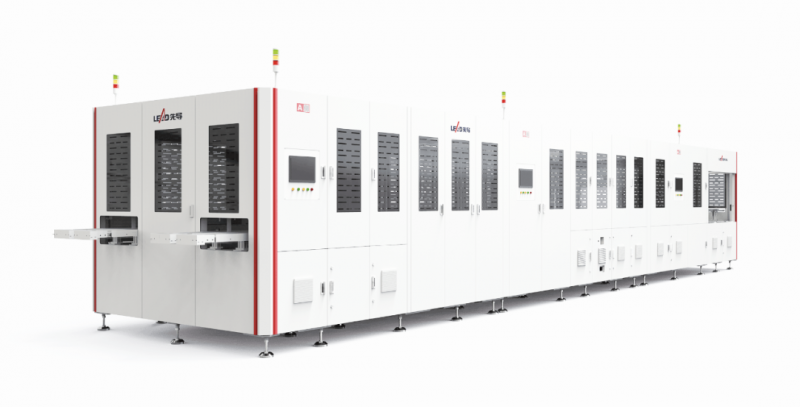
先导智能焊接设备出货北美,引领行业全球化新高度
Cai Fu Zai Xian· 2025-05-26 01:26
Core Insights - The photovoltaic industry is experiencing a new round of technological upgrades and capacity expansion amid the global energy transition, with Chinese photovoltaic equipment manufacturers making significant technological breakthroughs and entering high-end markets in Europe and America [1][6]. Group 1: Technological Advancements - The photovoltaic industry is evolving towards higher efficiency and lower costs, necessitating improved performance and technology levels in production equipment [3]. - The newly delivered welding equipment by the company integrates advanced processes such as non-destructive scribing, screen printing, and stacking, setting a new benchmark in the industry [3]. - The equipment achieves a production capacity efficiency of over 4,000 pieces per hour, significantly enhancing unit area productivity to support large-scale industrial production [3][4]. Group 2: Precision and Compatibility - The equipment employs a dual-process innovation of screen printing and stacking, achieving a printing precision of ±0.1mm and a process stability index (CPK) of ≥1.33, surpassing industry averages [3][4]. - It features strong compatibility, allowing for quick switching between different specifications and types of battery cells, and can adapt to future technological upgrades [4]. Group 3: Service Excellence - The company demonstrated exceptional service levels during the equipment delivery process, which is crucial for competitiveness in the international market [5]. - A professional team was assembled to follow the project closely, ensuring customized solutions and strict quality control throughout the production process [5]. - The company provided comprehensive post-delivery services, including installation, debugging, and technical training, to ensure seamless integration into the client's production line [5]. Group 4: Market Expansion and Future Outlook - The successful delivery to a top global electric vehicle and clean energy company is a strong recognition of the company's technological capabilities and lays the groundwork for further expansion in the North American photovoltaic market [6]. - The company aims to continue deepening its focus on intelligent manufacturing in the renewable energy sector, enhancing technological innovation, and contributing to the global renewable energy industry's development [6].


晶科能源20250507
2025-05-07 15:20
Summary of JinkoSolar Conference Call Company and Industry Overview - The conference call pertains to JinkoSolar, a leading solar energy company, focusing on advancements in solar technology and production capacity upgrades in the photovoltaic industry [2][3]. Key Points and Arguments Production Capacity and Technology Upgrades - JinkoSolar has completed upgrades at its production lines in Shangrao and Shanxi, achieving standard module efficiencies of 23.8%-24% and power outputs of 640-645 watts, with expectations to reach 645 watts (bifacial) and 650 watts (monofacial) in the first half of the year, leading competitors by over six months [2][3]. - The introduction of Topcon 3.0 technology is progressing smoothly, enhancing power output by 10-15 watts through a three-in-one technology approach. New products with power outputs of 650-660 watts are planned for development and will be showcased at the SAMT exhibition [2][5]. - The company aims to gradually release the 3.0 version by the end of 2025 and into 2026, utilizing technologies such as hidden busbars, low-temperature batteries, and tandem structures, with certified efficiencies exceeding 34% for Topcon and perovskite tandem cells [2][10]. Market Dynamics and Competitive Landscape - The industry is currently at a cyclical low, with rapid technological advancements. It is anticipated that 30%-50% of existing production capacity may be eliminated due to an inability to upgrade [4][15]. - JinkoSolar plans to upgrade 40% of its capacity, with an investment of approximately 80-90 million yuan per gigawatt, focusing on equipment and component upgrades [4][18]. Technological Innovations and Future Directions - The efficiency gap between high-efficiency Topcon and Bifacial Cell (BC) technologies is narrowing, with Topcon currently achieving 640-645 watts, only about 5 watts behind BC [9][13]. - The company is exploring half-cell and quarter-cell technologies to meet market demands and enhance product performance [35][36]. - JinkoSolar is also advancing in metallization, with successful trials of silver-copper paste technology, which is expected to be fully integrated into production by the end of 2026 [12][19]. Challenges and Risks - The transition to new technologies, such as Topcon and BC, presents challenges, particularly in terms of time and technical feasibility. Approximately 60% of Topcon technology can be applied to BC, but 50% cannot, indicating a need for further validation [7][24]. - The company faces uncertainties regarding the implementation of low-temperature technologies and the overall economic viability of new investments, especially in a potentially declining market [32][33]. Additional Important Insights - The introduction of silver-copper technology is progressing well, with reliability tests showing no significant differences compared to conventional silver paste. The company plans to complete the transformation of 20%-40% of its production capacity by the end of the year [12][29]. - JinkoSolar is closely collaborating with partners to ensure the successful implementation of new technologies and to meet the evolving demands of the solar industry [30]. - The company is optimistic about the future of perovskite tandem technology, expecting significant advancements in efficiency and reliability over the next three years [20][21][26]. This summary encapsulates the critical developments and strategic directions of JinkoSolar as discussed in the conference call, highlighting the company's commitment to innovation and market leadership in the solar energy sector.
