iPod Shuffle

Search documents
OpenAI首款硬件定型为笔!网友:就叫oPen吧
量子位· 2026-01-04 07:25
Core Viewpoint - OpenAI's first AI hardware product is an "AI pen," which exceeds expectations and aims to enhance user interaction with AI technology [1][6][12]. Group 1: Product Features - The AI pen is designed to facilitate two-way communication with ChatGPT through paired devices like smartphones [4][10]. - It is described as being similar in size to an iPod Shuffle, weighing approximately 10-15 grams [7]. - The pen is expected to run OpenAI's custom models locally, converting handwritten content into text and allowing users to sync this information with ChatGPT for further inquiries [10][11]. Group 2: Design and Development - The pen's design involves collaboration with Jony Ive, former Chief Design Officer at Apple, indicating a focus on professional design expertise [3][13]. - OpenAI's acquisition of Jony Ive's hardware company for approximately $6.5 billion last year marks a significant step in its hardware development strategy [14]. Group 3: Strategic Implications - The choice of a pen as the first hardware product reflects OpenAI's long-term vision to create a seamless AI experience that minimizes distractions and enhances user interaction [19][22]. - This product aims to fill a gap in the current ecosystem, reducing reliance on major platforms like Apple and Google, and potentially opening new revenue streams through hardware and services [25][27].


奥特曼谈OpenAI首款AI硬件:我想拿起它咬一口
量子位· 2025-11-25 01:17
Core Viewpoint - OpenAI's first AI hardware product is anticipated to be released within two years, with a design that aims to evoke a strong emotional response from users, described metaphorically as something they would want to "bite" or "lick" [2][7][27]. Group 1: Product Design and Philosophy - The collaboration between Sam Altman and Jony Ive is rooted in a shared vision regarding design, intelligence, and technology's role in human life [9][10]. - The initial phase of their partnership focused on exploring metaphysical themes rather than predefined product goals, emphasizing curiosity and creative exploration [16][17]. - The design process involved extensive research and the creation of detailed books on design history, which guided the development of the new hardware's form [18]. Group 2: Product Features and User Experience - The final product is expected to be striking in quality, with a design that feels both inevitable and obvious upon first sight [20][21]. - It will feature a simple and serene interface, contrasting with the complexity of modern devices, and will be powered by a reliable AI that filters information and understands context [22][23]. - The user experience is designed to be intuitive and effortless, allowing for immediate use without overwhelming the user [24][25]. Group 3: Market Context and Future Developments - OpenAI has recently partnered with Foxconn to produce AI hardware, indicating a significant step towards the realization of their hardware ambitions [27]. - The anticipated product may present both potential benefits and challenges, but its initial appeal is expected to be strong, capturing user interest at first glance [27].

OpenAI的AI硬件设备究竟长啥样? 科技圈早已猜了个遍
3 6 Ke· 2025-05-26 11:22
Core Insights - OpenAI has acquired AI hardware startup io, founded by former Apple chief designer Jony Ive, for $6.5 billion, marking a significant move in the tech industry during the Google I/O developer conference [2] - The collaboration aims to create a revolutionary device that could redefine human-computer interaction, with predictions ranging from wearable technology to a new standard for smart assistants [2][7] Group 1: Product Design and Features - The device is expected to embody a minimalist design philosophy akin to the iPod Shuffle, with a size comparable to a business card holder [3] - It will feature a neck-worn design, avoiding screens to promote a "no-distraction AI" concept, and will utilize a distributed computing architecture to work alongside smartphones and computers [5][7] - The device is planned to be modular, with three foundational forms: a neck-worn smart pendant, a magnetic desktop terminal, and a flexible patch-style wearable [7] Group 2: Market Strategy and Production Timeline - OpenAI aims for mass production by 2027, allowing ample time for concept development and industry positioning [3] - The company plans to adopt a "Tesla-like" production ramp-up strategy, targeting an annual delivery of 100 million units by 2030 [7] - The business model will leverage subscription-based AI services, potentially increasing the company's valuation beyond $1 trillion [7] Group 3: Competitive Landscape - The device represents a strategic move for OpenAI to establish a foothold in the hardware market, competing against dominant players like Apple and Google [32] - Previous attempts by other companies, such as Humane's AI pin and Meta's Ray-Ban smart glasses, have faced challenges, raising questions about OpenAI's ability to succeed [32] - The collaboration between Ive and OpenAI is seen as a bold gamble on the importance of both interaction methods and AI capabilities in shaping the future of technology [32]

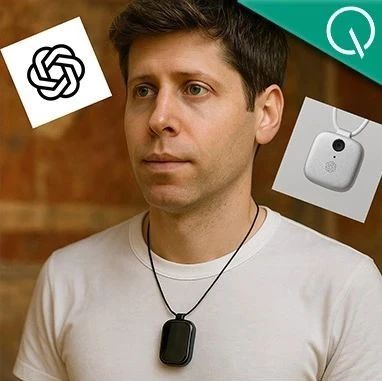
AI项链?OpenAI首款硬件爆料,乔布斯爱将操刀,“像iPod Shuffle一样优雅”
量子位· 2025-05-24 04:38
Core Viewpoint - OpenAI and Jony Ive are collaborating on a new AI hardware device, likely a necklace-style wearable, which aims to redefine user interaction by eliminating the need for screens [1][11]. Group 1: Device Features - The new device is a neck-worn AI wearable, slightly larger than the AI Pin, and can be placed in pockets or on tables [8]. - It resembles the iPod Shuffle, lacking a screen but capable of connecting to smartphones and PCs [8]. - The device includes a microphone for voice control and a camera to analyze the user's environment [8]. - Mass production is expected by 2027, with potential changes in design and specifications before then [8]. Group 2: Market Position and Comparisons - The device aims to break the screen barrier and enhance interactivity, potentially becoming a core device alongside MacBook Pro and iPhone [11]. - OpenAI's early investments, such as a $60 million lead in a hardware startup Opal, indicate a focus on high-end AI-integrated tools [13]. - Other companies, including domestic AI hardware firms, are also developing similar wearable devices, such as PLAUD's NotePin and Limitless Pendant [29][32]. Group 3: Public Reception and Concerns - Public opinion is mixed, with some believing the neck-worn design offers better visibility, while others criticize it as cumbersome and liken it to an "electronic shackles" [16][19]. - Concerns about privacy and the necessity of the device over smartphones have been raised, questioning its practicality [40].