AI笔

Search documents
大厂AI硬件竞赛:软硬一体易成,生态入口难夺
Xin Lang Cai Jing· 2026-02-10 12:40
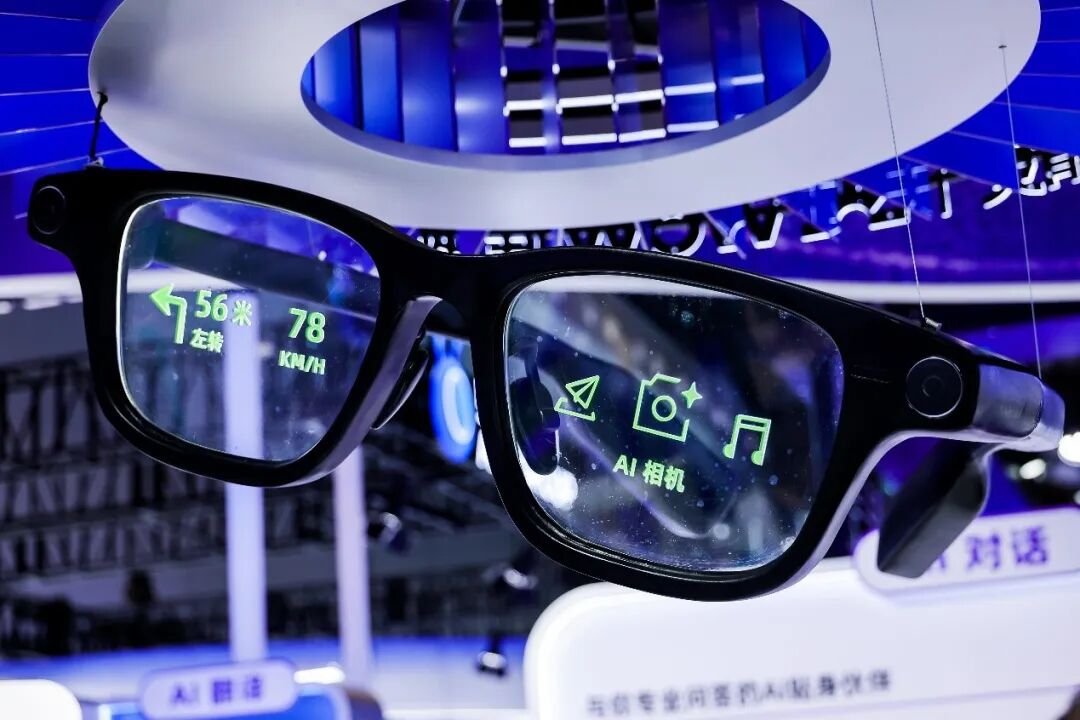
Core Insights - The next battleground for AI has shifted from the cloud to personal devices, with major tech companies exploring various forms of AI hardware, including glasses and pens [2][22] - OpenAI plans to launch a lightweight, screenless AI device in the second half of 2026, sparking speculation about its form factor [23] - The AI hardware market, particularly smart glasses, is entering a phase of scaled competition, with global shipments expected to exceed 10 million units by 2026 [3][24] Group 1: Market Dynamics - Meta has established itself as a leader in the smart glasses market, holding a 73% market share in early 2025 with its Ray-Ban collaboration [25] - Google is re-entering the smart glasses space with Project Aura, set to launch in 2026, aiming to create an open XR ecosystem [25][26] - In China, companies like Alibaba and Baidu are launching their own AI glasses, with Alibaba's Quark AI Glasses S1 topping sales charts upon release [26][27] Group 2: Product Innovations - Alibaba's Quark AI Glasses S1 features a lightweight design and advanced voice interaction capabilities, while Baidu's XiaoDu AI Glasses Pro focuses on AI voice photography [28][27] - ByteDance is preparing to launch its own AI glasses, leveraging its VR expertise from the PICO brand [27] - Other Chinese manufacturers, including XREAL and Rokid, are also developing competitive products in the global market [27] Group 3: Strategic Paths - OpenAI represents a "disruptive entry" strategy, focusing on a screenless AI pen that aims to redefine human-computer interaction [31][32] - Google is pursuing an "ecosystem platform" strategy with its Android XR operating system and Project Aura, aiming to replicate its success in the smartphone market [33] - Chinese giants like Alibaba and Baidu are adopting a "full-stack synergy" approach, integrating algorithms, chips, cloud, and terminal solutions [35][36] Group 4: Challenges Ahead - The AI hardware market faces significant challenges, including supply chain constraints and the need for robust production capabilities [39] - Privacy and ethical compliance issues are critical, as AI hardware collects extensive user data [40] - The business model may shift from selling devices to offering services, emphasizing the need for innovative revenue streams [41]



曝OpenAI 首款硬件定名「Dime」,坏消息:成本太高,9月首发只有「阉割版」
创业邦· 2026-02-09 04:07
Core Viewpoint - OpenAI is set to launch its first consumer hardware product, an AI headset named "Dime," which will initially be a simplified version due to high costs associated with advanced chip technology [5][6][9]. Product Development - OpenAI's "Dime" is designed to be a compact and unique audio device, aiming to replace existing products like AirPods, with a focus on high-quality materials and innovative design [6][9]. - The initial release is planned for 2026, with a target production of 40 to 50 million units in the first year [7][8]. - OpenAI is also developing custom chips to enable voice command functionalities similar to Apple's Siri, aiming to integrate seamlessly into existing ecosystems [7]. Strategic Vision - OpenAI's CEO, Sam Altman, emphasizes that the real competition lies with Apple, as the future of AI will be in end-user devices rather than cloud services [9]. - The vision for the hardware is to create an "AI native device" that enhances user focus and interaction, contrasting with the overwhelming nature of smartphones [9][10]. Additional Hardware Concepts - Alongside the headset, OpenAI is considering a smart pen, which aligns with the personal preferences of both Altman and Jony Ive, the designer behind the product [11][19]. - The smart pen is expected to incorporate advanced features, potentially including a micro-projector and environmental sensing capabilities, to enhance user interaction [33]. Market Positioning - OpenAI's entry into the hardware market is seen as a strategic move to disrupt existing AI hardware offerings, which primarily focus on basic functionalities like recording and transcription [30]. - The company plans to bundle software services with its hardware, leveraging its existing user base to quickly capture market share [31]. Competitive Landscape - The timing of OpenAI's product launch aligns with increasing competition in the AI hardware space, with major tech companies like Meta and Google also developing their own AI devices [35]. - OpenAI's approach of creating devices that only appear when needed may offer a unique advantage in a crowded market [36].

OpenAI押注“音频优先”AI,剑指下一代无屏设备
3 6 Ke· 2026-01-05 09:28
Core Insights - OpenAI is shifting focus from screen-based AI to audio-based AI, aiming to create a "screenless" device that interacts with users through voice and environmental awareness [1][2][7] - The company plans to release a new audio model in Q1 2026, which will enhance voice naturalness, emotional expression, and response accuracy, supporting real-time interruptions and bidirectional conversations [2][5] - OpenAI's hardware ambition includes a "third core device," likely an "AI pen," designed to be pocket-sized and used alongside existing devices like MacBooks and iPhones [4][5] Group 1: Strategic Shift - OpenAI's investment in audio AI represents a strategic overhaul rather than mere functional optimization, with a unified team working on a usable audio "operating system" for future devices [2][7] - The shift is part of a broader industry trend where companies like Google, Meta, and Tesla are also moving towards audio and environmental awareness, reducing reliance on screens [1][9] Group 2: Industry Context - The innovation space for screens is diminishing, with previous advancements being fully utilized, making further improvements costly and less impactful [7][9] - Attention has become a scarce resource, and adding more screen-based devices may exacerbate competition rather than create new usage scenarios [7][9] Group 3: Technical Challenges - The transition to screenless devices introduces complexities in managing when to speak or remain silent, requiring advanced voice activity detection and contextual understanding [10] - Continuous online functionality poses challenges in power consumption and processing capabilities, necessitating efficient model compression and memory optimization [10] Group 4: Market Viability - OpenAI is not the first to attempt screenless AI, with previous efforts by startups yielding mixed results, highlighting the importance of user experience over mere concept viability [11][13] - OpenAI's advantages include advanced model capabilities and Jony Ive's design expertise, which may enhance the likelihood of success in this endeavor [13]

OpenAI首款硬件定型为笔,网友:就叫oPen吧
3 6 Ke· 2026-01-04 09:45
Core Insights - OpenAI has launched its first AI hardware, described as an "AI pen," which exceeds previous expectations regarding its form and functionality [1][2][4] - The pen is designed in collaboration with Jony Ive, former Chief Design Officer at Apple, indicating a strategic move towards hardware development [6][9] Product Features - The AI pen is expected to have audio capabilities and facilitate two-way communication with ChatGPT through paired devices [1][4] - It is designed to convert handwritten content into text and sync with ChatGPT for further interaction, suggesting a focus on enhancing user experience [4][11] - The pen's form factor is comparable to an iPod Shuffle, weighing approximately 10-15 grams, emphasizing portability [2][4] Strategic Rationale - OpenAI's decision to develop hardware stems from a long-term vision articulated by CEO Sam Altman, who believes existing devices are not optimized for an AI-integrated experience [11][12] - The choice of a pen as the first hardware product allows OpenAI to avoid direct competition with major smartphone manufacturers while filling a gap in the hardware ecosystem [14][15] - The hardware initiative aims to create a new revenue stream, potentially enhancing the company's existing API and subscription services by integrating hardware with software [14][15]

OpenAI首款硬件定型为笔!网友:就叫oPen吧
量子位· 2026-01-04 07:25
Core Viewpoint - OpenAI's first AI hardware product is an "AI pen," which exceeds expectations and aims to enhance user interaction with AI technology [1][6][12]. Group 1: Product Features - The AI pen is designed to facilitate two-way communication with ChatGPT through paired devices like smartphones [4][10]. - It is described as being similar in size to an iPod Shuffle, weighing approximately 10-15 grams [7]. - The pen is expected to run OpenAI's custom models locally, converting handwritten content into text and allowing users to sync this information with ChatGPT for further inquiries [10][11]. Group 2: Design and Development - The pen's design involves collaboration with Jony Ive, former Chief Design Officer at Apple, indicating a focus on professional design expertise [3][13]. - OpenAI's acquisition of Jony Ive's hardware company for approximately $6.5 billion last year marks a significant step in its hardware development strategy [14]. Group 3: Strategic Implications - The choice of a pen as the first hardware product reflects OpenAI's long-term vision to create a seamless AI experience that minimizes distractions and enhances user interaction [19][22]. - This product aims to fill a gap in the current ecosystem, reducing reliance on major platforms like Apple and Google, and potentially opening new revenue streams through hardware and services [25][27].