
Zhong Yang Ji Wei Guo Jia Jian Wei Wang Zhan

Search documents
云南省临沧市委原一级巡视员尚东红被开除党籍
Zhong Yang Ji Wei Guo Jia Jian Wei Wang Zhan· 2025-10-17 02:35
(云南省纪委监委) 尚东红严重违反党的政治纪律、中央八项规定精神、组织纪律、廉洁纪律、工作纪律、生活纪律,构成 严重职务违法,并涉嫌贪污罪、受贿罪、滥用职权罪,且在党的十八大后不收敛、不收手,性质严重、 影响恶劣,应予以严肃处理。依据《中国共产党纪律处分条例》《中华人民共和国监察法》《中华人民 共和国公职人员政务处分法》等有关规定,经云南省纪委常委会会议研究并报云南省委批准,决定给予 尚东红开除党籍处分;按规定取消其享受的待遇;收缴其违纪违法所得;将其涉嫌犯罪问题移送检察机 关依法审查起诉,所涉财物一并移送。 中央纪委国家监委网站讯 据云南省纪委监委消息:日前,经云南省委批准,云南省纪委监委对临 沧市委原一级巡视员尚东红严重违纪违法问题进行了立案审查调查。 经查,尚东红身为党员领导干部,理想信念丧失,背离初心使命,不落实巡视整改要求,虚假整改,以 串供、伪造证据等方式对抗组织审查;无视中央八项规定精神,违规收受管理和服务对象的礼品、礼 金;违背组织原则,在组织进行谈话时,不如实说明问题;利用职权,将应由个人支付的费用由下属单 位支付;利用职务便利,侵吞公共财物,数额特别巨大;利用职务便利,为他人在工程承揽、工 ...
贵州省自然资源厅党委委员、副厅长夏清波接受纪律审查和监察调查
Zhong Yang Ji Wei Guo Jia Jian Wei Wang Zhan· 2025-10-17 02:03
中央纪委国家监委网站讯 据贵州省纪委监委消息:贵州省自然资源厅党委委员、副厅长夏清波涉 嫌严重违纪违法,目前正接受贵州省纪委监委纪律审查和监察调查。 (贵州省纪委监委) ...
贵州现代物流产业(集团)有限责任公司党委副书记、副董事长、总经理廖慧接受纪律审查和监察调查
Zhong Yang Ji Wei Guo Jia Jian Wei Wang Zhan· 2025-10-17 02:03
(贵州省纪委监委) 中央纪委国家监委网站讯 据贵州省纪委监委消息:贵州现代物流产业(集团)有限责任公司党委 副书记、副董事长、总经理廖慧涉嫌严重违纪违法,目前正接受贵州省纪委监委纪律审查和监察调查。 ...
湖南省演艺集团有限责任公司原党委书记、董事长吴友云接受纪律审查和监察调查
Zhong Yang Ji Wei Guo Jia Jian Wei Wang Zhan· 2025-10-17 01:17
(湖南省纪委监委) 中央纪委国家监委网站讯 据湖南省纪委监委消息:湖南省演艺集团有限责任公司原党委书记、董事长 吴友云涉嫌严重违纪违法,主动向组织交代问题,目前正接受湖南省纪委监委纪律审查和监察调查。 ...
坚定文化自信 建设文化强国丨一脉文渊百年传
Zhong Yang Ji Wei Guo Jia Jian Wei Wang Zhan· 2025-10-17 00:12
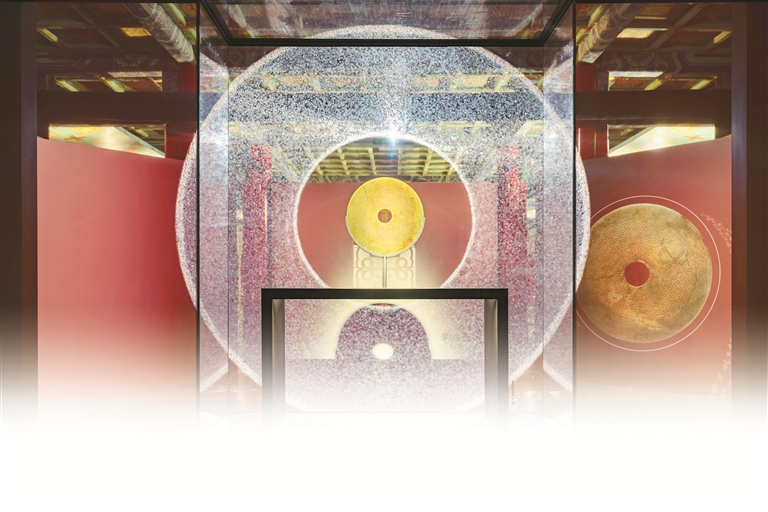
Core Viewpoint - The exhibition "A Century of Guardianship: From the Forbidden City to the Palace Museum" showcases the historical significance and cultural heritage of the Palace Museum, celebrating its 100th anniversary and emphasizing the importance of preserving and promoting Chinese civilization [8][10][12]. Group 1: Exhibition Overview - The exhibition features 200 precious artifacts selected from over 1.95 million items in the museum's collection, highlighting the continuity of Chinese cultural heritage over the past century [10][12]. - Artifacts on display range from the Shang and Zhou dynasties to the Qing dynasty, including bronze vessels, paintings, and exquisite porcelain [10][11]. - The exhibition aims to demonstrate the Palace Museum's role in safeguarding Chinese cultural heritage amidst historical upheavals [12][14]. Group 2: Historical Context - The Palace Museum was established on October 10, 1925, transforming from a restricted imperial space into a public museum, allowing access to historical treasures [9][10]. - During the Second Sino-Japanese War, the museum undertook significant efforts to protect its artifacts by relocating them to safer areas, showcasing a commitment to cultural preservation [12][13]. - The return of artifacts after the war symbolizes the resilience of Chinese culture and the importance of maintaining cultural identity [12][13]. Group 3: Cultural Significance - The artifacts serve as a testament to the continuity, innovation, unity, inclusiveness, and peace of Chinese civilization [11][14]. - The Palace Museum's collection reflects the creativity and wisdom of the Chinese people, embodying a shared cultural memory [11][14]. - The exhibition emphasizes the need for cultural heritage to be preserved and passed down through generations while also adapting to contemporary contexts [16][17]. Group 4: Modern Innovations - The Palace Museum has embraced modern technology to enhance the preservation and presentation of its artifacts, including digitalization efforts that allow for broader public access [16][17]. - Innovative projects, such as the "Digital Palace Museum," have made over 1 million artifacts digitally accessible, promoting cultural engagement [17]. - The integration of technology and culture aims to revitalize historical narratives and connect them with contemporary audiences [17].

江苏无锡抓实经常性纪律教育 让纪律规矩入脑入心
Zhong Yang Ji Wei Guo Jia Jian Wei Wang Zhan· 2025-10-17 00:12
Core Points - The article discusses the implementation of discipline education for party leaders in Wuxi City, Jiangsu Province, emphasizing the importance of regular and integrated discipline education for the growth of officials [1][2] - The Wuxi City Discipline Inspection Commission has developed a comprehensive approach to discipline education, including mandatory courses on party regulations and the establishment of a "Cultural Integrity" lecture team to tailor educational content to specific needs [1][2] - The city has also created a warning education base, the "Cultural Integrity Museum," which has attracted over 17,000 visitors since its opening, showcasing typical cases of violations to educate officials [2][3][4] Group 1 - The city has implemented a pre-appointment test for officials to reinforce discipline and serve as a warning mechanism [1] - The "Cultural Integrity" lecture team has designed 37 courses to meet diverse learning needs, allowing units to request tailored content [1][2] - The city focuses on using case studies from disciplinary actions to educate officials, enhancing the effectiveness of discipline education [2][4] Group 2 - The "Cultural Integrity Museum" features over 100 typical violation cases, providing personalized educational content for different visitor groups [3] - The city emphasizes the importance of both negative and positive role models in discipline education, showcasing exemplary cases to inspire officials [4] - The goal of ongoing discipline education is to internalize strict discipline as a habitual practice among officials [4]
盘龙城联通江河访武汉大学长江文明考古研究院院长刘礼堂教授
Zhong Yang Ji Wei Guo Jia Jian Wei Wang Zhan· 2025-10-17 00:12
Core Viewpoint - The Long River culture is a vital source for nurturing socialist core values and represents a significant symbol of Chinese civilization, emphasizing the importance of its protection, inheritance, and promotion [1] Archaeological Discoveries - The Panlongcheng site, located in Wuhan, Hubei, is recognized as one of the most significant archaeological discoveries in 2024, showcasing a well-preserved urban layout from the early Shang Dynasty, dating back 3,500 years [2][3] - The archaeological journey of Panlongcheng began in 1954, with significant findings including bronze artifacts and pottery, leading to a deeper understanding of its cultural significance and its connection to the Central Plains [2][4] Key Findings from Recent Excavations - Recent excavations from 2013 to present have revealed three critical breakthroughs: the dynamic evolution of urban layout, advancements in bronze production technology, and a complex social structure during the site's decline [4][5] - The urban layout of Panlongcheng evolved through three stages: emergence, prosperity, and decline, reflecting the dynamic relationship between the Central Plains and southern regions during the Xia and Shang periods [4] - Discoveries of bronze workshops indicate that Panlongcheng had advanced bronze casting technology, challenging previous notions of production monopolies held by central cities [5][6] Cultural and Economic Significance - Panlongcheng served as a strategic hub for the Central Plains' expansion into the Yangtze River basin, facilitating the flow of resources and cultural exchange between the two regions [6][7] - The site played a crucial role in controlling the supply chain of copper resources, essential for the Shang Dynasty's power, and acted as a catalyst for cultural and technological innovations in the Yangtze region [7][8] Understanding the Yangtze Civilization - The Yangtze civilization is a core pillar of Chinese civilization, characterized by its unique historical roots and interactions with the Yellow River civilization, contributing to the overall development of Chinese culture [8][9] - The agricultural revolution in the Yangtze basin, marked by the domestication of rice, laid a solid foundation for the emergence of complex societies, predating similar developments in the Yellow River basin [9][10] Long-term Implications - The relationship between the Yangtze and Yellow River civilizations has been pivotal in shaping Chinese civilization, with Panlongcheng facilitating the transmission of Central Plains culture and resources to the south [10][11] - The preservation and understanding of the Long River civilization are essential for exploring sustainable development and cultural diversity, highlighting the importance of ecological wisdom and cultural exchange [11]
推动解决堵点回应百姓关切 建好护好民心路
Zhong Yang Ji Wei Guo Jia Jian Wei Wang Zhan· 2025-10-17 00:12
Core Viewpoint - The improvement of rural roads in Hanzhong, Shaanxi Province, significantly enhances local tourism and economic development, benefiting the community and increasing the number of visitors to the area [2][5]. Group 1: Infrastructure Development - The "Liangda Road" has been upgraded to a smooth and wide road, facilitating access for tourists and improving local businesses such as farmhouses [2]. - The road connects various natural scenic spots, including the 4A-level tourist attraction, Panda Valley, which has led to the establishment of nearly 20 farmhouses and accommodations in the area [2][5]. - As of now, the total length of rural roads in Foping County is 665.2 kilometers, with 268.5 kilometers newly built or renovated in the past decade, achieving a 100% hard-surfaced road rate for towns and villages [5]. Group 2: Supervision and Management - The local disciplinary inspection and supervision agencies are focusing on the construction and management of the "Liangda Road," ensuring that the project is executed efficiently and transparently [3][6]. - The agencies have implemented a collaborative mechanism to monitor project progress, quality, and fund usage, addressing issues such as corruption and inefficiency [3][4]. - A total of 430 streetlights have been installed along the road to enhance nighttime safety for residents and travelers, demonstrating a proactive approach to community concerns [4]. Group 3: Community Impact - The development of rural roads is viewed as a vital project for improving the livelihood of local residents, contributing to their happiness and satisfaction [4][6]. - The local government is also addressing issues related to aging access roads, with plans for repairs expected to be completed by the end of November [4].
我说变化丨“干工作的动力更足了”
Zhong Yang Ji Wei Guo Jia Jian Wei Wang Zhan· 2025-10-16 23:28
Core Viewpoint - The article highlights the positive impact of reducing bureaucratic meetings and formalism in local governance, allowing village officials to focus more on community issues and improve public trust [1][2] Group 1: Changes in Meeting Structure - The local government has implemented a strategy to consolidate meetings, reducing the frequency and duration of gatherings, which previously consumed significant time for village officials [1] - Similar themes are now discussed in a single meeting, leading to more efficient use of time and resources [1] Group 2: Increased Community Engagement - Village officials now have more time to engage with residents, addressing their concerns directly and effectively [2] - Specific examples include assisting farmers with pest control, repairing roofs for elderly residents, and mediating land compensation disputes, demonstrating a tangible improvement in service delivery [2] Group 3: Enhanced Public Trust - The visible presence of village officials in the community has led to increased trust among residents, as they notice the officials' commitment to resolving local issues [2] - The changes have motivated officials to work more diligently, reflecting a positive feedback loop between community engagement and public trust [2]
中国进出口银行辽宁省分行原党委书记、行长刘正贵被开除党籍
Zhong Yang Ji Wei Guo Jia Jian Wei Wang Zhan· 2025-10-16 09:06
Core Viewpoint - The investigation into Liu Zhenggui, former Party Secretary and President of the Liaoning Branch of the China Export-Import Bank, reveals serious violations of discipline and law, leading to significant financial risks and misconduct in loan approvals and personal gain [1][2]. Group 1: Investigation Findings - Liu Zhenggui lost his ideals and beliefs, deviating from the mission and violating the central government's decisions on financial risk prevention, resulting in major financial risks [1]. - He ignored the spirit of the Central Eight Regulations, accepting gifts that could influence the impartial execution of duties, and participated in banquets and golf activities in violation of regulations [1]. - Liu engaged in nepotism during personnel selection, using his position to assist others in securing jobs, and violated the principle of organizational integrity [1]. Group 2: Disciplinary Actions - Liu Zhenggui was expelled from the Party for serious violations of political, organizational, and disciplinary regulations, and for engaging in corrupt practices [2]. - His retirement benefits were revoked, and his illegal gains were confiscated as part of the disciplinary measures [2]. - The case has been referred to the judicial authorities for criminal prosecution, along with the related assets [2].