CNET

Search documents
Apple Reportedly Planning AI-Enhanced Siri With Search Tool in 2026
CNET· 2025-09-04 16:26
Core Viewpoint - Apple is set to launch its iPhone 17 lineup next week, alongside a significant software update rumored to enhance Siri with AI capabilities in iOS 26.4, expected to arrive as early as March 2026 [1]. Group 1: Siri Upgrade and AI Integration - Apple is developing a new Siri feature called World Knowledge Answers, which is an AI-driven search tool that will provide detailed responses using web data, images, video, and local information [2]. - The new Siri upgrade will initially be exclusive to the Siri app, with plans to extend the AI search tool to Safari and Spotlight in the future [4]. - The integration of AI-driven search into Siri positions Apple to compete with rapidly growing rivals like OpenAI and Perplexity, indicating its intent to catch up in the generative AI sector [5]. Group 2: Collaboration with Google - Apple may collaborate with Google to test a custom version of the Gemini model to enhance parts of the new search tool, while Apple's own models will manage personal data and device context [2]. - A recent court ruling upheld a lucrative $20 billion arrangement between Apple and Google, allowing Google to remain the default search engine in Safari, providing Apple with financial flexibility to explore new web query handling methods [5].



Disney Settles FTC Complaint With YouTube Over Children's Data Collection
CNET· 2025-09-03 16:46
Group 1 - Disney will pay a $10 million penalty for mislabeling videos on YouTube and violating COPPA by allowing personal data collection from children without parental consent [1][2] - The complaint alleges that Disney uploaded videos that should have been labeled "Made For Kids" but were instead set to "Not Made For Kids," leading to improper data collection and targeted advertising to children under 13 [1] - Disney has agreed to comply with COPPA by notifying parents and obtaining consent for videos labeled "Not Made For Kids" and will establish a review program for video labeling [2] Group 2 - The FTC also took action against Apitor Technology, imposing a $500,000 penalty for allegedly collecting geolocated information from children via a third-party app [2]

Judge Rules Google Can Keep Chrome, but Must Stop Exclusive Search Deals
CNET· 2025-09-02 21:32
Core Insights - The article discusses the importance of maximizing the utility of services, apps, and software that users engage with daily [1] Group 1: Services - The article emphasizes the need for users to stay informed about the latest news and tips related to services they utilize [1] Group 2: Software - It highlights the significance of understanding software functionalities to enhance user experience and productivity [1]


Apple Reportedly Still Under Pressure to Give UK Government Backdoor iCloud Access
CNET· 2025-08-29 17:32
Core Viewpoint - The UK government is pursuing broader access to Apple's iCloud services, including a request for backdoor access to standard iCloud data, which raises significant privacy and security concerns [1][5][6]. Group 1: Government Requests and Legal Context - The UK Home Office's request for access to iCloud data is not limited to data protected by Apple's Advanced Data Protection (ADP) but extends to all iCloud data, including sensitive information like passwords and messages [5]. - The request is facilitated by the Investigatory Powers Act, which aims to assist law enforcement in investigating serious crimes, but critics argue it compromises user security by potentially allowing exploitation of Apple's systems [6]. Group 2: Responses and Implications - Apple previously withdrew its Advanced Data Protection security tool for UK users, expressing disappointment over the necessity of this action, and has initiated a legal challenge against the government's request [4]. - The US government is closely monitoring the situation, as the UK's request could grant access to data from all iCloud users globally, not just British citizens [3]. Group 3: Expert Opinions - Cybersecurity experts warn that creating a backdoor for government access could lead to broader security vulnerabilities, as it undermines the integrity of Apple's security measures and puts all users at risk [7].

Fox and Google Reach Agreement to Keep Fox Channels on YouTube TV
CNET· 2025-08-29 15:11
Core Points - Google and Fox have reached an agreement to keep Fox channels on YouTube TV, ending a dispute that could have led to the removal of these channels [1][2] - The deal ensures that Fox channels, including Fox Broadcast Network, Fox News, and Fox Sports, remain available for subscribers, preserving the value of the service [2] - The agreement was reached just in time for significant college and NFL football events, highlighting the urgency for both parties to finalize the deal [2] Summary by Sections Agreement Details - Google announced the deal via a YouTube blog post, emphasizing the preservation of service value and future flexibility [2] - The agreement allows for continued access to over 100 channels, ensuring that football fans will not miss upcoming games [2] Context and Urgency - The timing of the agreement was critical due to the first big Saturday of college football and the upcoming NFL season, which increased pressure on both companies to finalize negotiations [2] - A short-term extension was granted to allow negotiations to continue past the initial deadline, ultimately leading to a successful renewal of the contract without service disruption [2]


Apple's iPhone 17 Invites Are Out: Here's What Could Come On Sept. 9
CNET· 2025-08-26 16:51
Core Insights - Apple is set to hold its annual fall iPhone launch event on September 9 at 10 a.m. PT, where it is expected to unveil the iPhone 17 lineup, Apple Watch Series 11, and AirPods Pro 3 [1][2] Product Launch Expectations - The iPhone 17 lineup may include a slimmer version called the iPhone 17 Air, featuring a lightweight design similar to Samsung's Galaxy S25 Edge. The Pro model is anticipated to have a scratch-resistant antireflective display and an 8x telephoto lens, while the Pro Max could include a larger battery. The baseline iPhone 17 may also offer a higher refresh rate [3] - All new iPhones might incorporate an Apple-developed 5G modem known as the C1 chip, which was first introduced with the iPhone 16E, along with in-house Wi-Fi chips [3] Software Updates - The event is expected to provide insights into the public rollout of iOS 26, which features a Liquid Glass interface for a more transparent look, a redesigned Camera app, and new functionalities in Messages, including the ability to create polls in group chats and improved spam detection [4] AI Developments - There may be limited discussion regarding the updated version of Siri, which has faced delays and may not be released until next year or later. However, Apple could highlight other updates related to Apple Intelligence and features for its new devices [5]

Waymo Gets the Green Light to Test in New York City. Everything to Know About the Robotaxi
CNET· 2025-08-25 17:39
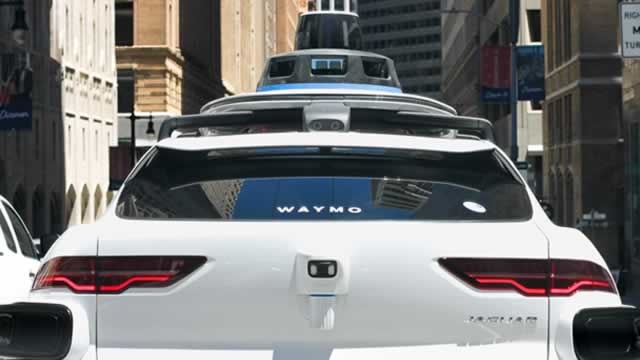
Core Insights - Waymo has received a permit to test its autonomous vehicles in parts of New York City, specifically in Manhattan and Downtown Brooklyn, with a specialist present in the vehicle [2][3] - The company is expanding its robotaxi services to multiple cities, including plans to offer rides in Washington, DC, and Miami by 2026, and has already established operations in cities like Phoenix, San Francisco, and Los Angeles [3][4][29][30] - Waymo's autonomous vehicles have demonstrated a significant reduction in crash rates compared to human drivers, with 88% fewer serious injury crashes and 78% fewer injury-causing crashes over 71 million miles driven [9] Expansion Plans - Waymo is conducting early testing in Dallas and plans to launch public rides next year through a partnership with Avis Budget Group [4][24] - The company is also rolling out a limited fleet in Philadelphia, focusing on complex areas, while it aims to expand its services in other cities [28] - Future expansions include Tokyo, where Waymo is collaborating with local taxi services to adapt its technology to local conditions [31][32] Technology Development - Waymo is opening a new 239,000-square-foot factory in Phoenix to increase its fleet of fully autonomous Jaguar I-Pace vehicles from 1,500 to 3,500 [6] - The company has announced partnerships with Hyundai to integrate its sixth-generation self-driving technology into the Ioniq 5 SUV, with testing expected to start by late 2025 [7][35] - Waymo's sixth-generation technology aims to enhance vehicle capabilities, including navigation in extreme weather conditions [34] Safety and Operations - The NYC Department of Transportation has implemented comprehensive safety guidelines for autonomous vehicle testing to ensure public safety [3] - Waymo's vehicles are currently unable to charge for rides in New York due to existing state laws, but the company is advocating for changes to allow fully autonomous ride-hailing services [27] - The company provides over 250,000 paid trips weekly across more than 700 square miles in the US, indicating a growing demand for its services [8]

Elon Musk Sues Apple, OpenAI Over iPhone AI Deal
CNET· 2025-08-25 16:38
Katelyn Chedraoui Writer IKatelyn is a writer with CNET covering artificial intelligence, including chatbots, image and video generators. Her work explores how new AI technology is infiltrating our lives, shaping the content we consume on social media and affecting the people behind the screens. She graduated from the University of North Carolina at Chapel Hill with a degree in media and journalism. You can reach her at kchedraoui@cnet.com. Expertise artificial intelligence, AI image generators, social me ...

Meta Teams Up With Midjourney for Future Creative AI Models
CNET· 2025-08-22 23:02
Group 1 - Meta is partnering with Midjourney AI to enhance its AI video generation capabilities, although the timeline for a potential product release remains unclear [1] - The company has teased a tool called MovieGen, which allows users to upload files or "restyle" existing videos, but lacks a comprehensive creation tool compared to competitors like OpenAI and Google [2] - The partnership with Midjourney signifies Meta's commitment to AI video as a crucial element in the competitive landscape of advanced AI products [3] Group 2 - Midjourney is well-known for AI image creation and is currently involved in a copyright infringement lawsuit, which highlights ongoing legal challenges in the AI media space [4] - Meta has been focusing on integrating AI chatbots into its social media platforms and has invested significantly in AI talent and restructuring, with the Midjourney partnership being a key strategic move [5]

Meta's AI Push Leads to $10 Billion Google Cloud Deal, Report Says
CNET· 2025-08-22 15:44
Core Insights - Meta has signed a deal with Google Cloud worth at least $10 billion over six years to enhance its artificial intelligence capabilities [1][2] Group 1: Meta's AI Strategy - The partnership with Google Cloud will expand Meta's AI tools and services across its platforms, including Facebook, Instagram, and WhatsApp [2] - Meta is investing heavily in building its own AI data centers, including a 4-million-square-foot facility in Louisiana named Hyperion, set to open by 2030 [3] - Despite a recent hiring spree for AI talent, reports indicate that Meta may pause AI-related hiring as it reassesses its strategy [4] Group 2: Implications for Google Cloud - The deal with Meta is expected to enhance Google Cloud's position as a "one-stop shop" for AI services [5] - Google Cloud previously partnered with OpenAI in June to utilize its data centers, indicating a trend of collaboration in the AI space [5]