
Finbold

Search documents
2 sub‑$10 AI stocks to outperform Palantir in 2026, according to ChatGPT‑5
Finbold· 2025-11-23 19:58
Core Insights - Palantir Technologies (NASDAQ: PLTR) has established itself as a leader in AI-driven data analytics, securing significant government contracts and expanding its intelligence business, resulting in a 105% stock price increase year-to-date, trading at $154 [1][2] Company Summaries BigBear.ai (NYSE: BBAI) - BigBear.ai is undergoing a strategic pivot, highlighted by its acquisition of Ask Sage, a generative AI platform for secure sectors like defense, which is expected to generate approximately $25 million in annual recurring revenue in 2025 [3][5] - The acquisition positions BigBear to transition from a decision-intelligence contractor to a full-stack generative AI provider, enhancing its offerings for government clients [4] - With over $450 million in cash, BigBear has the financial flexibility to support growth initiatives and strategic investments, potentially allowing it to carve out a unique position in the defense AI sector [5][6] Lantern Pharma (NASDAQ: LTRN) - Lantern Pharma utilizes its RADR AI platform to innovate oncology drug development, leveraging over 200 billion data points and 200 machine-learning algorithms [7] - The company has shown promising clinical results, with a 48% clinical benefit rate in its LP-184 Phase 1a trial among heavily pretreated patients [8][9] - Lantern is managing its cash effectively, with $19.7 million available, and plans to commercialize parts of its RADR platform, which could generate revenue through licensing [9]





Wall Street sets Meta Platforms (META) stock price for next 12 months
Finbold· 2025-11-23 15:05
Core Viewpoint - Meta Platforms has received a bullish outlook from Wall Street despite recent stock volatility, with a consensus indicating strong buy recommendations for the next 12 months [5][6]. Financial Performance - Meta reported strong Q3 2024 earnings, with adjusted EPS of $7.25, exceeding expectations of $6.69, and revenue of $51.24 billion, surpassing the forecast of $49.41 billion. Sales increased by 26% year-over-year, marking the fastest growth since early 2024 [3][4]. - For Q4, Meta anticipates revenue between $56 billion and $59 billion, which is above analyst expectations at the midpoint [4]. Stock Outlook - A consensus from 41 Wall Street analysts shows a 'Strong Buy' rating, with 34 recommending a purchase, six advising to hold, and only one suggesting a sell [5]. - The average 12-month price target is $839.23, indicating a potential upside of 41.23% from the last closing price of $594.25. Projections vary widely, with a high target of $1,117.00 and a low of $655.15 [6]. Analyst Insights - Cantor Fitzgerald's analyst cut the price target to $720 from $830 but maintained an 'Overweight' rating, citing expected cost increases starting in 2026, with operating expenses projected to rise 30% year-over-year to $152 billion [8]. - Wedbush added Meta to its "Best Ideas List," maintaining an Outperform rating with a price target of $920, highlighting strong core ad demand and AI advancements [9]. - Needham maintained a 'Hold' rating without a price target, while Mizuho raised its target to $920 from $812, reflecting increased confidence after strong fiscal Q3 results [10].


Notorious Congress trader dumps entire stake in this Warren Buffett stock
Finbold· 2025-11-23 12:09
Core Insights - Senator Markwayne Mullin has fully exited his position in Berkshire Hathaway, with the transaction reported on November 21 for a trade executed on November 3 [1][2] - Berkshire Hathaway is currently facing significant challenges, including underwriting losses and a large cash reserve that has frustrated shareholders [3][4] - Since Mullin's sale, Berkshire shares have increased by 9.52%, indicating a missed opportunity for the senator [5] Company Performance - Berkshire Hathaway's stock has struggled this year due to various factors, including foreign-exchange impacts and a lack of major buybacks [3] - The company's cash pile has led to shareholder frustration, as many are expecting more active deployment of capital or acquisitions [4] - The upcoming leadership transition to Greg Abel in 2026 has led to a reassessment of the "Buffett premium," contributing to stock volatility [4] Senator's Trading Activity - Mullin's recent trades included selling positions in Chipotle Mexican Grill, T-Mobile, and Fiserv, with mixed post-trade performances: Chipotle up 3.94%, T-Mobile up 6.59%, and Fiserv down 1.77% [8] - The senator also made a significant purchase of Microsoft shares valued between $250,000 and $500,000, which is currently down 5.13% since the trade [8] - Mullin's trading history has drawn scrutiny due to potential conflicts of interest and the timing of his transactions [7]

ChatGPT predicts Nvidia stock price for end of 2025
Finbold· 2025-11-21 14:42
Core Insights - Nvidia's stock experienced a decline of over 3% on November 21, following a brief rally supported by strong quarterly results, coinciding with a broader drop in the technology sector [1][7] - The recent pullback has reignited concerns regarding AI valuations, despite Nvidia's CEO attempting to reassure investors about the company's outlook [2] Nvidia Stock Price Predictions - ChatGPT predicts Nvidia's stock price could reach approximately $220 per share by the end of 2025, with a potential fluctuation of $15 in either direction [3] - The forecast assumes continued demand in AI and data centers but acknowledges risks such as overvaluation and a slowdown in hyperscale capital expenditure, presenting a more conservative outlook compared to Wall Street's average target of around $240 [5] - In a more optimistic scenario, where AI spending accelerates, Nvidia could trade between $240 and $250 by late 2025, while a bearish environment could see the stock drop to between $150 and $180 [6] Market Sentiment and Broader Impact - Nvidia's earnings did not convince traders of the sustainability of the AI trade, leading to a 3.15% decline after an initial 5% surge, with further losses in overnight trading [7] - The sell-off affected the broader tech sector, with notable declines in stocks like Tesla and Amazon, and Palantir experiencing a 5.85% drop [7] - The cryptocurrency market also faced a significant downturn, with Bitcoin dropping nearly 10%, indicating a potential weakening of retail trader support for AI stocks [8]

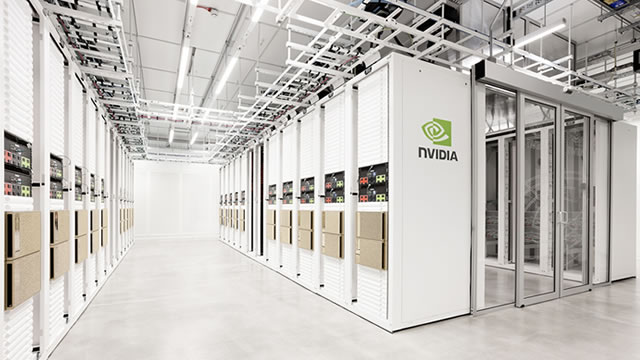
Palantir stock hit by monster insider trading activity
Finbold· 2025-11-21 11:12
Core Insights - Palantir shares experienced a significant decline due to increased insider selling activity, with CEO Alex Karp and other senior executives proposing substantial share disposals [1][2][4] Insider Selling Activity - Multiple senior executives, including Alex Karp, filed to sell shares, with Karp proposing to sell 585,000 shares valued at approximately $95.93 million at an estimated price of $163.99 per share [2][4] - In total, over 1.26 million shares are set to be sold by five executives, representing a combined market value exceeding $205 million [5] - The coordinated nature of the sales suggests possible ties to scheduled options exercises or executive sell-down programs [6] Market Reaction - Following the insider selling announcements, Palantir's stock closed at $155.74, down 5.85%, and continued to decline in pre-market trading [1] - The stock has broken below immediate support near the $160 region, with potential further pullbacks toward $150 if selling persists [7] - A recovery above $165 is necessary to restore bullish sentiment in the market [7]

Here's why AMD stock is surging today
Finbold· 2025-11-20 10:50
Core Viewpoint - Advanced Micro Devices (AMD) is experiencing renewed upward momentum in pre-market trading, driven by a reassessment of the semiconductor sector following Nvidia's earnings report, despite a recent sharp decline in its stock price [1][2]. Stock Performance - AMD closed at $223.55 per share, reflecting an 11.27% drop over the past five trading days, but rebounded to $232.80 in pre-market trading, gaining 4.14% [2]. - The median consensus price target for AMD stands at approximately $258, indicating a potential double-digit upside from current pre-market levels [8]. Market Sentiment - The shift in sentiment towards AMD was influenced by Nvidia's better-than-expected third-quarter results, which alleviated concerns regarding a slowdown in AI-related spending [4][5]. - Investor confidence is primarily driven by reassurances that AI spending remains on track, rather than significant changes in AMD's fundamentals [9]. Analyst Insights - Analysts from Morgan Stanley and Jefferies have described AMD as undervalued relative to its AI peers, with price targets of $260 and $270 respectively [7]. - Institutional analysts suggest that AMD is gaining market share as data center operators seek hardware diversification, particularly for energy-intensive AI workloads [6]. Industry Outlook - Nvidia's strong data center guidance for Q4 signals robust AI investment, which is seen as a positive indicator for AMD and other companies in the sector [5]. - As long as data center operators prioritize GPU and CPU hardware upgrades into 2026, AMD is likely to remain a key strategic beneficiary [10].

Why Google stock is skyrocketing
Finbold· 2025-11-19 16:55
Core Viewpoint - Alphabet's stock has reached a new record high, driven by the launch of the Gemini 3.0 AI model and positive analyst ratings, amidst broader market volatility [1][3][5]. Group 1: Stock Performance - As of the latest update, GOOGL stock was trading at $296, reflecting an increase of nearly 5% for the day and a total rally of 55% throughout 2025 [1]. - The stock achieved a record high of approximately $303 during early trading on Wednesday [1]. Group 2: Catalysts for Stock Rally - The momentum in GOOGL's stock is largely attributed to the launch of the Gemini 3.0 AI model, which is considered the company's most advanced AI offering to date [3]. - The Gemini 3.0 model has been integrated into revenue-generating products, with AI Overviews reaching 2 billion monthly users and the Gemini app surpassing 650 million monthly users [4]. Group 3: Analyst Ratings and Market Sentiment - KeyBanc has reiterated an 'Overweight' rating for Alphabet, maintaining a price target of $300, citing the anticipated impact of the Gemini 3 launch and Alphabet's strength in full-stack AI as key drivers [5]. - Loop Capital upgraded Alphabet to 'Buy' and raised its price target to $320, highlighting significant upside potential from AI-led search growth and the expansion of the Gemini platform [6]. Group 4: Institutional Investment - Investor interest surged following Berkshire Hathaway's disclosure of a $4.9 billion stake in Alphabet, which underscores the company's AI exposure through Google Cloud and Gemini [7].


Wall Street strategist sets S&P 500 price for end of 2025
Finbold· 2025-11-19 14:37
Group 1 - Yardeni Research expects the S&P 500 to reach a new record high by the end of 2025, maintaining a year-end target of 7,000, which represents a 5.7% increase from its recent close of 6,617 [1] - The firm has reduced the probability of a "melt-up" scenario from 25% to 15% and increased the odds of a bearish scenario to 30%, citing concerns over an AI-led market correction and weak consumer sentiment [2] - Despite current market challenges, Yardeni Research believes fears of an "AI bubble" may be exaggerated, similar to past recession fears that did not materialize, and notes that extreme market fear often indicates potential rebounds [3] Group 2 - Wall Street analysts are generally optimistic about the S&P 500 for 2025, with Citigroup raising its target to 6,600 and Deutsche Bank lifting its target to 7,000, both citing strong corporate earnings and fiscal stimulus [5] - Goldman Sachs projects a 7% earnings growth for the S&P 500, while Edward Jones anticipates 11% growth but warns of potential volatility due to high valuations at 23x forward P/E [6] - Key factors influencing the index include performance from mega-cap technology, AI productivity gains, and favorable tax and spending policies, although risks such as elevated valuations and macroeconomic uncertainties persist [6]

Wall Street analyst issues warning for Meta stock, cuts price target
Finbold· 2025-11-19 13:23
Core Viewpoint - Meta Platforms is experiencing increased caution from Wall Street as MoffettNathanson lowers its price target to $750 due to concerns over margin deterioration linked to rising AI infrastructure spending, although this target still suggests a 25% increase from the last closing value of $597 [1][3]. Group 1: Financial Outlook - The firm anticipates margin compression in Q4 and through 2026, driven by rising costs in Reality Labs and significant investments in AI infrastructure [5]. - Analysts project an average 12-month price target of $846.48, indicating a potential upside of 41.63% from the current price, with estimates ranging from a high of $1,117.00 to a low of $655.15 [7]. Group 2: Cost Management and Risks - Meta is entering a unique cost cycle, with increasing difficulty in forecasting future costs as capital expenditures grow and the operating structure adapts to long-term AI investments [3][4]. - The absence of a mature enterprise or cloud business to balance these expenses raises the risk profile, leading to doubts about maintaining earlier efficiency gains [4]. Group 3: Market Sentiment - Despite the caution from MoffettNathanson, the broader Wall Street community remains optimistic, with 42 analysts maintaining a consensus 'Strong Buy' rating, including 34 'Buy' recommendations, seven 'Hold', and one 'Sell' [6].

Warning: S&P 500 flashes start of bear cycle
Finbold· 2025-11-18 16:50
Market Overview - The S&P 500 index has fallen below its 50-day moving average, indicating a potential broader market downturn, closing at 6,630.21 with a 0.6% drop in the past day [1] - Technical signals suggest that the current pullback could develop into a more significant decline if conditions persist [2] Technical Analysis - A bearish divergence is forming on the weekly RSI, with the index printing higher highs while the RSI trends lower, reminiscent of the setup seen in mid-November 2021 [3] - The 100-day moving average has been a key support level over the past five months, and a weekly close below this level could indicate a structural breakdown, transitioning from bullish to bearish cycles [4][5] Price Projections - If a breakdown is confirmed, the S&P 500 could retrace towards the 200-week moving average, which marked the bottom of the 2022 bear cycle after a decline of approximately 27.6% [5] - The next major accumulation zone is estimated between 5,300 and 5,000, assuming the recent peak holds [6] Market Sentiment - Despite the bearish signals, some analysts on Wall Street remain optimistic, projecting that the S&P 500 could still reach 7,000 next year [7]
