The Motley Fool

Search documents
The Intel Business Growing 50% That Nobody's Talking About
The Motley Fool· 2026-01-26 19:10
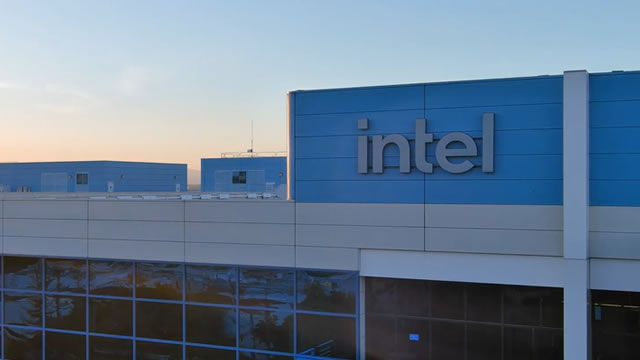
Intel's custom chip business is taking off.In September of 2025, Intel (INTC 5.45%) created a new group to handle custom chip design for external customers. The Central Engineering Group, led by a Cadence Design Systems veteran Srini Iyengar, formalized the company's efforts to break into the custom silicon market.While Intel's fourth-quarter results and guidance fell short of expectations, sending the stock tumbling on Friday morning, there was plenty of good news for investors to chew on. The success of t ...


Why Shares of Booz Allen Hamilton Are Sinking Today
The Motley Fool· 2026-01-26 19:09
Group 1 - The U.S. Treasury Department has cancelled all contracts with Booz Allen Hamilton due to a data leak incident involving an employee, which is part of a broader initiative to eliminate waste, fraud, and abuse [1][2][4] - The cancellation affects 31 contracts with Booz Allen, amounting to annual revenue of $4.8 million and total commitments of $21 million [4] - Following the announcement, Booz Allen's shares dropped nearly 11%, reflecting investor concerns about potential further cancellations of government contracts under the Trump administration [1][5][6] Group 2 - The company has been facing challenges in a difficult environment, with the Trump administration reportedly eliminating many government contracts with consulting firms [6][7] - Booz Allen's stock has seen a significant decline, being roughly cut in half since November 2024, indicating ongoing struggles within the consulting industry [7] - Despite the current situation, Booz Allen has condemned the actions of the employee responsible for the data leak and has expressed support for the U.S. government's investigation [6]


Forget Gold At Over $5,000 Per Ounce: These 2 Precious Metals Plays Are a Much Smarter Move for Investors
The Motley Fool· 2026-01-26 18:54
Core Viewpoint - Gold prices have reached record highs, exceeding $5,000 per ounce, driven by market uncertainty, global tensions, and a weakening dollar, which presents both opportunities and risks for investors in the mining sector [1]. Group 1: Newmont Corporation - Newmont Corporation, the largest gold miner by market cap, is experiencing record profits while reducing long-term debt, with a reported revenue of $5.5 billion, up nearly 20% year over year, and earnings per share (EPS) of $1.67, up 108% [3][7]. - In the third quarter, Newmont produced 1.4 million ounces of gold, a decrease of 28.5% year over year, but maintained a profit of nearly $2,000 per ounce mined due to an average all-in sustaining cost (AISC) of $1,566 per ounce and an average realized gold price of $3,539 per ounce [6]. - Newmont has a diversified portfolio, mining not only gold but also copper, lead, zinc, and silver, which provides stability against fluctuations in gold prices [4]. - The company faces potential challenges in Ghana, where it operates two mines, as the government plans to increase royalties to 12% if gold prices exceed $4,500 per ounce, which could impact profits [8][9]. Group 2: Agnico Eagle Mines - Agnico Eagle Mines, the second-largest gold producer, is on track to produce a record 3.5 million ounces of gold this year, with a net income increase of 86% year over year to $1.06 billion and an EPS of $2.10 [10][12]. - The company has a strong financial position with $2.7 billion in cash and only $196 million in debt, having paid down $950 million in debt this year [14]. - Agnico's all-in AISC for gold production is $1,373 per ounce, while it realized an average price of $3,476 per ounce, indicating a high-margin operation [14]. - Despite a 145% rise in share price over the past year, concerns exist regarding its valuation, as the stock is trading around 32 times earnings, and its return on equity (ROE) is 9.35%, which is below expectations for a leading mining company [13]. Group 3: Investment Outlook - Both Newmont and Agnico Eagle Mines are positioned to benefit from elevated gold prices, serving as a hedge against inflation and providing diversification for investors' portfolios [15]. - The mining companies have the advantage of scale, with established operations that can maintain profitability even if gold prices fluctuate [16].


FSTA vs. IYK: The Clash of Two Consumer Staple ETFs
The Motley Fool· 2026-01-26 18:44
Core Insights - The article compares two U.S. consumer staples sector ETFs: Fidelity MSCI Consumer Staples Index ETF (FSTA) and iShares U.S. Consumer Staples ETF (IYK), highlighting their differences in cost, holdings concentration, and sector focus, which may appeal to different investor types [1] Cost & Size Comparison - IYK has an expense ratio of 0.38% while FSTA has a lower expense ratio of 0.08% - As of January 25, 2026, IYK's one-year return is 8.52% compared to FSTA's 7.13% - IYK offers a dividend yield of 2.61%, slightly higher than FSTA's 2.19% [2] Performance & Risk Comparison - Over the past five years, IYK experienced a maximum drawdown of 15.04%, while FSTA had a drawdown of 16.59% - An investment of $1,000 in IYK would have grown to $1,171, whereas the same investment in FSTA would have grown to $1,315 over five years [3] Holdings Composition - FSTA holds 97 stocks, focusing entirely on consumer staple companies, with top positions in Costco, Walmart, and Procter & Gamble, which together account for over 25% of the ETF's weight [4] - IYK is more concentrated with 58 stocks and allocates 10% of its holdings to healthcare, heavily relying on Procter & Gamble, Coca-Cola, and Philip Morris International, which are the only stocks exceeding 10% weight [5] Investment Implications - Consumer staples are generally considered defensive assets during economic downturns, providing essential goods that maintain demand [6] - Both FSTA and IYK are designed to have lower risk and volatility compared to other ETFs, making them resilient during recession-like events [7] - FSTA emphasizes large retailers, while IYK focuses more on individual product brands, with IYK's healthcare allocation potentially less appealing to those seeking pure consumer staples [8]

Apple's Action Tells Me That Another "Magnificent Seven" Stock Is the Best AI Investment Opportunity in 2026 and Beyond
The Motley Fool· 2026-01-26 10:21
Apple is figuring out how to participate in the AI race by leaning on its fellow California-based tech peer.Apple has drawn criticism for falling behind in the artificial intelligence race (AI). But the consumer tech heavyweight's latest move signals a calculated approach to push the business forward.Investors looking to gain more exposure to the revolutionary technology in their portfolios might want to consider the company Apple just partnered with. It's the best AI opportunity in 2026 and beyond. Leanin ...



Yeti Holdings: Is the Post-Q3 Rally Pricing in Margin Recovery?
The Motley Fool· 2026-01-26 10:00
Core Viewpoint - Yeti Holdings' stock has increased by 44% since reporting Q3 2025 earnings, despite a significant decline in gross margins and operating margins, indicating market optimism about the company's future potential [1]. Financial Performance - Yeti's stock is currently trading at approximately $48 per share, nearing levels not seen since December 2023 [1]. - The company reported a gross margin decline from 58.2% to 55.9% and adjusted operating margins at 13.7%, the lowest in years [1]. - Current gross margin stands at 57.79% [2]. Market Dynamics - The decline in gross margin is attributed to tariff impacts on China-sourced goods and a shift in product mix, with higher-margin drinkware sales declining by 4% while lower-margin coolers grew by 12% [5][6]. - Drinkware now constitutes about 54% of sales, down from previous levels, while coolers account for 44% [6]. Supply Chain and Manufacturing - Yeti is reducing its reliance on Chinese manufacturing, projecting that exposure will be less than 5% of cost of goods sold by 2026 [5]. - The company is diversifying its supply chain across countries like Vietnam, the Philippines, and Mexico [5]. Growth Opportunities - Direct-to-consumer sales have increased from 8% to 60% of total revenue over the past decade, providing a scalable platform for growth [8]. - International sales grew by 14% in Q3 2025, now representing about 20% of revenue, with significant growth potential in Asia [9]. Strategic Initiatives - Yeti is targeting new customer segments beyond outdoor enthusiasts, including partnerships in sports and entertainment [10]. - The company has acquired Helimix for $38 million to expand into the sports nutrition market [10]. Competitive Landscape - Competition in the drinkware segment has intensified, with rivals like Stanley gaining market share among younger consumers [11]. - The domestic tumbler category shows signs of saturation, which may prolong pressure on gross margins [11]. Financial Health and Shareholder Returns - Yeti has repurchased $150 million of stock in Q3 2025 and raised its buyback target for the year from $200 million to $300 million, indicating strong cash generation [13]. - The company expects to generate $200 million in free cash flow for 2025 and has a solid balance sheet with approximately $90 million in net cash [14]. Valuation - At around $48 per share, Yeti trades at about 19.5 times management's 2025 earnings and free cash flow expectations, which is considered reasonable given the company's growth potential [15].


This $25 Dividend Stock Could Be Your Ticket to Financial Freedom
The Motley Fool· 2026-01-26 09:30
Core Viewpoint - VICI Properties offers a high dividend yield, currently over 6%, which is significantly above the S&P 500 average of 1.2%, making it an attractive option for passive income investors [1]. Group 1: Dividend Stability and Growth - VICI Properties owns a diverse portfolio of experiential real estate, including casinos and entertainment complexes, and leases these properties under long-term, triple-net leases, ensuring stable cash flows [2]. - The company pays out approximately 75% of its stable cash flow in dividends, with a history of increasing its dividend for eight consecutive years at a compound annual growth rate of 6.6%, outpacing the 2.3% average of other NNN-focused REITs [5]. Group 2: Investment Strategy and Growth Potential - VICI Properties engages in sale-leaseback transactions, recently completing a $1.2 billion acquisition of seven gaming properties, which enhances its cash flow to support dividend payments [3]. - The company has a significant total addressable market opportunity exceeding $400 billion for U.S. gaming properties, positioning it for continued growth and the ability to increase dividends [6].



Micron Stock Is Up Over 260%. Here's Why It Could Go Even Higher
The Motley Fool· 2026-01-26 08:47
Core Viewpoint - Micron Technology is experiencing significant momentum, driven by the increasing demand for high-bandwidth memory (HBM) in artificial intelligence (AI) applications, with a potential for further growth in its stock price [2][4][11] Company Performance - Micron's stock has surged over 260% in the last 12 months, outperforming other AI stocks [2] - Current market capitalization stands at $450 billion, with a price range of $390.76 to $412.22 for the day [3] - The company has a gross margin of 45.53% and a dividend yield of 0.12% [3] Market Dynamics - The total addressable market for HBM is projected to grow from approximately $35 billion last year to around $100 billion by 2028, reflecting a compound annual growth rate of about 40% [6] - Strong demand for HBM is expected to persist, with supply constraints likely continuing beyond 2026 [6][7] Demand Drivers - AI applications are expanding beyond data centers to edge devices, including smartphones and vehicles, increasing the need for memory [3][4] - Developers of large language models are increasing context windows, which require more memory, specifically HBM [4][5] Earnings Potential - Analysts predict that Micron's earnings could nearly quadruple over the next two years due to favorable supply-demand dynamics [8] - The stock is currently trading at 12.5 times forward earnings, with a low price-to-earnings-to-growth (PEG) ratio of 0.7, indicating potential for significant growth [9] Analyst Sentiment - Despite a strong performance, the consensus 12-month price target for Micron is 12% below the current share price, reflecting a cautious outlook among analysts [10] - 37 out of 43 analysts rated Micron as a "buy" or "strong buy," indicating overall positive sentiment despite the lower price target [10]


The Stock Market This Week: President Trump's Tariffs, the Fed's Interest Rate Decision, and Big Tech Earnings
The Motley Fool· 2026-01-26 08:25
Market Overview - The U.S. stock market is experiencing volatility due to President Trump's tariff threats, the Federal Reserve's interest rate decision, and earnings reports from major tech companies [1][2][11] - The S&P 500 index had a 2% increase before a drop of over 2% following tariff announcements [1] Federal Reserve Interest Rate Decision - The Federal Open Market Committee (FOMC) is expected to maintain the federal funds rate at 3.5% to 3.75% during its meeting on January 28 [3] - The likelihood of a 25-basis-point cut is only 4% according to CME Group's FedWatch tool [3] - Recent economic data suggests a resilient jobs market, with the unemployment rate improving to 4.4% in December from 4.5% in November [4][5] Earnings Reports from "Magnificent Seven" - Four companies from the "Magnificent Seven" will report earnings this week: Tesla, Microsoft, Meta Platforms, and Apple [6][11] Tesla - Expected revenue for Tesla in Q4 is $24.9 billion, a 3% decrease, with non-GAAP earnings projected to drop 45% to $0.40 per diluted share [6] - Focus will be on CEO Elon Musk's comments regarding physical AI initiatives [7] Microsoft - Anticipated revenue increase of 15% to $80.3 billion, with non-GAAP earnings expected to rise 20% to $3.86 per diluted share [8] - Investors will pay attention to Azure's revenue growth and generative AI adoption [8] Meta Platforms - Expected revenue growth of 21% to $58 billion, with non-GAAP earnings projected to increase 3% to $8.23 per diluted share [9] - Investors are looking for continued trends in engagement and advertising conversion rates due to AI investments [9] Apple - Expected revenue increase of 11% to $138 billion, with GAAP earnings also projected to rise 11% to $2.67 per diluted share [10] - Market focus will be on iPhone sales and updates regarding AI innovation [10]




3 Things Investors Need to Know About TRX Gold Corporation in 2026
The Motley Fool· 2026-01-26 08:05
Core Viewpoint - Investors interested in gold may find TRX Gold Corporation an attractive option due to its significant stock price increase and the overall rise in gold prices, which have surged 87% since the start of 2025, with TRX Gold's stock rising 178% since September [1]. Group 1: Company Performance - TRX Gold has a market capitalization of $327 million and has seen its stock price increase by 12.87% to $1.14, with a 52-week range of $0.27 to $1.14 [2]. - The company reported an average gold price of $3,860 per ounce in the first quarter, leading to an increase in its adjusted EBITDA margin from 35.2% to 52.5% [4]. - TRX Gold generated record revenue of $25.1 million in the first quarter and is transitioning from a negative to a positive working capital position, aiming to fund future expansions through operational cash flow rather than equity sales [7]. Group 2: Operational Risks - TRX Gold operates primarily from a single project, the Buckreef Gold Project in Tanzania, which exposes the company to risks such as technical failures, weather events, and political issues [5][6]. - The company operates as a joint venture with the Tanzanian government, which may limit its control over certain operational decisions [6]. Group 3: Future Outlook - The capital cost for the planned plant expansion is estimated at $30 million, which the company expects to finance entirely through internally generated cash flow over the next 18 to 24 months [8]. - TRX Gold is not hedged, providing it with full exposure to rising gold prices, making it a speculative investment for those bullish on gold [9].