The Motley Fool

Search documents
The Secret Crypto Stock That Could Turn $1,000 Into a Fortune
The Motley Fool· 2026-01-18 06:00
Core Viewpoint - Coinbase offers a lower-risk investment opportunity to gain exposure to the long-term growth of cryptocurrencies, benefiting from institutional adoption and acting as a primary custodian for U.S. spot Bitcoin and Ethereum ETFs [1][2] Business Momentum - In Q3 of fiscal 2025, Coinbase reported revenues of $1.9 billion, a nearly 55% year-over-year increase, and adjusted EBITDA of $801 million, up 78.3% year-over-year [4] - Subscription and service revenues accounted for 40% of total revenues in Q3, indicating a shift away from volatile trading fees and more consistent earnings performance [4] Market Position and Regulatory Environment - The regulatory landscape for cryptocurrencies is improving, with U.S. lawmakers preparing for key hearings and votes in January 2026 to establish clearer regulations [2] - Coinbase is complying with the EU's Markets in Crypto-Assets (MiCA) framework by submitting required disclosures [2] Key Financial Metrics - Coinbase's market capitalization is $65 billion, with assets held on the platform nearing $516 billion, supported by growing institutional flows [6] - The gross margin stands at 86.71%, indicating strong profitability [6] Growth Catalysts - Stablecoins are a significant growth driver, with Coinbase generating $355 million in stablecoin-related revenues, bolstered by high interest rates and a $15 billion USDC balance on the platform [7] - The increasing use of USDC for payments and cash management is leading to higher interest-based revenues for Coinbase [7] Investment Outlook - Despite exposure to cryptocurrency volatility, Coinbase is positioned as a smart investment choice to benefit from long-term trends in cryptocurrency adoption [8]



Are Data Storage Stocks in a Bubble or Should You Get in Now?
The Motley Fool· 2026-01-18 05:00
Core Viewpoint - Data storage stocks significantly outperformed the market in 2025, with four companies achieving over 200% gains, driven by a persistent memory chip shortage and high demand from AI workloads [1][4][5]. Group 1: Company Performance - Sandisk (NASDAQ: SNDK) was the best-performing stock in the S&P 500, soaring 559% in 2025 [1]. - Western Digital (WDC) experienced a 282% increase in stock price [2]. - Seagate Technology Holdings (STX) saw a 219% rise [3]. - Micron Technology (MU) had a stock price increase of 239% [3]. Group 2: Market Dynamics - A supply-demand imbalance led to significant price increases for memory storage products, with DRAM prices rising 170% and NAND prices climbing nearly 250% in 2025 [4][5]. - The demand for storage is primarily driven by AI workloads, which require substantial digital storage and memory compared to consumer devices [4][7]. Group 3: Current Trends - In early 2026, Sandisk is up 63%, Western Digital has climbed 23%, Seagate Technology is up 16%, and Micron Technology is 19% higher, while the S&P 500 index is up less than 2% [6]. - DRAM memory prices are expected to increase by 50% or more in the first quarter of 2026 compared to the fourth quarter of 2025 [5]. Group 4: Future Outlook - The ongoing demand for storage is expected to continue due to the rapid AI buildout, although supply adjustments may eventually occur [7][8]. - The four memory device providers currently appear promising for investors [8].



2 Reasons to Buy This Hidden Gem Luxury Stock
The Motley Fool· 2026-01-18 04:37
Core Insights - Ferrari is positioned as a unique luxury stock within the automotive industry, defying typical industry challenges such as intense competition and low margins [2] - The company maintains high profit margins and pricing power by limiting vehicle production and introducing innovative technology [3][5] - Ferrari's upcoming F80 model, priced at nearly $4 million, is already sold out, showcasing its strong demand and pricing strategy [6] Financial Performance - Ferrari boasts a gross margin of 51.25%, significantly higher than its industry competitors, indicating strong financial health [9] - The company's market capitalization stands at $61 billion, with a current stock price of $345.30 [8] Market Position and Strategy - Ferrari has a strategic advantage in transitioning to electric vehicles (EVs), allowing it to wait for market readiness while already engaging in hybrid vehicle production [7] - In the third quarter of 2025, Ferrari's shipments were 57% internal combustion engine (ICE) vehicles and 43% hybrids, reflecting a balanced approach to market demands [9] Competitive Advantages - The company has demonstrated durable competitive advantages that have consistently driven its operating margins and profits higher over the past decade [10] - Ferrari's brand power and unique market positioning allow it to effectively manage its limited order book while maintaining high pricing power [5][10]


Intuitive Machine's CEO Sold Nearly 13,000 Shares. Is the Stock a Buy or Sell?
The Motley Fool· 2026-01-18 04:24
Company Overview - Intuitive Machines is a Houston-based aerospace company focused on providing advanced lunar and orbital solutions for the space industry, supporting robotic and human exploration of the Moon and beyond [8] - The company offers services related to lunar access, orbital services, and lunar data through its various business units, positioning itself as a key enabler of sustained lunar exploration [7][8] - As of January 8, 2026, the company has a market capitalization of $3.07 billion, with a revenue of $218.49 million and a net income of -$193.22 million [4] Recent Insider Transaction - On January 8, 2026, CEO Stephen J. Altemus executed an option exercise and immediate sale of 12,669 shares for a total transaction value of approximately $253,400 [1][2] - The shares sold represented just 0.09% of Altemus's direct ownership, leaving his stake essentially unchanged at over 13.8 million shares [6] - The transaction was part of a Rule 10b5-1 trading plan adopted by Altemus in December 2024, indicating it was not based on insider information [9][10] Market Performance - The sale occurred when Intuitive Machines' stock was on an upswing, reaching a 52-week high of $24.95 on January 24, 2026, due to new customer contracts and the acquisition of Lanteris Space Systems [11] - The company's price-to-sales ratio rose to nearly 11, suggesting that while the stock price has increased, it may be a good time to sell rather than buy [11]


I Predicted That Nvidia Would Beat the S&P 500 for the 3rd Consecutive Year in 2025. Here's Why the Streak Can Continue in 2026.
The Motley Fool· 2026-01-18 04:00
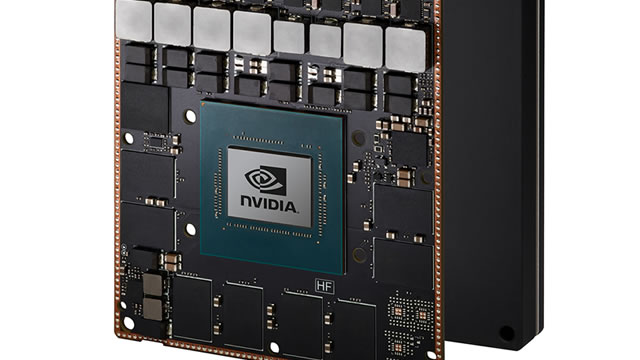
Core Viewpoint - Nvidia is positioned as a fundamentals-led growth story, outperforming the S&P 500 with a 38.9% increase compared to the index's 16.4% gain, and is expected to continue this trend into 2026 [1]. Group 1: Financial Performance and Projections - Nvidia forecasts reaching $500 billion in Blackwell and Rubin booked orders, with expectations to exceed this guidance as orders increase [2]. - Analysts have raised earnings estimates for Nvidia, projecting fiscal 2026 earnings per share at $4.69 and $7.60 for fiscal 2027, up from previous estimates of $4.29 and $5.76 respectively [4]. - Nvidia's fiscal 2027 ends in late January 2027, indicating that the financial benefits from Rubin will likely start in the second half of fiscal 2027 [4]. Group 2: Product Development and Efficiency - Nvidia announced six new Rubin chips, including a GPU and CPU, with full production of Rubin expected and deliveries in the second half of calendar year 2026 [3]. - Rubin has achieved significant efficiency improvements, including a 90% reduction in inference token costs and a 75% reduction in the number of GPUs needed for AI model training [6]. - The company justifies high pricing for Rubin products due to their expected performance improvements, which will lower operating costs for data centers [7]. Group 3: Market Position and Demand - Nvidia's innovation is expected to sustain high margins and maintain competitiveness against rising competition [9]. - Key customers of Nvidia are highly profitable companies, indicating strong demand for AI solutions, which supports a forward price-to-earnings ratio of 39 [10]. - Current demand for Rubin suggests that AI spending remains robust, providing confidence in Nvidia's ability to reward long-term investors [10].

Vanguard VBK vs. iShares IJT: How These Small-Cap Growth ETFs Compare on Fees, Risk, and Returns
The Motley Fool· 2026-01-18 03:17
Core Insights - The article compares two small-cap growth ETFs, the Vanguard Small-Cap Growth ETF (VBK) and the iShares S&P Small-Cap 600 Growth ETF (IJT), focusing on their cost, performance, risk, and portfolio construction to assist investors in making informed decisions [1][2] Cost & Size Comparison - IJT has an expense ratio of 0.18%, while VBK has a lower expense ratio of 0.07% [3] - As of January 17, 2026, IJT's one-year return is 8.63%, compared to VBK's 12.47% [3] - IJT offers a dividend yield of 0.91%, higher than VBK's 0.54% [3] - Assets under management (AUM) for IJT is $6 billion, while VBK has significantly higher AUM at $39 billion [3] Performance & Risk Comparison - Over the past five years, IJT experienced a maximum drawdown of -29.23%, while VBK had a deeper drawdown of -38.39% [4] - An investment of $1,000 in IJT would have grown to $1,227 over five years, while the same investment in VBK would have grown to $1,155 [4] Portfolio Composition - VBK holds 552 positions, with 27% allocated to technology, 21% to industrials, and 18% to healthcare, featuring top holdings like Insmed and SoFi Technologies [5] - IJT contains 348 stocks, with a more balanced sector allocation: 20% in technology, 19% in industrials, and 17% in healthcare, including leading positions like Arrowhead Pharmaceuticals [6] Investment Implications - Both ETFs focus on small-cap stocks with growth potential, which may lead to higher total returns over time [7] - VBK is considered slightly higher risk due to its heavier tilt towards technology, indicated by a higher beta of 1.43 compared to IJT's 1.18 [8] - IJT's higher dividend yield may appeal to income-focused investors, despite its higher expense ratio compared to VBK [9] - Investors must weigh their goals, as VBK has shown larger price swings but has outperformed IJT over the last 12 months [10]
Want a Higher Retirement Withdrawal Rate Than 4%? Here's What You Need to Do
The Motley Fool· 2026-01-18 03:02
You may be able to get more income out of your savings each year.A lot of people work hard to build a retirement nest egg. But then, once their careers actually end, they wind up disappointed when they realize they're able to withdraw only a limited amount of money from their IRA or 401(k) each year.Financial experts tend to promote the 4% rule for managing a retirement nest egg. The rule states that if you withdraw 4% of your IRA or 401(k) account balance your first year of retirement and adjust future wit ...

Can Costco Stock Reach $1,000 in 2026?
The Motley Fool· 2026-01-18 02:37
Core Viewpoint - Costco's stock has shown strong long-term performance, with a total return of 52% over the 12 months leading to February 2025, but currently trades 11% below its all-time high, prompting investor interest in potential gains [1] Stock Performance and Projections - For Costco's stock to reach $1,000 by the end of 2026, it would need to increase by just 5% from its current price of $954, which is achievable given its historical compound annual growth rate of 20% over the past decade [2] - Sell-side analysts have set a consensus price target of $1,033 for Costco, indicating an 8% upside potential based on its long-term performance [3] Financial Performance - Costco reported a 7% increase in same-store sales (SSS) for December 2025, following a 5.9% increase in fiscal 2025 and a 5.3% increase in fiscal 2024, highlighting strong fundamental gains [3] - Wall Street analysts forecast revenue and earnings per share to grow by 8% and 11%, respectively, between fiscal 2025 and fiscal 2026, reflecting a stable outlook for the company [8] Membership and Customer Retention - Costco has 81.4 million membership accounts, a 5.2% increase from the previous year, indicating strong customer retention and attraction [4] Market Position and Valuation - Costco's stock trades at a high price-to-earnings (P/E) ratio of 51, reflecting the market's premium valuation of the company due to its strong brand recognition and cost advantages in the retail sector [9] - Despite facing competition and the rise of online shopping, Costco continues to perform well, supported by its expanding store base [9] Economic Considerations - While external factors such as a potential recession could impact consumer spending and foot traffic, the current economic environment, including the Federal Reserve's rate-cutting cycle and quantitative easing, is seen as a stimulus for growth [6][7]


A Once-in-a-Generation Investment Opportunity: Here's My Top AI Stock for 2026
The Motley Fool· 2026-01-18 02:30
Core Viewpoint - Artificial intelligence (AI) represents a significant investment opportunity that investors should not overlook, with the potential for massive gains through improved worker efficiency and profitability [2][3]. Company Overview: Nvidia - Nvidia is positioned as a leader in the AI sector, providing cutting-edge computing hardware essential for training and running AI models [3][9]. - The company's stock has experienced a substantial increase of nearly 1,200% since 2023, indicating strong market performance [4]. - Nvidia's current market capitalization stands at $4.5 trillion, with a gross margin of 70.05% and a dividend yield of 0.02% [7]. Market Potential - Global data center capital expenditures are projected to rise from approximately $600 billion in 2025 to between $3 trillion and $4 trillion by 2030, highlighting the growing demand for AI infrastructure [8]. - Nvidia has sold out its capacity for cloud GPUs as of Q3, leading AI hyperscalers to order GPUs years in advance, which provides Nvidia with valuable insights into future market trends [9]. Revenue Projections - For FY 2026, Wall Street estimates Nvidia will generate around $213 billion, capturing over a third of total data center spending based on the $600 billion estimate [10]. - If the market reaches the $3 trillion level by 2030, Nvidia could potentially generate $750 billion in revenue, assuming it maintains a 25% market share, which would represent more than a tripling of its current revenue [11][12].
What Tesla Needs to Prove in 2026
The Motley Fool· 2026-01-18 02:00
Core Insights - Tesla's stock gained 11% in 2025, underperforming the overall market, but has seen a remarkable increase of 3,130% over the past decade, contributing to a market cap of $1.4 trillion [1] - The company's price-to-earnings ratio stands at 292, indicating high market expectations for future performance [2] Group 1: Autonomous Driving and Robotaxis - Progress in robotaxi development is crucial for Tesla, with expectations that the company will achieve full self-driving technology and expand its robotaxi service [3] - In 2025, Tesla launched its robotaxi service in Austin, Texas, but needs to expand to new cities and increase Cybercab production in 2026 [4] - Competition from Nvidia's AI tools for autonomous driving could impact Tesla's growth potential, emphasizing the need for Tesla to focus on its own software development [5] Group 2: Core Business and Market Conditions - Tesla's valuation is heavily influenced by its autonomous-driving ambitions, but it remains primarily an EV manufacturer, with automotive deliveries declining by 9% year-over-year in 2025 [7] - Higher interest rates and the expiration of the EV tax credit are making new cars more expensive, while increased competition presents challenges for Tesla [8] - Shareholders are looking for improvements in top-line growth and margins from Tesla's core business in 2026 [8]