中关村储能产业技术联盟

Search documents
澳大利亚电力市场重大改革:电池储能因此受益
中关村储能产业技术联盟· 2025-07-09 09:10
Core Viewpoint - The Australian Energy Market Operator (AEMO) has successfully implemented the Frequency Performance Payment (FPP) reform in the National Electricity Market (NEM), which is seen as a significant milestone for the NEM, effective from June 8, 2025 [1] Reform Key Changes - The reform includes two major changes: the abolition of the "causer pays" model and the introduction of a new framework based on a five-minute contribution factor, primarily affecting semi-scheduled assets like solar and wind farms [2] - A new funding pool has been created under the FPP, charging units with poor frequency performance and compensating those with good performance, benefiting battery storage system owners due to their rapid response capabilities [2] Chain Effects and Additional Benefits - The change from the "causer pays" model will alter how large solar and wind farms share costs, eliminating existing loopholes and prompting owners to seek more accurate forecasting technologies [3] - The FPP framework is expected to attract international capital investment in NEM storage projects, enhancing grid reliability amid the shutdown of coal-fired power plants and the proliferation of investor-owned generation [3] Ensuring Mechanism's Continued Applicability - The FPP framework is designed to be configurable, allowing AEMO to respond to future market changes while maintaining the fundamental calculation rules [4] - AEMO can adjust levers to accommodate performance differences among various assets, ensuring the mechanism remains relevant as energy transition progresses [4]


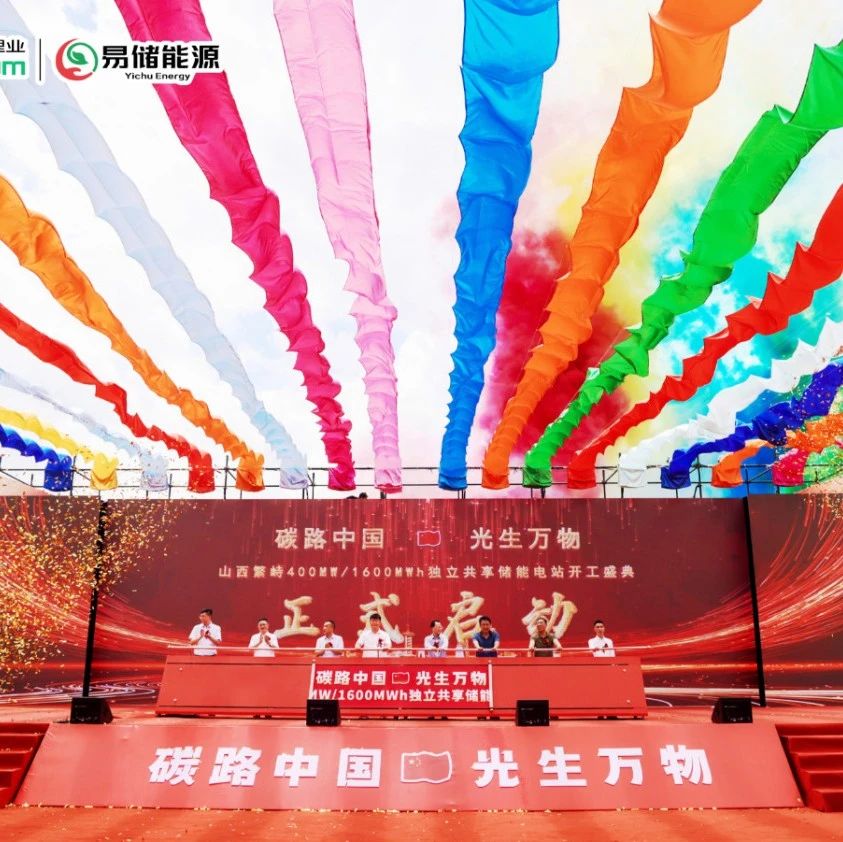
400MW/1600MWh!山西最大构网型独立共享储能电站开工
中关村储能产业技术联盟· 2025-07-08 09:08
Core Viewpoint - The construction of the 400MW/1600MWh independent shared energy storage station by Ganfeng Group in Shanxi is a significant step towards enhancing local renewable energy consumption and stabilizing the power grid [1][2]. Investment and Financial Summary - The total investment for the project is 2 billion yuan, with an expected annual revenue of 300 million yuan [2]. - Upon completion, the project is projected to reduce carbon dioxide emissions by over 500,000 tons annually, equivalent to the carbon sequestration benefits of approximately 2,800 hectares of forest [2]. Technology and Innovation - The project utilizes Ganfeng's advanced 5MWh energy storage container system, featuring domestically developed high-cycle, long-life next-generation dual-layer coated 314Ah lithium iron phosphate battery cells [2]. - The energy storage system incorporates Ganfeng's proprietary liquid cooling and fully automated linkage fire protection system [2]. Policy and Market Context - The project aligns with the recent policy developments in Shanxi, including the 136th document which outlines pricing mechanisms for energy storage and the focus on new power system construction [4].

大储新增装机同比下降68%,上半年装机高峰前移!—6月源网侧新型储能项目分析
中关村储能产业技术联盟· 2025-07-08 09:08
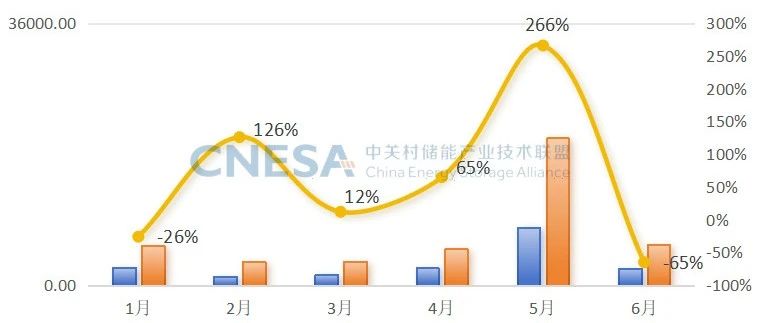
Core Insights - The article highlights a significant decline in the newly installed capacity of new energy storage projects in China, with a year-on-year decrease of 65% in June 2025, attributed to the "rush to install" driven by renewable energy [2][5]. Summary by Sections Overall Market Performance - In June 2025, the newly installed capacity of new energy storage projects reached 2.33 GW/5.63 GWh, marking a year-on-year decline of 65% and a month-on-month decline of 71% [2][5]. - Despite the negative growth in June, the second quarter saw a total of 12.61 GW/30.82 GWh of new installations, which is a year-on-year increase of 24% and 27% respectively [2][5]. Regional Insights - Jiangsu province led the country with over 750 MW of new installations in June, accounting for more than 35% of the national total [5][12]. - In Inner Mongolia, 17 new projects commenced construction in June, with a total capacity of 8.2 GW/33.1 GWh [5][18]. Storage Duration - The average storage duration for new projects in Xinjiang, Inner Mongolia, and Qinghai exceeded 3.5 hours, while most other provinces had an average duration of around 2 hours [5][15]. Technology Trends - Lithium battery technology dominated the new installations, with lithium iron phosphate battery technology accounting for 89% of the installed capacity. Non-lithium technologies, such as vanadium flow batteries, also saw deployment [5][16]. Market Expectations - The total new installed capacity for the year is expected to exceed 43 GW, driven by over 23 GW of projects currently under construction and more than 10 GW in planning stages [5][19].
Powin正式申请破产,竞争对手FlexGen已出价收购
中关村储能产业技术联盟· 2025-07-08 09:08
Core Viewpoint - The acquisition of Powin by FlexGen highlights the competitive landscape and development trends in the U.S. energy storage market amidst industry turmoil and consolidation [1] Group 1: Powin's Financial Struggles - Powin, based in Oregon, is facing severe financial difficulties and has filed for Chapter 11 bankruptcy protection, with potential layoffs and operational halts by the end of July 2024 if no solutions are found [2] - The company attributes its financial challenges to industry headwinds, including uncertainties from U.S. import tariffs and the future of investment tax credit (ITC) incentives [2] - A temporary order from the New Jersey bankruptcy court allows Powin to access $2.75 million in debtor-in-possession (DIP) financing, with FlexGen designated as the lead bidder for this financing [2][3] Group 2: FlexGen's Acquisition Motivation - FlexGen aims to acquire Powin to leverage its extensive customer base and project portfolio in the U.S. and abroad, believing that Powin's product offerings can complement its own business [4] - FlexGen, originally a microgrid control specialist, has 15 years of field deployment experience and a proprietary energy management system (EMS) software platform, Hybrid OS [5] - Powin is a pioneer in the U.S. battery energy storage system integration field, with a focus on battery hardware integration and battery management system (BMS) development [5] - The acquisition would allow FlexGen to enhance its position in the energy storage value chain by expanding from software integration and operations to hardware integration, thereby increasing overall competitiveness [5] - Powin's global market presence in the U.S., Australia, Asia, and Europe would enable FlexGen to quickly penetrate these overseas markets and expand its market share [5] Group 3: Supplier Relationships - Both FlexGen and Powin are procurement partners of CATL, with FlexGen having signed a long-term supply agreement for 10 GWh of EnerC liquid-cooled storage containers in 2022 [6]

93座电站参与!江苏完成全国最大规模新型储能集中调用
中关村储能产业技术联盟· 2025-07-08 01:55
文 | 新华日报 记者从国家电网获悉,受持续高温影响,截至7月7日,江苏电网最高用电负荷 已在年内第三次 刷新历史纪录 ,达1.52亿千瓦。而7月6日,在国网江苏省电力有限公司电力调控中心统一指挥 下, 全省93座新型储能电站在晚间用电高峰时集中向电网放电 ,最大放电功率达714万千瓦, 实现了我国最大规模新型储能的集中调用。 新型储能被喻为"超级充电宝",在用电高峰可放电发挥顶峰调节作用,同时在用电低谷可充电助 力新能源消纳。 6日晚,为了支撑晚间电网用电高峰,共有 64个电网侧储能、29个电源侧储能电站 参与集中放 电,总参与容量724.8万千瓦,实际最大调用规模为714万千瓦;这是继去年夏季集中调用455 万千瓦新型储能后, 创造了集中调用规模的新纪录 ,同比增长56.9%。 在此次新型储能集中调用中,国网江苏电力通过新一代调度支持系统,在用电高峰同时向超过 700万千瓦新型储能发出放电指令,最大可同时满足约4800万户居民一个小时的用电需求。 看似简单,其实充电放电的时机要精心选择。放电, 在考虑城市用电需求的前提下,还要尽可 能让储能项目获得收益 。"从空间来讲,江苏储能项目多位于苏北,用电却集中在 ...
国家级零碳园区申报开启!科学配置储能,鼓励参与电力市场
中关村储能产业技术联盟· 2025-07-07 10:37
Core Viewpoint - The article discusses the launch of a national-level zero-carbon park application process by the National Development and Reform Commission, the Ministry of Industry and Information Technology, and the National Energy Administration, emphasizing the importance of transitioning to renewable energy and reducing carbon emissions in industrial parks [1][8]. Group 1: Key Tasks for Zero-Carbon Park Construction - Accelerate the transformation of energy use structure by enhancing the development and utilization of renewable energy in parks and surrounding areas, supporting the matching of parks with non-fossil energy generation resources, and promoting green electricity supply models [9][10]. - Promote energy conservation and carbon reduction by establishing energy and carbon emission management systems, conducting energy efficiency assessments, and encouraging the construction of ultra-efficient and zero-carbon factories [10][11]. - Optimize the industrial structure of parks by developing low-energy, low-pollution, and high-value-added emerging industries, and exploring green energy manufacturing [10][12]. Group 2: Support and Funding Measures - The National Development and Reform Commission will utilize existing funding channels to support zero-carbon park construction, encouraging local governments to provide financial backing through special bonds and long-term credit support from policy banks [6][13]. - Support for enterprises to issue bonds for zero-carbon park construction and the introduction of external talent and technology for energy-saving and carbon reduction initiatives [6][13]. Group 3: Basic Conditions for Application - The construction entity for national-level zero-carbon parks must be a provincial-level or above development zone, with the possibility of including newly established emerging industrial parks or high-tech parks [3][20]. - The application can cover the entire park or a "park within a park" model, requiring clear boundaries and management responsibilities [3][20]. - Parks must have a certain foundation in energy consumption and carbon emission statistics, and must not have experienced major safety or environmental incidents in the past three years [4][5][20]. Group 4: Evaluation and Implementation - After the construction period, provincial development and reform commissions will conduct self-assessments, and those meeting requirements will undergo evaluations by the National Development and Reform Commission to officially become national-level zero-carbon parks [5][15]. - The article outlines a structured approach for the application process, including the need for comprehensive feasibility analysis and economic, environmental, and social benefit assessments [15][22]. Group 5: Indicators for Zero-Carbon Parks - Core indicators include a unit energy consumption carbon emission target of ≤0.2 tons per ton of standard coal for parks with an annual energy consumption of 20-100 million tons, and ≤0.3 tons for those with ≥100 million tons [28][30]. - Guiding indicators include a clean energy consumption ratio of ≥90% and an industrial solid waste comprehensive utilization rate of ≥80% [28][30].

2027目标超10万台,配套光储与电网融合!四部门推动大功率充电设施规划建设
中关村储能产业技术联盟· 2025-07-07 07:46
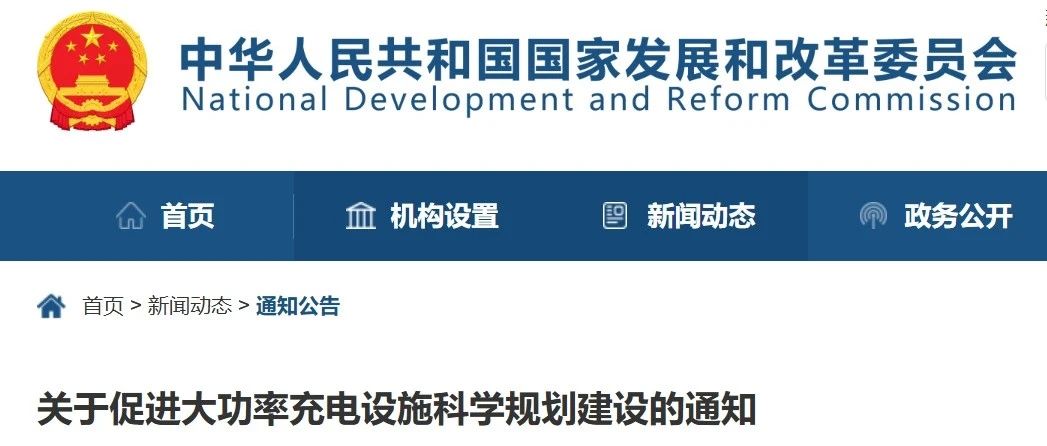
Core Viewpoint - The article emphasizes the importance of promoting the scientific planning and construction of high-power charging facilities to support the development of the electric vehicle industry and the transition to a green and low-carbon transportation energy sector. The goal is to have over 100,000 high-power charging facilities nationwide by the end of 2027, with improved service quality and technological advancements [5][7]. Group 1: Planning and Development - The notification calls for a focus on high-power charging facilities that have a utilization rate exceeding 40% during major holidays for upgrades [1][7]. - Local economic development levels, electric vehicle promotion efforts, and power resource distribution should guide the planning of high-power charging facilities [6]. - The provincial departments responsible for charging facility development are tasked with setting development goals and construction tasks for high-power charging facilities [6][7]. Group 2: Construction and Operation - Project construction units must comply with legal procedures for project filing, and local departments should strengthen supervision to avoid resource waste [8]. - The government is encouraged to support quality operators in building and operating charging stations, particularly in public transport and logistics sectors [8]. - Charging operators are required to enhance the quality and efficiency of their services, aiming for a device availability rate of no less than 98% [9]. Group 3: Safety and Management - Safety management is emphasized, with strict adherence to national standards for the design, construction, and operation of charging stations [10]. - Charging operators must ensure compliance with quality regulations and maintain high safety standards in their operations [10]. Group 4: Integration with Power Grid - The integration of high-power charging facilities with the power grid is crucial, with studies on the impact of charging loads on regional distribution systems [11]. - The establishment of efficient interaction mechanisms between charging stations and the power grid is encouraged, including the use of solar power and energy storage [11]. Group 5: Technical Standards and Innovation - Continuous development of technical standards for high-power charging is necessary, covering various aspects such as equipment, safety, and digitalization [12]. - Encouragement for technological innovation in charging equipment to improve efficiency and lifespan is highlighted, including research on high-capacity charging technologies [13]. Group 6: Support and Coordination - Local departments are urged to enhance support for the development of high-power charging facilities, including land, power supply, and financial policies [14][15]. - Coordination among various governmental departments is essential for effective planning and implementation of charging infrastructure [16].
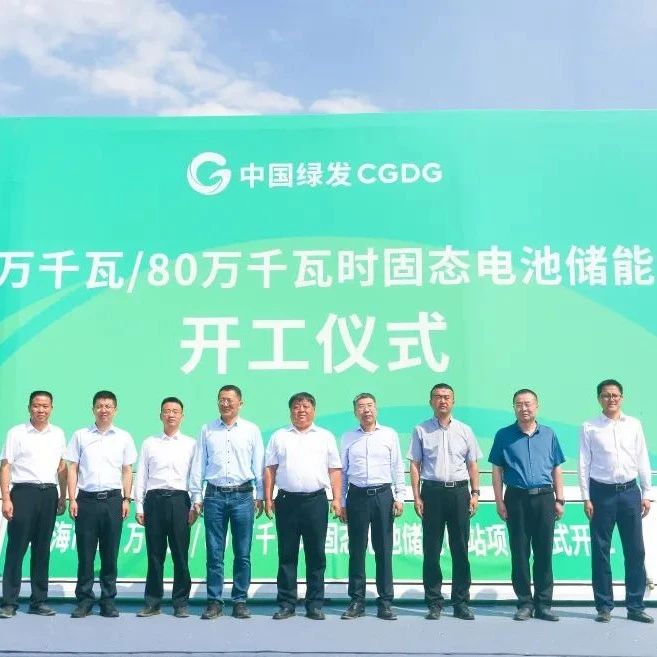
内蒙古乌海市200MW/800MWh固态电池储能电站项目开工建设
中关村储能产业技术联盟· 2025-07-07 07:46
Core Viewpoint - The project of a 200,000 kW/800 MWh solid-state battery energy storage station in Uhuai City is a significant step towards achieving China's carbon peak and carbon neutrality goals, enhancing the reliability and stability of the power system in the region [4]. Group 1: Project Overview - The energy storage station project is located in the Low Carbon Industry Park of Uhuai High-tech Industrial Development Zone, Inner Mongolia, with a total investment of nearly 700 million yuan [1]. - The project includes a 200,000 kW/800 MWh storage area and a 110 kV booster station, covering an area of 100 acres [1]. - The construction type is semi-solid-state lithium iron phosphate batteries, with each battery module having a rated capacity of 5.015 MWh and a cycle life of no less than 6,000 times [1]. Group 2: Operational Details - The project has completed all 11 preliminary procedures, including obtaining the engineering planning permit and land use planning permit [2]. - The operational period is set for 10 years, with an average annual charging capacity of 231 million kWh and an average annual discharging capacity of 189 million kWh [1]. Group 3: Strategic Importance - The energy storage station is crucial for integrating and optimizing the operation of the power system, significantly improving the stability of Uhuai City's power system and the capacity for renewable energy consumption [4].
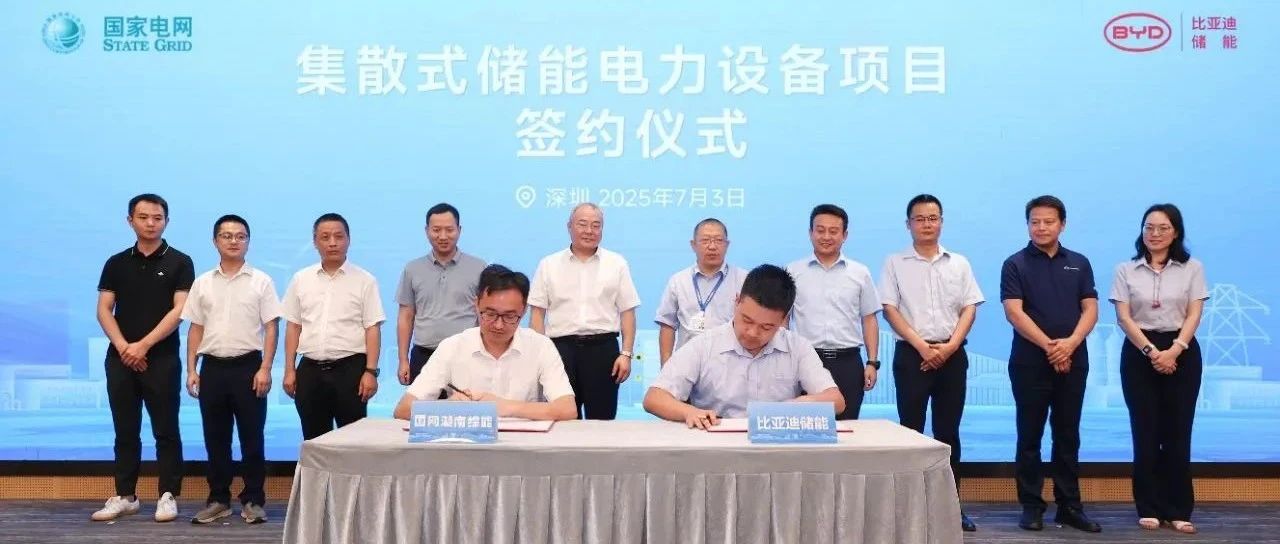
比亚迪储能与国网湖南综能深度合作,聚焦集散式储能
中关村储能产业技术联盟· 2025-07-07 07:46
Core Viewpoint - The signing of the cooperation framework agreement between BYD Energy and State Grid Hunan Comprehensive Energy Service Co., Ltd. marks a significant step towards establishing a deep and comprehensive partnership in the distributed energy storage sector, aiming to drive innovation and sustainable development in the energy industry [1][3]. Group 1: Partnership Details - The agreement emphasizes mutual recognition as long-term partners, focusing on principles of complementary advantages, joint development, integrated innovation, and mutual benefits [3]. - Both parties aim to explore innovative paths to address pain points in distribution networks and expand the future development space for new energy storage [3]. Group 2: Company Profiles - State Grid Hunan Comprehensive Energy Service Co., Ltd. is a pioneer in the new energy storage industry, having established a complete ecosystem covering planning consultation, system integration, smart operation, and product research and development [3]. - The company has developed a blockchain-based smart control platform for energy storage, recognized as a major technological equipment, leading the way in cluster management of energy storage facilities [3]. Group 3: BYD Energy's Role - BYD Energy focuses on the research, development, manufacturing, sales, service, and recycling of energy storage systems, creating a complete industrial chain [3]. - The company aims to provide safe and reliable battery storage systems, contributing to the global low-carbon energy transition [3]. Group 4: Future Outlook - The cooperation is expected to foster organic integration of both parties' strengths, promoting green development consensus and expanding cooperation areas to tackle contemporary challenges [4].

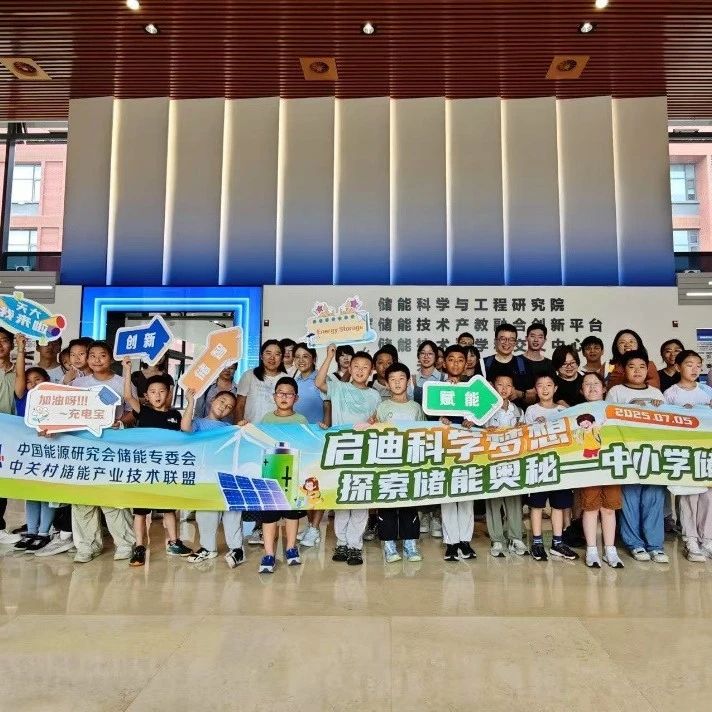
启迪科学梦想 探索储能奥秘——储能联盟中小学生科普活动圆满完成
中关村储能产业技术联盟· 2025-07-07 07:46
Core Viewpoint - The event "Future Star of Energy Storage" successfully engaged students in Tianjin, promoting awareness and understanding of energy storage technology through immersive experiences and hands-on activities [1][13]. Group 1: Safety Awareness and Emergency Preparedness - Students participated in emergency safety training at the Tianjin Fire Research Institute, learning critical self-rescue skills through simulations of scenarios like "smoke escape" and "earthquake avoidance" [2]. - Real-life case studies were used to analyze battery fire risks and home safety precautions, enhancing students' awareness of daily safety hazards [2]. - CPR and Heimlich maneuver training were conducted, embedding life-saving knowledge in students [2][3]. Group 2: Exploration of Energy Storage Technology - At Tianjin University, students were introduced to energy storage principles through engaging educational videos and exhibits, showcasing applications like streetlight storage and electric vehicle charging [4]. - The evolution of battery technology was highlighted, from lithium batteries to sodium-ion and zinc-based batteries, allowing students to explore the microscopic details of electrode materials [4][6]. - A hydrogen energy section demonstrated the clean conversion process from water to power, featuring models of high-purity green hydrogen production and hydrogen fuel vehicles [4]. Group 3: Hands-On Learning and Innovation - The creative workshop featured activities like building a "fruit battery" that lit an LED lamp, demonstrating the concept of natural batteries using lemons [8]. - Students engaged in a "solar charging treasure" DIY project, prompting discussions on energy storage during cloudy days [8]. - The hand-cranked generator activity illustrated the conversion of kinetic energy to light energy, reinforcing classroom knowledge through practical experience [8][11]. Group 4: Future Directions and Goals - The event aimed to plant the seeds of energy technology in young minds, with students expressing enthusiasm for future innovations in energy storage [13]. - The Zhongguancun Energy Storage Industry Technology Alliance plans to strengthen collaboration with research institutions to foster scientific enthusiasm among youth and support national carbon neutrality goals [15].