中关村储能产业技术联盟

Search documents
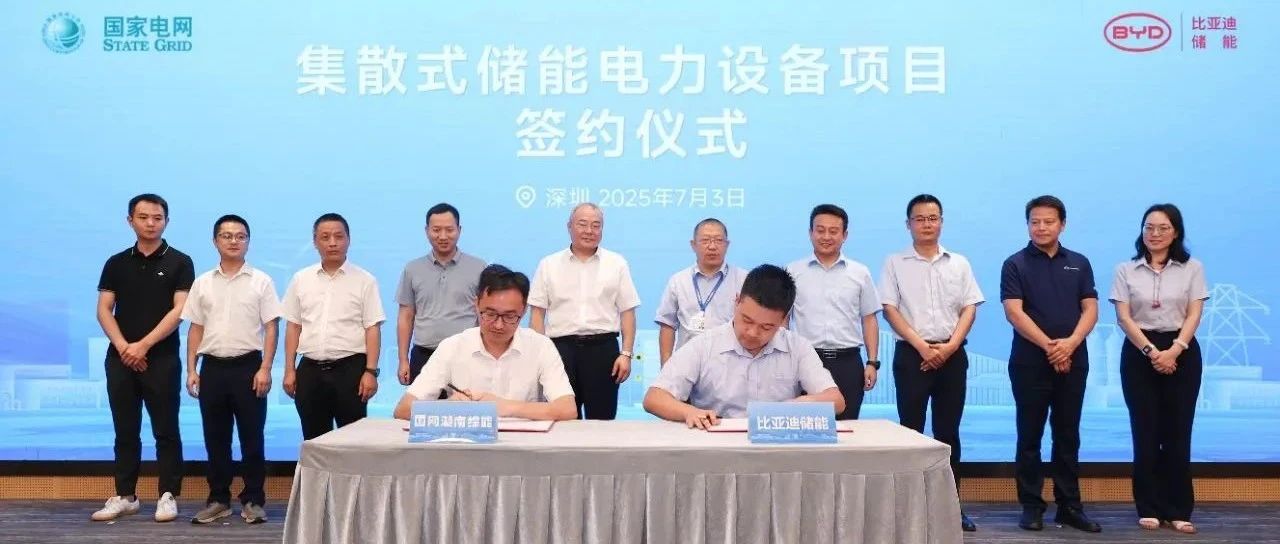
比亚迪储能与国网湖南综能深度合作,聚焦集散式储能
中关村储能产业技术联盟· 2025-07-07 07:46
Core Viewpoint - The signing of the cooperation framework agreement between BYD Energy and State Grid Hunan Comprehensive Energy Service Co., Ltd. marks a significant step towards establishing a deep and comprehensive partnership in the distributed energy storage sector, aiming to drive innovation and sustainable development in the energy industry [1][3]. Group 1: Partnership Details - The agreement emphasizes mutual recognition as long-term partners, focusing on principles of complementary advantages, joint development, integrated innovation, and mutual benefits [3]. - Both parties aim to explore innovative paths to address pain points in distribution networks and expand the future development space for new energy storage [3]. Group 2: Company Profiles - State Grid Hunan Comprehensive Energy Service Co., Ltd. is a pioneer in the new energy storage industry, having established a complete ecosystem covering planning consultation, system integration, smart operation, and product research and development [3]. - The company has developed a blockchain-based smart control platform for energy storage, recognized as a major technological equipment, leading the way in cluster management of energy storage facilities [3]. Group 3: BYD Energy's Role - BYD Energy focuses on the research, development, manufacturing, sales, service, and recycling of energy storage systems, creating a complete industrial chain [3]. - The company aims to provide safe and reliable battery storage systems, contributing to the global low-carbon energy transition [3]. Group 4: Future Outlook - The cooperation is expected to foster organic integration of both parties' strengths, promoting green development consensus and expanding cooperation areas to tackle contemporary challenges [4].


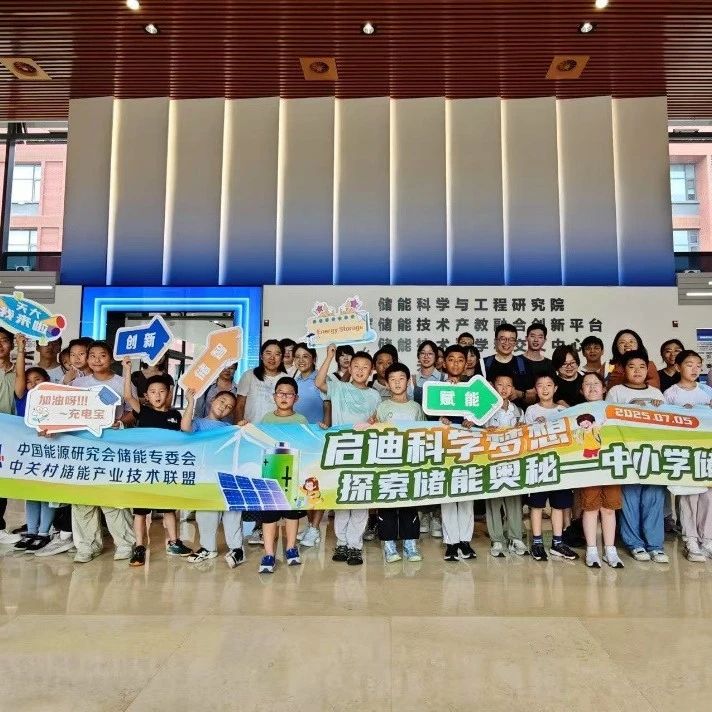
启迪科学梦想 探索储能奥秘——储能联盟中小学生科普活动圆满完成
中关村储能产业技术联盟· 2025-07-07 07:46
Core Viewpoint - The event "Future Star of Energy Storage" successfully engaged students in Tianjin, promoting awareness and understanding of energy storage technology through immersive experiences and hands-on activities [1][13]. Group 1: Safety Awareness and Emergency Preparedness - Students participated in emergency safety training at the Tianjin Fire Research Institute, learning critical self-rescue skills through simulations of scenarios like "smoke escape" and "earthquake avoidance" [2]. - Real-life case studies were used to analyze battery fire risks and home safety precautions, enhancing students' awareness of daily safety hazards [2]. - CPR and Heimlich maneuver training were conducted, embedding life-saving knowledge in students [2][3]. Group 2: Exploration of Energy Storage Technology - At Tianjin University, students were introduced to energy storage principles through engaging educational videos and exhibits, showcasing applications like streetlight storage and electric vehicle charging [4]. - The evolution of battery technology was highlighted, from lithium batteries to sodium-ion and zinc-based batteries, allowing students to explore the microscopic details of electrode materials [4][6]. - A hydrogen energy section demonstrated the clean conversion process from water to power, featuring models of high-purity green hydrogen production and hydrogen fuel vehicles [4]. Group 3: Hands-On Learning and Innovation - The creative workshop featured activities like building a "fruit battery" that lit an LED lamp, demonstrating the concept of natural batteries using lemons [8]. - Students engaged in a "solar charging treasure" DIY project, prompting discussions on energy storage during cloudy days [8]. - The hand-cranked generator activity illustrated the conversion of kinetic energy to light energy, reinforcing classroom knowledge through practical experience [8][11]. Group 4: Future Directions and Goals - The event aimed to plant the seeds of energy technology in young minds, with students expressing enthusiasm for future innovations in energy storage [13]. - The Zhongguancun Energy Storage Industry Technology Alliance plans to strengthen collaboration with research institutions to foster scientific enthusiasm among youth and support national carbon neutrality goals [15].
新疆某科技有限公司“4·8”触电事故调查报告
中关村储能产业技术联盟· 2025-07-07 07:46
Core Viewpoint - The incident involving a fatal electric shock at a storage project in Ruoqiang County was determined to be a general production safety responsibility accident caused by violations of operational procedures [3][10]. Group 1: Incident Overview and Emergency Response - On April 8, 2025, a fatal electric shock occurred during cable insulation testing, resulting in one death [2][9]. - The victim, Liu, and colleagues attempted to conduct tests without proper equipment and safety gear, leading to the accident [4]. - Emergency response was hindered by the remote location, but the victim was transported to a hospital where he was pronounced dead after unsuccessful resuscitation efforts [5][7]. Group 2: Causes and Nature of the Accident - The direct cause of the accident was Liu's improper use of conductive metal wire instead of the insulation resistance tester's output lead, which created an electric arc and resulted in electrocution [11]. - Indirect causes included the company's failure to implement safety responsibilities, lack of necessary qualifications, inadequate safety training for new employees, and ineffective supervision [12][13]. Group 3: Recommendations for Accountability - Liu, the deceased, was found to have direct responsibility for the accident but is recommended for immunity from accountability due to his death [14]. - Administrative penalties are suggested for Xu, the company's legal representative, for inadequate safety training and oversight [15]. - The company itself is recommended for penalties due to serious lapses in safety management and failure to ensure proper training and supervision [16][17]. Group 4: Lessons Learned - The company failed to enforce safety measures for high-voltage operations and did not provide adequate training or supervision for workers [18]. - The supervising company also lacked effective oversight and did not address safety hazards promptly [18]. Group 5: Corrective Actions and Preventive Measures - The company must enhance management of specialized workers, clarify safety responsibilities, and improve training and hazard inspections [19]. - The supervising company should strengthen management practices and adhere to safety regulations to fulfill its supervisory responsibilities [19].

立陶宛新建582MWh储能项目,采用罗尔斯罗伊斯储能系统
中关村储能产业技术联盟· 2025-07-06 04:57
Core Viewpoint - Ignitis Group is investing in battery energy storage systems to enhance the reliability of Lithuania's renewable energy grid, with a total investment of €130 million (approximately $153 million) for three sites, aiming for commercial operation by 2027 [1][4]. Group 1: Investment and Development - Ignitis Group plans to develop a 291MW/582MWh battery storage system at three clean energy sites, with construction starting this year [1]. - The investment of €130 million will be allocated to battery storage systems at wind farms in Kaunas and Mažeikiai, as well as a site next to the Kruonis pumped storage power plant [1]. Group 2: Importance of Battery Storage - The CEO of Ignitis Group, Darius Maikš tėnas, emphasized that battery storage systems are crucial for maintaining grid stability and efficiently utilizing green energy, especially during significant fluctuations in power supply [4]. - Battery storage systems are identified as key components in the green transition, helping to integrate more renewable energy capacity and balance electricity price volatility [4]. Group 3: Security Measures - Ignitis Group has implemented measures to prevent remote access to battery storage systems by countries identified as security threats by Lithuania's national security strategy [4]. - This initiative aligns with Lithuania's strengthened cybersecurity regulations, which prohibit manufacturers from designated threat countries, including China, from accessing energy facilities remotely [4]. Group 4: Strategic Partnerships - Rolls-Royce has established a strategic partnership with CATL to introduce energy storage systems to the EU and UK markets, integrating CATL's systems into Rolls-Royce's mtu EnergyPack QG solutions [5]. - A long-term supply agreement for over 10GWh of storage capacity was signed between Rolls-Royce and CATL, with multiple project deliveries completed in the EU region [5].

山西136号文配套细则征求意见:存量机制电价≤燃煤发电基准价,增量竞价申报充足率≥1.2
中关村储能产业技术联盟· 2025-07-06 04:57
Core Viewpoint - The article discusses the implementation plan for the market-oriented reform of renewable energy grid pricing in Shanxi Province, aiming to promote high-quality development of renewable energy through market mechanisms [1][20]. Group 1: Market Participation - Renewable energy projects, including wind and solar, will primarily participate in the electricity market, with all grid electricity entering the market to form pricing through a "quantity and price reporting" method [2][22]. - Cross-provincial and cross-regional transactions will follow the pricing policies for electricity transmission, with certain projects not included in the mechanism pricing [2][23]. Group 2: Pricing Settlement Mechanism - A sustainable pricing settlement mechanism will be established, where the difference between market trading average prices and the mechanism price will be settled by grid companies, with costs shared among all commercial users [3][23]. - The average market trading price will be determined based on a weighted average of similar projects in the market [3][23]. Group 3: Mechanism Electricity and Pricing - The mechanism electricity scale for existing projects will align with current policies, allowing projects to determine their mechanism electricity ratio annually, not exceeding the previous year's ratio [4][24]. - For new projects, the mechanism price will be determined through competitive bidding, with the price not exceeding the current benchmark price for coal-fired power [5][25]. Group 4: Competitive Bidding System - A competitive bidding system for new projects will be organized annually, with the bidding process determining the clearing price based on submitted quantities and prices [7][26]. - The bidding limits will be set by the provincial development and reform commission, considering various factors to ensure effective competition [7][28]. Group 5: Exit Rules and Policies - Projects can voluntarily apply to exit the mechanism during the execution period, and those that reach the end of their execution period will no longer be included [12][29]. - The article outlines the transitional policies for existing and new projects during the implementation period, ensuring a smooth transition to the new pricing mechanism [11][30]. Group 6: Supporting Measures - The article emphasizes the need for optimizing market trading and pricing mechanisms, including establishing a price monitoring system to ensure stability in the electricity market [13][40]. - It also highlights the importance of policy coordination and tracking the impact of reforms on industry development and enterprise operations [42][44].

湖南新型储能首次参与调频辅助服务市场,服务费占比19.6%
中关村储能产业技术联盟· 2025-07-05 02:44
Core Viewpoint - Hunan's independent new energy storage power station has successfully participated in the frequency regulation auxiliary service market, marking a significant breakthrough in the market-oriented operation of new energy storage in Hunan [1] Group 1: Market Participation - The new energy storage power station successfully engaged in secondary frequency regulation service transactions, market clearing, and service invocation during the trial operation of Hunan's frequency regulation auxiliary service market in June [1] - The new energy storage station provided an average of 25,000 megawatt-hours of frequency regulation mileage daily, with service fees from the frequency regulation auxiliary service market accounting for 19.6% [1] - The performance indicators of frequency regulation show a clear competitive advantage over traditional power generation units [1] Group 2: Future Developments - The participation in the frequency regulation service market is the latest market application following the new energy storage's involvement in peak regulation auxiliary services and the electricity spot market [1] - The Hunan Energy Regulatory Office will work with relevant provincial units to summarize experiences and accelerate the establishment of a market mechanism for new energy storage and other new operating entities [1] - This initiative aims to enhance the power system's regulation capacity and ensure the security of power supply [1]

澳大利亚电池制造商进军美国储能市场,目标5GWh
中关村储能产业技术联盟· 2025-07-05 02:44
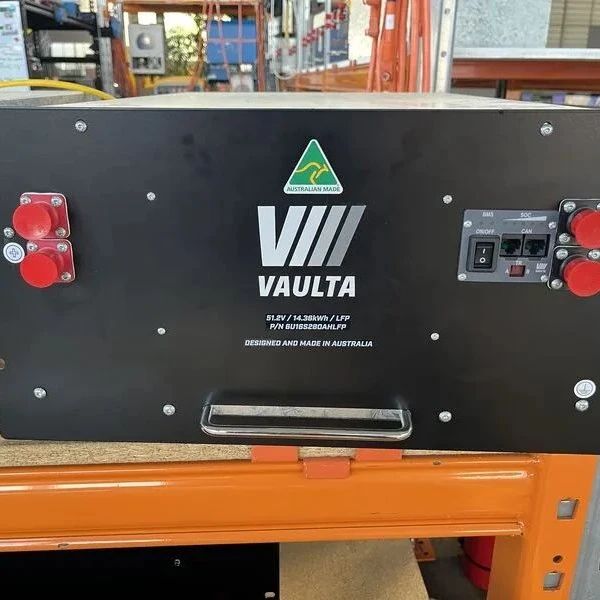
Core Viewpoint - Vaulta, an Australian battery manufacturer, has signed a strategic cooperation memorandum with eFinery Energy to promote the large-scale application of Australian lithium battery technology in the U.S. market, aiming to develop a 5 GWh energy storage project [1] Group 1: Strategic Collaboration - The collaboration will focus on exploring the technology transfer and licensing of Vaulta's lithium battery storage manufacturing processes to the U.S. market [1] - The partnership aims to pave the way for local production and deployment of high-performance battery systems, with considerations for establishing a certified assembly plant in the U.S. [1] Group 2: Company Background and Challenges - Vaulta was founded in 2019 by product design expert Dominic Spooner, specializing in modular, recyclable batteries suitable for electric vehicles, military applications, and fixed energy storage [4] - The company faces multiple challenges in entering the U.S. market, including differing certification standards across states, compliance with the Inflation Reduction Act's localization requirements, supply chain development, and establishing commercial influence in a competitive market [4] Group 3: Supply Chain and Talent - Spooner highlighted that tariff issues will persist, but eFinery has secured local cell suppliers to alleviate some pressure [4] - The primary challenge identified is talent acquisition, necessitating the establishment of a trans-Pacific technical support team [4]
储能松绑、但中资企业受限、光伏和电动汽车遭重创!美国"大而美"法案生效
中关村储能产业技术联盟· 2025-07-05 02:44
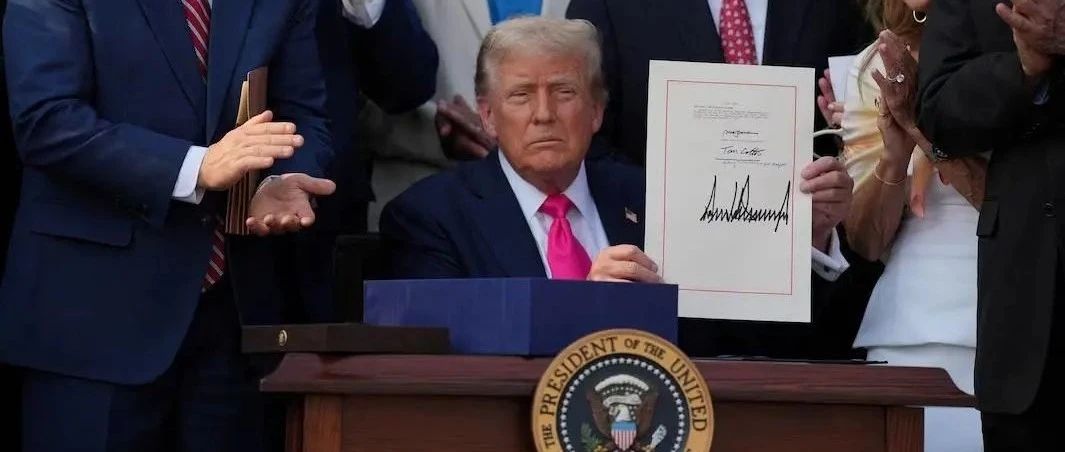
Core Viewpoint - The "Big and Beautiful" tax and spending bill signed by President Trump is expected to exacerbate the U.S. fiscal deficit and debt risks while altering the competitive landscape for the renewable energy sector, particularly solar and electric vehicle industries [1][3]. Summary by Sections Tax and Subsidy Adjustments - The bill adjusts tax credits and subsidy policies, differentiating between renewable and traditional energy sectors, with significant implications for solar and electric vehicle industries [1]. - It terminates several clean energy tax credits, including those for new energy-efficient homes and renewable energy equipment, potentially jeopardizing up to 4,500 clean energy projects across the U.S. [9]. Energy Storage Provisions - The bill extends the energy storage investment tax credit (ITC) to 2036, providing a longer policy support window for the energy storage industry [5]. - The phase-out schedule for the ITC has been adjusted to a more gradual decline, which is expected to stabilize market expectations [5]. - New funding of $1 billion is allocated for grid reliability, energy storage, and transmission infrastructure upgrades, focusing on long-duration storage technology [3]. Restrictions on Foreign Entities - The bill imposes restrictions on foreign entities, particularly those from China, in energy storage project construction, which could limit participation from Chinese companies in the U.S. market [6]. - However, the restrictions on foreign sensitive entities have been relaxed compared to earlier versions of the bill, allowing for some level of foreign material sourcing under specific conditions [7]. Impact on Electric Vehicle Industry - The bill eliminates federal tax credits for new electric vehicle purchases, which could severely impact the electric vehicle market [10]. - Additional fees, such as a $250 highway usage fee for electric vehicle owners, are introduced, significantly increasing the cost burden compared to traditional fuel vehicles [11]. Global Market Implications - The "Big and Beautiful" bill poses challenges for Chinese energy storage companies, which dominate global supply chains, as U.S. developers may need to exclude Chinese suppliers to qualify for tax credits [12]. - The potential for similar legislative actions in other regions, such as the EU, could lead to a global restructuring of the energy storage supply chain, affecting the competitive dynamics of the renewable energy sector [12].
新疆1GW/4GWh储能项目储能电池舱+变流升压系统采购
中关村储能产业技术联盟· 2025-07-04 09:23
Core Viewpoint - The article discusses the public tender announcement for the 1 million kW, 4 million kWh independent new energy storage demonstration project at the Xinjiang Huadian Urumqi photovoltaic base by Nanjing Guodian Nanzi New Energy Technology Co., Ltd, highlighting the requirements for bidders and the project details [1][6]. Group 1: Project Overview - The project involves a storage battery cabin and a conversion and boosting system, with a total capacity of 1 million kW and 4 million kWh [1][21]. - The project has been approved and is funded through self-raised capital [6][21]. Group 2: Bidding Requirements for Storage Battery Cabin - Bidders must provide at least one operational performance record of a lithium iron phosphate electrochemical storage battery cabin with a capacity of no less than 80 MWh since January 1, 2022, or cumulative contracts of no less than 1,000 MWh from projects with a minimum capacity of 10 MWh [2][9]. - Bidders must be legally registered independent entities in China, without any bankruptcy or administrative penalties affecting their eligibility [8][9]. Group 3: Bidding Requirements for Conversion and Boosting System - Suppliers must provide at least two contract performance records for conversion and boosting systems or similar products since January 1, 2024, including transformers and switch cabinets [3][24]. - Similar eligibility criteria apply, including legal registration and absence of disqualifying conditions [23][24]. Group 4: Tender Document Acquisition - The tender documents can be obtained from July 3, 2025, to July 10, 2025, through the China Huadian Group e-commerce platform [10][25]. - Bidders must complete registration and follow specific steps to download the tender documents [11][25]. Group 5: Submission and Opening of Bids - The deadline for bid submission is August 1, 2025, at 09:00 [5][27]. - Bids will be opened electronically on the same date and time, with the process recorded for archival purposes [14][28]. Group 6: Contact Information - Contact details for the bidding company and the bidding agency are provided for further inquiries [19][33].


巴西首批储能监管规则今年出台,涉及储能收益机制
中关村储能产业技术联盟· 2025-07-04 09:23
文 | 中关村储能产业技术联盟 巴西众议院矿产和能源委员会举行的公开听证会上,国家电力局(ANEEL)局长 Daniel Danna 表示,监管机构拟于 今年出台首批储能监管规则 。这些初始标准将涵盖 电网接入与使用、储能 收益机制,包括收益叠加模式 。 Danna表示, 当前阶段我们已完成监管影响分析报告及规范性决议提案,计划今年下半年批准 通过。此外,该规则 还将涉及"未来场景,如电网容量拍卖和孤立系统拍卖。 在CP 39号咨询结果获批后,第二轮讨论将聚焦 "可逆式"电站的监管界定、作为输配电系统资 产的储能设施认定标准、以及用于缓解限电和弃电问题的储能系统监管框架 。计划中的第三轮 讨论拟围绕" 储能即服务"聚合商模式 及 系统运行模拟仿真研究 展开,全部讨论预计2028年前 完成。 据悉, CP 39号咨询 (Consulta Pública nº 39/2022)是巴西国家电力局(ANEEL)于 2022年启动的关于 储能系统监管框架 的专项公众咨询文件。 听证会上, Danna 特别指出监管机构预算削减对储能规则研讨进程的影响。 此外听证会重点讨论了由于光伏、风电等可再生能源占比激增带来的储能需求 ...