机器之心

Search documents
Mini-Omni-Reasoner:实时推理,定义下一代端到端对话模型
机器之心· 2025-09-20 04:37
Core Viewpoint - The article introduces Mini-Omni-Reasoner, a new real-time reasoning paradigm designed for dialogue scenarios, which allows models to think and express simultaneously, enhancing interaction quality while maintaining logical depth [4][11][25]. Group 1: Introduction to Mini-Omni-Reasoner - Mini-Omni-Reasoner is inspired by human cognitive processes, where individuals often think and speak simultaneously rather than waiting to complete their thoughts before speaking [7][25]. - The model employs a "Thinking-in-Speaking" paradigm, contrasting with traditional models that follow a "thinking-before-speaking" approach, which can lead to delays in interaction [11][25]. Group 2: Model Architecture and Mechanism - The architecture of Mini-Omni-Reasoner consists of two components: Thinker, responsible for logic and reasoning, and Talker, focused on dialogue, allowing for efficient task execution [12][15]. - The model alternates between generating response tokens and reasoning tokens in a 2:8 ratio, balancing reasoning depth with real-time speech synthesis [13][15]. Group 3: Data and Training Process - A comprehensive data pipeline, including the Spoken-Math-Problems-3M dataset, was developed to address the "Anticipation Drift" issue, ensuring the model does not prematurely reveal conclusions [17][19]. - The training process is divided into five stages, progressively aligning text reasoning capabilities with speech modalities to ensure effective performance [19][20]. Group 4: Experimental Validation - Mini-Omni-Reasoner was tested against various models, demonstrating significant performance improvements over the baseline model Qwen2.5-Omni-3B [21][24]. - The model's ability to maintain natural and concise responses while ensuring high-quality reasoning was validated through comparative analysis [24]. Group 5: Future Directions - The article emphasizes that Mini-Omni-Reasoner is a starting point for further exploration into reasoning capabilities in dialogue systems, encouraging ongoing research in this area [26][28].


陈天桥旗下AI公司MiroMind打造全球顶尖预测型大模型,性能登顶行业基准
机器之心· 2025-09-20 04:37
Core Viewpoint - The article discusses the launch of FutureX, the world's first dynamic real-time LLM intelligence future prediction benchmark, which aims to enhance AI's predictive capabilities in uncertain environments, as emphasized by Elon Musk [2][5][4]. Group 1: FutureX Benchmark - FutureX was developed by ByteDance's SEED team in collaboration with Stanford University, Fudan University, and Princeton University, focusing on predicting future events such as stock price movements, sports outcomes, and political election results [5][6]. - The benchmark evaluates AI models based on their ability to analyze current information and make predictions using logical reasoning, trend analysis, and probability calculations, thus enhancing their practical capabilities in complex real-world scenarios [5][6]. Group 2: MiroMind's Performance - MiroMind's model, MiroFlow, achieved first place in the FutureX rankings for two consecutive weeks in September, showcasing its advanced predictive capabilities compared to other international models [8][12]. - MiroMind successfully predicted complex outcomes, such as ATP men's singles rankings and cryptocurrency price movements, demonstrating its robust modeling and risk management abilities [10][11]. Group 3: MiroMind's Predictive Strategy - MiroMind employs a systematic five-step strategy for predictions, which includes detailed planning, data acquisition, understanding rules, dynamic information updates, and probability analysis [13][11]. - The model's core capabilities include information insight, logical reasoning, uncertainty management, and cross-domain integration, allowing it to make informed predictions in various fields [11][13]. Group 4: MiroThinker Model - MiroThinker, MiroMind's flagship foundational model, is designed for reasoning, decision-making, and multi-modal understanding, and is set to be fully open-sourced for global developers and researchers [15][17]. - The model aims to bridge the gap between open-source and closed-source commercial models, enhancing collaboration and innovation in AI development [15][17].

OpenAI从苹果挖了20多人搞硬件,知情人士:苹果创新缓慢、官僚主义令人厌倦
机器之心· 2025-09-20 04:37
Core Viewpoint - OpenAI is actively recruiting hardware, design, and supply chain talent from Apple to accelerate its hardware development, leveraging Apple's supply chain network in China for production [2][5][11]. Group 1: Talent Acquisition - OpenAI has recruited over 20 employees from Apple's consumer hardware division, including engineers and designers specializing in user interface, wearables, camera, and audio engineering [5][11]. - Notable hires include Cyrus Daniel Irani, a user interface design director with nearly 15 years at Apple, and Matt Theobald, a veteran in manufacturing design [6][11]. - Many Apple employees are reportedly dissatisfied with the company's bureaucratic environment and gradual product improvements, prompting them to seek opportunities at OpenAI [11][16]. Group 2: Product Development - OpenAI is developing a range of hardware products, including a smart speaker without a display, smart glasses, digital voice recorders, and wearable pins, with a target launch by late 2026 or early 2027 [5][11]. - OpenAI has established partnerships with major Apple suppliers, including Luxshare Precision, which has secured assembly contracts for at least one OpenAI device [5][11]. Group 3: Competitive Landscape - OpenAI's aggressive talent acquisition may complicate its collaboration with Apple, particularly as both companies are discussing integrating OpenAI's models into Apple's Siri [16]. - Apple's management is concerned about employee turnover, leading to the cancellation of an annual meeting for its manufacturing and supply chain teams in China [16]. - Historically, many companies have attempted to challenge Apple's dominance in hardware but have often failed, highlighting the risks OpenAI faces in this competitive landscape [16][17].


「一人公司」不强求,「Copilots 」更能填平 AI 产业落地的「Massive Delta」?
机器之心· 2025-09-20 01:30
Group 1 - The core viewpoint of the article emphasizes that the explosion of general AI models has ignited a frenzy of investment in AI, while the opportunities in Vertical AI arise from the ability to bridge the gap between general capabilities and industry-specific applications, suggesting that the next generation of winners may not solely rely on "agent employees" but also on auxiliary models that drive process solutions, integration, and value delivery [1] Group 2 - Recent data indicates a significant shift in global venture capital towards the AI sector, with a projected investment of $110 billion in AI for 2024, marking a 62% year-on-year increase, while overall tech sector investments have declined by 12% [5] - By August 15, 2024, AI-related companies had raised a total of $118 billion, with eight companies alone securing $73 billion, accounting for 62% of the total AI funding [5] - Vertical AI companies are showing a growing advantage in transaction volume, with $17.4 billion raised across 784 deals in the U.S. and Canada, representing 57% of related transactions, although only 36% of the total funding has flowed into Vertical AI, indicating selective investment by venture capitalists [5][6] Group 3 - Vertical AI is attracting attention due to its potential for high commercial returns, with McKinsey estimating that GenAI could add $2.6 trillion to $4.4 trillion annually to the global economy, particularly benefiting sectors like banking, high-tech, and life sciences [5] - Emerging Vertical AI companies are demonstrating commercial metrics comparable to traditional SaaS firms, with annual contract values (ACV) reaching 80% of traditional SaaS levels and a year-on-year growth rate of 400%, while maintaining approximately 65% gross margins [5] Group 4 - The market for Vertical AI Agents is projected to be ten times larger than traditional vertical SaaS, as it not only replaces existing software but also integrates software with human operations, eliminating repetitive labor [7] - The transition from general models to specific industry applications faces significant challenges, termed the "Massive Delta," which includes the complexity of industry workflows and the need for close collaboration with domain experts to accurately define and model these processes [7][8] - The application of general models is hindered by data privacy compliance and the need for deep integration with legacy systems, particularly in sectors like healthcare and law, which have stringent data privacy requirements [9][10] Group 5 - To bridge the "Massive Delta," various business models have emerged in the Vertical AI space, categorized into Copilots, Agents, and AI-enabled services, representing different levels of value delivery from auxiliary to replacement [10]

5555被拒稿,AC接收但PC强拒,NeurIPS揭榜引争议
机器之心· 2025-09-19 13:23
Core Insights - NeurIPS 2025 received a total of 21,575 valid paper submissions, with 5,290 accepted, resulting in an acceptance rate of 24.52%, slightly below 25% [1] - Among the accepted papers, 4,525 are poster papers, 688 are spotlight papers, and 77 are oral papers [2] - Some accepted papers have already made significant impacts in the AI community, such as being utilized in Qwen-next [3] - The conference has seen submissions from very young scholars, including first-year undergraduate students [7] Submission and Acceptance Details - The acceptance rate for NeurIPS 2025 is indicative of a competitive selection process, as high-scoring papers can still be rejected to maintain this rate [1][22] - A notable case includes a paper with an average score of 4.75 being rejected, highlighting the stringent review process [22] - There are reports of papers being rejected due to physical resource limitations, which has raised concerns about the rationale behind such decisions [32] Reviewer Feedback and Rebuttal Process - The rebuttal process has been criticized for leading to higher scores for some papers, which in turn affects the acceptance rates of subsequent submissions [34] - Instances of papers receiving unanimous positive reviews yet still being rejected have been reported, questioning the decision-making process of the program chairs [35][39] Industry Implications - The increasing number of submissions to NeurIPS reflects the growing interest and competition in the AI research field, suggesting a need for alternative publication channels to accommodate valuable work that may not meet the main conference standards [41] - The challenges faced by researchers in the submission process may impact the overall innovation and dissemination of AI research, as high-quality work risks being overlooked [41]

华为超节点:用「一台机器」的逻辑,驱动AI万卡集群
机器之心· 2025-09-19 13:23
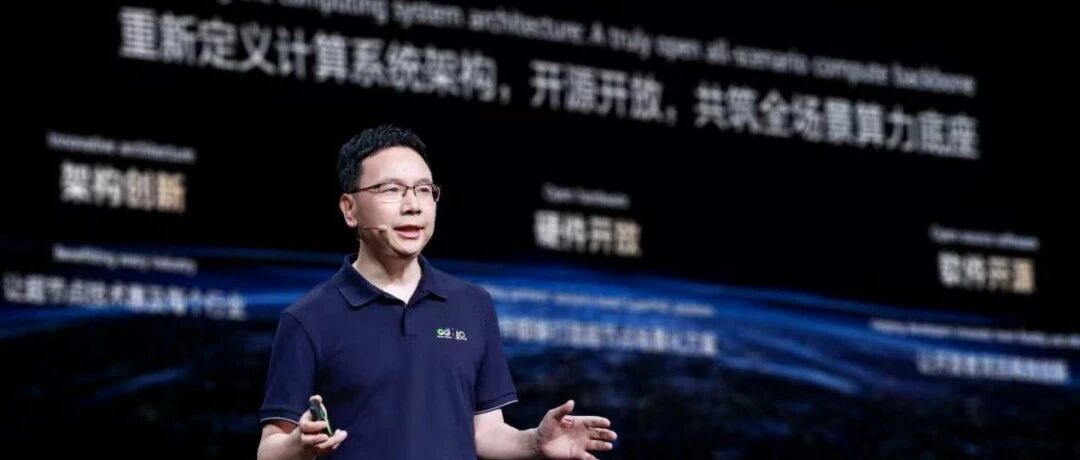
Core Viewpoint - The article discusses Huawei's innovative "super node" architecture, which aims to redefine large-scale effective computing power in AI by addressing the limitations of traditional server architectures and enhancing interconnectivity through the self-developed UnifiedBus protocol [3][4][12]. Group 1: Super Node Architecture - The super node architecture represents a deep restructuring of computing system architecture, moving from a "stacked" model to a "fused" model that allows multiple machines to function as a single device [4][9]. - This architecture aims to eliminate the communication bottlenecks inherent in traditional server setups, where data exchange between servers can lead to significant delays and inefficiencies [5][11]. - Huawei's super node can reduce communication latency to the nanosecond level, significantly improving cluster utilization and lowering communication costs, with the goal of achieving linear scalability of effective computing power [11][12]. Group 2: Product Offerings - Huawei introduced the Atlas 950 SuperPoD and Atlas 960 SuperPoD, which support 8192 and 15488 Ascend cards respectively, showcasing superior performance in key metrics such as card scale, total computing power, memory capacity, and interconnect bandwidth [17][20]. - The Atlas 850, an enterprise-grade air-cooled AI super node server, lowers the barrier for enterprises to adopt super node architecture without requiring complex liquid cooling modifications [21]. - The TaiShan 950 SuperPoD extends the super node architecture to general computing, offering ultra-low latency and memory pooling capabilities beneficial for databases and big data applications [25]. Group 3: Ecosystem Strategy - Huawei emphasizes an ecosystem strategy of "hardware openness and software open-source," encouraging industry partners to engage in secondary development and enrich product offerings based on the UnifiedBus protocol [26][28]. - The company aims to build a unified, scalable computing foundation that provides a consistent, high-performance computing experience across various environments, from cloud to enterprise [28].
超强开源模型Qwen3、DeepSeek-V3.1,都被云计算一哥「收」了
机器之心· 2025-09-19 10:43
Core Insights - Amazon Web Services (AWS) is enhancing its AI capabilities by integrating new models into its Amazon Bedrock and Amazon SageMaker platforms, allowing users to choose from a diverse range of AI models [2][5][39] - The recent addition of two significant domestic models, Qwen3 and DeepSeek-V3.1, showcases AWS's commitment to providing a comprehensive ecosystem for AI development [3][7][11] - AWS emphasizes the importance of model choice, asserting that no single model can address all challenges, and advocates for a multi-model approach to meet complex real-world demands [5][39] Summary by Sections Model Integration - AWS has recently integrated OpenAI's new open-source models into its AI platforms, alongside the domestic models Qwen3 and DeepSeek-V3.1, which are now available globally on Amazon Bedrock [2][3][4] - The integration of these models reflects AWS's agility in the global AI competition and its strategy of offering diverse options to developers and enterprises [5][7] Qwen3 Model - Qwen3, developed by Alibaba, is a new generation model that excels in reasoning, instruction following, multilingual support, and tool invocation, significantly reducing deployment costs and hardware requirements [9][10] - The model features a hybrid architecture, supporting both MoE and dense configurations, which enhances its performance across various applications [10][13] - Qwen3 supports a context window of 256K tokens, expandable to 1 million tokens, allowing it to handle extensive codebases and long conversations effectively [10] DeepSeek-V3.1 Model - DeepSeek-V3.1 is recognized for its efficient reasoning capabilities and competitive pricing, making it a popular choice for enterprises [11][12] - AWS is the first overseas cloud provider to offer a fully managed version of DeepSeek, enhancing its service offerings [12][16] - The model supports both thinking and non-thinking modes, improving adaptability and efficiency in various applications [14] Performance and User Experience - Both Qwen3 and DeepSeek models have demonstrated strong performance in practical tests, showcasing their capabilities in code generation and complex reasoning tasks [19][23][31] - The Amazon Bedrock platform currently hosts 249 models, providing users with a wide array of options for different applications, from general dialogue to code assistance [16] Strategic Vision - AWS's strategy, encapsulated in the "Choice Matters" philosophy, aims to empower customers with the freedom to select and customize models according to their specific needs [39][40] - This approach not only enhances innovation potential but also positions AWS as a neutral and reliable infrastructure provider in the AI landscape [40][41]


给大模型「精准手术」:美团智能客服提出逆向学习技术精准纠偏,风险控制提升38%
机器之心· 2025-09-19 10:43
Core Viewpoint - Meituan's intelligent customer service has introduced a new reverse learning technology that effectively suppresses specific errors and risk behaviors in models, improving key risk control indicators by over 38 percentage points while maintaining overall service quality [2][6]. Group 1: Background and Mechanism - The intelligent customer service system utilizes an end-to-end large model agent combined with a data feedback mechanism to create a closed-loop optimization scheme that automatically collects and utilizes real dialogue data from online services [3]. - This scheme enhances the model's ability to follow instructions, express naturally, and reason through complex states, leading to a significant increase in the overall problem-solving rate across various business scenarios [3]. Group 2: Challenges and Solutions - Despite the improvements from the data feedback mechanism, the reliance on unverified online interactions can introduce erroneous strategies or inappropriate behaviors, leading to a decline in key service quality indicators [4]. - Reverse learning is proposed as a surgical-like behavior editing technique aimed at precisely "removing" undesirable behaviors or sensitive knowledge from the model while preserving its original capabilities [6]. Group 3: Adaptive Learning Method - The adaptive learning method (ALKN) focuses on systematically collecting dialogue data that needs to be "forgotten" and provides clear optimization targets for reverse learning [9]. - The algorithm includes three key components: low-entropy loss function optimization, symmetric transformation iterative training, and adaptive parameter localization, which together enhance training stability and performance retention [11][12]. Group 4: Performance and Future Outlook - The adaptive reverse learning method demonstrates significant advantages over various baseline methods, maintaining overall performance while effectively suppressing undesirable behaviors [15]. - Future developments may integrate reverse learning with reinforcement learning algorithms to create a hybrid optimization framework, enhancing decision-making robustness in dynamic environments [17].

攻克大模型训推差异难题,蚂蚁开源新一代推理模型Ring-flash-2.0
机器之心· 2025-09-19 10:43
Core Viewpoint - The article discusses the release of Ring-flash-2.0 by Ant Group's Bailing team, highlighting its potential to reshape the competitive landscape of large models by achieving high performance with lower activation parameters and improved training stability [1][4][26]. Performance Overview - Ring-flash-2.0 features a total of 100 billion parameters and 6.1 billion activations, achieving a score of 86.98 in mathematical AIME and an Elo score of 90.23 on CodeForces, with a throughput of over 200 tokens per second [1][21]. - The model's performance is comparable to state-of-the-art (SOTA) levels of 40 billion dense models, demonstrating significant advancements in reasoning tasks [1][21]. Technical Innovations - The introduction of the icepop algorithm allows for stable long-term reinforcement learning (RL) training by freezing tokens with large discrepancies in training and inference accuracy, preventing gradient backpropagation [6][10][13]. - The two-staged RL approach combines supervised fine-tuning (SFT) with reinforcement learning using verifiable rewards (RLVR) and human feedback (RLHF), optimizing the training process [14][16]. Cost Efficiency - Ring-flash-2.0 achieves a performance equivalent to a 40 billion dense model while only activating 6.1 billion parameters, marking a turning point in cost efficiency within the large model competition [17][21]. - The model's design allows for high sparsity and low activation, significantly reducing inference costs in high-concurrency scenarios [21]. Market Implications - The competitive landscape for large models is shifting from a focus on parameter quantity to cost-effectiveness, with Ring-flash-2.0 positioned as a leading solution in this new era [18][25]. - The article suggests that Ring-flash-2.0 may signify the beginning of a "high cost-performance era" in the field of large models, following the advancements initiated by GPT-4 [26].

理解帮助生成?RecA自监督训练让统一多模态模型直升SOTA
机器之心· 2025-09-19 00:46
谢集,浙江大学竺可桢学院大四学生,于加州大学伯克利分校(BAIR)进行访问,研究方向为统一多模态理解生成大模型。第二作者为加州大学伯克利分校的 Trevor Darrell,第三作者为华盛顿大学的 Luke Zettlemoyer,通讯作者是 XuDong Wang, Meta GenAl Research Scientist,博士毕业于加州大学伯克利分校 (BAIR 实验室),这篇工作为他在博士期间完成。 背景:统一多模态理解与生成模型的挑战 统一多模态模型(Unified Multimodal Models, UMMs)旨在将视觉理解和生成统一于单一模型架构。UMM 继承了多模态大语言模型 (Multimodal Large Language Models, MLLMs) 可以很轻松地辨别物体的左右、颜色、种类。但是很多生成模型连「一只黑色的猫和白色的狗」,「黄色西兰花」都无法生成。这体现了当前统 一多模态模型在视觉理解和生成能力上的不平衡:它们往往在理解图像内容方面表现出色,但在根据文本描述生成图像时却力不从心。这是为什么呢? 实际上,图片是一个「稠密」的模态,文字是一个「稀疏」的模态,从一个稠密的信息 ...