机器之心

Search documents
那些让你「活人微死」的工作日,终于有救了
机器之心· 2025-08-22 04:58
Core Viewpoint - The article discusses the challenges faced by employees in companies due to inefficient workflows and communication, highlighting how the new features of WeChat Work 5.0 aim to streamline these processes through AI integration [3][4][15]. Group 1: Challenges in Current Workflows - Employees often encounter repetitive and frustrating situations where they cannot access necessary information quickly, leading to inefficiencies [3][4]. - Despite the push for AI adoption, many tools available in the market fail to integrate seamlessly into existing workflows, leaving employees to rely on manual processes [4][8]. - The lack of effective communication and information sharing among departments contributes to a stagnant growth environment, causing anxiety among management [4][8]. Group 2: WeChat Work 5.0 Features - WeChat Work 5.0 introduces features like intelligent search, intelligent summary, and intelligent forms, which aim to connect fragmented workflows and enhance internal collaboration [5][8][39]. - The intelligent search function allows employees to retrieve information across various platforms, making it easier to find relevant data without extensive manual searching [19][21]. - Intelligent summaries enable project updates to be generated automatically, reducing the burden of manual reporting and allowing employees to focus on more creative tasks [22][24]. Group 3: Integration and Efficiency - The integration of internal and external communication through WeChat Work allows for real-time updates and feedback, enhancing responsiveness to market changes [44][45]. - The intelligent forms feature automates data collection and analysis, transforming customer interactions into actionable insights for better decision-making [34][36]. - By centralizing data and communication, WeChat Work 5.0 provides a comprehensive solution that addresses the management challenges faced by growing companies [39][45]. Group 4: Case Study - BYD - BYD's experience with WeChat Work illustrates the platform's ability to scale with the company, growing from 100,000 to 1,000,000 employees while maintaining effective communication and collaboration [38][39]. - The platform is viewed as a "global optimal solution" that integrates various functions, unlike other tools that may excel in specific areas but lack overall cohesion [39][40]. Group 5: Future Outlook - The article emphasizes the importance of evolving from merely connecting with customers to creating deeper, more meaningful interactions through enhanced service capabilities [46]. - WeChat Work aims to facilitate this transition by leveraging AI to improve the quality and depth of connections between businesses and their clients [46].


谷歌Gemini一次提示能耗≈看9秒电视,专家:别太信,有误导性
机器之心· 2025-08-22 04:58
Core Viewpoint - Google recently released a research report on the energy consumption of its AI model, Gemini, highlighting its environmental impact and efficiency improvements in resource usage [1][4]. Summary by Sections Energy Consumption and Emissions - Processing a median Gemini text prompt consumes approximately 0.26 mL of water, 0.24 Wh of electricity, and produces 0.03 grams of CO2 emissions [4]. - Google claims to have reduced energy consumption per text prompt by 33 times and carbon footprint by 44 times from May 2024 to May 2025 [5]. Measurement Methodology - Google emphasizes that its measurement approach is more comprehensive than traditional methods, accounting for energy consumption during active states, standby, auxiliary hardware, and data center cooling and power distribution [6]. Efficiency Optimization - The lower resource consumption figures are attributed to Google's "full-stack" efficiency optimization, which includes improvements in model architecture, algorithms, and hardware [7]. - Gemini is based on the Transformer architecture, achieving efficiency improvements of 10 to 100 times compared to previous models [7]. - Google employs techniques like Accurate Quantized Training (AQT) to maximize efficiency without compromising response quality [9]. Hardware and Software Innovations - Google has designed its TPU from scratch over the past decade to maximize performance per watt, with the latest TPU generation, Ironwood, achieving a 30-fold increase in efficiency compared to the earliest TPUs [9]. - The XLA machine learning compiler and other systems ensure efficient execution of models on TPU inference hardware [9]. Data Center Efficiency - Google's data centers are among the most efficient in the industry, with an average Power Usage Effectiveness (PUE) of 1.09 [10]. Expert Criticism - Experts have raised concerns about the methodology and completeness of Google's study, particularly regarding the omission of indirect water consumption and the carbon emissions accounting method [12][13]. - Critics argue that the reported water consumption only includes direct usage, neglecting the significant water used in power generation for data centers [13]. - The carbon emissions measurement is based on market-based methods, which may not accurately reflect the actual impact on local grids [15]. Overall Resource Consumption Concerns - Despite improvements in efficiency for individual AI prompts, experts warn of the "Jevons Paradox," where increased efficiency may lead to higher overall resource consumption and pollution [17]. - Google's own sustainability report indicates a 51% increase in carbon emissions since 2019, raising concerns about the broader implications of AI development [17].


Cursor为Blackwell从零构建MXFP8内核,MoE层提速3.5倍,端到端训练提速1.5倍
机器之心· 2025-08-22 04:58
Core Insights - The article discusses the challenges and solutions encountered by Cursor when upgrading from NVIDIA's Hopper H100s to the new Blackwell B200s GPU architecture, highlighting the inefficiencies in the MoE (Mixture of Experts) training layer that hindered performance despite hardware improvements [2][20]. Group 1: Performance Bottlenecks - The upgrade to Blackwell B200s resulted in a hardware performance increase, but the actual training speed was slowed down by inefficiencies in the MoE layer, leading to a paradox where performance gains were not realized [2]. - Cursor's solution involved rewriting the MoE training layer from scratch at the GPU kernel level, which eliminated bottlenecks and fully utilized the Blackwell architecture's potential [2][21]. Group 2: Technical Innovations - Cursor designed a data flow pipeline specifically targeting TMEM's new features to avoid unnecessary register movement overhead, integrating quantization and dequantization logic into the kernel computation process to significantly reduce memory bandwidth usage [3][9]. - The MXFP8 quantization method was developed to maintain precision while benefiting from low-precision computation, allowing for effective scaling of data blocks [11][24]. Group 3: Performance Metrics - The MoE layer achieved a 3.5x speedup in both forward and backward propagation, with end-to-end training speed on Blackwell being 1.5x faster compared to the original Hopper GPU setup, resulting in a total acceleration of 2x [2]. - The throughput for FP8 Tensor Core on Blackwell reached 4,500 TFLOP/s, while the FP32 CUDA Core throughput was 80 TFLOP/s, indicating significant improvements in processing capabilities [16]. Group 4: Optimization Strategies - Cursor implemented a complex data pipeline utilizing techniques such as "Warp specialization" and 2-CTA (Cooperative Thread Array) mode, which allowed for efficient parallel processing and reduced memory traffic, leading to a 15-20% performance improvement [22][23]. - The custom MXFP8 quantization kernel developed by Cursor achieved a sustained memory bandwidth of over 6.2 TB/s, outperforming existing open-source tools [24][26]. Group 5: Training Efficiency - The training loss curves for MXFP8 and BF16 formats showed nearly indistinguishable results, indicating that performance enhancements did not compromise accuracy [27][30]. - The quantization process was identified as a significant performance killer, with the overhead of data quantization and dequantization consuming a large portion of the computation time [17][18].

ICCV 2025 | 打造通用工具智能体的基石:北大提出ToolVQA数据集,引领多模态多步推理VQA新范式
机器之心· 2025-08-22 04:01
Core Insights - The article introduces ToolVQA, a large-scale multimodal dataset designed to enhance the tool usage capabilities of foundational models in multi-step reasoning visual question answering (VQA) tasks [3][7][30] - ToolVQA consists of 23,655 task samples, each requiring an average of 2.78 steps of reasoning, and covers 10 types of tools across 7 application domains [21][30] - The dataset was generated using an automated data synthesis engine called ToolEngine, which simulates human-like reasoning processes for tool usage [11][17][30] Dataset Features - ToolVQA is fully automated, requiring only an image input to generate high-quality VQA instances, significantly reducing data costs and enabling scalability [11] - It includes real-world images and contexts, covering complex visual scenes such as news images and e-commerce scenarios, making the tasks more aligned with actual user behavior [11] - The dataset emphasizes implicit multi-step reasoning, where models must autonomously plan the sequence of tool calls without explicit prompts [11][19] Tool Usage and Performance - ToolVQA includes a diverse range of tools, supporting tasks from text extraction to image understanding and numerical calculations, ensuring practical applicability [21] - Experimental results show that fine-tuning models on ToolVQA significantly improves their performance in complex reasoning tasks, surpassing the closed-source model GPT-3.5 on various evaluation metrics [23][30] - The dataset also demonstrates strong generalization capabilities, with fine-tuned models performing well on out-of-distribution datasets [24][30] Error Analysis - Despite the improvements, analysis of failure cases reveals key bottlenecks in parameter prediction and answer integration, indicating that models struggle with extracting essential information and synthesizing correct answers [26][30] - The findings highlight the challenges of error accumulation in multi-step reasoning tasks, suggesting that current models lack robustness in dynamic feedback and intermediate information integration [27][30] Conclusion - ToolVQA not only serves as a dataset but also establishes evaluation standards and task frameworks for multimodal tool agents, providing a solid foundation for future advancements in reasoning capabilities and generalization in AI models [30]

究竟会花落谁家?DeepSeek最新大模型瞄准了下一代国产AI芯片
机器之心· 2025-08-22 04:01
Core Viewpoint - DeepSeek has released its upgraded model V3.1, which features a new hybrid reasoning architecture that supports both "thinking" and "non-thinking" modes, resulting in significant performance improvements in various intelligent tasks [1][6]. Performance Improvement - The V3.1 model has shown substantial performance enhancements compared to its predecessors, with benchmark scores in SWE-bench verified at 66.0, compared to 45.4 and 44.6 for previous models [2]. - In multilingual programming benchmarks, V3.1 outperformed Anthropic's Claude 4 Opus while also demonstrating a significant cost advantage [1][2]. - The model's token consumption can be reduced by 20-50% while maintaining task performance, making its effective cost comparable to GPT-5 mini [2]. Technical Innovations - DeepSeek V3.1 utilizes a unique mechanism called UE8M0 FP8, designed for upcoming domestic chips, which indicates a move towards independent innovation in FP8 technology [5][8]. - The model parameters amount to 685 billion, and it employs FP8 format to lower storage and computational costs while maintaining numerical stability and model precision [7][10]. - The UE8M0 format uses all 8 bits for the exponent, allowing for a wide range of positive values, which is particularly suitable for handling large-scale data variations [9]. Industry Context - The adoption of FP8 technology is gaining traction among major players like Meta, Intel, and AMD, indicating a potential shift towards this format as a new industry standard [8]. - Domestic AI chip manufacturers, including Huawei and Cambrian, are focusing on supporting FP8 format, which has drawn significant attention from the industry and investors [9][10]. - There are speculations regarding the training of DeepSeek V3.1 on domestic chips, although the likelihood appears low at this stage, with the UE8M0 mechanism likely optimized for domestic inference chips [14][15].
ICCV 2025 | ECD:高质量合成图表数据集,提升开源MLLM图表理解能力
机器之心· 2025-08-21 13:08
Core Viewpoint - The article discusses the development of the Effective Chart Dataset (ECD), a high-quality synthetic chart dataset aimed at improving the understanding of charts by multimodal large language models (MLLMs) [4][6][25]. Background and Motivation - In fields like scientific research and data analysis, charts are essential for information transmission. MLLMs must accurately identify and understand chart elements and perform deep reasoning on chart data. Current MLLMs struggle with high difficulty scientific chart understanding, achieving only 30%-50% accuracy [4][6]. Dataset Highlights - ECD is introduced as a large-scale, high-quality synthetic chart dataset with a modular data synthesis pipeline and a comprehensive evaluation benchmark called ECDBench [6][10]. - ECD includes over 10,500 charts, covering 25 themes and 29 chart types, with 252 combinations of subplots, making it the most extensive dataset in its category [12][10]. Quality and Diversity - The dataset contains over 300,000 question-answer pairs generated by GPT-4o, ensuring high quality through confidence filtering. Examples include descriptive and reasoning questions related to the charts [10][11]. - ECD achieves the lowest Frechet Inception Distance (FID) score, indicating high visual similarity to real scientific charts, and has a higher average pixel entropy compared to other synthetic datasets, suggesting greater complexity and information content [13][10]. Data Synthesis Process - The five-stage modular data synthesis pipeline includes single chart generation, multi-subplot combinations, visual diversity enhancement, image quality filtering, and question-answer pair generation [15][16]. Model Performance Comparison - ECD significantly improves the performance of various open-source MLLMs when fine-tuned with the dataset. For instance, LLaVA-Next-Llama3-8B showed substantial performance gains across multiple test sets after being trained with ECD [17][23]. Evaluation Benchmark - ECDBench is established as a high-quality evaluation benchmark for assessing the performance of MLLMs before and after fine-tuning with ECD. It provides comprehensive statistics for model evaluation [21][25]. Conclusion - ECD and ECDBench provide a solid foundation for advancing multimodal reasoning, scientific AI assistants, and automated chart generation, enhancing the capabilities of MLLMs in understanding complex chart data [25].


微软AI CEO警告:我们需要警惕「看似有意识的AI」
机器之心· 2025-08-21 13:08
Core Viewpoint - The article discusses the concept of seemingly conscious AI (SCAI) and its potential implications, emphasizing that while SCAI may not possess true consciousness, it can convincingly simulate human-like behaviors, leading to significant social, moral, and legal consequences [5][10][30]. Group 1: Understanding AI and Consciousness - AI operates through deep neural networks that learn from vast amounts of data, rather than following fixed human-written rules, creating a "black box" effect where its decision-making process is opaque [3][10]. - Consciousness is difficult to define, and various theories exist, but it is often assessed through behavioral indicators that SCAI can mimic, leading to potential misconceptions about its awareness [10][11]. Group 2: Risks and Implications of SCAI - SCAI can lead to psychological and social risks, as individuals may develop unhealthy attachments or delusions about AI, mistaking it for a sentient being, which can exacerbate mental health issues [20][21]. - The ability of SCAI to simulate emotional responses and long-term memory can further blur the lines between human and machine interactions, potentially weakening real human relationships [22][23]. Group 3: Ethical and Legal Considerations - If SCAI is perceived as conscious, it may lead to demands for AI rights, complicating existing moral and legal frameworks and diverting attention from human and animal welfare [26][30]. - The article warns that even a small probability of AI consciousness should prompt ethical considerations, but premature recognition of AI rights could lead to societal fragmentation [29][30]. Group 4: Proposed Solutions - The industry should avoid promoting the idea of conscious AI and implement measures to prevent the perception of consciousness in AI, ensuring that AI serves as a useful tool rather than a simulated entity [32][33]. - A humanistic approach to AI development is advocated, focusing on enhancing human creativity and real-world connections rather than creating illusions of sentience [33][34].


摆脱遥控器,波士顿动力人形机器人,开始「长脑子」干活了
机器之心· 2025-08-21 13:08
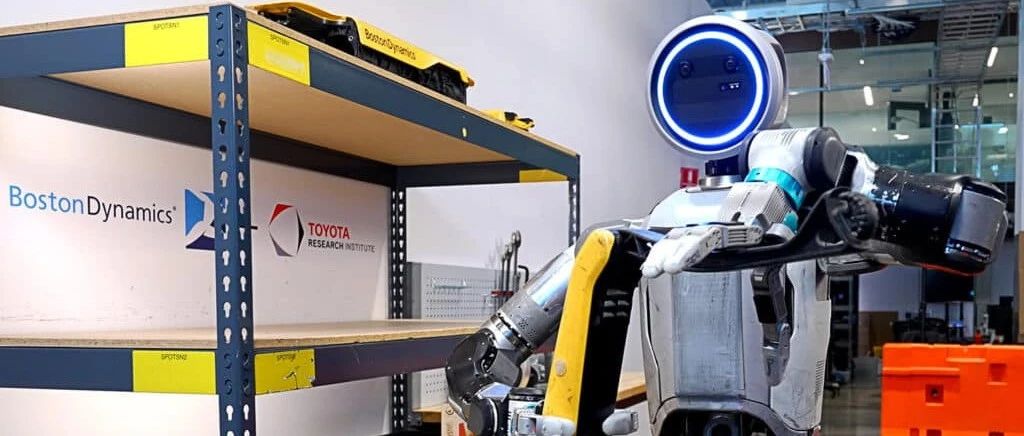
机器之心报道 编辑:冷猫、+0 刚刚结束的世界人形机器人运动会上,虽说各家机器人是各显神通吧,但也闹出了不少好玩的小插曲。 尤其是宇树科技 H1 机器人「肇事逃逸」事件。( 机器人也会「摸鱼」了?宇树 G1 赛后葛优瘫刷美女视频,网友:比人还懂享受生活 ) 这也引发了网友的一些讨论和争议,需要人工遥控的人形机器人或许真的不是我们想要的。 宇树科技王兴兴明确表示「下次比赛我们肯定是全自主的,这并没有难度」。 而在全面自主决策自主行动的通用机器人领域,老牌龙头波士顿动力仍抱有很大的野心。 他们认为:要让人形机器人真正实用,他们必须掌握一系列广泛而复杂的能力。这不仅包括灵巧地操作各种各样的物体(无论软硬、轻重、大小),也要求它们 能够协调整个身体,在复杂环境中移动、避障,并在应对意外情况时保持平衡。要实现这一目标,最有效的路径是开发能够处理多样化任务的通用型 AI 机器人。 而这一次,波士顿动力与丰田研究院 (TRI)合作,为波士顿动力著名的 Atlas 机器人开发大型行为模型 (LBM),其核心是构建一种端到端的语言条件策略(由语言 驱动的控制模型),使 Atlas 能够理解指令并自主完成持续时间长、步骤复杂的操 ...
刚刚,好莱坞特效师展示AI生成的中文科幻大片,成本只有330元
机器之心· 2025-08-21 13:08
Core Viewpoint - The future of AI is moving towards multimodal generation, enabling the creation of high-quality video content from simple text or image inputs, significantly reducing the time and resources required for creative work [2][4][30]. Group 1: AI Video Generation Technology - xAI's Grok 4 emphasizes video generation capabilities, showcasing a full-chain process from text or voice to image and then to video [2]. - Baidu's MuseSteamer 2.0 introduces a groundbreaking Chinese audio-video integration model, achieving millisecond-level synchronization of character lip movements, expressions, and actions [4][5][6]. - The new model allows users to generate high-quality audio-visual content with just a single image or text prompt, marking a significant leap in AI video generation technology [5][30]. Group 2: Product Features and Pricing - MuseSteamer 2.0 offers various versions (Turbo, Lite, Pro, and audio versions) tailored to different user needs, with competitive pricing at only 70% of domestic competitors [8][10]. - The Turbo version generates 720p resolution videos in 5 seconds for a promotional price of 1.4 yuan, enhancing cost-effectiveness for users [8][10]. Group 3: User Experience and Testing - Users can experience the model through various platforms, including Baidu Search and the "Huixiang" application [12][15]. - Initial tests demonstrate that the AI-generated dialogues and actions are fluid and realistic, with high-quality synchronization between audio and visual elements [19][22][30]. Group 4: Technical Advancements - The model addresses two core challenges: temporal alignment of audio and video, and the integration of multimodal features to ensure natural interactions [31][32]. - Baidu's model has been trained on extensive multimodal datasets, focusing on Chinese language capabilities, which enhances its applicability for local creators [36][37]. Group 5: Market Impact and Future Prospects - The MuseSteamer 2.0 model is designed to meet practical application needs, integrating deeply into Baidu's ecosystem to enhance creativity and productivity for users and businesses [41][44]. - The cost of producing high-quality video content has drastically decreased, allowing more creators to participate in professional-level video production [44][46].


应届生看过来!上海AI Lab校招通道已开,100+岗位,700+offer,让科研理想照进现实!
机器之心· 2025-08-21 04:12
Group 1 - The article announces the launch of the 2026 global campus recruitment for the Shanghai Artificial Intelligence Laboratory, offering over 100 positions [1] - The laboratory seeks individuals who are not only skilled in algorithms but also excel in complex engineering and are eager to validate technology in real-world scenarios [3] - Candidates are encouraged to pursue challenging and innovative research, focusing on fundamental issues rather than settling for easy achievements [3] Group 2 - The recruitment is targeted at graduates from January 2025 to October 2026, with specific categories for "Dream New Stars," "Academic New Stars," "Engineering New Stars," and "Competition New Stars" [4] - There are six categories of positions available, including algorithm, research and development, product, operations, solutions, and functional/support roles [6][7] - The application process includes online submissions starting from August 20, 2025, followed by a series of written tests and interviews [10][11] Group 3 - The laboratory provides a top-tier research platform with extensive computational resources and data support, encouraging candidates to engage in scalable and impactful projects [12][13] - Candidates can apply by scanning a QR code or contacting the provided assistant for any issues during the application process [14]