具身智能之心

Search documents
昨天具身领域发生了一件大事,对学术界和工业都利好.......
具身智能之心· 2025-09-04 04:00
Group 1 - The core viewpoint of the article highlights the upcoming IPO of Yushu Technology, which is scheduled to submit its application between October and December 2025, marking a significant milestone for the company and the embodied robotics industry [1] - The recognition of embodied robotics by the market and capital is seen as a positive development, suggesting that subsequent IPOs in this sector are likely to follow, expanding the market's potential and driving the growth of related industries [1] - The article emphasizes that the embodied intelligence field is still in its growth phase, presenting a promising research direction and career advancement opportunities for those in the industrial sector [3] Group 2 - The article promotes various learning resources and research platforms provided by the company for those interested in entering the embodied intelligence field, indicating a strong commitment to education and professional development [3] - A special discount card for courses is introduced, offering a 30% discount on all embodied courses for students purchasing two or more courses, valid for one year [4] - The company’s knowledge community is highlighted as the largest in the domestic market, facilitating communication among nearly 2,000 members [7]


具身智能之心遥操作技术交流群来了!
具身智能之心· 2025-09-04 04:00
Group 1 - The article introduces a new communication group focused on remote operation technology related to embodied intelligence, inviting individuals interested in this field to join for discussions [1] - The group aims to facilitate knowledge sharing and collaboration among professionals and students in the relevant sectors [1] Group 2 - Interested individuals can join the group by adding a designated assistant on WeChat, providing their nickname, institution, and a request to join the remote operation group [2]
早鸟优惠即将截止!3个月搞透具身大脑+小脑算法
具身智能之心· 2025-09-04 01:04
Core Viewpoint - The exploration of Artificial General Intelligence (AGI) is increasingly focusing on embodied intelligence, which emphasizes the interaction and adaptation of intelligent agents within physical environments, enabling them to perceive, understand tasks, execute actions, and learn from feedback [1][3]. Industry Analysis - In the past two years, numerous star teams in the field of embodied intelligence have emerged, establishing valuable companies such as Xinghaitu, Galaxy General, and Zhujidongli, driving advancements in embodied brain and cerebellum technologies [3]. - Major domestic companies like Huawei, JD.com, Tencent, Ant Group, and Xiaomi are actively investing and collaborating to build key technologies in embodied intelligence, while international players like Tesla and investment firms are supporting companies like Wayve and Apptronik in autonomous driving and warehouse robotics [5]. Technological Evolution - The development of embodied intelligence has progressed through several stages: - The first stage focused on grasp pose detection, which lacked the ability to model task context and action sequences, limiting its effectiveness in complex operations [6]. - The second stage involved behavior cloning, allowing robots to learn from expert demonstrations but revealing weaknesses in generalization and performance in multi-target scenarios [6]. - The third stage introduced Diffusion Policy methods, enhancing stability and generalization by modeling action trajectories, followed by the emergence of Vision-Language-Action (VLA) models that integrate visual perception, language understanding, and action generation [7][9]. - The fourth stage, starting in 2025, explores the integration of VLA models with reinforcement learning, world models, and tactile sensing to overcome current limitations [9][11][12]. Product and Market Development - The evolution of embodied intelligence technologies has led to the emergence of various products, including humanoid robots, robotic arms, and quadrupedal robots, serving industries such as manufacturing, home services, dining, and healthcare [14]. - The demand for engineering and system capabilities is increasing as the industry shifts from research to deployment, necessitating higher engineering skills for effective implementation [17].

RoboMemory:专为物理具身系统中的终身学习而设计
具身智能之心· 2025-09-04 01:04
Core Viewpoint - The article discusses RoboMemory, a brain-inspired multi-memory framework designed for lifelong learning in physical embodied systems, addressing key challenges in dynamic real-world environments [2][4]. Group 1: Framework Overview - RoboMemory is designed to tackle four core challenges: continuous learning capability, multi-module memory latency, task relevance capture, and avoidance of deadlock in closed-loop planning [2]. - The framework integrates four core modules: information preprocessing system (thalamus-like function), lifelong embodied memory system (hippocampus-like function), closed-loop planning module (prefrontal cortex-like function), and low-level executors (cerebellum-like function) [2]. Group 2: Memory System Features - The lifelong embodied memory system features parallel updating and retrieval mechanisms across four sub-modules: spatial memory, temporal memory, episodic memory, and semantic memory, effectively resolving reasoning speed bottlenecks in complex memory architectures [2]. - The system employs dynamic knowledge graphs and a consistent architecture design, significantly enhancing memory coherence and scalability [2]. Group 3: Application and Impact - The article emphasizes the importance of memory systems for embodied agents in real-world environments, highlighting the need for continuous learning capabilities [4][6]. - The discussion includes the pain points faced by embodied agents in real environments and how a robust memory system can address these challenges [6].
Galaxea 团队推出:大规模高质量开放世界数据集与G0双系统VLA模型
具身智能之心· 2025-09-04 01:04
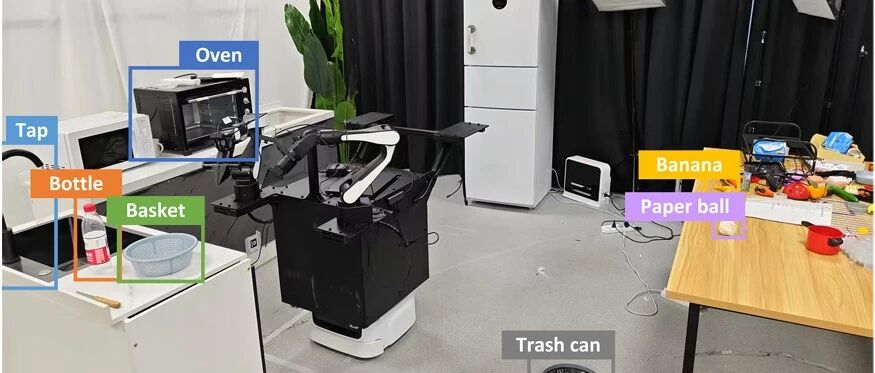
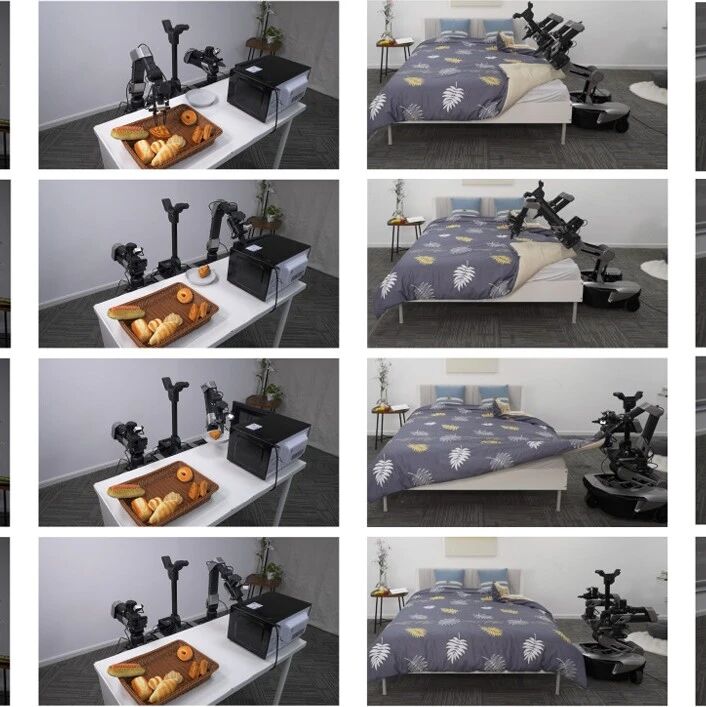
Core Insights - The article presents the Galaxea Open-World Dataset, a large-scale and diverse collection of robot behaviors recorded in real human living and working environments, addressing the scarcity of high-quality open-world robot data and insufficient model generalization [3][5][6]. Dataset Overview - The dataset consists of 500 hours of data, 100,000 demonstration trajectories, covering 150 task categories, 1,600 object types, and 58 operational skills, with a 2Hz frequency for detailed sub-task instruction labeling [8][12]. - Data was collected using the Galaxea R1 Lite mobile dual-arm robot, which has 23 degrees of freedom and is equipped with RGB cameras for global scene perception and fine operation sensing [5][6]. Data Diversity and Coverage - The dataset includes data from 11 physical sites across 50 unique scenarios, covering residential, retail, dining, and office environments, thus avoiding the limitations of existing datasets that are confined to controlled laboratory settings [6][12]. - The distribution of tasks shows a balance between basic actions and specialized skills, with residential scenes making up 50.8% and office scenes 33.2% of the dataset [11][12]. G0 Dual-System Framework - The G0 framework couples a "slow thinking" visual-language model (G0-VLM) with a "fast execution" visual-language-action model (G0-VLA), employing a three-stage training strategy to achieve complex task planning and precise execution [5][19]. - The training phases include cross-entity pre-training, single-entity pre-training, and task-specific fine-tuning, which enhance the model's performance significantly [21][30]. Model Performance Evaluation - The G0-VLA model demonstrated superior performance in benchmark tasks such as desktop organization and microwave operation, with G0-Full achieving the highest average task progress scores [39][47]. - The study found that single-entity pre-training is essential for effective model adaptation, as cross-entity pre-training can lead to negative transfer due to significant differences between the training and target robot entities [39][46]. Key Findings - The G0-VLM model outperformed mainstream visual-language models in instruction accuracy, achieving 83.3% in desktop organization and 78.2% in bed-making tasks, highlighting the importance of domain-specific fine-tuning [42][47]. - The dataset's design and the dual-system framework effectively address the challenges of real-world robot task execution, providing a robust foundation for future advancements in embodied intelligence [17][19].
VLA方向的1v1论文辅导来啦,辅导至中稿~
具身智能之心· 2025-09-03 10:00
Group 1 - The article highlights the availability of 5 slots for guidance on embodied intelligence-related papers, targeting conferences such as CVPR, ICCV, ECCV, ICLR, CoRL, ICML, ICRA, and RSS [1] - The mentoring is provided by active researchers in the field of embodied intelligence, each with over 10 top conference papers and specific ideas [1] Group 2 - Interested individuals can add a specific WeChat account for inquiries or scan a QR code for consultation regarding the embodied paper guidance [2]

Galaxea 团队推出:大规模高质量开放世界机器人数据集与G0双系统VLA模型
具身智能之心· 2025-09-03 03:23
Core Insights - The article presents the Galaxea Open-World Dataset, a large-scale and diverse collection of robot behaviors recorded in real human living and working environments, addressing the scarcity of high-quality open-world robot data and insufficient model generalization capabilities [2][5][6]. Dataset Overview - The Galaxea Open-World Dataset is the first large-scale robot behavior dataset collected in real-life scenarios, solving issues of existing datasets that are limited to controlled environments and inconsistent robot entities [5][17]. - Data collection was conducted using the Galaxea R1 Lite mobile dual-arm robot, which features 23 degrees of freedom and is equipped with RGB cameras for global scene perception and fine operation sensing [8][6]. - The dataset includes 500 hours of data, 100,000 demonstration trajectories, covering 150 task categories, 1,600 object types, and 58 operational skills, with a 2Hz frequency for detailed sub-task instruction labeling [8][12]. Model Framework - The G0 dual-system framework couples a "slow thinking" visual-language model (G0-VLM) with a "fast execution" visual-language-action model (G0-VLA), utilizing a three-stage training strategy to achieve complex task planning and precise execution [5][19]. - The training phases include cross-entity pre-training, single-entity pre-training, and task-specific fine-tuning, which are designed to balance general knowledge and specific robot adaptation [21][27]. Performance Evaluation - The G0-VLA model demonstrated superior performance in benchmark tasks such as desktop organization, microwave operation, bed making, and block building, with G0-VLM achieving an instruction accuracy of 78.2% in bed making and 83.3% in desktop organization [42][47]. - The study found that single-entity pre-training is essential for effective model performance, as cross-entity pre-training can lead to negative transfer due to significant differences between the training and target robot entities [39][46]. Key Findings - The dataset's design emphasizes real-world adaptability and model training friendliness, ensuring that the collected data reflects the complexities of human environments [6][17]. - The G0 model's architecture is inspired by Kahneman's dual-system theory, where System 2 (slow thinking) is responsible for planning and System 1 (fast execution) handles real-time reactions, allowing for a balance between planning rationality and execution timeliness [19][21].
诚聘英才 | 朗毅机器人2026届全球校园招聘启动!
具身智能之心· 2025-09-03 00:03
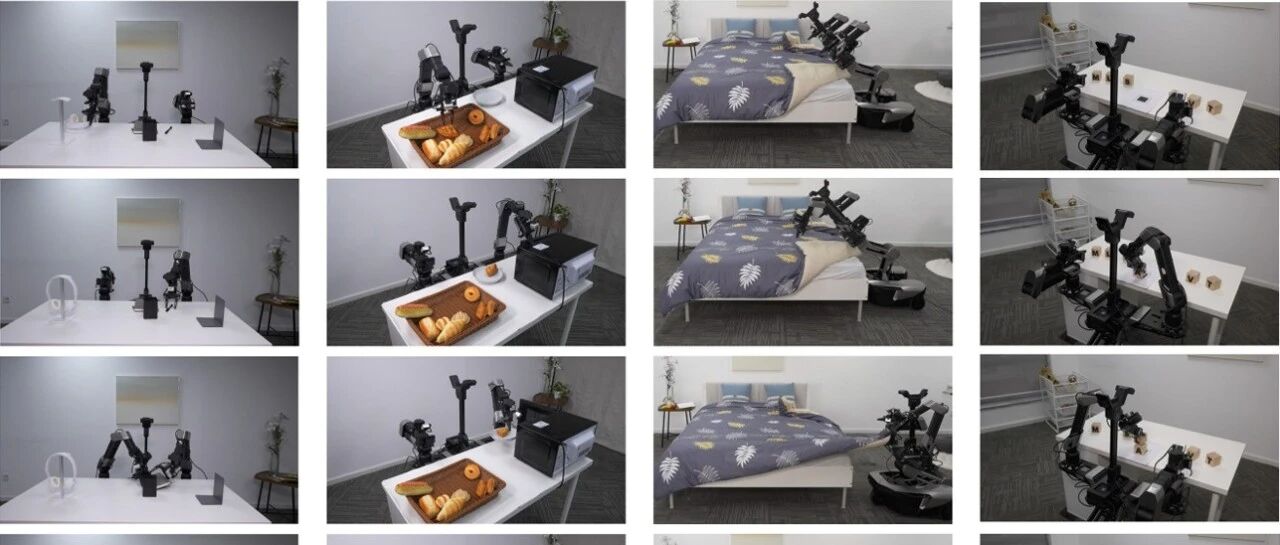
Core Viewpoint - The article highlights the advancements and market position of Langyi Robotics, a company specializing in embodied intelligence and spatial intelligence solutions, emphasizing its innovative navigation technology and significant market share in the humanoid robot sector [2][3]. Company Overview - Langyi Robotics focuses on developing next-generation embodied intelligence and spatial intelligence solutions, aiming to push the boundaries of robot perception and navigation technology [2]. - The company has launched the world's first embodied perception navigation module, enabling humanoid robots to achieve fully autonomous movement, obstacle avoidance, advanced spatial reasoning, and generalized environmental interaction capabilities [2]. Market Position - The company holds a remarkable market share of 80% and has served numerous leading humanoid robot manufacturers [3]. - Research and development account for 85% of the company's operations, indicating a strong focus on innovation and technology advancement [3]. Team and Expertise - The core team members come from prestigious universities such as Huazhong University of Science and Technology, Zhejiang University, and University of Electronic Science and Technology, with over ten years of experience in core algorithms for spatial intelligence [4]. - The company has secured tens of millions in investments from several leading institutions, including Inno Angel Fund, Jiada Capital, and Qiji Chuangtan [4]. Recruitment and Opportunities - Langyi Robotics is actively recruiting for full-time and internship positions, targeting 2026 graduates and current students in relevant fields [9]. - The company offers competitive compensation packages, including fixed salaries, performance bonuses, and core talent equity incentives [5]. - Opportunities for professional growth include a mentorship system with industry experts and participation in core business projects [5].

MemoryVLA:给机器人装上海马体,助力长时序机器人操作任务
具身智能之心· 2025-09-03 00:03
Core Viewpoint - The article discusses the development of MemoryVLA, a cognitive-memory-action framework inspired by human memory systems, aimed at improving robotic manipulation tasks that require long-term temporal dependencies [3][7]. Group 1: Current Issues in VLA Models - Existing Vision-Language-Action (VLA) models primarily rely on current observations, leading to poor performance in long-term, temporally dependent tasks [2][7]. - Cognitive science indicates that humans utilize a memory system involving neural activity and the hippocampus to manage tasks effectively over time [7]. Group 2: MemoryVLA Framework - MemoryVLA is designed to create a memory system for robots, drawing inspiration from human cognitive mechanisms [3][7]. - The framework includes a pre-trained Vision-Language Model (VLM) that encodes observations into perceptual and cognitive tokens, which are stored in a Perceptual-Cognitive Memory Bank [3]. - Working memory retrieves relevant entries from the memory bank, merging them with current tokens to adaptively update the memory [3]. Group 3: Importance of Memory in Robotics - The article emphasizes the necessity of memory in robotic tasks, explaining that it enhances decision-making and action sequences in complex environments [3][7]. - A memory-conditioned diffusion action expert generates action sequences with temporal awareness using the tokens [3].
刚入学,导师让我从0开始研究具身智能方向......
具身智能之心· 2025-09-03 00:03
Core Viewpoint - The article discusses the advancements in embodied intelligence algorithms and their market potential, emphasizing the need for further research and development in this field [1][2]. Group 1: Technological Advancements - Embodied algorithms have improved global perception capabilities, transitioning from traditional pipeline solutions to end-to-end models [1]. - Navigation tasks have shifted from mapping and localization to target navigation using large model-based, map-free solutions [2]. Group 2: Market Potential and Challenges - The market size and capacity for embodied intelligence are larger than other fields, but many unresolved issues remain, requiring collective effort [2]. - The short development time of embodied intelligence has led to a lack of systematic approaches and pathways for newcomers [2]. Group 3: Educational Initiatives - The company has developed several courses in the embodied intelligence field to address the lack of structure and guidance for learners [2]. - A community has been established to facilitate learning and collaboration among individuals interested in embodied intelligence [2]. Group 4: Course and Community Highlights - The learning path is systematized to help users avoid common pitfalls and quickly get started [6]. - The program includes a variety of practical robotics projects, combining simulation and real machine practice [6]. - Live interactions with industry experts and researchers are available, along with permanent access to recorded sessions and shared source code [7].