CCB(00939)

Search documents
博思软件(300525):中标中国建设银行股份有限公司内蒙古自治区分行采购项目,中标金额为952.20万元
Xin Lang Cai Jing· 2026-02-24 11:11
Group 1 - The core point of the news is that Fujian Bosi Software Co., Ltd. won a procurement project from China Construction Bank's Inner Mongolia branch, with a bid amount of 9.522 million yuan [1][2][3] Group 2 - Bosi Software (300525.SZ) reported a revenue of 2.142 billion yuan for 2024, with a revenue growth rate of 4.79% [2][3] - The net profit attributable to the parent company for 2024 was 302 million yuan, with a net profit growth rate of -7.44% [2][3] - The return on equity (ROE) for the company was 11.89% [2][3] - In the first half of 2025, the company reported a revenue of 706 million yuan, with a revenue growth rate of -1.58% [2][3] - The net profit attributable to the parent company for the first half of 2025 was -42 million yuan, with a net profit growth rate of -10.42% [2][3] - The company operates in the information technology industry, with its main product types being software sales and professional consulting services [2][3] - The revenue composition for 2024 was as follows: technical services 78.07%, software development and sales 19.49%, hardware and consumables sales 2.35%, and other businesses 0.1% [2][3]


建行、浦发银行合计被罚没8601万元
Xin Lang Cai Jing· 2026-02-24 11:05
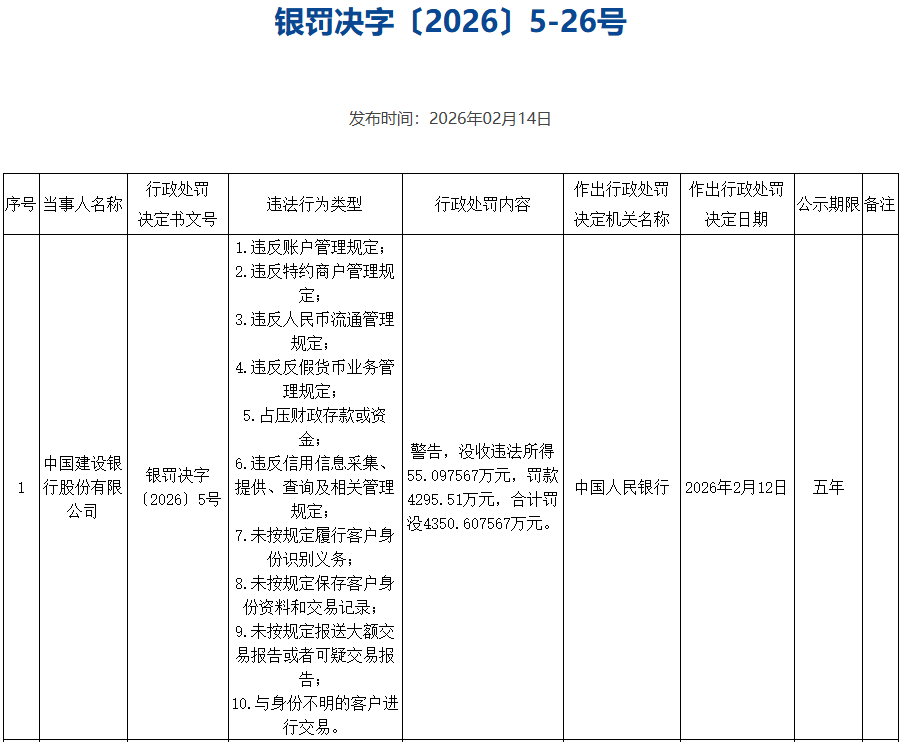
Core Viewpoint - Two major state-owned banks, China Construction Bank (CCB) and Shanghai Pudong Development Bank (SPDB), were fined a total of over 86 million yuan for various regulatory violations, highlighting ongoing regulatory scrutiny in the banking sector [1][6]. Group 1: China Construction Bank (CCB) Penalties - CCB was fined a total of 43.506 million yuan, which includes a confiscation of illegal gains amounting to 0.550 million yuan and a fine of 42.955 million yuan [1][11]. - The violations committed by CCB include ten types, such as violating account management regulations, failing to perform customer identity verification, and not submitting large transaction reports [3][14]. - A total of 21 key personnel were penalized under a "dual penalty system," which includes both institutional and individual accountability, reflecting a trend towards regularized dual penalties in regulatory enforcement [4][14]. Group 2: Shanghai Pudong Development Bank (SPDB) Penalties - SPDB was fined a total of 42.2289 million yuan, which includes a confiscation of illegal gains amounting to 0.275 million yuan and a fine of 42.22289 million yuan [6][16]. - Similar to CCB, SPDB's violations also encompass ten types, including breaches of account management regulations and failure to fulfill customer identity verification obligations [6][18]. - Nine individuals from SPDB were also penalized for various violations, with fines ranging from 2 million to 31.5 million yuan, indicating a comprehensive approach to accountability within the bank [19][20].


港股通央企红利ETF天弘(159281)涨2.85%,成交额1.19亿元
Xin Lang Cai Jing· 2026-02-24 09:47
Core Viewpoint - The Tianhong CSI Hong Kong Stock Connect Central State-Owned Enterprises Dividend ETF (159281) has shown a positive performance with a closing increase of 2.85% and a trading volume of 119 million yuan on February 24, 2025 [1] Group 1: Fund Overview - The Tianhong CSI Hong Kong Stock Connect Central State-Owned Enterprises Dividend ETF was established on August 20, 2025, with an annual management fee of 0.50% and a custody fee of 0.10% [1] - As of February 13, 2025, the fund's latest share count was 345 million shares, with a total size of 352 million yuan, reflecting a 2.54% decrease in shares and a 0.57% increase in size since December 31, 2025 [1] Group 2: Liquidity and Trading Activity - Over the last 20 trading days leading up to February 24, 2025, the cumulative trading amount for the ETF was 1.311 billion yuan, with an average daily trading amount of 65.57 million yuan [1] Group 3: Fund Management - The current fund manager, He Yuxuan, has managed the fund since its inception, achieving a return of 2.96% during the management period [1] Group 4: Top Holdings - The ETF's top holdings include: - COSCO Shipping Holdings (4.11% holding, 1.441 million yuan market value) - China Shenhua Energy (2.68% holding, 939.20 thousand yuan market value) - CNOOC (2.56% holding, 898.44 thousand yuan market value) - Sinopec Engineering (2.56% holding, 895.97 thousand yuan market value) - China National Offshore Oil Corporation (2.52% holding, 882.26 thousand yuan market value) - China Merchants Energy Shipping (2.45% holding, 857.72 thousand yuan market value) - PetroChina (2.37% holding, 829.56 thousand yuan market value) - China Coal Energy (2.37% holding, 829.50 thousand yuan market value) - CITIC International (2.34% holding, 819.88 thousand yuan market value) - China Construction Bank (2.28% holding, 797.37 thousand yuan market value) [2]

中国建设银行因违规被央行罚款4000多万元
Feng Huang Wang Cai Jing· 2026-02-24 08:36
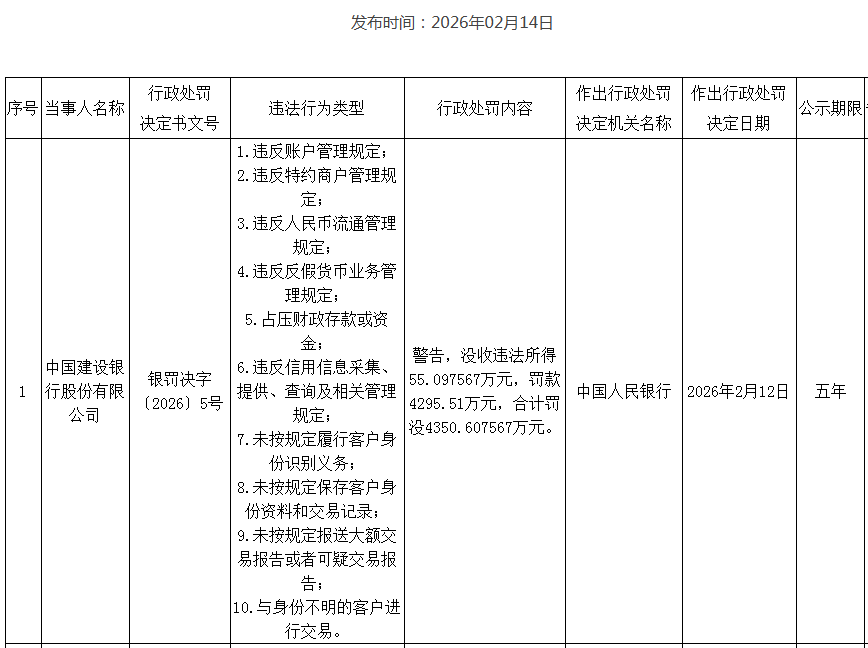
| 序号 当事人名称 | 行政处罚 | 违法行为类型 | | 行政处罚内容 | 作出行政处罚 | 作出行政处罚 | 公示期限 | | --- | --- | --- | --- | --- | --- | --- | --- | | | 决定书文号 | | | | 决定机关名称 | 決定日期 | | | | | 1. 违反账户管理规定; | | | | | | | | | 2. 违反特约商户管理规 | | | | | | | | | 定; | | | | | | | | | 3. 违反人民币流通管理 | | | | | | | | | 规定; | | | | | | | | | 4. 违反反假货币业务管 | | | | | | | | | 理规定; | | | | | | | | | 5. 占压财政存款或资 | | | | | | | | | 金; | | | | | | | 中国建设银 | | 6. 违反信用信息采集、 | | 警告,没收违法所得 | | | | | | 银罚决字 | | | 55.097567万元,罚款 | | | | | 1 行股份有限 | (2026) 5号 | 提供、查询及相关管理 ...
节后流动性无虞,关注二季度通胀格局
GF SECURITIES· 2026-02-24 06:04
Core Insights - The report indicates that liquidity is expected to remain stable post-holiday, with a focus on the inflation landscape in the second quarter of 2026 [1]. Group 1: Market Performance - During the observation period from February 9 to February 20, 2026, the banking sector (CITIC first-level industry) experienced an overall decline of 1.3%, ranking 23rd among all industries and underperforming the Wind All A index, which rose by 1.1% [15]. - The performance of state-owned banks, joint-stock banks, city commercial banks, and rural commercial banks showed declines of -1.67%, -1.53%, -0.52%, and -0.81% respectively [15]. - The Hang Seng Composite Index increased by 0.4%, while H-shares of banks fell by 0.2%, underperforming the Hang Seng Composite Index but outperforming A-share banks [15]. Group 2: Individual Stock Performance - Among A-share banks, Huaxia Bank and Nanjing Bank saw increases of 2.28% and 1.43% respectively, while Chongqing Bank and Xi'an Bank faced declines of 4.40% and 3.61% [15]. - In the H-share market, Minsheng Bank led with a 4.80% increase, followed by Zhejiang Commercial Bank at 1.96% and Qingdao Bank at 0.91%. Conversely, Postal Savings Bank, Agricultural Bank, and Chongqing Bank saw declines of 2.68%, 1.64%, and 1.62% respectively [15]. Group 3: Bond Market Performance - The average price of bank convertible bonds rose by 0.48%, underperforming the Zhongzheng convertible bond index by 0.60 percentage points [16]. - The top-performing convertible bonds included Shangyin Convertible Bond (+1.26%), Zhongyin Convertible Bond (+0.51%), and Xingye Convertible Bond (+0.25%), while the worst performers included Ziyin Convertible Bond, which fell by 0.02% [16]. Group 4: Profit Forecasts - There were changes in the performance growth expectations for three banks in 2025, specifically Huaxia Bank, Changshu Bank, and Jiangyin Bank. However, the net profit and revenue growth expectations for A-share banks in 2025 remained unchanged compared to the previous period [16]. Group 5: Investment Recommendations - The report suggests that while banks are unlikely to yield relative returns, their valuations may receive liquidity support, leading to potential absolute returns. The overall banking sector is expected to trend upwards from the post-holiday period until the Two Sessions [17]. - The core issue for the second quarter is whether inflation will accelerate and if long-term interest rates will continue to rise. If inflation accelerates, high-dividend and bond-like asset valuations may be pressured, necessitating a downward adjustment of target returns for the banking sector [17]. - The report maintains that the banking sector may experience further differentiation in 2026, with larger banks and wealth management banks expected to outperform. Recommended core stocks include Ningbo Bank, China Merchants Bank, Qingdao Bank, and large state-owned banks [17].


30万羽蛋鸡供应稳了
Jin Rong Shi Bao· 2026-02-24 03:30
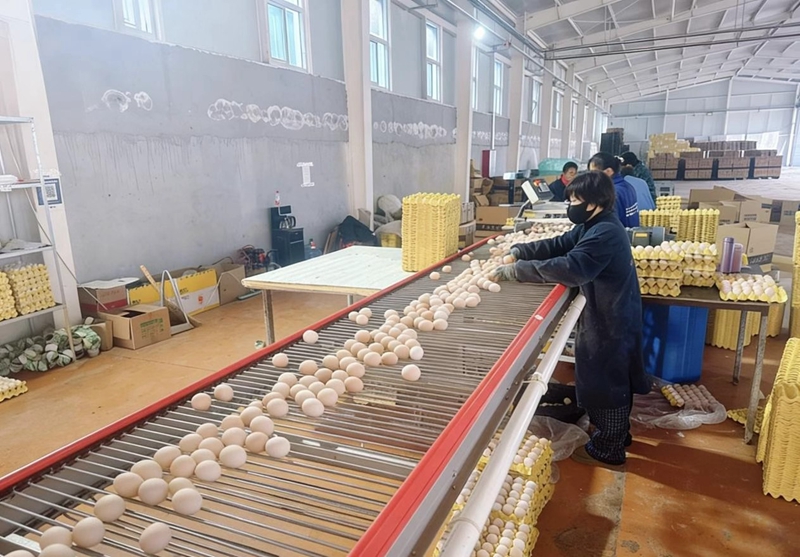
Core Insights - The article highlights the successful financial support provided by the Bank of China to a local agricultural company, ensuring a stable supply of fresh eggs during the Spring Festival [1][3][5] Group 1: Company Overview - Hebei Wuan Jiamai Agricultural Development Co., Ltd. is recognized as a national "high-tech enterprise" and a provincial specialized and innovative company, playing a crucial role in local rural revitalization by providing stable employment and income to over 100 farmers [3][4] - The company has expanded its operations to cover five surrounding villages, contributing significantly to the local economy [3] Group 2: Financial Support and Impact - The company faced urgent financing needs to procure feed, upgrade facilities, and pay year-end bonuses to employees, with a total loan of 5 million yuan approved in just four working days [3][4] - The loan enabled the company to secure 2,000 tons of feed and upgrade automation equipment, increasing daily egg production capacity to 60,000 jin during the festival [4] - The company plans to expand its operations by adding 800,000 egg-laying hens and developing related industries, which will create job opportunities for over 200 local farmers [4] Group 3: Financial Services Innovation - The Bank of China has streamlined its loan approval process, allowing for efficient service delivery directly to the company's production site, enhancing operational efficiency [4][5] - The initiative reflects a broader strategy to leverage financial services to support rural industry development and ensure food supply stability [5]
湖南 点亮新春消费季
Jin Rong Shi Bao· 2026-02-24 02:13
Group 1 - The consumption market in Hunan is experiencing a surge as the New Year approaches, with financial institutions like China Construction Bank (CCB) providing targeted support to help households prepare for the festive season [1] - CCB's Hunan branch is actively engaging with local businesses to offer financial solutions, such as the "Yunong Loan," which is designed to meet the seasonal cash flow needs of small and micro enterprises [2][5] - The loan provided to a local electric vehicle retailer enabled them to upgrade their brand and stock up for the holiday season, resulting in a 12% year-on-year increase in sales during the New Year period [2] Group 2 - Hunan Xianghong Food Co., a leading agricultural enterprise, received a 3 million yuan loan from CCB, which allowed them to secure low-priced raw materials and upgrade production capacity by 20%, meeting increased demand for their products [3] - Qinghe Animal Husbandry Co. in Phoenix County secured a 5 million yuan loan through CCB's "Hui Dong Ni" app, enabling them to expand production lines and sign supply agreements with local cooperatives, aiming for a sales target of over 30 million yuan by 2025 [4][5] - CCB's focus on integrating financial services into festive consumption scenarios reflects its commitment to supporting the micro-economy and enhancing the vibrancy of local markets [5]
中国人民银行、金融监管总局 发布我国系统重要性银行名单
Jin Rong Shi Bao· 2026-02-24 01:28
Core Viewpoint - The People's Bank of China and the National Financial Regulatory Administration have conducted the 2025 assessment of systemically important banks, identifying 21 domestic banks categorized into five groups based on their systemic importance scores [1] Group 1: Assessment of Systemically Important Banks - A total of 21 domestic systemically important banks have been recognized, including 6 state-owned commercial banks, 10 joint-stock commercial banks, and 5 city commercial banks [1] - The banks are divided into five groups based on their systemic importance scores, with the first group consisting of 11 banks, the second group having 4 banks, the third group with 2 banks, the fourth group containing 4 banks, and the fifth group having no banks [1] Group 2: Breakdown of Bank Groups - The first group includes: China Minsheng Bank, China Everbright Bank, Ping An Bank, Huaxia Bank, Ningbo Bank, Jiangsu Bank, Beijing Bank, Nanjing Bank, Guangfa Bank, Zheshang Bank, and Shanghai Bank [1] - The second group consists of: Industrial Bank, China CITIC Bank, Shanghai Pudong Development Bank, and China Postal Savings Bank [1] - The third group includes: Bank of Communications and China Merchants Bank [1] - The fourth group comprises: Industrial and Commercial Bank of China, Bank of China, China Construction Bank, and Agricultural Bank of China [1] - The fifth group currently has no banks included [1] Group 3: Future Regulatory Actions - The People's Bank of China and the National Financial Regulatory Administration will implement additional regulatory measures for systemically important banks according to the "Regulations on Additional Supervision of Systemically Important Banks (Trial)" [1] - The aim is to enhance the synergy between macro-prudential management and micro-prudential supervision, ensuring the safe and sound operation of systemically important banks [1] - This initiative is intended to better support the high-quality development of the real economy [1]




今日金价!2026年2月23日最新黄金价格!各大金店、黄金回收价格
Sou Hu Cai Jing· 2026-02-23 23:35
Core Insights - The domestic gold market is experiencing adjustments, with retail prices remaining strong while wholesale prices are more affordable [1] - The recovery price for gold is steadily increasing, indicating a stable demand for high-purity gold [6] Brand Gold Store Prices - Major brands' gold prices per gram are as follows: - Chow Tai Fook: 1545.00 CNY - Chow Sang Sang: 1562.00 CNY - King of Gold: 1545.00 CNY - Xie Ruilin: 1545.00 CNY - Lao Feng Xiang: 1518.00 CNY - Lao Miao Gold: 1598.00 CNY - Cai Bai Jewelry: 1505.00 CNY - China Gold: 1505.00 CNY [1][2][3][4] Regional Price Differences - In Shenzhen, wholesale prices are as follows: - Gold 999: 1298.00 CNY - High purity gold 999.9: 1299.00 CNY - Gold bars: 1298.00 CNY - Prices in first-tier cities like Beijing, Shanghai, and Guangzhou vary slightly, with Shanghai's Chow Tai Fook at 1545.00 CNY and Guangzhou's Lao Feng Xiang at 1518.00 CNY [4] Investment Gold Prices - Bank gold bars are priced at 1155.00 CNY per gram, with recovery prices around 1100.00 CNY depending on purity [5][9] Gold Recovery Prices - The current base recovery price for gold with a purity of 99.9% or higher is 1100.00 CNY per gram, with several brands also offering the same recovery price [6][8]


智通ADR统计 | 2月24日
智通财经网· 2026-02-23 22:18
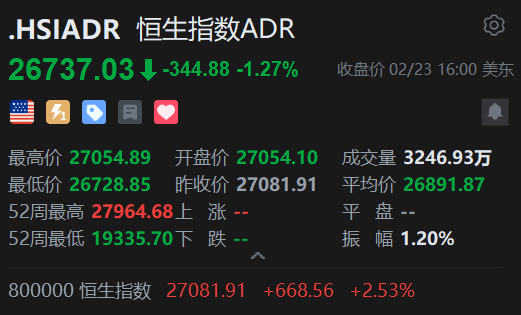
Market Overview - The Hang Seng Index (HSI) closed at 26,737.03, down by 344.88 points or 1.27% from the previous close [1] - The index reached a high of 27,054.89 and a low of 26,728.85 during the trading session [1] - The trading volume was 32.469 million shares, with an average price of 26,891.87 [1] Major Blue-Chip Stocks Performance - HSBC Holdings closed at 136.676 HKD, up by 0.57% compared to the Hong Kong close [2] - Tencent Holdings closed at 531.535 HKD, down by 1.20% compared to the Hong Kong close [2] - Alibaba Group (ADR) was priced at 149.305, down by 1.90% compared to its Hong Kong price of 152.200 [3] - AIA Group closed at 84.621, down by 1.20% compared to its Hong Kong price of 85.650 [3] - Meituan closed at 83.194, down by 2.12% compared to its Hong Kong price of 85.000 [3] Stock Price Changes - Tencent Holdings saw an increase of 16.000 HKD, or 3.07%, in its latest price [3] - Alibaba Group increased by 5.100 HKD, or 3.47% [3] - HSBC Holdings rose by 1.600 HKD, or 1.19% [3] - China Ping An increased by 2.250 HKD, or 3.19% [3] - JD.com and Kuaishou saw price increases of 3.700 HKD (3.56%) and 2.050 HKD (3.08%) respectively [3]