ICBC(01398)

Search documents
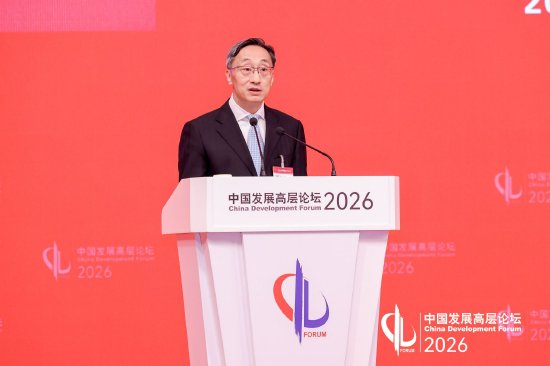
中国工商银行行长刘珺:AI时代需培育π型人才,以应对智能体带来的知识融合挑战
Xin Lang Cai Jing· 2026-03-23 10:10
Core Viewpoint - The need for a credible international cooperation system, termed "Globalization 2.0," to address global challenges such as climate change and AI governance, thereby reducing risk premiums and achieving mutual benefits among parties [3][7]. Group 1: Strategic Transformations for Financial Institutions - Financial institutions must fundamentally transform in three strategic dimensions: 1. Repricing non-economic and non-market risks, moving beyond traditional risk models that focus on credit, market, and liquidity risks to incorporate complex and dynamic variables using big data and technologies like AI and remote sensing [3][7]. 2. Cultivating π-type talents in the digital age, emphasizing the importance of deep vertical knowledge and interdisciplinary expertise to navigate the challenges posed by AI and knowledge integration [3][7]. 3. Transitioning to a multidimensional, systematic, and intelligent agency-based financial service model, integrating lifecycle support and industry chain services to create a comprehensive financial service framework for the real economy [4][9]. Group 2: Commitment to Risk Management and Digital Transformation - ICBC is dedicated to enhancing its comprehensive risk management system to ensure stable operations across cycles while advancing its digital and intelligent transformation to build a world-class financial institution [5][9].


工商银行今日大宗交易平价成交240万股,成交额1740万元
Xin Lang Cai Jing· 2026-03-23 09:33
Core Viewpoint - On March 23, the Industrial and Commercial Bank of China (ICBC) executed a block trade involving 2.4 million shares, with a total transaction value of 17.4 million yuan, representing 0.47% of the total trading volume for the day, at a price of 7.25 yuan per share, which was consistent with the market closing price [1]. Group 1 - The block trade involved 2.4 million shares of ICBC [1] - The total transaction amount was 17.4 million yuan [1] - The transaction price was 7.25 yuan, unchanged from the market closing price [1]

银行板块跌势扩大 农业银行等多股跌超5%
Xin Lang Cai Jing· 2026-03-23 06:33
Group 1 - The banking sector is experiencing a significant decline, with multiple stocks, including Agricultural Bank of China, Zhangjiagang Bank, and Xiamen Bank, dropping over 5% [1] - Other banks such as Industrial and Commercial Bank of China, Bank of Communications, and Postal Savings Bank of China have also seen declines exceeding 3% [1]


银行资负跟踪20260322:通胀预期下广谱资产流动性收敛,关注负反馈
GF SECURITIES· 2026-03-22 14:06
Investment Rating - The industry investment rating is "Buy" [2] Core Insights - The report highlights that under inflation expectations, broad asset liquidity may contract, and attention should be paid to negative feedback effects [1][14] - The central bank's operations have resulted in a net injection of 215.8 billion CNY, with liquidity in the interbank market remaining ample and funding rates slightly declining [14] - The report emphasizes the potential for liquidity-driven valuation expansion to slow down in the second quarter due to rising inflation expectations and external geopolitical conflicts affecting oil prices [14][16] Summary by Sections 1. Inflation Expectations and Asset Liquidity - The interbank liquidity is currently abundant, with funding rates showing a slight decline. As of March 20, R001 and R007 rates were 1.40% and 1.48%, respectively [14] - The central bank conducted 242.3 billion CNY in 7-day reverse repos, with a maturity of 1,765 billion CNY, and a net injection of 215.8 billion CNY was achieved [14] - The report anticipates that liquidity may face contraction in Q2, influenced by inflation recovery expectations and external factors [14] 2. Central Bank Dynamics and Market Rates - The central bank's operations are characterized by small adjustments, maintaining a stable liquidity environment [15] - The report notes that government bond yields have shown mixed movements, with 1Y and 3Y yields decreasing by 2.0bp and 2.5bp, while longer-term yields have increased [16] - The report suggests that the market should prepare for potential upward pressure on long-term interest rates as economic recovery and inflation expectations evolve [16] 3. Bank Financing Tracking - The report indicates that the issuance of interbank certificates of deposit (NCD) has seen a weighted average issuance rate of 1.53%, down by 2bp from the previous period [19] - The total outstanding amount of interbank certificates of deposit is 18.17 trillion CNY, with a negative net financing of 4.042 billion CNY this period [19] - The report highlights that there were no new issuances of commercial bank bonds during this period, with a total outstanding amount of 3.35 trillion CNY [20]


沃什“掌舵”美联储前瞻——美联储政策何去何从-中国工商银行
Sou Hu Cai Jing· 2026-03-22 13:30
Group 1 - Kevin Warsh's policy stance is influenced by his experience during the 2008 financial crisis, advocating for strict inflation control, market discipline, financial stability, and central bank independence while opposing the normalization of quantitative easing (QE) [1][12][17] - Warsh supports a combination of "interest rate cuts + moderate balance sheet reduction" to stabilize growth through price easing while managing risks through structural contraction [1][19] - Following Warsh's nomination, the market saw a brief strengthening of the dollar, a significant pullback in precious metals, a steepening of the U.S. Treasury yield curve, and volatility in the stock market, particularly in the tech sector [2][7] Group 2 - The U.S. economy remains resilient, but the labor market is weakening, leading to expectations of two interest rate cuts totaling 50 basis points by June 2026 [1][19][20] - Warsh's cautious approach to QE is expected to help restore the credibility of the dollar and slow down the de-dollarization process, while the yield curve is likely to continue steepening [2][7] - The overall market is anticipated to experience increased volatility and sector differentiation, with a preference for stable value stocks amid expectations of regulatory easing in the financial sector [2][7][19]

银行投资观察20260322:二季度流动性逆风期的内涵
GF SECURITIES· 2026-03-22 11:05
Core Insights - The report indicates that the banking sector has shown resilience, with A-share banks rising overall while H-share banks outperformed A-shares during the observation period from March 16 to March 20, 2026 [17] - The report emphasizes the importance of liquidity trends, suggesting that the liquidity environment may tighten in the second quarter of 2026, impacting investment strategies [19][20] Section Summaries 1. Current Observation: A-share banks overall increased, H-share banks outperformed A - During the observation period, the Wind All A index fell by 4.1%, while the banking sector (CITIC first-level industry) rose by 0.3%, ranking second among all industries [17] - The performance of state-owned banks, joint-stock banks, city commercial banks, and rural commercial banks varied, with changes of 2.17%, -0.32%, -0.49%, and -0.54% respectively [17] - H-share banks saw a 2.0% increase, outperforming the Hang Seng Composite Index, which fell by 1.7% [17] 2. Investment Recommendations: Understanding the liquidity headwinds in Q2 - Historical liquidity assessments indicate a turning point expected in Q1 2026, driven by domestic fiscal policies and cross-border capital inflows [19] - The report suggests that the focus should shift from M1 to M2 as a key liquidity indicator, with expectations of a rebound in broad money supply [19] - The anticipated tightening of liquidity in Q2 2026 may lead to a recommendation for investing in state-owned banks to achieve relative returns [20] 3. Sector Performance: Banking sector increased, weekly turnover rate rose - The banking sector's weekly turnover rate was 1.42%, an increase of 0.06 percentage points from the previous week, ranking last among 30 CITIC first-level industries [42] - As of March 20, 2026, the banking sector's latest price-to-earnings (P/E) ratio was 6.89X, and the price-to-book (P/B) ratio was 0.67X, indicating relative stability in valuations [42] 4. Individual Stock Performance: A-share banks overall increased, state-owned banks performed better - The top-performing A-share bank was Industrial and Commercial Bank of China, which rose by 4.17%, while Qingdao Bank saw the largest decline at 4.67% [17] - In H-shares, Industrial and Commercial Bank of China also led with a 4.27% increase, while Zhengzhou Bank experienced a decline of 3.67% [17] 5. Convertible Bond Performance: Average price of bank convertible bonds fell by 1.01% - The average price of bank convertible bonds decreased by 1.01%, outperforming the Zhongzheng convertible bond index by 2.14 percentage points [18] - Notable individual bond performances included Qingnong Convertible Bond with a slight increase of 0.12% and Changyin Convertible Bond with a decline of 1.29% [18] 6. Profit Forecast Tracking: 2025 profit growth expectations remain largely unchanged - The report notes that four banks have seen changes in their 2025 profit growth expectations, including Jiangsu Bank and Changsha Bank [18] - The overall profit growth and revenue growth expectations for A-share banks in 2025 have remained stable, with minimal changes from the previous period [18]
银行业周报:财报披露季开启-20260321
ZHESHANG SECURITIES· 2026-03-21 12:50
Investment Rating - The industry investment rating is "Positive" (maintained) [4] Core Views - The first annual report of listed banks has been disclosed, reinforcing the logic of fundamental improvement [1] - The banking sector outperformed the market, with the banking index rising by 0.36% while the overall market (Wande All A Index) fell by 4.13% [2] - The performance of state-owned banks was stronger, with an increase of 2.23%, while joint-stock banks, city commercial banks, and rural commercial banks saw declines [2] - The release of the "Regulations on the Disclosure of Comprehensive Financing Costs for Personal Loans" is expected to enhance consumer protection and increase market concentration in personal loans [3] - The Loan Prime Rate (LPR) remained unchanged for ten consecutive months, indicating a potential delay in interest rate cuts [3] - The financial law draft aims to strengthen financial regulation and risk management [3] Summary by Sections Industry Performance - The banking sector index ranked second among 31 first-level industries, benefiting from capital inflows due to escalating overseas geopolitical conflicts [2] - The average dividend yield for the banking sector in 2025 is projected to be 4.4%, with a price-to-book (PB) ratio of 0.61x as of Q3 2025 [9] Individual Bank Performance - CITIC Bank reported a slight decline in revenue of 0.5% but a net profit increase of 3.0% year-on-year, with a non-performing loan (NPL) ratio of 1.15% [4] - Ping An Bank's revenue and net profit decreased by 10.4% and 4.2% respectively, with an NPL ratio holding steady at 1.05% [4] - Shanghai Bank's revenue and net profit grew by 3.4% year-on-year, although growth has slowed due to high non-interest income in the previous year [6] Investment Recommendations - The report suggests focusing on state-owned banks and certain high-dividend small and medium-sized banks, recommending major banks like ICBC, ABC, and CCB, as well as smaller banks like Nanjing Bank and Shanghai Bank [10] - The report anticipates a recovery in bank earnings in 2026, with core revenue expected to grow by 5% [9]



中国工商银行内部审计局天津分局副局长陈兵被查
新华网财经· 2026-03-21 04:13
来源: 中央纪委国家监委网站 关注" 新华网财经 "视频号 据中央纪委国家监委驻中国工商银行纪检监察组、天津市纪委监委消息,中国工商银行内部审计局天津分局副局长陈兵涉嫌严重违纪违 法,主动投案,目前正接受中央纪委国家监委驻中国工商银行纪检监察组纪律审查和天津市监察委员会监察调查。 更多财经资讯等你来看 往期推荐 多家黄金品牌宣布:调价! 寿司郎回应消费者吃出金枪鱼寄生虫卵 ...

工商银行再提示贵金属市场风险
Zhong Guo Jing Ying Bao· 2026-03-20 11:57
Core Viewpoint - The Industrial and Commercial Bank of China (ICBC) has issued a warning regarding the risks in the precious metals market due to increased volatility influenced by global macroeconomic conditions and geopolitical developments [1] Group 1: Market Conditions - The precious metals market is experiencing heightened volatility, which is attributed to complex changes in global macroeconomic and geopolitical factors [1] - Investors are advised to maintain a calm and rational investment mindset, thoroughly assess their risk tolerance, and avoid impulsive trading driven by short-term market emotions [1] Group 2: Investment Strategy - From a long-term asset allocation perspective, ICBC recommends that investors adhere to principles of "total control, phased entry, and diversified layout" [1] - The bank suggests extending the investment horizon to smooth out phase-specific volatility risks and to build a more robust asset portfolio [1]
金价震荡,工行紧急提示
21世纪经济报道· 2026-03-20 09:24
Core Viewpoint - The article emphasizes the increasing volatility in the precious metals market due to global macroeconomic factors and geopolitical tensions, urging investors to maintain a calm and rational investment mindset while assessing their risk tolerance [1][4]. Group 1: Market Conditions - The international gold market has experienced significant fluctuations, with prices dropping below $5000 per ounce, reaching a low of $4502.01 per ounce on March 19, before rebounding to $4712.87 per ounce by March 20 [4]. - The U.S. Producer Price Index (PPI) for February rose by 0.7%, exceeding expectations of 0.3%, which has raised inflation concerns and influenced the Federal Reserve's hawkish stance [5][6]. Group 2: Investment Recommendations - The Industrial and Commercial Bank of China (ICBC) recommends a long-term asset allocation strategy that includes "total control, phased entry, and diversified layout" to mitigate short-term market volatility [1]. - Investors are advised to closely monitor geopolitical developments and the flow of safe-haven funds, as the market is currently favoring a "cash is king" strategy [7]. Group 3: Risk Management Measures - Several major banks, including ICBC and Agricultural Bank of China, have issued multiple risk warnings regarding precious metal investments and have implemented stricter measures, such as raising risk assessment thresholds and transaction limits [8][9]. - ICBC has raised the minimum investment amount for its gold accumulation products and has introduced dynamic limit management for transactions on non-trading days [8].