
ZZPZH(600436)

Search documents
今日89只个股突破半年线
Zheng Quan Shi Bao Wang· 2025-08-04 04:03
证券时报·数据宝统计,截至今日上午收盘,上证综指3567.02点,收于半年线之上,涨跌幅0.20%,A股 总成交额为9323.22亿元。到目前为止,今日有89只A股价格突破了半年线,其中乖离率较大的个股有盟 升电子、金杨股份、百傲化学等,乖离率分别为4.81%、3.91%、3.74%;启明信息、大业股份、片仔癀 等个股乖离率较小,刚刚站上半年线。 8月4日突破半年线个股乖离率排名 | 证券代 | 证券简 | 今日涨跌幅 | 今日换手率 | 半年线 | 最新价 | 乖离率 | | --- | --- | --- | --- | --- | --- | --- | | 码 | 称 | (%) | (%) | (元) | (元) | (%) | | 688311 | 盟升电 子 | 6.33 | 4.01 | 37.68 | 39.49 | 4.81 | | 301210 | 金杨股 份 | 5.81 | 10.97 | 42.39 | 44.05 | 3.91 | | 603360 | 百傲化 学 | 6.19 | 2.38 | 20.51 | 21.28 | 3.74 | | 002625 | 光启技 术 | ...


【片仔癀(600436.SH)】聚焦国内国际双循环,科技创新引领未来——更新点评(王明瑞/黄素青)
光大证券研究· 2025-08-02 00:03
Core Viewpoint - The article highlights the strategic initiatives of the company in promoting traditional Chinese medicine and health products, focusing on product development, international expansion, and investment in the health industry [4][5][6]. Group 1: Product Development and Market Strategy - The company is committed to enhancing its flagship product, Pianzaihuang, and expanding its product line with significant items such as the compound Pianzaihuang lozenge and Yindan Pinggan capsules, continuously enriching its "big product" matrix [5]. - The cosmetics subsidiary has implemented a long-term incentive mechanism based on excess profit sharing, successfully launching several products that have achieved over 100 million in sales [5]. Group 2: International Expansion - The company actively participates in national-level events to promote the internationalization of traditional Chinese medicine, including the "Belt and Road" conference and various international trade expos scheduled for 2025 [5]. - The company is involved in multiple international trade fairs, enhancing its global presence and market reach [5]. Group 3: Investment in Health Industry - Since 2024, the company has established three funds, each with a scale of 1 billion, focusing on investments in traditional Chinese medicine, biomedicine, medical devices, and health-related industries [5]. - The company's equity stake in these funds ranges from 20% to 30%, indicating a strong commitment to the health sector [5]. Group 4: Research and Development - In 2024, the company is advancing clinical research on 11 projects related to Pianzaihuang and other traditional Chinese medicine products, laying the groundwork for expanding clinical applications [6]. - The company has a robust pipeline with 14 ongoing new drug projects, including two new traditional Chinese medicine drugs entering clinical trials [6]. - Recent advancements include the completion of Phase I clinical research for a chemical drug and the initiation of Phase II trials for another, showcasing the company's commitment to innovation [6].


中药上市公司董秘PK:奇正藏药冯平年接待投资者超400次 2024年薪酬超130万元
Xin Lang Zheng Quan· 2025-08-01 05:17
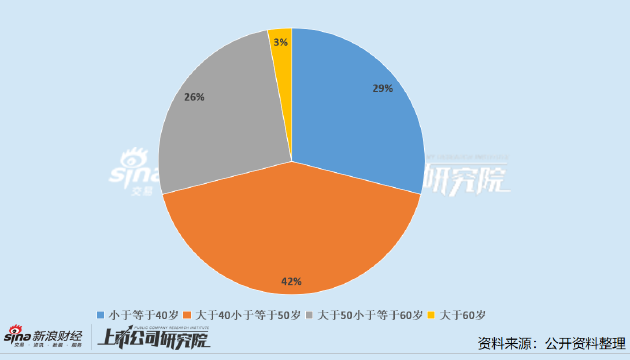
Group 1 - The total salary of A-share listed company secretaries in 2024 reached 4.086 billion yuan, with an average annual salary of 754,300 yuan [1] - Among the A-share listed companies, 1,144 secretaries earned over 1 million yuan annually, accounting for over 21% [1] - The age distribution of secretaries shows that those aged 40-50 constitute 42%, while those over 50 account for 29%, and those under 40 make up 26% [1] Group 2 - The educational background of secretaries indicates that 5% have an associate degree, 42% hold a bachelor's degree, 49% possess a master's degree, and 4% have a doctoral degree, with over half holding a master's degree or higher [3] - Only three secretaries hold a doctoral degree, specifically from Yiling Pharmaceutical, Kunming Pharmaceutical Group, and Jinhua Co., Ltd. [3] Group 3 - The average annual salary of secretaries in A-share listed Chinese medicine companies is 742,400 yuan, with 39% earning below 500,000 yuan, 42% earning between 500,000 and 1 million yuan, and 15% earning between 1 million and 2 million yuan [5] - The top five highest-paid secretaries are from China Resources Sanjiu, Jichuan Pharmaceutical, Tianjin Pharmaceutical, Yiling Pharmaceutical, and Yibai Pharmaceutical, with salaries ranging from 1.3935 million to 2.5587 million yuan [7] Group 4 - There is significant variation in the number of investor receptions among listed companies, with 59% receiving fewer than 10 times a year, while 3% received between 300 and 1,000 times [9] - The five companies with the highest number of investor receptions are Zoli Pharmaceutical, Qizheng Pharmaceutical, Yunnan Baiyao, Jinghua Pharmaceutical, and Pianzihuang, with receptions ranging from 207 to 410 times [9]


中药上市公司董秘PK:佐力药业吴英成行业“劳模” 年接待投资者410次排名第一
Xin Lang Zheng Quan· 2025-08-01 05:17
Core Insights - The report highlights that the total salary for A-share listed company secretaries in 2024 reached 4.086 billion yuan, with an average annual salary of 754,300 yuan [1] - A total of 1,144 company secretaries earn over 1 million yuan annually, accounting for more than 21% of the total [1] Salary Distribution - The average annual salary for company secretaries in the A-share traditional Chinese medicine sector is 742,400 yuan [5] - The distribution of salaries is as follows: below 500,000 yuan (27 individuals, 39%), between 500,000-1,000,000 yuan (29 individuals, 42%), between 1,000,000-2,000,000 yuan (10 individuals, 15%), between 2,000,000-3,000,000 yuan (2 individuals, 3%), and above 3,000,000 yuan (1 individual, 1%) [5] Age and Educational Background - The age distribution of company secretaries shows that those aged 40-50 constitute 42%, while those over 50 account for 29%, and those under 40 make up 26% [1] - In terms of educational qualifications, 5% have an associate degree, 42% hold a bachelor's degree, 49% possess a master's degree, and 4% have a doctoral degree, with over half of the secretaries holding a master's degree or higher [3] Top Earners and Investor Relations - The top five highest-paid company secretaries are: - Xing Jian from China Resources Sanjiu (2.5587 million yuan) - Cao Wei from Jichuan Pharmaceutical (2.4107 million yuan) - Yu Jie from Tian Shi Li (2.525 million yuan) - Wu Rui from Yiling Pharmaceutical (1.89 million yuan) - Jiang Xianhong from Yibai Pharmaceutical (1.3935 million yuan) [7] - The frequency of investor meetings varies significantly among companies, with 41 companies hosting fewer than 10 meetings annually (59%), 17 companies holding 10-100 meetings (25%), 9 companies conducting 100-300 meetings (13%), and 2 companies having 300-1000 meetings (3%) [7] Most Active Companies in Investor Relations - The five companies with the highest number of investor meetings are: - Zoli Pharmaceutical (410 meetings) - Qizheng Tibetan Medicine (404 meetings) - Yunnan Baiyao (298 meetings) - Jinghua Pharmaceutical (221 meetings) - Pian Zai Huang (207 meetings) [9]


中药上市公司董秘PK:华润三九邢健年薪255.87万元行业第一 任职董秘尚不足一年
Xin Lang Zheng Quan· 2025-08-01 05:13
Group 1 - The total salary of A-share listed company secretaries in 2024 reached 4.086 billion yuan, with an average annual salary of 754,300 yuan [1] - Among the A-share listed companies, 1,144 secretaries earned over 1 million yuan annually, accounting for over 21% [1] - The age distribution of secretaries shows that those aged 40-50 constitute 42%, while those over 50 account for 29%, and those under 40 make up 26% [1] Group 2 - The educational background of secretaries indicates that 5% have an associate degree, 42% hold a bachelor's degree, 49% possess a master's degree, and 4% have a doctoral degree, with over half holding a master's or higher [3] - Only three secretaries hold a doctoral degree, specifically from Yiling Pharmaceutical, Kunming Pharmaceutical Group, and Jinhua Co., Ltd. [3] Group 3 - The average annual salary of secretaries in A-share listed Chinese medicine companies is 742,400 yuan, with 39% earning below 500,000 yuan, 42% earning between 500,000-1 million yuan, 15% between 1-2 million yuan, 3% between 2-3 million yuan, and 1% above 3 million yuan [5] - The top five highest-paid secretaries are from China Resources Sanjiu, Jichuan Pharmaceutical, Tianjin Tasly, Yiling Pharmaceutical, and Yibai Pharmaceutical, with salaries of 2.5587 million yuan, 2.4107 million yuan, 2.525 million yuan, 1.89 million yuan, and 1.3935 million yuan respectively [7] Group 4 - There is significant variation in the number of investor receptions among listed companies, with 59% receiving fewer than 10 times a year, 25% between 10-100 times, 13% between 100-300 times, and 3% between 300-1000 times [9] - The five companies with the highest number of investor receptions are Zoli Pharmaceutical, Qizheng Tibetan Medicine, Yunnan Baiyao, Jinghua Pharmaceutical, and Pianzihuang, with receptions of 410, 404, 298, 221, and 207 respectively [9]

中药上市公司董秘PK:益佰制药蒋先洪任董秘一年即收获140万年薪 显著高于行业均值
Xin Lang Zheng Quan· 2025-08-01 05:13
Core Insights - The report highlights that the total salary for A-share listed company secretaries in 2024 reached 4.086 billion yuan, with an average annual salary of 754,300 yuan [1] - A total of 1,144 company secretaries earn over 1 million yuan annually, accounting for more than 21% of the total [1] Salary Distribution - The average annual salary for company secretaries in the A-share traditional Chinese medicine sector is 742,400 yuan [5] - The distribution of salaries is as follows: - Below 500,000 yuan: 27 individuals (39%) - 500,000-1,000,000 yuan: 29 individuals (42%) - 1,000,000-2,000,000 yuan: 10 individuals (15%) - 2,000,000-3,000,000 yuan: 2 individuals (3%) - Above 3,000,000 yuan: 1 individual (1%) [5] Age and Educational Background - The age distribution of company secretaries shows that those aged 40-50 constitute 42%, while those over 50 account for 29%, and those under 40 make up 26% [1] - The educational background indicates that 5% have an associate degree, 42% hold a bachelor's degree, 49% possess a master's degree, and 4% have a doctoral degree, with over half of the secretaries holding a master's degree or higher [3] Top Earning Company Secretaries - The top five highest-paid company secretaries are: - Xing Jian from China Resources Sanjiu: 2.5587 million yuan - Cao Wei from Jichuan Pharmaceutical: 2.4107 million yuan - Yu Jie from Tianjin Tasly: 2.525 million yuan - Wu Rui from Yiling Pharmaceutical: 1.89 million yuan - Jiang Xianhong from Yibai Pharmaceutical: 1.3935 million yuan - Their tenure at the companies ranges from less than 1 year to 15 years [7] Investor Engagement - There is significant variation in the number of investor meetings held by companies: - Less than 10 meetings: 41 companies (59%) - 10-100 meetings: 17 companies (25%) - 100-300 meetings: 9 companies (13%) - 300-1000 meetings: 2 companies (3%) [7] - The five companies with the highest number of investor meetings are: - Zoli Pharmaceutical: 410 meetings - Qizheng Pharmaceutical: 404 meetings - Yunnan Baiyao: 298 meetings - Jinghua Pharmaceutical: 221 meetings - Pianzihuang: 207 meetings [9]


中药上市公司董秘PK:特一药业许紫兰为行业最年轻董秘 年薪57.78万元低于行业均值
Xin Lang Zheng Quan· 2025-08-01 05:09
Core Insights - The report highlights that in 2024, the total salary for A-share listed company secretaries reached 4.086 billion yuan, with an average annual salary of 754,300 yuan [1] - The data indicates that over 21% of company secretaries earn more than 1 million yuan annually [1] Group 1: Salary Distribution - The average annual salary for company secretaries in the A-share traditional Chinese medicine sector is 742,400 yuan [7] - The distribution of salaries shows that 39% earn below 500,000 yuan, 42% earn between 500,000 and 1 million yuan, 15% earn between 1 million and 2 million yuan, 3% earn between 2 million and 3 million yuan, and 1% earn above 3 million yuan [7] - The top five highest-paid company secretaries are from Huaren Sanjiu, Jichuan Pharmaceutical, Tianshili, Yiling Pharmaceutical, and Yibai Pharmaceutical, with salaries of 2.5587 million yuan, 2.4107 million yuan, 2.525 million yuan, 1.89 million yuan, and 1.3935 million yuan respectively [7] Group 2: Age Distribution - Company secretaries aged between 40 and 50 constitute 42% of the market, while those over 50 account for 29%, and those under 40 make up 26% [3] - The youngest company secretary is 32 years old, representing Te Yi Pharmaceutical [3] Group 3: Educational Background - The educational background of company secretaries shows that 5% have an associate degree, 42% hold a bachelor's degree, 49% have a master's degree, and 4% possess a doctoral degree [5] - More than half of the company secretaries hold a master's degree or higher, with only three having a doctoral degree [5] Group 4: Investor Engagement - There is significant variation in the number of investor meetings held by listed companies, with 59% of companies hosting fewer than 10 meetings annually [9] - The top five companies with the most investor meetings are Zoli Pharmaceutical, Qizheng Tibetan Medicine, Yunnan Baiyao, Jinghua Pharmaceutical, and Pianzihuang, with 410, 404, 298, 221, and 207 meetings respectively [9]
恒润达生CAR-T疗法获批上市,片仔癀所投阳明基金持有203万股
Zheng Quan Shi Bao Wang· 2025-07-31 12:57
Group 1 - The core point of the article is the approval of HICARA, a CAR-T therapy developed by Hengrun Dazheng, marking a significant advancement in China's immunotherapy landscape for treating relapsed or refractory large B-cell lymphoma [1] - HICARA is the first fully domestically developed CAR-T product targeting CD19 in China and the fourth CAR-T therapy targeting this antigen approved in the country [1] - Hengrun Dazheng is focused on innovative biopharmaceuticals, particularly in the development of CAR-T and CAR-NK therapies for malignant hematological diseases and solid tumors, with five class 1 new drug clinical approvals currently in progress [1] Group 2 - The company is in the process of an IPO on the Sci-Tech Innovation Board, aiming to raise approximately 2.539 billion yuan by issuing up to 50 million shares [1] - Major shareholders include well-known investment firms such as Yingke Value, Hongtu Medical, and Zhangjiang Torch, with a notable stake held by Yangming Kangyi, which owns about 1.35% of the company [2] - Yangming Kangyi focuses on high-tech, high-growth, and high-value-added enterprises in the biopharmaceutical sector, with backing from leading companies like Pianzaihuang [2] Group 3 - Since 2024, the company has been actively participating in the "Yuanshan Plan" in Zhangzhou, planning to establish six industry funds with a total scale of 6 billion yuan in collaboration with local state-owned enterprises [3] - Existing funds include the Zhangzhou Yuanshan Health Industry Fund and the Pianzaihuang Yingke Life Health Industry Equity Fund, with Pianzaihuang being a significant investor [3]
沪深300制药指数报12999.93点,前十大权重包含恒瑞医药等
Jin Rong Jie· 2025-07-31 08:07
Group 1 - The core viewpoint of the news is that the Shanghai Stock Exchange 300 Pharmaceutical Index has shown significant growth, with a 12.60% increase over the past month, 13.11% over the past three months, and 19.34% year-to-date [1] - The Shanghai Stock Exchange 300 Pharmaceutical Index is composed of listed companies in the pharmaceutical sector selected from the Shanghai and Shenzhen 300 Index, reflecting the overall performance of these companies [1] - The index was established on December 31, 2004, with a base point of 1000.0 [1] Group 2 - The top ten weighted companies in the Shanghai Stock Exchange 300 Pharmaceutical Index include: Heng Rui Medicine (44.25%), Pian Zai Huang (9.6%), Yunnan Baiyao (7.98%), Kelun Pharmaceutical (6.66%), East China Pharmaceutical (6.13%), Fosun Pharmaceutical (5.62%), New Harmony (5.46%), Baillie Tianheng (4.07%), Tong Ren Tang (3.93%), and China Resources Sanjiu (3.33%) [1] - The market share of the index's holdings is 70.43% from the Shanghai Stock Exchange and 29.57% from the Shenzhen Stock Exchange [1] - The composition of the index by industry shows that drug formulations account for 66.73%, traditional Chinese medicine for 27.81%, and raw materials for 5.46% [1] Group 3 - The index sample is adjusted every six months, with adjustments implemented on the next trading day following the second Friday of June and December each year [2] - Weight factors are adjusted in accordance with the sample adjustments, which occur at the same time [2] - In special circumstances, the index may undergo temporary adjustments, such as when a sample company is delisted or undergoes mergers, acquisitions, or splits [2]



中药行业周报:多地对中成药价格提出治理要求-20250727
Xiangcai Securities· 2025-07-27 10:12
Investment Rating - The industry investment rating is maintained at "Overweight" [4] Core Views - The market performance shows that the Chinese medicine sector has increased by 1.39% last week, while the overall pharmaceutical sector continues its upward trend, with Chinese medicine lagging behind [3][6] - The price governance of traditional Chinese medicine (TCM) is being implemented across multiple regions, with various local health insurance bureaus issuing notifications regarding price risk management for certain TCM products [9] - The valuation metrics for the Chinese medicine sector indicate a PE (ttm) of 28.69X, which has increased by 0.41X week-on-week, and a PB (lf) of 2.37X, which has also risen by 0.03X week-on-week [7] Summary by Sections Market Performance - The Chinese medicine sector reported a closing index of 6638.77 points, reflecting a 1.39% increase, while the overall pharmaceutical index closed at 8580.75 points, up by 1.9% [6][22] - The performance of individual companies within the sector varied, with notable gainers including Zhendong Pharmaceutical and Yabao Pharmaceutical, while Wanbangde and Weikang Pharmaceutical showed declines [6][22] Valuation - The current PE (ttm) for the Chinese medicine sector is 28.69X, with a one-year maximum of 30.13X and a minimum of 22.58X, placing it at the 32.65% percentile since 2013 [7] - The PB (lf) stands at 2.37X, with a one-year maximum of 2.65X and a minimum of 1.99X, positioning it at the 7.04% percentile since 2013 [7] Price Governance - Recent notifications from various local health insurance bureaus indicate a focus on price governance for TCM, with specific measures being taken in regions such as Ningxia and Jilin [9] - The governance aims to address price risks associated with TCM products, particularly those that exceed local minimum treatment costs [9] Investment Recommendations - The report suggests focusing on three main investment themes: price governance, consumption recovery, and state-owned enterprise reform [11][12] - Specific recommendations include companies with strong R&D capabilities and unique products, as well as those less affected by centralized procurement [12]
