Shuangliang Eco-Energy(600481)

Search documents
概念股暴涨后遇冷!马斯克带火的“太空光伏”,前景几何?谁已入局?
Da Zhong Ri Bao· 2026-02-05 10:30
Core Viewpoint - The recent surge and subsequent decline in the space photovoltaic concept stocks were triggered by news of Elon Musk's team conducting research on solar energy companies, raising questions about the viability and market potential of space photovoltaics [1][2][3]. Group 1: Market Reaction - On February 4, space photovoltaic concept stocks experienced significant gains, with companies like Zhonglai Co. hitting a 20% limit up, while others like Guosheng Technology saw consecutive gains [3]. - Following the initial excitement, by February 5, the Wind Space Photovoltaic Index dropped by 4.86%, with several stocks, including Junda Co. and Jincheng Co., hitting their daily limit down [4]. Group 2: Company Responses - Multiple companies, including TCL Zhonghuan and Jinko Solar, confirmed interactions with Musk's team but clarified that no formal agreements or collaborations had been established [2][3]. - Jinko Solar stated that while they had contact with Musk's team, they had not signed any contracts or received orders related to space photovoltaics [3]. Group 3: Industry Insights - The concept of space photovoltaics involves harnessing solar energy in outer space and transmitting it back to Earth, which is seen as a potential solution for energy supply in commercial space endeavors [8]. - Industry experts, including the Secretary-General of the China Photovoltaic Industry Association, indicated that space photovoltaic technology is still in the exploratory phase, with significant uncertainties regarding its commercialization [3][8]. - The Ministry of Industry and Information Technology emphasized the need for high standards and quality regulation in the photovoltaic industry, aiming to address challenges such as supply-demand mismatches and promote innovation [8]. Group 4: Future Outlook - Analysts from Zhongyuan Securities noted that space photovoltaics are currently in the early stages, requiring validation across various technical and economic dimensions for large-scale commercial application [9]. - Huaxi Securities highlighted that emerging applications in space photovoltaics could drive growth across the entire photovoltaic industry, benefiting equipment, materials, and battery manufacturers [9].






双良节能(600481) - 双良节能系统股份有限公司2026年第一次临时股东会决议公告
2026-02-05 09:15
| 证券代码:600481 | 证券简称:双良节能 | 公告编号:2026-009 | | --- | --- | --- | | 转债代码:110095 | 转债简称:双良转债 | | 双良节能系统股份有限公司 2026年第一次临时股东会决议公告 本公司董事会及全体董事保证本公告内容不存在任何虚假记载、误导性陈述 或者重大遗漏,并对其内容的真实性、准确性和完整性承担法律责任。 本次会议是否有否决议案:无 一、 会议召开和出席情况 | 1、出席会议的股东和代理人人数 | 955 | | --- | --- | | 2、出席会议的股东所持有表决权的股份总数(股) | 902,323,023 | | 3、出席会议的股东所持有表决权股份数占公司有表决权股 | | | 份总数的比例(%) | 48.1529 | (四) 表决方式是否符合《公司法》及《公司章程》的规定,会议主持情况等。 本次股东会由公司董事会召集,董事长缪文彬先生与副董事长缪志强先生因公务 原因未能出席会议,董事会推举职工代表董事王法根先生主持了会议。会议采用 (一) 股东会召开的时间:2026 年 2 月 5 日 (二) 股东会召开的地点:江苏省江阴 ...

双良节能(600481) - 上海市通力律师事务所关于双良节能系统股份有限公司2026年第一次临时股东会的法律意见书
2026-02-05 09:15
上海市通力律师事务所 关于双良节能系统股份有限公司 2026 年第一次临时股东会的法律意见书 致: 双良节能系统股份有限公司 上海市通力律师事务所(以下简称"本所")接受双良节能系统股份有限公司(以下简称 "公司")的委托,指派本所徐青律师、纪宇轩律师(以下简称"本所律师")根据《中华人民 共和国公司法》《中华人民共和国证券法》《上市公司股东会规则》等法律法规和规范性文 件(以下统称"法律法规")及《双良节能系统股份有限公司章程》(以下简称"公司章程") 的规定就公司 2026 年第一次临时股东会(以下简称"本次股东会")相关事宜出具法律意见。 本所律师已经对公司提供的与本次股东会有关的法律文件及其他文件、资料予以了核 查、验证。在进行核查验证过程中,公司已向本所保证,公司提供予本所之文件中的所有签 署、盖章及印章都是真实的,所有作为正本提交给本所的文件都是真实、准确、完整和有效 的,且文件材料为副本或复印件的,其与原件一致和相符。 在本法律意见书中,本所仅对本次股东会召集和召开的程序、出席本次股东会人员资格 和召集人资格及表决程序、表决结果是否符合法律法规和公司章程的规定发表意见,并不对 本次股东会所审议的 ...
白银闪崩,贵金属板块直线跳水!消费股逆市大涨,贵州茅台4连阳,还有牛股6天5板!
雪球· 2026-02-05 08:16
Market Overview - The three major indices narrowed their declines in the afternoon, with the Shanghai Composite Index down 0.64%, the Shenzhen Component down 1.44%, and the ChiNext Index down 1.55% [3] - The total trading volume in the Shanghai and Shenzhen markets was 2.18 trillion yuan, a decrease of 304.8 billion yuan compared to the previous trading day, with over 3,700 stocks declining [4] Sector Performance Consumer Sector - The consumer sector saw significant gains, with food and beverage, retail, film and television, and tourism sectors being particularly active. Notably, Hengdian Film City recorded five consecutive trading days of gains [4][19] - Major stocks in the consumer sector, such as Kweichow Moutai, rose by 1.97%, bringing its market value to 1.95 trillion yuan [19][20] - The hotel and tourism sectors also performed well, with hotel bookings for long-distance travel increasing over 120% year-on-year as the Spring Festival approaches [21] Precious Metals - Precious metals experienced a sharp decline, with silver prices dropping over 16% at one point and gold prices falling over 3%. The precious metals sector fell more than 6%, leading the market decline [7][10] - Key stocks in the precious metals sector, such as Hunan Silver and Sichuan Gold, saw significant drops, with Hunan Silver hitting the daily limit down [9][10] Photovoltaic Sector - The photovoltaic sector opened with a sharp decline, with several leading stocks, including Junda Co. and Shuangliang Energy, hitting their daily limit down [12][14] - Companies like JinkoSolar and High Measurement Co. announced that they had not engaged in any collaboration with Elon Musk's team regarding space photovoltaic projects, which contributed to the sector's volatility [17] Conclusion - The market is currently characterized by significant volatility, particularly in the precious metals and photovoltaic sectors, while the consumer sector shows resilience and growth as the Spring Festival approaches [10][21]


A股收评 | 三大变数集中来袭!沪指缩量收跌0.64% 券商股护盘
智通财经网· 2026-02-05 07:20
Market Overview - The three major indices declined, with the Shanghai Composite Index down 0.64%, Shenzhen Component down 1.44%, and ChiNext down 1.55%. The total trading volume in the Shanghai and Shenzhen markets was 2.18 trillion yuan, a decrease of 304.8 billion yuan from the previous trading day [1] Key Trends 1. Structural De-leveraging - Despite a significant rebound in A-shares, the financing balance decreased by 13.9 billion yuan compared to the previous trading day, indicating ongoing "structural de-leveraging" [2] 2. U.S. Market Trends - The U.S. market's leverage lending index continued to decline, with a drop exceeding the previous trading day. This index has been on a downward trend since reaching a peak on January 13 [2] 3. AI Sector Dynamics - Major changes in the narrative surrounding technology are evident, with Oracle's layoffs highlighting challenges in AI financing. The impact of AI on software companies continues to exert pressure on valuations within the AI sector [2] Sector Performance 1. Consumer Sector Strength - The consumer sectors, including media, tourism, food and beverage, saw strong performance, with stocks like Jin Yi Film and Shaanxi Tourism hitting the daily limit [2][7] 2. Weakness in Precious Metals - The precious metals sector faced significant declines, with stocks like Silver and Hunan Silver hitting the daily limit. The market is experiencing a historical sell-off that is reshaping the short-term ecology of the precious metals market [3][15] 3. Solar Industry Decline - The solar industry chain, including photovoltaic equipment, experienced a broad decline, with stocks like Jun Da and Shuangliang Energy hitting the daily limit [9] 4. Hard Technology Sector Retreat - The hard technology sector, including optical fibers and modules, continued to decline, with stocks like Zhishang Technology and Dekeli falling over 10% [11] Institutional Insights 1. High Dividend Stocks - Huatai Securities noted that as market volatility increases, the value of high dividend stocks has marginally improved compared to last month, suggesting a focus on stable high dividend and potential growth stocks [14] 2. Precious Metals Market Outlook - Guoxin Futures indicated that the recent sell-off in precious metals marks the end of a smooth single-sided trend, leading to a new phase characterized by higher uncertainty and normalized volatility [15] 3. Consumer Demand Expectations - Tianfeng Securities suggested that this year's "Spring Festival rally" may be more sustained due to policy expectations and the trend of household funds moving towards equity assets, with consumer demand anticipated to release earlier than in previous years [16]




刚刚,崩了!大面积暴跌!
天天基金网· 2026-02-05 05:21
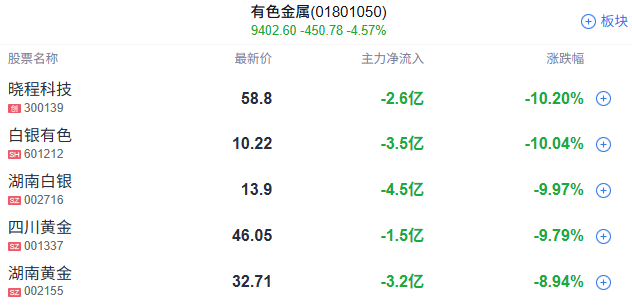
上天天基金APP搜索777注册即可领500元券包,优选基金10元起投!限量发放!先到先得! 2月5日上午,A股三大股指低开低走,日跌幅均超1%。 从市场结构看,大科技板块持续调整,CPO、半导体跌幅靠前,太空光伏板块大幅下挫,光 伏股里的钧达股份、双良节能双双跌停,贵金属板块持续暴跌,有色金属指数盘中跌超5%。 大消费板块表现较好,白酒股已实现4连阳,餐饮旅游、软饮料板块表现活跃,银行股全线飘 红。 截至午间收盘,沪指跌1.02%,深证成指跌1.8%,创业板指跌1.92%。 | 代码 | 名称 | 现价 | 涨跌幅 ▲ | 总市值1 | | --- | --- | --- | --- | --- | | 688205 | 德科立 | 173.40 | -11.54% | 274亿 | | 300570 | 大辰光 | 115.74 | -10.89% | 263亿 | | 300757 | 罗博特科 | 380.90 | -9.22% | 638亿 | | 300620 | 光库科技 | 161.80 | -8.83% | 403亿 | | 688048 | 长米华芯 | 125.51 | -7.17% | ...


一夜喧嚣后,太空光伏概念股进入“冷静期”
Xin Jing Bao· 2026-02-05 05:01
Group 1 - The recent market fluctuations in the space photovoltaic sector were triggered by Elon Musk's visit, leading to significant declines in several stocks, including JunDa Co., Ltd. and others [1] - Companies like GCL-Poly Energy Holdings and GCL-Integrated are experiencing stock price increases following Musk's team's interest in collaboration on silicon and perovskite technologies [1] - Multiple companies, rumored to be visited by Musk, issued announcements regarding their space photovoltaic business operations [1] Group 2 - JinkoSolar stated that space photovoltaic technology is still in the early exploration phase, with no impact on its current business performance as it focuses on terrestrial photovoltaic products [2] - Jingcheng Machinery expressed that the application scenarios for space photovoltaics are still being explored, and the industrialization process faces uncertainties [2] - The China Photovoltaic Industry Association emphasized that space photovoltaic technology is in the initial exploration and verification stage, making it premature to determine a clear technical direction [2] Group 3 - During a seminar held by the China Photovoltaic Industry Association, regulatory authorities reiterated the importance of addressing "involution" within the industry as a key focus for the year [3] - The Ministry of Industry and Information Technology highlighted that the photovoltaic industry is undergoing a significant adjustment period, with unresolved supply-demand mismatches posing challenges for companies [3] - The governance of industry involution is prioritized as a critical task for the current year [3]

刚刚,崩了!大面积暴跌!这一板块却猛涨
Zhong Guo Ji Jin Bao· 2026-02-05 04:41
Market Overview - The A-share market opened lower on February 5, with all three major indices declining over 1% [2] - The technology sector continued to adjust, with significant declines in CPO and semiconductor stocks, while the space photovoltaic sector saw a sharp drop [2][5] - The consumer sector performed well, particularly in the liquor and restaurant tourism segments, with bank stocks also showing positive performance [2] Stock Performance - A total of 3,690 stocks declined, while 1,644 stocks rose, and 43 stocks hit the daily limit up [3] - The half-day trading volume in the Shanghai and Shenzhen markets was 1.45 trillion yuan, a decrease of 168.2 billion yuan compared to the previous trading day [3] Photovoltaic Sector - The photovoltaic sector experienced a significant drop, with key stocks like Junda Co. and Shuangliang Energy hitting the daily limit down [5] - Other notable declines included Maiwei Co., Dike Co., and Jiejia Weichuang, all falling over 10% [5][6] Consumer Sector - The consumer sector saw gains, particularly in the liquor segment, with Kweichow Moutai rising 1.41% to 1,546.46 yuan per share, increasing its market capitalization to 1,936.6 billion yuan [8] - Other consumer stocks, including Zhongxin Niya and Qunxing Toys, recorded significant gains, with both hitting the daily limit up [9] Banking Sector - The banking sector showed a positive trend, with all related stocks rising, including Xiamen Bank up over 6% and Chongqing Bank up over 4% [13] - The People's Bank of China recently held a meeting to discuss the credit market, which is expected to provide multiple benefits to the banking sector [13]


光伏早盘收跌近5%,多家公司公告澄清与马斯克合作
Di Yi Cai Jing Zi Xun· 2026-02-05 04:37
Core Viewpoint - The recent excitement in the photovoltaic sector, particularly regarding "space photovoltaics," has been tempered by multiple companies denying any concrete collaborations with Elon Musk's team, highlighting the uncertainty surrounding the commercialization of this technology [2][3][5]. Group 1: Market Reaction - As of February 5, the Wind Photovoltaic Index fell by 4.56%, with several stocks, including Aotwei and Maiwei, dropping over 10% [2]. - Following initial reports of potential collaboration with Musk's team, JinkoSolar saw a 20% surge in stock price, but later clarified that no formal agreements or orders exist [3][4]. Group 2: Company Announcements - Multiple companies, including JinkoSolar and Shuangliang Energy, issued announcements stating they have not engaged in any space photovoltaic projects and that the technology remains in the exploratory phase [3][4]. - Guosheng Technology and High Measurement Co. also confirmed they have not initiated any space photovoltaic-related business or partnerships [4]. Group 3: Industry Insights - Industry experts emphasize that space photovoltaic technology is still in its early stages, with significant uncertainties regarding its commercialization [5][6]. - The current leading material for space photovoltaics is gallium arsenide (GaAs), which, despite its high efficiency, has a cost of approximately 1000 RMB per watt, making it economically unfeasible for large-scale deployment [6]. - The cost of electricity generated from space photovoltaics is estimated to be 2-3 USD per kilowatt-hour, significantly higher than the 0.03-0.05 USD per kilowatt-hour for ground-based photovoltaics, raising concerns about its economic viability [6].

光伏早盘收跌近5%,多家公司公告澄清与马斯克合作
第一财经· 2026-02-05 04:28
Core Viewpoint - The recent interest in space photovoltaic technology has led to significant stock price fluctuations in the solar industry, but many companies have clarified that they have not engaged in any concrete projects with Elon Musk's team, highlighting the uncertainty surrounding the commercialization of space photovoltaic technology [2][4][9]. Group 1: Market Reactions - As of February 5, the Wind Photovoltaic Index fell by 4.56%, with several stocks, including Aotwei and Maiwei, dropping over 10% [2]. - In contrast, the space photovoltaic sector saw a temporary surge, with Jinko Solar hitting a 20% limit-up, alongside TCL Zhonghuan and others [3]. Group 2: Company Announcements - Multiple companies, including Jinko Solar, have issued announcements denying any collaboration with Musk's team, stating that they have not signed any agreements or received orders related to space photovoltaic projects [4][6]. - Dual Energy and Guosheng Technology also clarified that they have not engaged in any space photovoltaic business and that their current operations remain unaffected [5][6]. Group 3: Industry Insights - The space photovoltaic technology is still in the exploratory and verification stages, with significant uncertainties regarding its commercialization [9][10]. - The China Photovoltaic Industry Association emphasized that the development of any technology requires mature manufacturing capabilities and long-term reliability verification [9]. - Current space photovoltaic technologies, such as gallium arsenide (GaAs) and perovskite, face challenges in terms of cost and stability, with GaAs being the mainstream material but prohibitively expensive for large-scale deployment [10]. Group 4: Economic Considerations - The cost of electricity generated from space photovoltaic systems is currently estimated to be 2-3 USD per kilowatt-hour, significantly higher than the 0.03-0.05 USD per kilowatt-hour for ground-based photovoltaic systems [10]. - Without a drastic reduction in launch costs and a doubling of photovoltaic efficiency, the economic viability of space photovoltaic technology remains questionable [10].