Shuangliang Eco-Energy(600481)

Search documents
商业航天一二级市场全线火爆!星际荣耀完成50亿元融资刷新纪录,双良节能“蹭热点”收监管函
Xin Lang Cai Jing· 2026-02-13 02:31
登录新浪财经APP 搜索【信披】查看更多考评等级 来源:金融界 最近几个月,国内外商业航天领域利好消息频出,一级市场和二级市场热度不断走高。就在2月12日, 又有商业航天领域企业宣布完成数十亿元融资。 2月12日,星际荣耀官微发文称,完成D++轮融资,融资金额50.37亿元。该融资规模创下国内民营企业 单轮融资新纪录。 据星际荣耀透露,本轮融资由同创伟业和老股东京铭资本联合领投,老股东甘泉资本、成都产投集团旗 下基金成都市重大产业化项目二期股权投资基金有限公司、千里马资本、鼎晖百孚、凯联资本、盈远投 资、新鼎资本、成都空港创新创业投资有限公司、率然投资等继续追投。 另外,典实资本、图灵资管、坚果资本、领阳投资、钰湖资本、玄素投资、龙芯创投、成都交子工融基 金、国中资本、建投投资、金浦投资、粤科金融、卓源亚洲等多家新机构参与投资。 星际荣耀称,此次所募资金,将主要用于进一步加快星际荣耀可重复使用液氧甲烷运载火箭型号研制及 商业化进程;同时,将聚焦"陆上发射、海上回收"的技术路径,围绕试验、总装总测、发射、回收等核 心环节,加大总装总测生产能力投入,完善结构、电气、动力等核心系统的试验能力,增加海上回收能 力投入 ...

自曝“SpaceX订单”后遭监管警示,双良节能股价跳水跌停
2 1 Shi Ji Jing Ji Bao Dao· 2026-02-13 02:20
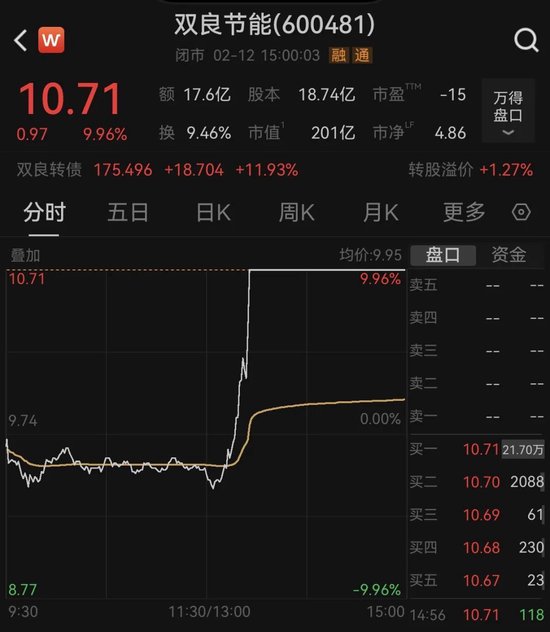
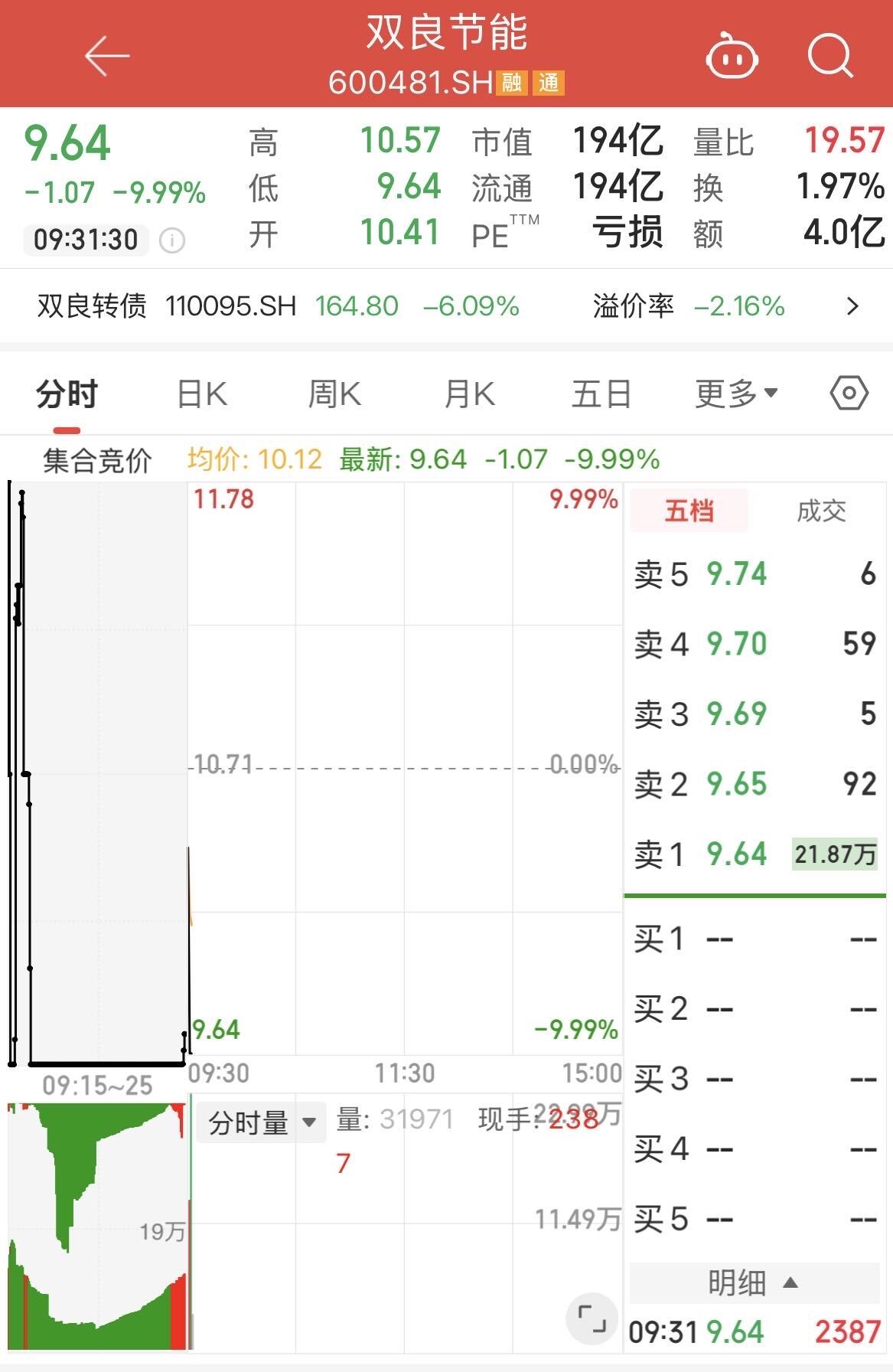
Core Viewpoint - The stock of Shuangliang Energy (600481.SH) experienced a significant drop after the Shanghai Stock Exchange issued a regulatory warning regarding the company's inaccurate and incomplete information disclosure related to overseas orders in the commercial aerospace sector [1][2]. Group 1: Company Performance and Stock Reaction - On February 13, Shuangliang Energy's stock opened at 9.64 CNY per share, falling by 9.99% with over 210,000 sell orders, leading to a substantial decrease in market capitalization [1]. - The company had previously announced three overseas orders for a total of 12 high-efficiency heat exchanger units, which were claimed to support SpaceX's fuel production system for its launch base [1][2]. - Following the announcement, the stock surged to a peak of 10.71 CNY per share, with a total trading volume of 1.762 billion CNY, before the regulatory intervention [1]. Group 2: Regulatory Intervention and Clarification - The Shanghai Stock Exchange intervened, prompting Shuangliang Energy to issue a clarification stating that the orders were signed in late 2025 and early 2026, totaling approximately 13.923 million CNY, which represents only 0.11% of the company's audited revenue for 2024 [2]. - The company clarified that it is not a direct partner with SpaceX and that its role is as a non-exclusive indirect supplier, indicating a high dependency on the commercial aerospace project's construction and expansion plans, which carry uncertainties [2]. Group 3: Financial Health and Business Focus - Shuangliang Energy is facing significant financial challenges, with projected net losses for 2025 estimated between 780 million CNY and 1.06 billion CNY, following a loss of 2.134 billion CNY in 2024, marking the second consecutive year of substantial losses [3]. - The company has previously stated that the "space photovoltaic" concept is still in the exploratory phase, with no substantial contributions to current performance, highlighting the uncertainties in commercialization and operational frameworks [3].

未知机构:上交所对双良节能及有关责任人予以监管警示财联社2月12日电上交所发布关于-20260213
未知机构· 2026-02-13 02:00
【上交所:对双良节能及有关责任人予以监管警示】财联社2月12日电,上交所发布关于对双良节能系统股份有限 公司及有关责任人予以监管警示的决定,其中指出,经查明,2月12日13时25分,双良节能在微信公众号发布题为 《双良节能再获海外订单,助力商业航天太空探索》的市场快讯。 文章发布后,公司股价于当日13时26分起至收盘均涨停。 经监管督促,公司于盘后披露说明公告。 当前,"商业航天"属于市 【上交所:对双良节能及有关责任人予以监管警示】财联社2月12日电,上交所发布关于对双良节能系统股份有限 公司及有关责任人予以监管警示的决定,其中指出,经查明,2月12日13时25分,双良节能在微信公众号发布题为 《双良节能再获海外订单,助力商业航天太空探索》的市场快讯。 上交所决定,对双良节能系统股份有限公司及时任董事会秘书杨力康予以监管警示。 经监管督促,公司于盘后披露说明公告。 当前,"商业航天"属于市场较为关注的热点概念,为投资者高度关注。 公司发布相关信息,应当审慎、准确、客观,并充分提示不确定性风险,避免对投资者产生误导。 公司在微信公众号中发布涉及"商业航天"海外订单信息,但未说明相关订单的供货方式、销售规模及对 ...
超3300只个股上涨
第一财经· 2026-02-13 01:59
Core Viewpoint - The article discusses the performance of various stocks and indices in the market, highlighting significant movements and trends, particularly in the Hong Kong and A-share markets. Market Performance - Over 3,300 stocks in the market experienced an increase, indicating a positive trend overall [3] - The Hong Kong stock market saw a notable rise, with the stock of Zhizhu Pan increasing over 13%, reaching a new high since its listing [3] - The A-share market opened lower, with the Shanghai Composite Index down by 0.44%, the Shenzhen Component down by 0.66%, and the ChiNext Index down by 0.56% [6][7] Specific Stock Movements - Shuangliang Energy hit the daily limit down, falling by 9.99% to a price of 9.64, following news about its involvement in overseas orders related to commercial aerospace projects [3][4] - In the Hong Kong market, gold stocks declined, with Zijin Mining down by 6%, Shandong Gold down by 3.12%, and Zhaojin Mining down by 3.21%, as international gold prices fell below $5,000 [5] Sector Trends - The technology sector in Hong Kong faced a downturn, with the Hang Seng Technology Index dropping by 1.59% and major tech stocks like Tencent Music and Baidu experiencing significant declines [8][9] - The rental computing sector showed localized activity, with stocks like Dazhi Technology achieving consecutive gains [3] New Listings - The new stock Haizhi Technology Group saw a remarkable increase of over 200% on its first trading day, indicating strong market interest [9][10]

今日十大热股:利欧股份登顶热榜领涨,大位科技4天4板算力概念持续爆炒,双良节能SpaceX合作传闻引爆光伏板块
Jin Rong Jie· 2026-02-13 01:08
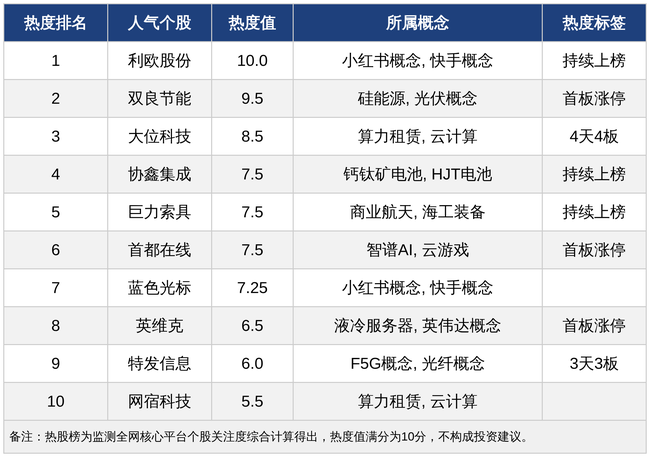
2月12日A股收盘,创业板指涨1.32%、科创50涨1.78%领涨主要指数,深成指涨0.86%,沪指微涨 0.05%;两市成交额2.14万亿元,较前一日放量约1575亿元;个股涨跌分化,3109股下跌,1995股上 涨。资金上,互联网服务、半导体(核心股)等板块主力净流入居前,银行(核心股)、文化传媒(核 心股)等净流出;题材方面SST概念、水轮机概念领涨,影视娱乐、动漫板块跌幅显著。 今日,A股十大人气热股如下:利欧股份、双良节能、大位科技、协鑫集成、巨力索具、首都在线、蓝 色光标、英维克、特发信息、网宿科技。 | 热度排名 | 人气个股 | 热度值 | 所属概念 | 热度标签 | | --- | --- | --- | --- | --- | | J | 利欧股份 | 10.0 | 小红书概念,快手概念 | 持续上榜 | | 2 | 双良节能 | 9.5 | 硅能源,光伏概念 | 首板涨停 | | 3 | 大位科技 | 8.5 | 算力租赁,云计算 | 4天4板 | | 4 | 协鑫集成 | 7.5 | 钙钛矿电池, HJT电池 | 持续上榜 | | 5 | 巨力索具 | 7.5 | 商业航天,海工装备 ...
A股避雷针: 国家大基金对泰凌微持股比例降至5%以下,双良节能未直接与SpaceX合作
Jin Rong Jie· 2026-02-13 01:08
Reduction of Shareholding - Caibai Co., Ltd.: Shareholder Mingpai Industrial plans to reduce its holdings by no more than 23.33 million shares, accounting for up to 3% of the total share capital through centralized bidding and block trading [1] - Dayuan Pump Industry: Shareholder Han Yuanfu intends to reduce his holdings by no more than 5.595 million shares, representing no more than 3% of the total share capital from March 17, 2026, to June 16, 2026, through centralized bidding and block trading [1] - Fuda Alloy: Controlling shareholder Wang Dawu plans to reduce his holdings by no more than 4.0634 million shares, which is up to 3% of the total share capital from March 16, 2026, to June 15, 2026, through centralized bidding and block trading [1] - China National Heavy Duty Truck Group: Shareholders Agricultural Bank of China (core shareholder) Sichuan Branch and Jiangsu Branch plan to reduce their holdings by no more than 72.1339 million shares (up to 1% of total share capital) through centralized bidding and by no more than 144 million shares (up to 2% of total share capital) through block trading [1] - Dazhong Laser: Controlling shareholder Dazhong Holdings plans to reduce its holdings by no more than 9.9582 million shares, accounting for 0.9672% of the total share capital from March 16, 2026, to June 12, 2026, through centralized bidding [1] Clarifications and Denials - Decai Co., Ltd.: The controlling subsidiary Qixiang Infinite currently has no orders or revenue related to animation production [3] - Zhangyue Technology: The expected revenue from AI short drama business for 2025 is not expected to exceed 1% of the main business revenue for 2025 [4] - Shuangliang Energy: The company indirectly participates in commercial aerospace projects but does not have direct cooperation with SpaceX; three orders signed on October 25, 2025, and January 9, 2026, total approximately 1.7 million euros, accounting for about 0.11% of the audited operating income for 2024, with no significant impact on business performance [4] - YN Energy: The company's investment targets do not belong to the computing chip manufacturing, computing leasing, or cloud service industries; the main business remains thermal power generation [4] - Honghe Technology: The main product, electronic-grade glass fiber cloth, is one of the basic materials for PCBs, and there are no significant changes in the main business [5] Other Information - Shanghai Stock Exchange: Issued regulatory warnings to Shuangliang Energy and related responsible persons, indicating that the company did not adequately disclose the uncertainty risks related to "commercial aerospace" overseas order information, which could mislead investors [6] - Jiamei Packaging: The capital operation plan of Magic Atom will be completely independent of the listed company; if the stock price continues to rise abnormally, it may apply for a trading suspension for further investigation [6] - China Coal Energy: In January, the sales volume of commodity coal was 20.05 million tons, a year-on-year decrease of 7.3% [7]
金融界财经早餐:央行今日开展万亿买断式逆回购操作,Anthropic完成300亿美元融资,上交所给予双良节能董秘监管警示,1月各类挖掘机销量同比增长49.5%(2月13日)
Jin Rong Jie· 2026-02-13 01:08
Industry Insights - In January 2026, a total of 18,708 excavators were sold, marking a 49.5% year-on-year increase, with domestic sales reaching 8,723 units (up 61.4%) and exports at 9,985 units (up 40.5%) [2] - MiniMax released the M2.5 model, enhancing task decomposition capabilities and token consumption efficiency, which aligns with Agentic AI task requirements, potentially benefiting related AI model and application companies [2] - Yike's cloud computing services are entering a price increase cycle due to surging demand for computing power driven by AI applications, which may benefit companies in the cloud computing and computing power supply chain [2] - Shanghai has launched the "Smart Shanghai" action plan (2026-2028) to integrate AI into information and communication networks, aiming for large-scale access of smart terminals like AI glasses by the end of 2028, presenting growth opportunities for related companies [2] - China successfully launched the world's first AI model satellite aimed at urban sustainable development, which may create development opportunities for companies involved in commercial aerospace and AI satellite applications [2][3] Company Developments - Shuangliang Energy received a regulatory warning regarding its former board secretary Yang Likang [4] - Shuangliang Energy clarified its indirect involvement in commercial aerospace projects, stating it does not have a direct partnership with SpaceX [5] - Zhongnan Culture announced plans to acquire equity in Sulong Thermal Power and will be suspended from trading starting February 13 [6] - Shenghong Technology confirmed the industrialization of its 1.6T optical module PCB [7] - Huitian Technology announced a plan to invest 3.3 billion yuan in a new high-end printed circuit board production project to meet the long-term demand for high-speed computing servers [7] - SMIC reported a supply-demand imbalance in memory and BCD components, leading to price increases [8] - Xianglu Tungsten Industry warned that significant economic fluctuations in its main customer countries could impact market demand for tungsten products and the recovery of accounts receivable [8] - Jiamei Packaging announced that its capital operation plan will be completely independent of the listed company, and it may apply for a trading suspension if stock prices rise abnormally [8] - Tailin Microelectronics disclosed that its third-largest shareholder, the National Integrated Circuit Industry Investment Fund, reduced its holdings by 4.6513 million shares, bringing its stake below 5% [8] - Zhangyue Technology projected that revenue from its AI short drama business will not exceed 1% of its main business revenue for 2025 [9] - International Composite Materials stated that electronic-grade fiberglass is a fundamental raw material for printed circuit boards (PCBs) [9] - Huapei Power announced plans to issue convertible bonds and pay cash to acquire 100% equity of Meichuang Zhiguan, leading to a trading suspension [10] - Jingrui Electric Materials plans to invest 600 million yuan to build a key materials comprehensive base for the integrated circuit manufacturing industry chain in the western region [11] - United Optoelectronics signed a business cooperation framework contract with Lingzhi Cloud Creation to provide assembly and processing services for its robotic products [11]
【立方早知道】A股千亿级并购火速获批/算力龙头宣布百亿级大单/河南有望再添一家上市公司
Sou Hu Cai Jing· 2026-02-13 00:12
Group 1 - Gold and silver prices experienced significant declines, with spot gold dropping to $4,890 per ounce, a decrease of 0.68%, and spot silver falling by 10.89% to $75.0942 per ounce [1] - China Shenhua's acquisition plan was approved, allowing the company to issue shares to purchase assets and raise up to 20 billion yuan, with a total transaction value of 133.598 billion yuan [6] - Double Good Energy received a regulatory warning after a social media post led to a surge in stock price, claiming new overseas orders for equipment used in SpaceX projects [4] Group 2 - Henan Jiachen Intelligent Control Co., Ltd. successfully passed the listing review, marking the fourth company from Henan to achieve this in two months [2] - Shenzhen released an "Artificial Intelligence + Advanced Manufacturing Action Plan" aiming to establish a national AI application pilot base by 2027 [8][9] - The automotive industry is facing new compliance guidelines to regulate pricing behaviors, aiming to maintain fair competition [12] Group 3 - Huaxia Bank reported a decline in net profit by 1.72% for the year 2025, with total profit down by 4.75% [21] - Xiamen Airport plans to acquire 100% of Zhaoxiang Technology for 1.193 billion yuan as part of its strategic transition with the new airport [24][25] - Chengdu-based aerospace company completed a D++ round financing of 5.037 billion yuan, indicating strong investor interest in the commercial space sector [16]




自曝“SpaceX订单” 股价涨停!监管警示来了
Zhong Guo Zheng Quan Bao· 2026-02-12 23:29
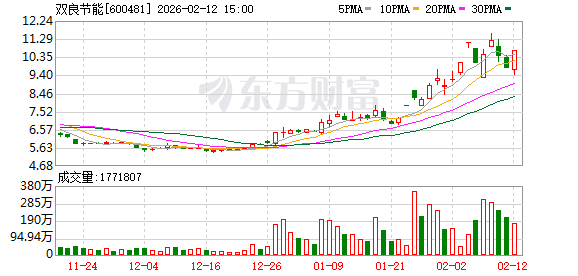
2月12日午后,双良节能借SpaceX概念涨停后,公司当晚收到上交所监管警示。 上交所查明,2月12日13时25分,双良节能在微信公众号发布题为《双良节能再获海外订单,助力商业航天太空探索》的市场快讯称,近日公司先后获得3 个海外订单,共计12台高效换热器设备,将用于Space X星舰发射基地扩建配套的燃料生产系统。这是继前期合作后,该产品再度应用于Space X星舰发射 基地,充分印证了海外客户对双良节能产品可靠性的高度信任。 文章发布后,双良节能股价于2月12日13时26分起至收盘均封涨停板,报收10.71元/股,成交额17.62亿元,至收盘仍有超21万手买单封住涨停板。 图片来源:Wind 经监管督促,双良节能于2月12日盘后披露说明公告表示,公司本次3项订单分别签订于2025年10月25日和2026年1月9日,合计总金额约1392.3万元,占公 司2024年度经审计的营业收入的比例约0.11%,对公司经营业绩无重大影响。商业航天不是公司产品主要的应用领域,公司未直接与SpaceX发生合作,公 司为项目非独家间接供应商。公司相关订单的获取受商业航天项目建设及扩产规划的影响较大,未来订单的获取存在一定的不 ...
双良节能自曝“SpaceX订单”,股价涨停!监管警示来了
Xin Lang Cai Jing· 2026-02-12 23:28
2月12日午后,双良节能借SpaceX概念涨停后,公司当晚收到上交所监管警示。 上交所查明,2月12日13时25分,双良节能在微信公众号发布题为《双良节能再获海外订单,助力商业 航天太空探索》的市场快讯称,近日公司先后获得3个海外订单,共计12台高效换热器设备,将用于 Space X星舰发射基地扩建配套的燃料生产系统。这是继前期合作后,该产品再度应用于Space X星舰发 射基地,充分印证了海外客户对双良节能产品可靠性的高度信任。 文章发布后,双良节能股价于2月12日13时26分起至收盘均封涨停板,报收10.71元/股,成交额17.62亿 元,至收盘仍有超21万手买单封住涨停板。 经监管督促,双良节能于2月12日盘后披露说明公告表示,公司本次3项订单分别签订于2025年10月25日 和2026年1月9日,合计总金额约1392.3万元,占公司2024年度经审计的营业收入的比例约0.11%,对公 司经营业绩无重大影响。商业航天不是公司产品主要的应用领域,公司未直接与SpaceX发生合作,公 司为项目非独家间接供应商。公司相关订单的获取受商业航天项目建设及扩产规划的影响较大,未来订 单的获取存在一定的不确定性。 上 ...