
HASCO(600741)

Search documents
华域汽车(600741) - 华域汽车十一届一次董事会决议公告
2025-06-27 14:00
证券代码:600741 证券简称:华域汽车 公告编号:临 2025-018 (同意 9 票,反对 0 票,弃权 0 票) 华域汽车系统股份有限公司 第十一届董事会第一次会议决议公告 本公司董事会及全体董事保证本公告内容不存在任何虚假记载、误导性陈 述或者重大遗漏,并对其内容的真实性、准确性和完整性承担法律责任。 华域汽车系统股份有限公司第十一届董事会第一次会议于 2025 年 6 月 27 日在上海市同嘉路 79 号会议室召开。本次会议通知已于 2025 年 6 月 17 日以专人送达、邮件等方式发出。会议应参加董事 9 名,实到董事 9 名。会议的召开及程序符合《公司法》及《公司章程》 的有关规定。经审议,本次会议通过决议如下: 一、关于选举公司董事长的议案; 选举王晓秋先生为公司第十一届董事会董事长。 二、关于选举公司董事会战略与 ESG 可持续发展委员会委员的 议案; 选举王晓秋先生、贾健旭先生、徐平先生、张维炯先生、余卓平 先生为公司第十一届董事会战略与 ESG 可持续发展委员会委员,任 期与本届董事会任期一致。 (同意 9 票,反对 0 票,弃权 0 票) 三、关于选举公司董事会战略与 ESG 可持 ...

17家中国零部件车企进入全球汽车供应链百强
Mei Ri Jing Ji Xin Wen· 2025-06-27 10:04
Group 1 - The "2025 Global Automotive Supply Chain Core Enterprise Competitiveness White Paper" was released, highlighting that 17 Chinese automotive parts companies made it to the global top 100 list, with CATL, Weichai Group, and Huayu Automotive in the top 20 [1] - The automotive parts industry is experiencing three major trends: the relative stability of leading companies, growth driven by mergers and acquisitions, and an increase in the number of Chinese companies in the global supply chain [1] - The impact of intelligence and electrification is reshaping the automotive parts industry, with leading companies accelerating global expansion to tap into new growth opportunities [1] Group 2 - Chinese automotive parts companies face both historic opportunities and multiple challenges in their internationalization efforts [2] - A structural change occurred in 2024, where vehicle exports surpassed parts exports, influenced by geopolitical factors and the restructuring of global supply chains [2] - The global competition in the automotive industry is not just between companies but also involves the competition of industrial ecosystems, requiring collaboration and resource sharing for comprehensive breakthroughs [2]


“30cm”“20cm”涨停,大消息密集袭来
Zheng Quan Shi Bao· 2025-06-24 05:39
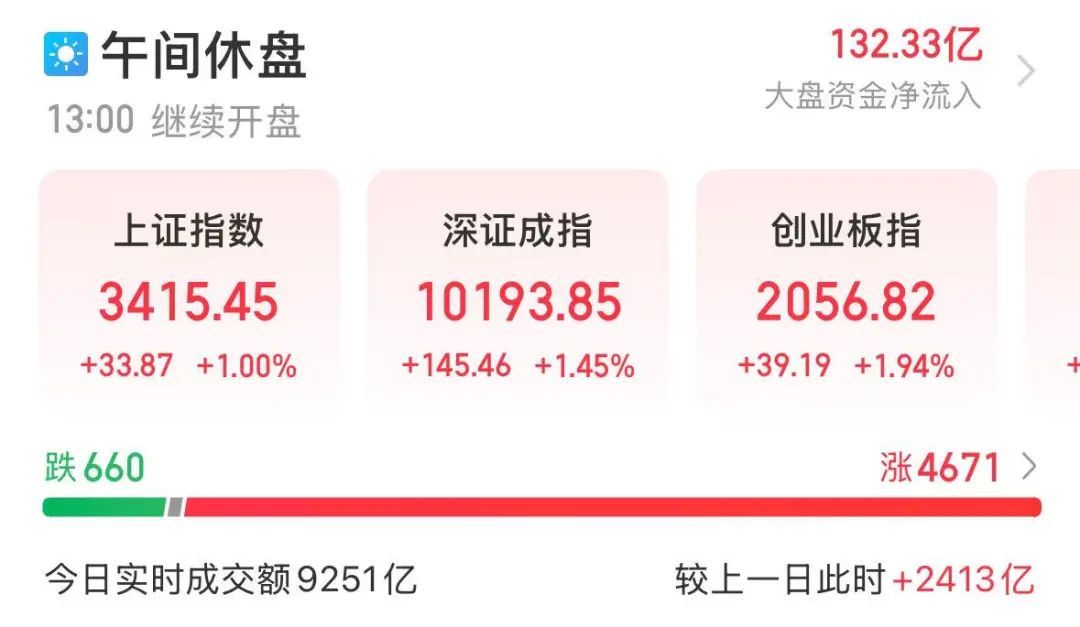
Market Overview - A-shares experienced a significant rise with over 4600 stocks increasing in value, as the Shanghai Composite Index surpassed 3400 points, gaining 1% [1] - The Shenzhen Component Index rose by 1.45%, and the ChiNext Index increased by 1.94%, with a total trading volume exceeding 925 billion yuan, an increase of over 240 billion yuan compared to the previous day [1] Company Specifics: Huasheng Co., Ltd. - Huasheng Co., Ltd. resumed trading and opened at the limit-up price, but quickly fell by 14.8% within three minutes, eventually closing down by 4.33% [3] - The company announced plans to acquire 100% of Yixin Technology through a combination of stock issuance and cash payment, aiming to transition from traditional industries to strategic emerging industries [5] - Huasheng's stock price has increased by 55.49% year-to-date, with a trading volume of 617 million yuan, marking the highest single-day trading volume since February 2024, and a turnover rate of 20.13% [6] - The company's recent financial performance has been underwhelming, reporting a net loss of 49 million yuan in the 2024 annual report and a continued loss of 13 million yuan in the first quarter of this year, attributed to rising interest expenses and operational costs [6] Industry Developments: Intelligent Driving - Guangzhou's government issued a three-year action plan to promote the development of intelligent connected new energy vehicles, targeting that by 2027, over 90% of new vehicles will be L2 or higher level [7] - The plan includes incentives for the production of autonomous vehicles, with rewards of up to 50 million yuan for qualifying models [7] - The intelligent driving sector saw a collective rise, with related indices increasing by over 2%, and significant capital inflow into the sector [7] - Tesla launched its Robotaxi service in Texas, charging only $4.2 per ride, indicating a growing focus on the scalability of autonomous driving technology [11] - A report predicts that the intelligent vehicle sector will experience rapid earnings growth, with the potential for a "Davis Double" effect by 2025 [11] Valuation Insights - Among the 120 stocks in the intelligent driving and vehicle networking sector, the median rolling P/E ratio is 47.46, with several stocks, including Huayu Automotive and Yutong Bus, having P/E ratios below 20 [12] - Huayu Automotive has the lowest rolling P/E ratio at 8.51, indicating potential undervaluation [12] Institutional Holdings - Several stocks in the intelligent driving sector have attracted significant interest from social security funds, with 17 stocks receiving heavy investments totaling 7.971 billion yuan [14] - Yutong Bus has been a consistent favorite, with its stock being heavily held for seven consecutive quarters, reflecting strong institutional confidence [14]



华域汽车: 华域汽车2024年年度股东大会资料
Zheng Quan Zhi Xing· 2025-06-19 09:54
Core Viewpoint - The 2024 Annual General Meeting of Huayu Automotive Systems Co., Ltd. outlines the company's operational strategies, financial performance, and future plans, emphasizing the importance of maintaining shareholder rights and efficient meeting procedures [1][2][3]. Meeting Procedures - Shareholders must register in advance to attend the meeting, and no gifts will be distributed to ensure equal treatment [1][2]. - Questions from shareholders can be submitted during a preparatory meeting, and responses will be provided collectively [2]. - The voting process will combine on-site and online methods, with results announced publicly [2][3]. Financial Performance - In 2024, the company reported a slight increase in revenue to CNY 168.85 billion, up 0.15% from 2023 [23]. - Net profit attributable to shareholders decreased by 7.26% to CNY 6.69 billion, with basic earnings per share dropping to CNY 2.122 [23][33]. - The company’s return on equity fell to 11.17%, down from 13.03% in the previous year [23]. Business Strategy - The company is focusing on new market opportunities in smart and electric vehicle technologies, including smart cockpits and electric drive systems [11][12][13]. - It aims to enhance its core competitiveness by accelerating innovation and project application in response to market trends [11][12]. - The company plans to increase its market share in the new energy vehicle sector, which accounted for 75% of its new business orders by the end of 2024 [16]. Future Plans - For 2025, the company intends to strengthen its customer management system and enhance collaboration with key clients in the new energy and autonomous vehicle markets [23][25]. - The focus will be on improving operational efficiency and risk management through digital transformation and supply chain optimization [26]. - The company aims to complete 70% of its digital factory construction goals by the end of the "14th Five-Year Plan" [26].
华域汽车(600741) - 华域汽车2024年年度股东大会资料
2025-06-19 09:15
华域汽车系统股份有限公司 2024 年年度股东大会资料 华域汽车系统股份有限公司 2024 年年度股东大会资料 2025 年 6 月 27 日 1 华域汽车系统股份有限公司 2024 年年度股东大会资料 华域汽车系统股份有限公司 2024 年年度股东大会会议须知 为了维护投资者的合法权益,确保股东大会的正常秩序和议 事效率,根据《公司法》《证券法》《华域汽车系统股份有限公司 章程》等有关规定,特制定本须知: 一、为保证股东大会的严肃性和正常秩序,切实维护与会股 东(或授权代表)的合法权益,务请有出席股东大会资格的相关 人员事先办理参会登记手续,并准时参会。股东大会正式开始后, 终止现场参会登记。股东大会设秘书处,具体负责大会有关事宜。 二、股东(或授权代表)出席大会,依法享有发言权、咨询 权、表决权等各项权利。请出席股东大会的相关人员遵守股东大 会秩序,维护全体股东合法权益。公司不向参会股东发放任何形 式的礼品,以平等对待所有股东。 三、股东要求提问的,可在预备会议时向大会秘书处登记, 并填写提问登记表。公司将统一回答股东提出的问题,如问题涉 及与本次股东大会议题无关或将泄露公司商业秘密或有损公司、 股东共同 ...
超长账期问题:整车厂之后,零部件巨头该出来说话了
经济观察报· 2025-06-18 01:55
Core Viewpoint - The article highlights the hidden truth within the automotive supply chain, where large parts manufacturers impose longer payment terms, creating significant pressure on small and medium-sized enterprises (SMEs) [4][7]. Group 1: Payment Terms and Their Impact - A recent lawsuit involving a mold company and a joint venture parts manufacturer illustrates the underlying issue of payment terms, where SMEs complete their work but face delayed payments from larger firms [2]. - The automotive industry has seen a positive response to commitments from automakers to a 60-day payment term, previously criticized for exploiting SMEs [3]. - However, large parts manufacturers, such as Huayu Automotive and Dongfeng Technology, have payment turnover days of 163 and 196 days respectively, indicating a trend of extended payment cycles that adversely affect SMEs [5][6]. Group 2: Industry Dynamics and Power Shifts - The payment turnover days are not equivalent to the contractual payment terms, as they reflect the actual payment cycles, which can serve as an indirect indicator of a company's payment practices and credit cycles [6]. - Some suppliers, while not directly affiliated with automakers, also exert pressure on SMEs, as seen with companies like CATL, which has a payment turnover day exceeding 258 days, indicating a trend of stringent payment practices [6]. - Large parts manufacturers leverage their negotiating power to impose even stricter payment terms on their suppliers, exacerbating the financial strain on SMEs [7]. Group 3: Need for Transparency and Fairness - To address the challenges posed by extended payment terms, there is a call for large enterprises to publicly disclose their payment policies, which is seen as a crucial first step towards restoring fairness in the industry [8]. - The article argues that while long payment terms may appear as a financial strategy, they should not undermine fair competition and the integrity of the industry credit ecosystem [9]. - The question is raised whether large parts manufacturers should also take a stance on the issue of extended payment terms, emphasizing the need for collective responsibility within the industry [10].


超长账期问题:整车厂之后,零部件巨头该出来说话了
Jing Ji Guan Cha Wang· 2025-06-17 14:40
Core Viewpoint - The article discusses the ongoing issues in the automotive supply chain, particularly focusing on the extended payment terms imposed by large parts manufacturers on smaller suppliers, despite recent commitments from automakers to shorten their payment periods [3][4]. Group 1: Payment Terms and Industry Dynamics - A recent lawsuit highlights the contract disputes between a mold company and a joint venture parts manufacturer, revealing underlying issues related to payment terms and cash flow for small enterprises [3]. - Automakers have received praise for their commitment to a 60-day payment term, but the larger issue lies with major parts manufacturers who impose even longer payment terms on smaller suppliers [3][4]. - For instance, Huayu Automotive, a major parts supplier under SAIC, has an accounts payable turnover period of 163 days, while Dongfeng Technology has a turnover period exceeding 196 days [4]. Group 2: Impact on Smaller Suppliers - The accounts payable turnover days do not equate to the contractual payment terms, indicating that actual payment cycles can be significantly longer, affecting the cash flow of smaller suppliers [4]. - Larger parts manufacturers, such as CATL, have been able to maintain a favorable accounts receivable turnover period of around 60 days, while their own accounts payable turnover days exceed 258 days, further straining smaller suppliers [4][5]. - The article suggests that these large manufacturers are leveraging their negotiating power to impose harsher terms on smaller suppliers, exacerbating the financial strain within the supply chain [5]. Group 3: Call for Transparency and Fairness - The article advocates for greater transparency in payment policies from large manufacturers, similar to the commitments made by automakers, to foster a healthier competitive environment [5]. - It emphasizes that while extended payment terms may seem like a financial strategy, they should not undermine fair competition and the integrity of the supply chain [5]. - The article questions whether large parts manufacturers should also take responsibility and clarify their payment practices to ensure fairness across the industry [5].



红利板块估值重塑预期升温,300红利低波ETF(515300)近9日“吸金”1.34亿元
Sou Hu Cai Jing· 2025-06-13 03:49
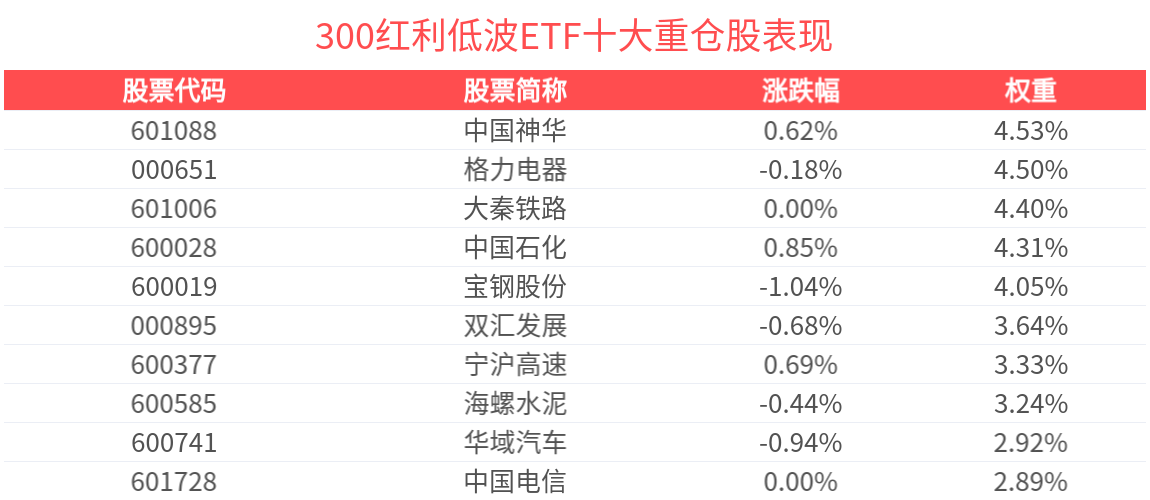
Core Viewpoint - The performance of the CSI 300 Dividend Low Volatility Index shows mixed results among its constituent stocks, with a slight overall decline, while the ETF associated with this index has seen significant inflows and strong long-term performance metrics [1][5]. Group 1: Index Performance - As of June 13, 2025, the CSI 300 Dividend Low Volatility Index decreased by 0.37% [1]. - The ETF associated with this index, CSI 300 Dividend Low Volatility ETF (515300), experienced a turnover of 4.49% during the trading session, with a total transaction value of 268 million yuan [1]. - Over the past month, the average daily transaction value of the ETF was 11.7 million yuan, and its latest scale reached 5.975 billion yuan [1]. Group 2: Stock Performance - Among the constituent stocks, Shanghai Port Group led with a gain of 1.39%, while Shanghai Bank, Industrial Bank, and Jiangsu Bank saw declines [1]. - The top ten weighted stocks in the index accounted for 36.97% of the total index weight, with China Shenhua and Gree Electric Appliances being the most significant contributors [2][4]. Group 3: Dividend and Investment Trends - The upcoming dividend season from May to July is expected to attract more investments into dividend-paying stocks, as the yield on dividend indices reaches new highs [5]. - Regulatory support for increasing insurance funds' market participation is anticipated to enhance the valuation expectations for dividend stocks [5]. - Investors without stock accounts can access investment opportunities through the corresponding CSI 300 Dividend Low Volatility ETF linked funds [5].






内卷行情拨云见日,车市生态优化向上
HTSC· 2025-06-12 02:25
Investment Rating - The industry is rated as "Overweight" [6] Core Views - Multiple automakers have committed to shortening payment terms to within 60 days, which is expected to improve the automotive supply chain ecosystem [1] - The shortening of payment terms is anticipated to alleviate concerns regarding automakers' repayment capabilities and promote healthy industry development [1] - The average cash turnover rates for components, complete vehicles, and dealers in 2024 are projected to be 4.5, 2.2, and 8.9 respectively, with the new payment terms expected to enhance cash flow [1] - The reduction in payment terms aligns with international standards, potentially benefiting Chinese brands in overseas markets [2] - Price competition has paused, leading to a narrowing of discount rates, which is favorable for healthy competition within the industry [2] Summary by Sections Section 1: Impact of Shortened Payment Terms - The adjustment to a 60-day payment term is expected to have limited impact on the cash flow of complete vehicle manufacturers, as many currently operate with payment terms exceeding 110 days [2] - The new terms are expected to enhance the cash turnover ability and cash levels of upstream component manufacturers, with an estimated increase in cash funds of approximately 32 billion yuan (+37%) if accounts receivable turnover improves to 6 [3] Section 2: Export Growth of Domestic Passenger Vehicles - Domestic brands are leading in competitiveness within the market, driving foreign brands out [4] - In 2024, market shares for domestic brands in various price segments are projected to be 80%, 48%, and 42% respectively, with year-on-year increases of 7, 14, and 4 percentage points [4] - In May, domestic brand exports reached 375,000 units, a year-on-year increase of 18% and a month-on-month increase of 10% [4] - The global market is viewed as a significant growth opportunity for Chinese automakers, with a recommendation to focus on industry leaders with global competitiveness [4]





华域汽车: 华域汽车关于职工代表董事选举结果的公告
Zheng Quan Zhi Xing· 2025-06-06 08:15
Group 1 - The announcement details the election results of the employee representative director for Huayu Automotive Systems Co., Ltd. [1][2] - Mr. Huan De has been elected as the employee representative director for the 11th Board of Directors, following the 12th joint meeting of the third employee representative assembly [2] - The term for the newly elected board members, including Mr. Huan De, will last for three years, in accordance with the Company Law and the company's articles of association [2] Group 2 - Mr. Huan De, born in August 1976, holds a master's degree in business administration and has extensive experience in various leadership roles within the automotive industry [3] - His previous positions include roles at Shanghai Volkswagen Automotive Co., Ltd. and SAIC Volkswagen Automotive Sales Co., Ltd., among others [3] - Currently, he serves as the deputy chairman of the labor union at SAIC Motor Corporation Limited and is the employee representative director at Huayu Automotive Systems Co., Ltd. [3]