LBX(603883)

Search documents
医药商业板块7月30日涨1.04%,华人健康领涨,主力资金净流出6207.42万元
Zheng Xing Xing Ye Ri Bao· 2025-07-30 08:27
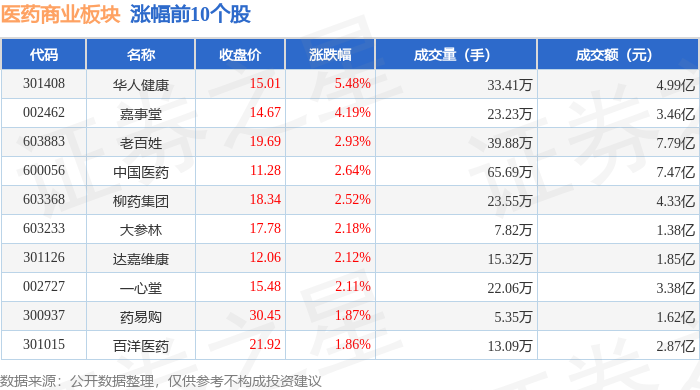
Market Overview - The pharmaceutical commercial sector increased by 1.04% on July 30, with Huaren Health leading the gains [1] - The Shanghai Composite Index closed at 3615.72, up 0.17%, while the Shenzhen Component Index closed at 11203.03, down 0.77% [1] Top Performers - Huaren Health (301408) closed at 15.01, up 5.48% with a trading volume of 334,100 shares and a transaction value of 499 million [1] - Jiazhang Tang (002462) closed at 14.67, up 4.19% with a trading volume of 232,300 shares and a transaction value of 346 million [1] - Laobaixing (603883) closed at 19.69, up 2.93% with a trading volume of 398,800 shares and a transaction value of 779 million [1] - China National Pharmaceutical (600056) closed at 11.28, up 2.64% with a trading volume of 656,900 shares and a transaction value of 747 million [1] Underperformers - Renmin Tongtai (600829) closed at 8.77, down 7.20% with a trading volume of 724,400 shares and a transaction value of 651 million [2] - Saily Medical (603716) closed at 30.89, down 2.31% with a trading volume of 444,300 shares and a transaction value of 1.385 billion [2] - Runda Medical (603108) closed at 18.20, down 1.83% with a trading volume of 299,700 shares and a transaction value of 552 million [2] Capital Flow - The pharmaceutical commercial sector experienced a net outflow of 62.07 million from institutional investors, while retail investors saw a net inflow of 64.93 million [2] - Major stocks like Laobaixing and China National Pharmaceutical had significant net inflows from retail investors, despite overall sector outflows [3] Individual Stock Analysis - Laobaixing (603883) had a net inflow of 62.57 million from institutional investors, but a net outflow of 45.34 million from retail investors [3] - China National Pharmaceutical (600056) saw a net inflow of 49.86 million from institutional investors, with a net outflow of 43.44 million from retail investors [3] - Huaren Health (301408) had a net inflow of 21.02 million from institutional investors, but a net outflow of 26.49 million from retail investors [3]


老百姓大药房荣登“2025中国网络零售TOP100”
Zheng Quan Shi Bao Wang· 2025-07-28 04:35
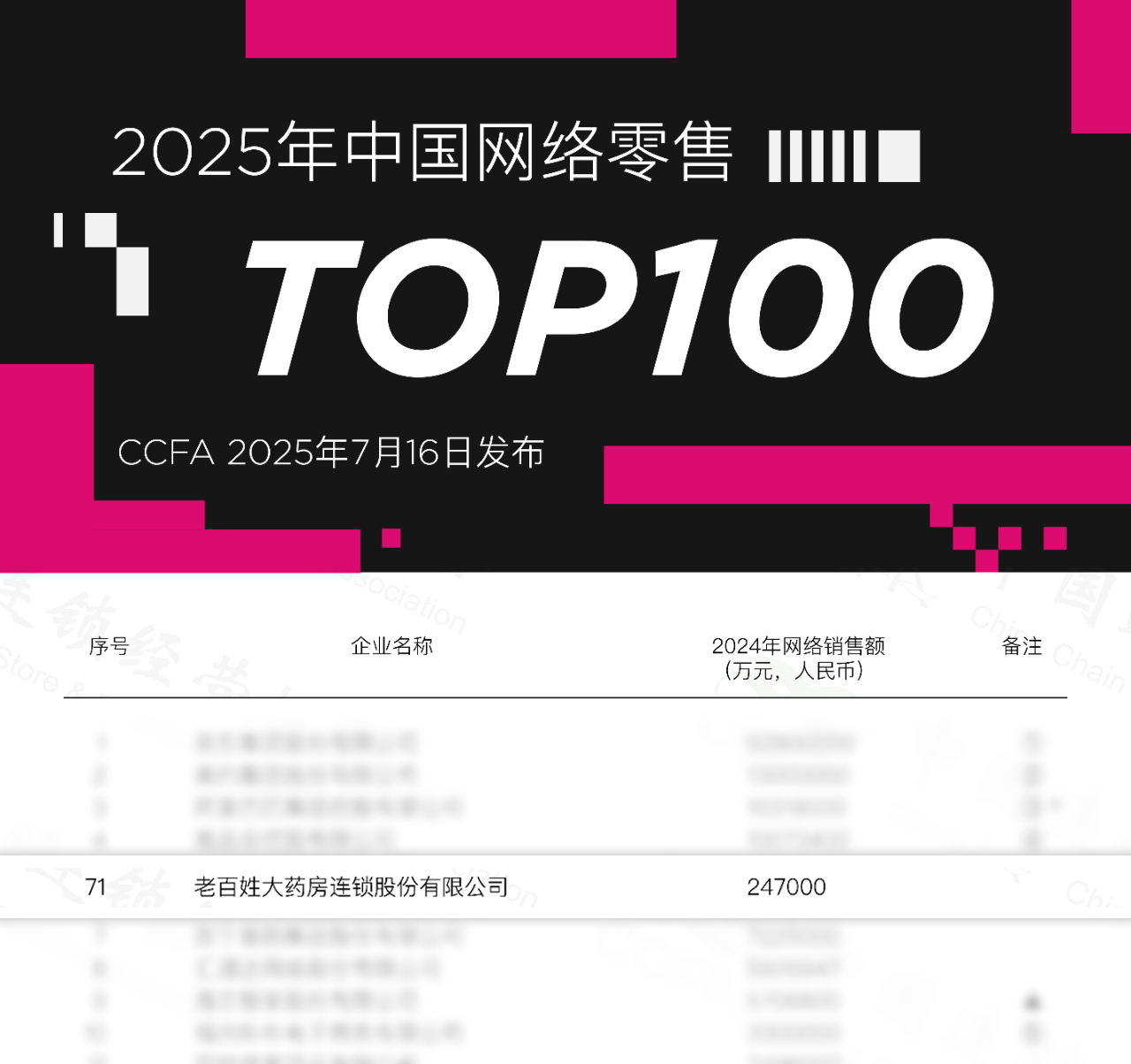
Group 1 - The core viewpoint of the article highlights the recognition of the company, Lao Bai Xing Pharmacy, as it ranks 71st in the "Top 100 Online Retailers in China" and 27th in the "Top 70 Retail Channels" [1] - The total online sales of the selected companies reached 2.17 trillion yuan, reflecting a year-on-year growth of 13.6% [4] - Lao Bai Xing Pharmacy has been strengthening its new retail business, innovating channels and products, and enhancing smart management and big data analysis to quickly respond to consumer demands [4] Group 2 - The online sales revenue (including franchises) for 2024 is projected to be approximately 2.47 billion yuan, with a year-on-year growth of about 24% [4] - In the first quarter of 2025, the company's online sales revenue (including franchises) is approximately 750 million yuan, showing a year-on-year increase of 34% [4] - As of the end of the first quarter of 2025, the company has 12,474 O2O delivery service stores and 665 24-hour stores, providing a solid foundation for instant delivery services [4] Group 3 - The company is actively engaging in multi-channel and multi-scenario live streaming, with significant results in various product categories such as health supplements [4] - In the first quarter of 2025, the company's O2O and B2C sales ranked fourth and third in the market, respectively [4] - The "Lao Bai Xing Pharmacy" WeChat mini-program offers 24-hour online services, and the service system is continuously improving, with a 70% year-on-year increase in daily active users (DAU) in the mini-program, peaking over 200,000 [4] Group 4 - Looking ahead, the company plans to leverage AI applications to continuously upgrade its new retail business strategy [5] - The company aims to enhance its professional and warm pharmaceutical service capabilities, improving customer experience through a full-chain resonance of online and offline services [5] - The company is committed to contributing to health management throughout the lifecycle of its customers, supporting the initiative of a healthy China [5]
医药生物行业双周报(2025、7、11-2025、7、24)-20250725
Dongguan Securities· 2025-07-25 08:09
Investment Rating - The report maintains an "Overweight" rating for the pharmaceutical and biotechnology industry, expecting the industry index to outperform the market index by over 10% in the next six months [1][40]. Core Insights - The SW pharmaceutical and biotechnology industry outperformed the CSI 300 index, rising by 7.84% from July 11 to July 24, 2025, exceeding the CSI 300's performance by approximately 4.13 percentage points [4][14]. - Most sub-sectors within the industry recorded positive returns during the same period, with the medical research outsourcing and raw materials sectors leading with increases of 14.23% and 9.30%, respectively [4][15]. - Approximately 91% of stocks in the industry achieved positive returns, with notable performers including Borui Pharmaceutical, which saw a weekly increase of 78.98% [16]. Summary by Sections 1. Market Review - The SW pharmaceutical and biotechnology industry outperformed the CSI 300 index, with a rise of 7.84% from July 11 to July 24, 2025, surpassing the CSI 300 by about 4.13 percentage points [14]. - Most sub-sectors recorded positive returns, particularly medical research outsourcing and raw materials, which increased by 14.23% and 9.30%, respectively [15]. - About 91% of stocks in the industry had positive returns, with Borui Pharmaceutical leading at 78.98% [16]. 2. Industry News - The report highlights the ongoing progress of the 11th batch of national drug procurement, with significant updates provided during a government open day event on July 22, 2025 [4][28]. - The announcement of the 11th batch of national drug procurement included a notification for drug information submission, which was highly anticipated [4][28]. 3. Company Announcements - Yekang Pharmaceutical announced that its subsidiary received FDA approval for clinical trials of YKYY029 injection for hypertension treatment [29]. 4. Industry Outlook - The report maintains an "Overweight" rating for the industry, citing a continuous rise in the pharmaceutical and biotechnology sector driven by positive sentiment towards innovative drugs and improved financing data [30]. - The report suggests focusing on investment opportunities within the innovative drug supply chain and highlights several companies across various segments, including medical devices, pharmaceutical commerce, and innovative drugs [30][32].





中国医疗健康:2025 年上半年预览 -China Healthcare_ 1H25 preview_ UIH bottom out_MR still in trough; Weak IVD_cataract, strong insulin
2025-07-25 07:15
Summary of Key Points from the Conference Call Industry Overview - **Industry Focus**: The conference call primarily discusses the healthcare sector in China, particularly the medical technology (Medtech), in vitro diagnostics (IVD), retail pharmacies, hospitals, vaccines, and insulin markets [1][2]. Core Insights and Arguments Medtech - **Key Areas of Focus**: 1. Progress of capital equipment value-based procurement (VBP) and the trade-in policy [1] 2. Channel destocking trends [1] 3. Import substitution trends post-VBP, including intraocular lenses (IOLs) and IVD [1] - **VBP Impact**: The June bidding value data showed a year-on-year growth rate of 49%, but a month-on-month decline of 3%, indicating lower unit prices due to VBP [10]. IVD Market - **Weak Demand**: The IVD sector continues to face challenges, with a projected 20% year-on-year decline in the CLIA reagent market size for 2025 [19]. - **AmoyDx Performance**: AmoyDx is expected to grow against the trend due to its strong presence in compliant in-hospital sales channels, benefiting from the anti-corruption campaign [21]. Insulin Market - **Domestic Substitution**: The insulin industry has seen significant growth, particularly for insulin analogs from companies like Gan & Lee and THDB, which reported rapid revenue growth in 1Q25 [22]. Retail Pharmacies - **Market Pressure**: Retail pharmacies are under pressure due to strict reimbursement policies and weak consumer spending. However, there is a potential market-clearing trend expected by year-end [31]. Hospitals - **New Product Feedback**: Hospitals are seeing new product introductions, such as the new version of SMILE surgery and new PIOL products, which are expected to drive consumption recovery [1]. Vaccine Market - **Anti-Corruption Campaign**: The ongoing anti-corruption campaign within the CDC system is impacting vaccine demand and distribution channels [1]. Financial Performance and Estimates Earnings Revisions - **Mindray**: Annual earnings estimates revised down by 2.1% to 5.0% for 2025E-27E due to industry headwinds in medical equipment and IVD [2][37]. - **United Imaging**: Revenue and earnings forecasts adjusted down to reflect lower-than-expected bidding data [39]. - **SNIBE**: Earnings estimates revised down by 1.4% to 7.1% for 2025E-27E due to policy headwinds in the IVD sector [40]. Revenue Growth Expectations - **High Growth Companies**: THDB and Gan & Lee are expected to achieve the highest revenue growth due to a low base from VBP renewal in 2Q24 [6]. - **Mindray's Decline**: Mindray's China business is expected to decline by 26% year-on-year in 2Q25 due to IVD weakness [9]. Other Important Insights - **Trade-in Policy Concerns**: The trade-in stimulus fund is expected to run out, leading to a decline in applications and a reduced stimulus effect in the second half of 2025 [10]. - **Market Dynamics**: The healthcare market is experiencing a shift with increasing government support for procurement and a focus on innovative products [47][48]. Conclusion - The healthcare sector in China is facing various challenges, including policy headwinds, weak demand in certain segments, and the impact of ongoing reforms. However, there are also opportunities for growth, particularly in innovative products and domestic substitution trends. Companies like AmoyDx, Gan & Lee, and THDB are positioned to benefit from these trends, while others like Mindray and SNIBE are facing headwinds that may impact their performance in the near term.


服务好老百姓的运动、睡眠和体重管理 杭州“三大健康中心”建设启动
Hang Zhou Ri Bao· 2025-07-24 03:00
Group 1 - The establishment of three health centers in Hangzhou aims to enhance service capabilities in sports medicine, sleep disorders, and weight management, marking a significant step in improving health service networks [1][2] - The three centers are located at Hangzhou Normal University Affiliated Hospital, Hangzhou Seventh People's Hospital, and Hangzhou Traditional Chinese Medicine Hospital, with collaboration agreements signed with local health authorities to ensure efficient operation of a "three-tier network" [1][2] - The new service model allows citizens to access basic health services, including exercise risk screening and weight management, at community health service points, improving convenience and accessibility [2][3] Group 2 - The weight management center integrates traditional Chinese medicine and Western medicine, offering personalized plans that include dietary advice, exercise, and behavioral interventions, with Olympic champion Sun Yang appointed as the center's ambassador [3] - Future plans include encouraging the exploration of new models for tightly-knit medical alliances and establishing district-level branches of the three centers to extend high-quality services across the city [3]
智通A股限售解禁一览|7月21日





智通财经网· 2025-07-21 01:04
Core Viewpoint - On July 21, a total of 23 listed companies had their restricted shares unlocked, with a total market value of approximately 5.36 billion yuan [1] Summary by Category Restricted Share Unlocking - The specific details of the restricted share unlocking include: - Shandong High Energy (000803): 1.2772 million shares from equity incentive - Yueyang Xingchang (000819): 2.1525 million shares from equity incentive - Zhangyu A (000869): 2.0357 million shares from equity incentive - Sheneng Co., Ltd. (600642): 9.7161 million shares from equity incentive - Batian Co., Ltd. (002170): 1.2 million shares from equity incentive - Wanma Co., Ltd. (002276): 2.6112 million shares from equity incentive - Chuanfa Longmang (002312): 12.5 million shares from A-share issuance - Chengda Pharmaceutical (301201): 6.15594 million shares with extended lock-up period - Maoshuo Power (002660): 8.22983 million shares from A-share issuance - Laobaixing (603883): 193.6 thousand shares from equity incentive - Zhenbaodao (603567): 726.9 thousand shares from equity incentive - Lifang Pharmaceutical (003020): 234 thousand shares from equity incentive - Triangle Defense (300775): 110.4 thousand shares from equity incentive - Yidao Information (001314): 46.26 thousand shares from equity incentive - Honghe Technology (603256): 252.65 thousand shares from equity incentive - Guomao Co., Ltd. (603915): 165.8 thousand shares from equity incentive - Arrow Home (001322): 135.28 thousand shares from equity incentive - Hongying Intelligent (001266): 18 thousand shares from equity incentive - Kangpeng Technology (688602): 4.6189 million shares - Juyi Technology (688162): 108.1 thousand shares - Xidiwei (688173): 15.4 million shares - Aike Optoelectronics (688610): 68 thousand shares - Hangcai Co., Ltd. (688563): 180 thousand shares [1]
“提振消费”政策解读:让政策红利落到老百姓心坎上腰包里
Xin Hua Ri Bao· 2025-07-18 00:00
Core Insights - The article discusses the implementation of measures to boost consumption in Jiangsu Province, highlighting the positive trends in the consumer market and the government's efforts to stimulate demand through various policies and initiatives [2][3][4]. Group 1: Consumption Market Performance - In the first half of the year, Jiangsu Province achieved a total retail sales of consumer goods of 23,949 billion yuan, representing a year-on-year growth of 5.0%, with the province's retail sales accounting for 9.8% of the national total, marking the highest growth in both total and net increase across the country [2]. - The government has introduced 62 specific measures aimed at releasing consumption potential and expanding effective demand, focusing on increasing income and reducing burdens to enhance consumer capacity [2]. Group 2: Policy Measures and Consumer Incentives - Over 25.98 million people benefited from subsidy programs in the first half of the year, with a total of 17.377 billion yuan in subsidies used, driving over 142.805 billion yuan in major consumer goods such as automobiles and home appliances [3]. - The government is promoting new business models and consumption scenarios, such as integrating sports events with tourism and entertainment to stimulate consumer spending [4]. Group 3: Cultural and Sports Events Impact - The "Su Chao" sports events have led to cross-regional consumer spending, with 91.7 million participants in 103 monitored events generating 2.07 billion yuan in consumption [4]. - The government plans to introduce a comprehensive set of policies to further support the development of event-driven economies and enhance consumer confidence [4]. Group 4: Future Initiatives and Financial Support - The Jiangsu Provincial Department of Culture and Tourism is launching the "Su Travel Loan" financial product to support the tourism industry, with an allocation of 50 million yuan aimed at providing at least 5 billion yuan in financing for cultural tourism projects [6]. - The province is focusing on developing water sports and outdoor activities to meet the growing demand for high-quality lifestyle experiences [6]. Group 5: Consumer Protection and Dispute Resolution - The Jiangsu Provincial Market Supervision Administration is innovating in consumer dispute resolution, encouraging large enterprises to establish effective systems and exploring new online resolution mechanisms [7]. - The administration aims to enhance consumer confidence by promoting a unified and convenient return and exchange service across different stores [7].
上半年人均消费支出1.4万元,老百姓把钱花哪儿了?
Jin Rong Shi Bao· 2025-07-17 08:29
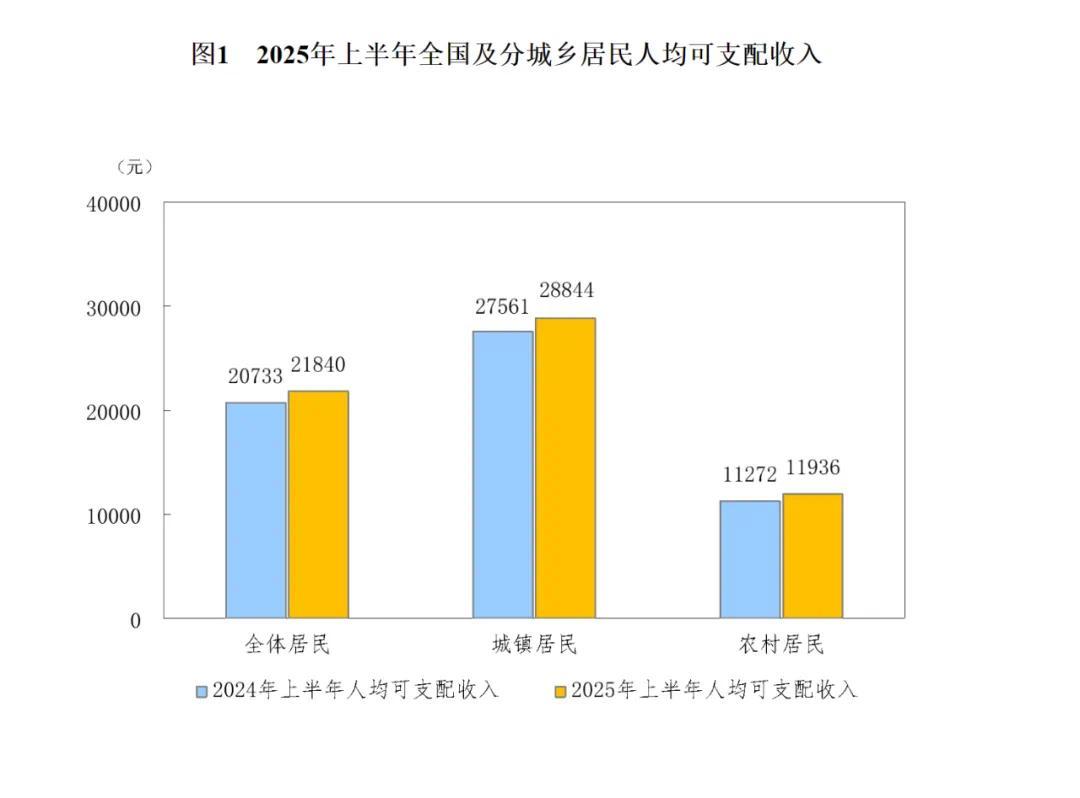
Economic Overview - In the first half of the year, the per capita disposable income of residents reached 21,840 yuan, representing a nominal increase of 5.3% year-on-year, and a real increase of 5.4% after adjusting for price factors [1] - The per capita disposable income for urban residents was 28,844 yuan, while for rural residents it was 11,936 yuan, indicating a gradual narrowing of the income gap between urban and rural areas [1] Income Sources - The growth in disposable income is primarily supported by rapid increases in wage income, net operating income, and net transfer income [4] - The per capita wage income was 12,628 yuan, up 5.7% year-on-year, which is 0.4 percentage points faster than the overall income growth rate [4] - The per capita net transfer income rose to 3,980 yuan, an increase of 5.6%, while net operating income was 3,407 yuan, growing at 5.3% [4] Consumption Expenditure - The per capita consumption expenditure for residents was 14,309 yuan, with a nominal increase of 5.2% and a real increase of 5.3% year-on-year [5] - Urban residents had a per capita consumption expenditure of 17,545 yuan, while rural residents spent 9,733 yuan [5] Spending Patterns - The largest portion of consumption expenditure was on food, tobacco, and alcohol, amounting to 4,355 yuan, which accounted for 30.4% of total spending [5] - Housing expenses were the second largest at 3,092 yuan, making up 21.6% of total consumption [5] - Other significant categories included transportation and communication (1,972 yuan, 13.8%), education and entertainment (1,499 yuan, 10.5%), and healthcare (1,314 yuan, 9.2%) [5] Consumption Trends - The structure of consumption expenditure shows rapid growth in spending on daily necessities, transportation, education, and entertainment, driven by policies promoting consumption upgrades and a vibrant tourism market [8] - The growth in per capita disposable income outpaced GDP growth and per capita consumption expenditure growth, indicating a positive cycle of agricultural efficiency, rural vitality, and increased farmer income [8]
2025年人民币升值了吗?人民币升值对阵贬值,普通老百姓如何应对?
Sou Hu Cai Jing· 2025-07-15 05:52
Group 1 - The fluctuation of the RMB exchange rate in 2025 has significant implications for both individuals and businesses, with a notable appreciation against the USD observed in July, reaching 7.1656, marking a 1.82% increase since the beginning of the year [1] - The RMB's appreciation is attributed to multiple factors, including the easing of US-China trade tensions, strong domestic economic recovery, and changes in international geopolitical dynamics, which have bolstered investor confidence in RMB assets [1] - China's GDP growth continues to lead globally, with foreign exchange reserves remaining above $3.2 trillion for five consecutive months, providing a solid foundation for the RMB exchange rate [1] Group 2 - The short-term benefits of RMB appreciation include reduced costs for overseas travel, education, and imported goods, with examples showing a decrease in the cost of a trip to the US from 50,000 yuan to 40,000 yuan and lower prices for imported cars [3] - However, long-term effects of RMB appreciation may negatively impact export-oriented businesses, leading to reduced profit margins, such as a drop in profit margin from 5% to 2% for a clothing factory, and potential capital outflows if companies do not hedge against exchange rate risks [3] - In contrast, RMB depreciation can increase costs for overseas travel and education, with a 20% rise in outbound travel costs noted during a previous depreciation, while simultaneously enhancing the international competitiveness of Chinese exports [5] Group 3 - To navigate the volatility of the RMB exchange rate, individuals planning to travel abroad are advised to avoid impulsive currency exchanges and consider a phased approach to mitigate risks, similar to dollar-cost averaging in investments [6] - Investors holding USD assets should not rush to sell, as the value of these assets may increase during RMB depreciation, but they should remain vigilant about the impact of US inflation on the dollar's value [6] - Companies in sectors that benefit from RMB appreciation, such as airlines and industries heavily reliant on imports, may present investment opportunities as their costs decrease [6]

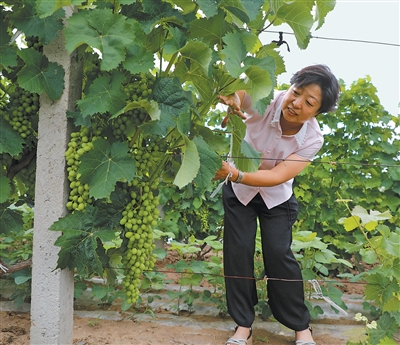
为老百姓办更多实事(党旗在基层一线高高飘扬)
Ren Min Ri Bao· 2025-07-10 22:52
Core Insights - The article highlights the successful transformation of Nanliunan Village's economy through agricultural development and community organization led by Yu Bianqing, the village's first secretary [2][3][6]. Group 1: Agricultural Development - Yu Bianqing introduced new fruit varieties such as Yuluo Xiang Pear, Cherry, and Bai Shui Apricot to revive the village's fruit industry after previous failures due to soil diseases [3]. - The village's fruit orchard began to bear fruit in 2021, but initial sales were challenging, prompting Yu to explore new marketing strategies including live streaming and short videos [3][5]. - A significant sales event at a local agricultural exhibition resulted in the sale of 1,500 boxes of Bai Shui Apricot, indicating strong market demand [5]. Group 2: Community Organization and Support - Yu emphasized the importance of community cohesion, leading to the establishment of a support group for sales and logistics, which included local farmers and party members [5]. - The village's collective efforts have led to the development of a cooperative that provides services such as cold storage, packaging, and processing for fruit products across six administrative villages [6]. - The introduction of a comprehensive agricultural project combining organic vegetable farming and tourism is underway, aiming to enhance the village's economic resilience [6].