
LBX(603883)

Search documents
“文秀月季”“娇龙月季”问世:最美的花,为老百姓的幸福而开
Xin Lang Cai Jing· 2026-01-24 03:07
Core Viewpoint - The recent naming event for two new rose varieties, "Wenxiu" and "Jiaolong," serves as a heartfelt tribute to grassroots leaders Huang Wenxiu and He Jiaolong, who dedicated their lives to poverty alleviation and community development, reflecting the public's deep appreciation for selfless service [1][3]. Group 1 - The naming of the roses symbolizes the enduring legacy of leaders who prioritize the welfare of the people, with the flowers representing hope and beauty in the fight against poverty and for rural revitalization [1][4]. - The emotional response from the public highlights a collective desire for more dedicated public servants like Wenxiu and Jiaolong, emphasizing the importance of commitment to serving the community [1][3]. Group 2 - The stories of Wenxiu and Jiaolong inspire a new generation, encouraging young individuals to pursue public service and embody values such as selflessness, optimism, and a sense of mission [3][4]. - The initiative to spread the "Wenxiu" and "Jiaolong" roses across the country aims to promote a culture of dedication and service, reinforcing societal values that prioritize the well-being of all citizens [4].



药品零售行业新指导意见出台,A股医药商业板块应声上涨
Jing Ji Guan Cha Wang· 2026-01-23 10:24
Core Viewpoint - The recent policy document issued by multiple government departments aims to promote high-quality development in the pharmaceutical retail industry, leading to a surge in stock prices of major pharmacy chains in the A-share market [1][3]. Group 1: Policy Measures - The policy document outlines 18 specific measures to enhance the pharmaceutical retail sector, focusing on professionalization, digitalization, and regulatory compliance [1]. - Key initiatives include improving pharmacy service capabilities, supporting mergers and acquisitions among retail pharmacies, and fostering a fair competitive market environment [2]. Group 2: Market Impact - The policy is expected to drive mergers and acquisitions, increasing industry concentration and facilitating the transition of pharmacies from "drug sales" to "comprehensive services" [2]. - Leading pharmacy chains such as Yifeng Pharmacy and Dacelins have seen significant stock price increases, with Yifeng's store count projected to exceed 14,666 by September 2025, and Dacelins operating 17,385 stores [3]. Group 3: Benefits to Other Companies - Other pharmaceutical companies like Shanghai Pharmaceuticals, China Resources Pharmaceutical, and Jiuzhoutong are anticipated to benefit from the integration of wholesale and retail operations, enhancing their revenue potential [3]. - The policy encourages retail pharmacies to enhance their service capabilities, which may benefit digital and supply chain service providers in the healthcare sector [4].



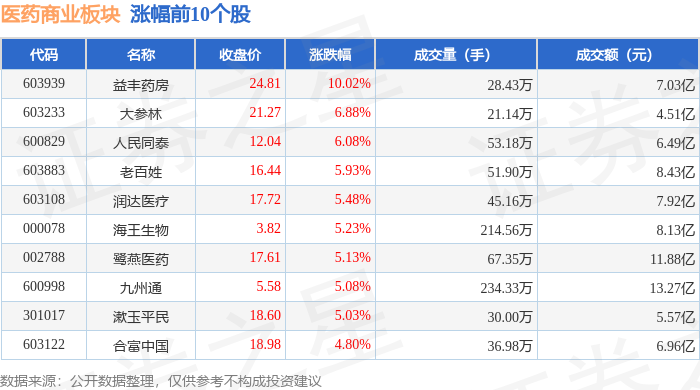
医药商业板块1月23日涨3.69%,益丰药房领涨,主力资金净流入3.68亿元
Zheng Xing Xing Ye Ri Bao· 2026-01-23 09:04
Market Performance - The pharmaceutical commercial sector increased by 3.69% on January 23, with Yifeng Pharmacy leading the gains [1] - The Shanghai Composite Index closed at 4136.16, up 0.33%, while the Shenzhen Component Index closed at 14439.66, up 0.79% [1] Individual Stock Performance - Yifeng Pharmacy (603939) closed at 24.81, up 10.02% with a trading volume of 284,300 shares and a transaction value of 703 million yuan [1] - Dazhenglin (603233) closed at 21.27, up 6.88% with a trading volume of 211,400 shares and a transaction value of 451 million yuan [1] - Renmintongtai (600829) closed at 12.04, up 6.08% with a trading volume of 531,800 shares and a transaction value of 649 million yuan [1] - Laobaixing (603883) closed at 16.44, up 5.93% with a trading volume of 519,000 shares and a transaction value of 843 million yuan [1] - Runda Medical (603108) closed at 17.72, up 5.48% with a trading volume of 451,600 shares and a transaction value of 792 million yuan [1] Capital Flow - The pharmaceutical commercial sector saw a net inflow of 368 million yuan from main funds, while retail funds experienced a net outflow of 294 million yuan [2] - The main funds' net inflow for Renmintongtai was 111 million yuan, accounting for 17.03% of its total trading volume [3] - Yifeng Pharmacy had a main fund net inflow of 110 million yuan, representing 15.70% of its total trading volume [3]
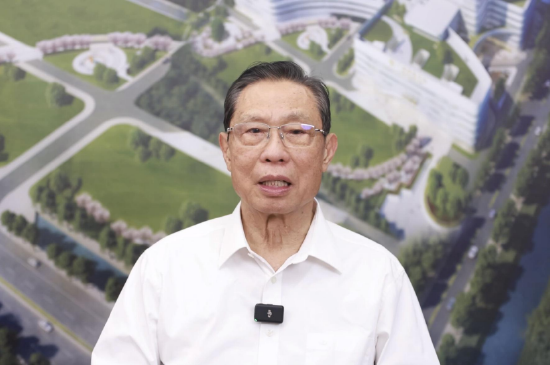
钟南山院士谈AI:AI不是取代医生,而是为老百姓解决看病贵看病难的问题
Xin Lang Cai Jing· 2026-01-23 07:27
Core Viewpoint - The integration of artificial intelligence (AI) and digital technologies is significantly transforming the healthcare service model and efficiency, aiming to enhance patient-centered care rather than replace doctors [1][2]. Group 1: AI in Healthcare - The "AI + Healthcare" initiative is gaining traction, with notable figures like Zhong Nanshan emphasizing that AI is not meant to replace healthcare professionals but to support them in focusing on patient needs [1][2]. - The AI health application "Ant Financial Aifu" has emerged as the largest health management app in China, with over 10 million user inquiries daily, 55% of which come from third-tier cities and below [3][5]. Group 2: Impact of Digital Technologies - Digital technologies, including AI, big data, and cloud computing, are reshaping healthcare delivery, improving the precision of medical services and making quality healthcare resources more accessible to rural populations [3][5]. - The application of AI technology has expanded from remote consultations during the pandemic to chronic disease management, early screening, and personalized treatment, thereby enhancing healthcare efficiency [3][5].
九部委发文推进药品零售行业高质量发展,支持零售药店进行兼并重组
Xuan Gu Bao· 2026-01-22 15:08
Industry Overview - The Ministry of Commerce and nine other departments issued opinions on promoting high-quality development in the retail pharmaceutical industry, supporting mergers and acquisitions among retail pharmacies [1] - The retail pharmacy sector is expected to accelerate its consolidation by 2025, with customer traffic likely concentrating towards leading players [1] - As of the end of Q3 2025, the total number of pharmacies in China is projected to be 686,426, reflecting a net decrease of nearly 20,000 stores since Q4 2024 [1] - The number of pharmacies has shown negative growth for four consecutive quarters, indicating a rapid contraction in the industry [1] Company Insights - Lao Bai Xing is recognized as one of the leading retail pharmacy chains in China, primarily engaged in the sale of pharmaceuticals and health-related products through its marketing network [1] - Yifeng Pharmacy focuses on the retail of pharmaceuticals, health products, medical devices, and daily convenience items related to health [1]
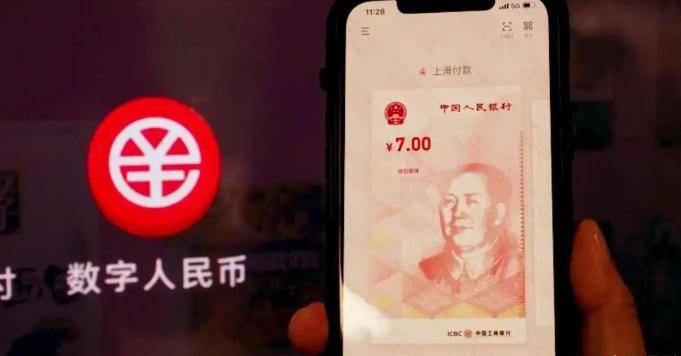
新版人民币2.0时代落地,纸币将何去何从?老百姓的支付方式会被颠覆吗
Sou Hu Cai Jing· 2026-01-21 21:46
Core Viewpoint - The transition to the digital renminbi 2.0 era signifies a fundamental change in China's payment system, moving from a simple digital cash model to a more dynamic digital deposit system that generates interest for users [2][4]. Group 1: Digital Renminbi Transition - The digital renminbi will evolve from being a digital cash equivalent to a true digital deposit, allowing it to earn interest starting January 1, 2026, at a current rate of 0.05% [2][4]. - The management of digital renminbi will shift from direct control by the central bank to commercial banks, enhancing service quality and providing deposit insurance up to 500,000 yuan [4][5]. Group 2: Usage and Adoption - As of November 2025, the digital renminbi has processed 3.48 billion transactions, amounting to 16.7 trillion yuan, indicating its transition from a pilot project to a widely used payment tool [5]. - The number of personal digital wallets has reached 230 million, with 18.84 million corporate wallets, showing significant user adoption [5]. Group 3: Future Implications - The digital renminbi's role in international payments is growing, with a 95.3% share in cross-border transactions, suggesting an increase in the renminbi's status as a payment tool in global trade [9]. - Future developments may allow users to purchase traditional financial products directly with digital renminbi, enhancing its utility and attractiveness [10]. Group 4: Payment Method Evolution - The coexistence of cash and digital renminbi is expected, with cash usage declining gradually rather than disappearing abruptly, similar to the transition from tapes to CDs [6][12]. - The transition to digital payment methods will be gradual, ensuring that all demographics, including the elderly, are accommodated during this shift [8][10].
70万亿存款到期潮!黄金、股市、楼市全是坑?老百姓如何守好钱包
Sou Hu Cai Jing· 2026-01-21 17:36
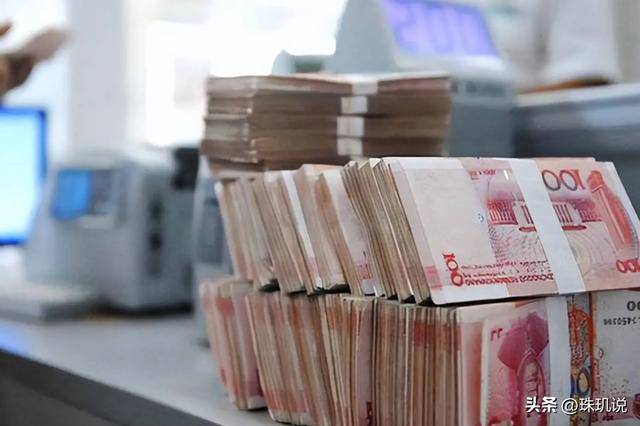
Group 1 - A significant wave of savings will mature in 2026, with approximately 70 trillion yuan in one-year and longer-term deposits set to expire [1][3] - The amount maturing is comparable to the total market capitalization of the Shanghai Stock Exchange, raising questions about where this capital will flow [3] - Many individuals are anxious about low interest rates on savings, with current rates at 0.05% for demand deposits and less than 1% for one-year deposits, leading to concerns about the effectiveness of traditional savings [4][8] Group 2 - The upcoming savings maturity is viewed as a test for individuals to manage their finances rationally rather than seeking quick profits [8][10] - Investment opportunities such as gold, stocks, and real estate are highlighted, but caution is advised due to inherent risks and market volatility [14][19][21] - The article emphasizes the importance of maintaining capital safety and liquidity over chasing high returns, suggesting conservative financial management strategies [12][22][26] Group 3 - Recommendations include keeping sufficient emergency funds, considering early mortgage repayments, and investing in low-risk products like government bonds and commercial insurance [27][29][31] - The focus should be on preserving capital rather than speculative investments, with a warning against overexposure to high-risk assets like stocks and gold [26][33]
用“真金白银”来补贴老百姓的消费
Bei Jing Qing Nian Bao· 2026-01-20 18:18
Group 1 - The Chinese government plans to increase the fiscal deficit rate to around 4% for 2025, which is a 1 percentage point increase from the previous year, and the new government debt scale will reach 11.86 trillion yuan, an increase of 2.9 trillion yuan compared to last year [1] - A special long-term government bond issuance of 1.3 trillion yuan is planned for 2025 to support consumption and related sales, with 300 billion yuan allocated for subsidies to encourage consumer spending [1] - The central government will allocate 667.4 billion yuan for employment support in 2025, along with various measures to enhance social insurance and reduce unemployment insurance rates [2] Group 2 - The central government will provide approximately 4.9 trillion yuan in total subsidies in 2025, including a basic pension increase of 2% and a minimum standard increase for rural residents' pensions [2] - A gradual implementation of free preschool education will begin, benefiting around 14 million children, and a new childcare subsidy system will be established with 100 billion yuan allocated for children under three years old [2] - The Ministry of Finance announced the cancellation or reduction of export tax rebates for over 200 products, including solar and battery products, to promote resource efficiency and reduce environmental pollution [3] Group 3 - For 2026, the fiscal policy will focus on increasing total spending, optimizing the spending structure, improving the effectiveness of fund usage, and enhancing economic vitality through tax reforms [4] - The government aims to ensure that necessary spending levels are maintained and that funds are directed towards critical areas such as consumption and social welfare [4] - The emphasis will be on improving the efficiency of fund usage, ensuring that every yuan spent generates the expected benefits [4]
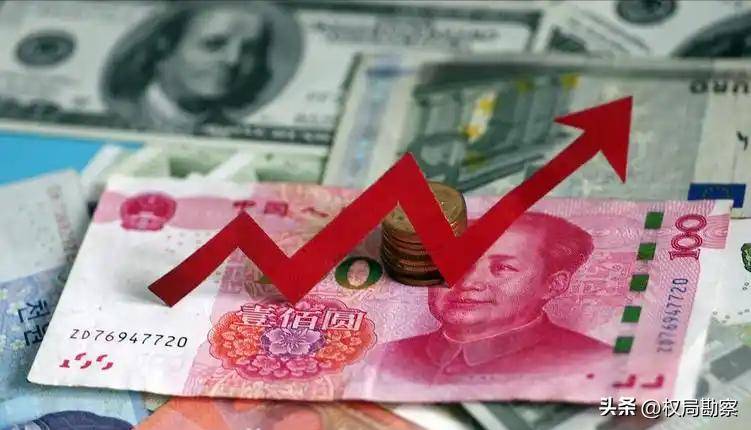
2026人民币升值趋势确立!对美元汇率破6.96,老百姓沾光迎红利
Sou Hu Cai Jing· 2026-01-20 14:11
Core Viewpoint - The recent appreciation of the Renminbi (RMB) against the US dollar reflects a strong trend supported by China's economic fundamentals, marking a significant milestone in the currency's performance [1][4][43]. Economic Performance - In 2025, China's GDP grew by 5%, surpassing 140 trillion yuan, indicating robust economic performance that underpins the RMB's strength [6]. - The RMB's appreciation is attributed to improved Sino-US trade relations and a weakening US dollar, which has provided more room for the RMB to strengthen [8][6]. Market Dynamics - The onshore and offshore RMB appreciated by 0.4% and 0.3% respectively since the beginning of the year, showcasing a trend of strengthening [3]. - The RMB's rise is not merely a short-term fluctuation but a reflection of deeper economic transformations, including a shift towards high-quality development and enhanced technological content in exports [14][31]. Consumer Impact - The appreciation of the RMB has made overseas consumption, education, and imported goods more affordable for consumers, leading to tangible benefits for families planning to travel or study abroad [16][18]. - The cost of imported goods, including cosmetics and high-end food products, is expected to decrease, benefiting consumers through lower prices and more frequent promotions [20]. Financial Innovations - The digital RMB has been upgraded to version 2.0, introducing features like interest-bearing wallets, enhancing financial convenience for users [22]. - The digital RMB also incorporates carbon credit functionalities, linking green living with financial incentives, thus broadening its utility beyond mere transactions [24]. Investment Implications - The RMB's appreciation suggests that investors may need to adjust their asset allocations, potentially reducing USD-denominated assets and increasing RMB-denominated investments [37]. - The ongoing development of the digital RMB is expected to play a significant role in personal asset management, making it a vital option for consumers [39]. Long-term Outlook - The RMB's strengthening is indicative of China's economic transformation and long-term growth potential, with expectations of continued benefits for the populace as the economy evolves [29][45]. - The RMB's rise is anticipated to enhance China's attractiveness for foreign goods and services, further stimulating import trade [35].
老百姓:公司不存在逾期担保
Zheng Quan Ri Bao Wang· 2026-01-20 13:14
Core Viewpoint - The company, Lao Bai Xing (603883), announced a total external guarantee amount of 980 million yuan, which accounts for 13.69% of the company's most recent audited net assets [1] Summary by Relevant Categories External Guarantees - The total external guarantee amount is 980 million yuan, with a balance of 440 million yuan (including the current guarantee) [1] - All external guarantees are provided for subsidiaries within the consolidated financial statements [1] - The company does not provide guarantees for its controlling shareholders, actual controllers, or their related parties, and there are no overdue external guarantees [1]