
LBX(603883)

Search documents
老百姓(603883) - 关于聘任高级管理人员的公告
2026-02-05 09:15
证券代码:603883 证券简称:老百姓 公告编号:2026-004 老百姓大药房连锁股份有限公司 关于聘任高级管理人员的公告 本公司董事会及全体董事保证本公告内容不存在任何虚假 记载、误导性陈述或者重大遗漏,并对其内容的真实性、准确性 和完整性承担法律责任。 2026 年 2 月 5 日 附件:本次聘任高级管理人员简历 1、王忠新先生个人简历 王忠新先生,1969 年出生,中国国籍,无境外永久居留权,武汉大学本科 学历、湖南大学企业管理硕士,曾任深圳市三九医药贸易有限公司区域经理、太 原(慷辉)三九医药公司总经理。2005 年加入老百姓,历任河北老百姓大药房 有限公司总经理、山东老百姓大药房连锁有限公司总经理、浙江老百姓大药房连 锁有限公司总经理、公司执行总裁助理及并购拓展总监、安徽百姓缘大药房连锁 有限公司总经理、集团星火事业群总经理、甘宁战区总经理和新中战区总经理等 职务。现任公司董事长特别助理。 2、陈立山先生个人简历 老百姓大药房连锁股份有限公司(以下简称"公司")于 2026 年 2 月 5 日 召开第五届董事会第十三次会议,审议通过了《关于聘任高级管理人员的议案》。 根据《公司章程》的有关规定, ...

老百姓(603883) - 关于非公开发行股票募投项目结项并将节余募集资金永久补充流动资金的公告
2026-02-05 09:15
证券代码:603883 证券简称:老百姓 公告编号:2026-003 老百姓大药房连锁股份有限公司 关于非公开发行股票募投项目结项并将节余募集资金 永久补充流动资金的公告 本公司董事会及全体董事保证本公告内容不存在任何虚假 记载、误导性陈述或者重大遗漏,并对其内容的真实性、准确性 和完整性承担个别及连带责任。 重要内容提示: ● 本次结项的募集资金投资项目:"老百姓大药房长沙NDC扩建项目(一期)" 和"新建连锁药店项目"已达到预定可使用状态,本次结项后,公司2021年非公 开发行股票募投项目已全部结项。 ● 节余募集资金金额及用途:截至2026年1月21日,公司2021年非公开发行 股票募投项目累计使用募集资金159,548.78万元,待支付的合同款项为3,036.69 万元,预计节余募集资金11,307.87万元(含募集资金利息净额),公司拟将上 述节余募集资金(最终以实际结转时募集资金专项账户扣除已签订合同待支付的 募集资金后的实际余额为准)永久补充流动资金,用于公司日常生产经营。 ●本事项已经公司第五届董事会审计委员会第九次会议和第五届董事会第 十三次会议审议通过,本次节余募集资金占公司2021年非公 ...
老百姓(603883) - 第五届董事会第十三次会议决议公告
2026-02-05 09:15
证券代码:603883 证券简称:老百姓 公告编号:2026-002 老百姓大药房连锁股份有限公司 第五届董事会第十三次会议决议公告 本公司董事会及全体董事保证本公告内容不存在任何虚假 记载、误导性陈述或者重大遗漏,并对其内容的真实性、准确 性和完整性承担法律责任。 一、董事会会议召开情况 (二)审议通过《关于聘任高级管理人员的议案》 表决结果:同意9票,反对0票,弃权0票,表决通过。 二、董事会会议审议情况 会议审议并通过了如下议案: (一)审议通过《关于非公开发行股票募投项目结项并将节余募集资金永 久补充流动资金的议案》 表决结果:同意 9 票,反对 0 票,弃权 0 票,表决通过。 截至 2026 年 1 月 21 日,公司 2021 年非公开发行股票募投项目累计使用募 集资金 159,548.78 万元,待支付的合同款项为 3,036.69 万元,预计节余募集 资金 11,307.87 万元(含募集资金利息净额),公司拟将上述节余募集资金(最 终以实际结转时募集资金专项账户扣除已签订合同待支付的募集资金后的实际 余额为准)永久补充流动资金,用于公司日常生产经营。 具体内容详见公司在上海证券交易所网站( ...
新华视点丨汽车消费“隐形门槛”逐步破除,老百姓买车用车能否更轻松?
Xin Hua Wang· 2026-02-04 08:40
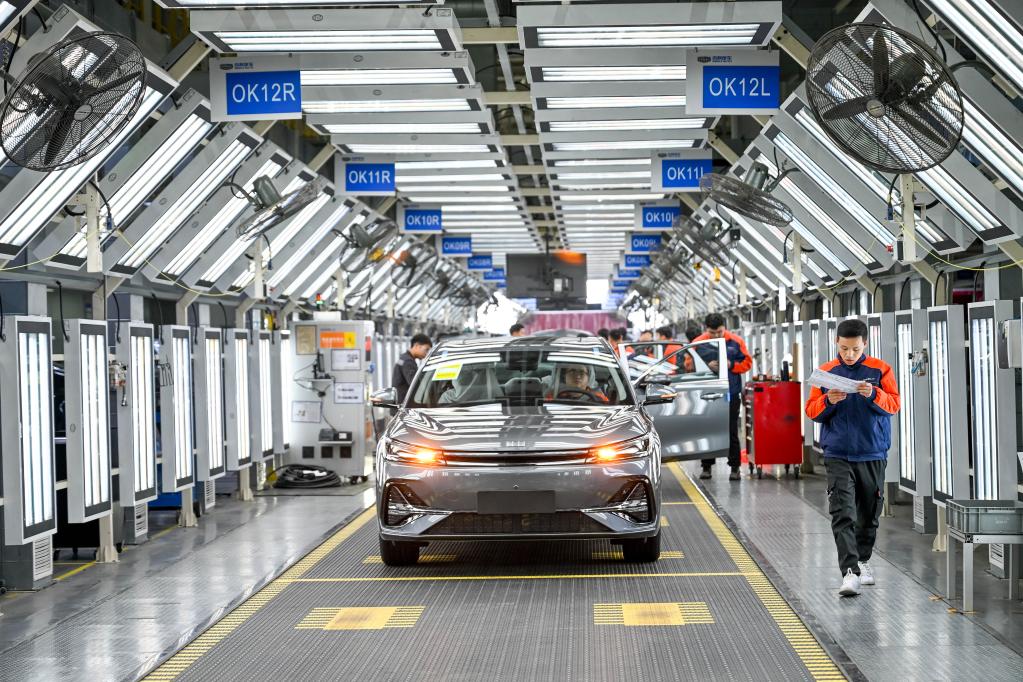
"十五五"规划建议提出,完善促进消费制度机制,清理汽车、住房等消费不合理限制性措施。 从放宽购买限制到便利二手车交易流程,汽车消费领域政策不断"松绑"。今后老百姓买车用车能否更轻松? 工人在贵州省贵阳市观山湖区一家汽车制造企业的车间内工作。新华社发(袁福洪 摄) 打通"购、用、换"等环节 清理消费领域不合理限制的核心,是消除阻碍消费潜力释放的"隐形门槛"。聚焦车辆"购、用、换"等全生命周期关键环节,一系列政策措施 精准发力,旨在激活百姓消费需求、为行业高效发展"松绑"。 优化限购措施,回应民生期盼—— 盘活存量市场,促进自由流通—— 二手车交易是汽车消费循环的关键一环。"曾经因限制多、流通堵等饱受诟病的二手车市场,正经历一场深刻的制度性变革。"重庆市汽车商 业协会常务副会长陈学勤表示,2022年17部门联合发文,在全国范围取消对符合国五排放标准的小型非营运二手车的迁入限制,促进二手车自由 流通和企业跨区域经营,让群众异地买卖二手车更方便。 中国汽车流通协会副秘书长郎学红介绍,近年来,多地积极推进落实二手车销售"反向开票"、异地交易登记等便利化措施,同时引导二手车 交易由经纪模式向经销模式转变,搭建二手车流通信 ...

【干货】连锁药店行业产业链全景梳理及区域热力地图
Qian Zhan Wang· 2026-02-02 07:14
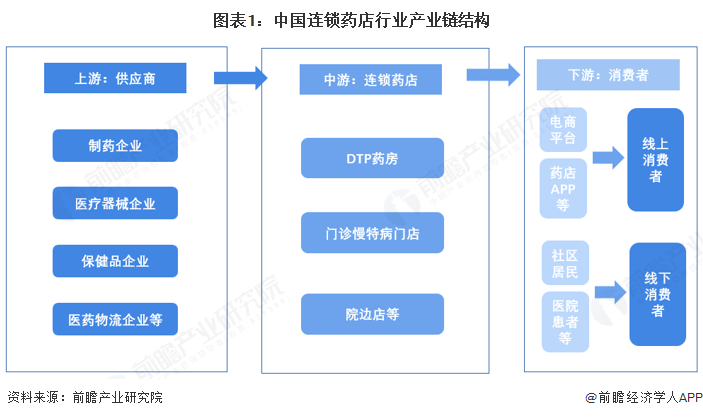
Core Insights - The report discusses the development prospects and investment strategies of the Chinese chain pharmacy industry, highlighting key players and market dynamics [1][12]. Industry Overview - The chain pharmacy industry supply chain consists of upstream manufacturers, medical device producers, health product manufacturers, and pharmaceutical logistics suppliers; the midstream is represented by chain pharmacies, while downstream customers include both offline and online clients [1][2]. Key Players - Major listed companies in the chain pharmacy sector include Dazhonglin, Yifeng Pharmacy, and Laobaixing, among others [1][2]. Regional Distribution - Upstream suppliers are primarily located in Beijing, Jiangsu, Hubei, and Hunan, while chain pharmacy operations are concentrated in Hunan, Yunnan, Guangdong, and Shanghai [6]. Financial Performance - By the first half of 2025, three listed chain pharmacy companies, including Guoyao Holdings, Dazhonglin, and Yifeng Pharmacy, are projected to exceed 10 billion yuan in operating revenue, with gross margins above 15%, and Yifeng Pharmacy exceeding 40% [8][9]. Investment Trends - Since 2024, chain pharmacy companies have focused on increasing capital in subsidiaries and acquisitions to improve financial structures and expand sales channels [10]. - Notable investment activities include: - Jianzhijia's capital increase of 466 million yuan across five subsidiaries [11] - Yixintang's investment of 32.8 million yuan in land use rights [11] - Tongrentang's acquisition of a 51% stake in Honghui Pharmaceutical for approximately 10.46 million yuan [11].



把老百姓的心里话带上会场
Xin Lang Cai Jing· 2026-02-01 20:19
为进一步扩大非遗影响力,彭清东调研后建议,在长沙洋湖水街打造省级非物质文化遗产及老字号示范 展示街区,通过"常驻展示+市州轮展"模式,带动全省非遗项目走向更广市场,助力乡村振兴与乡亲增 收。 ■三湘都市报全媒体记者 罗艾敏 【人物档案】 "当代表,就是要多调研,把老百姓的心里话带上会场。"彭清东深知偏远山村民生之难:老人看病不 便、道路狭窄泥泞、饮水环境待改善。他坚持走村串户听取民意,自费带队考察,把百姓的"小事"当作 履职"大事"。经他多方推动,村道得以拓宽,自来水入户全覆盖,卫生厕所普及,村级卫生室持续优 化,村民生活品质显著提升。 民生改善后,彭清东将重心转向富民产业。他聚焦土家织锦"西兰卡普"这一非遗技艺,创办企业推动产 品研发与市场拓展,让传统手艺成为留守妇女的"致富锦"。 彭清东,省人大代表。 冬日的龙山县洗车河镇克洞村,水泥路蜿蜒连通家家户户,路灯点亮村道;土家织锦工坊内,彩线在织 娘们手中翻飞,一幅幅精美的"西兰卡普"正徐徐成型……这些民生改善、产业兴旺的画面,是省人大代 表彭清东扎根乡村数十年的履职答卷。 ...

2026年,老百姓要做好“潮水退去”的准备?房地产会有这4个趋势
Sou Hu Cai Jing· 2026-01-31 05:54
Core Viewpoint - The Chinese real estate market is experiencing a long-term adjustment, with average national housing prices dropping over 30%, and certain cities seeing declines exceeding 60% [1][3]. Group 1: Trends in the Real Estate Market - Trend 1: Housing prices are beginning to show differentiation across regions, with second and third-tier cities experiencing a slowdown in price declines, while first-tier cities are likely to face a correction [5][3]. - Trend 2: A dual-track system in real estate is expected to emerge, allowing low-income families to apply for affordable housing while middle and high-income families can opt for purchasing such properties [7][3]. - Trend 3: The construction of quality housing is anticipated to become mainstream, as buyer expectations rise and government encourages developers to focus on quality [9][3]. - Trend 4: The proportion of existing home sales is projected to increase, allowing buyers to inspect properties before purchase, thereby reducing the incidence of unfinished buildings [11][3]. Group 2: Future Market Outlook - By 2026, housing prices are likely to continue a trend of "steady decline," with the expectation that housing market bubbles will be eliminated, prompting consumers to prepare for a significant market shift [11][3].

九部门发文“救市”,从大扩张到大并购,70万家药房化解关店危机
Hua Xia Shi Bao· 2026-01-29 04:53
本报(chinatimes.net.cn)记者于娜 北京报道 A股医药商业板块在1月23日那天的全线飘红,至今仍让投资者们记忆犹新。32只成分股中30家同步走 高,板块单日涨幅达3%,在这一波久违的反弹行情背后是商务部等九部门近日印发的《关于促进药品 零售行业高质量发展的意见》,为当前近70万家深陷调整期的药房注入了关键强心剂。 当前医药零售行业正处于不断加剧的扩张后遗症之中,2024年起闭店潮在国内市场蔓延,截至2025年三 季度末,全国药店数量已连续四个季度环比负增长,单季净关店8800家,CR10市占率升至29.8%,头部 与中小门店分化加剧,行业出清进入快车道。 这份药品零售行业新政精准呼应行业痛点,从并购资质衔接优化、健康服务转型引导双向发力,叠加头 部连锁业绩回暖信号,有望推动行业从被动闭店转向主动整合,而近期板块行情的震荡分化,正是行业 格局重塑在资本市场显现端倪。 "关店潮"倒逼转型 "九部门新政为行业定调,本质是给无序扩张后的洗牌按下'规范键',也让过去的规模竞赛模式彻底落 幕。"医健管理咨询合伙人曹宁向《华夏时报》记者表示,此前行业粗放增长早已难以为继,这在近两 年的关店潮中持续凸显。 与 ...



医药商业板块1月28日跌1%,人民同泰领跌,主力资金净流出5.28亿元
Zheng Xing Xing Ye Ri Bao· 2026-01-28 08:58
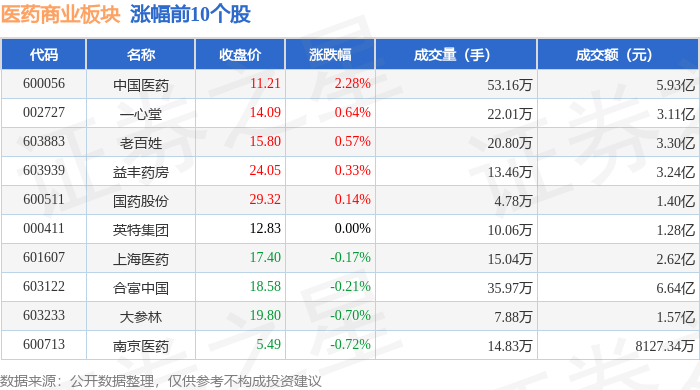
Market Overview - The pharmaceutical commercial sector declined by 1.0% on January 28, with Renmin Tongtai leading the drop [1] - The Shanghai Composite Index closed at 4151.24, up 0.27%, while the Shenzhen Component Index closed at 14342.9, up 0.09% [1] Stock Performance - Notable gainers in the pharmaceutical sector included: - China Medicine (600056) with a closing price of 11.21, up 2.28% and a trading volume of 531,600 shares, totaling 593 million yuan [1] - Yixin Pharmacy (002727) closed at 14.09, up 0.64% with a trading volume of 220,100 shares, totaling 311 million yuan [1] - Major decliners included: - Renmin Tongtai (600829) closed at 12.35, down 4.93% with a trading volume of 432,700 shares, totaling 537 million yuan [2] - Saili Medical (603716) closed at 23.29, down 4.71% with a trading volume of 157,600 shares, totaling 374 million yuan [2] Capital Flow - The pharmaceutical commercial sector experienced a net outflow of 528 million yuan from institutional investors, while retail investors saw a net inflow of 603 million yuan [2] - The capital flow for key stocks showed: - China Medicine had a net inflow of 32.15 million yuan from institutional investors, but a net outflow of 15.57 million yuan from retail investors [3] - Shanghai Pharmaceutical (601607) had a net inflow of 9.01 million yuan from institutional investors, with a significant net outflow of 32.51 million yuan from retail investors [3]




用23年死磕老百姓用得起:一则国货“笨”故事
Guan Cha Zhe Wang· 2026-01-27 13:44
【文/王力 编辑/周远方】 在效率至上、利润优先的商业世界里,一个根本性问题常被搁置:基于严谨科学、能真实改善生活的产品,其价值是否必然与高昂价格绑定?2026年初,于 河北金山岭长城脚下,上海家化旗下医学护肤品牌玉泽,用其23年的历程给出了坚定而温暖的答案。 这一答案的源头,需回溯至23年前。上海家化与瑞金医院皮肤科开启了一项看似"反效率"的合作。历经六年研发与上千例临床验证后,在定价的关键时刻, 上海交通大学医学院附属瑞金医院终身教授、玉泽首席科学家郑捷基于临床中对皮肤患者真实处境的深刻理解,坚决主张:医学护肤应服务于真正的皮肤健 康需求,是"雪中送炭",而非"锦上添花"。也正是这一坚定选择,为品牌奠定了坚实的价值根基——产品的意义,不止于功效,更在于被真正需要的人所信 赖与使用。 而今最初的承诺已生长为坚实的体系。通过设立专项慈善基金形成"公益+科研"闭环,累计完成超5000例临床研究,并与全国40余家顶尖医院持续合作,玉 泽构筑起一道独特的"医研长城"。从最新推出的特润霜,到同步发布的《国民皮肤屏障健康绿宝书》,玉泽始终在践行同一个使命:让基于实证的医学护 肤,真正从实验室走向千家万户百姓,守护千万人 ...

