LBX(603883)

Search documents
今明两年,老百姓“买房”好还是“卖房”好?内行人说出实情
Sou Hu Cai Jing· 2026-01-15 13:34
Core Viewpoint - The current real estate market presents a dichotomy where government policies are supportive of home buying, yet many cities, especially lower-tier ones, are experiencing declining property prices, leading to uncertainty among potential buyers and sellers [1][3][5]. Group 1: Suitable for Buying - Individuals with genuine housing needs, such as marriage, childbirth, or school enrollment, are in a favorable position to purchase homes due to low down payment ratios and mortgage rates [7][10]. - Families looking to upgrade from older properties in first and second-tier cities can consider selling their current homes and purchasing better ones, as there is significant room for negotiation in the current market [12][14]. - Investors with ample funds seeking to acquire quality properties in core urban areas for long-term stability should focus on prime locations and avoid low-quality properties [18][20]. Group 2: Suitable for Selling - Families holding multiple properties in third and fourth-tier cities or suburban areas that are not generating rental income should consider selling, as these assets face significant depreciation risks [22][24]. - Households with high leverage and tight cash flow should prioritize selling non-essential properties to reduce debt and improve financial stability [26][28]. - Families with a heavy concentration of assets in real estate should consider diversifying their investments to mitigate risks associated with a downturn in the property market [30][31]. Group 3: Observational Stance - Individuals looking to engage in short-term speculation without taking on significant risks or those with properties in less desirable locations may benefit from a wait-and-see approach [35][37].


宋雪涛提出“投资于人”三路径:让老百姓更有钱、更敢花、有地方花
Xin Lang Cai Jing· 2026-01-15 12:11
Core Viewpoint - The event emphasizes the importance of "investing in people" as a direct way to improve microeconomic conditions, with three main strategies proposed to enhance consumer spending [1][6]. Group 1: Strategies for Consumer Spending - The first strategy is to increase disposable income for citizens through enhanced transfer payments, particularly targeted subsidies for specific groups [3][8]. - The second strategy involves improving public services to encourage consumer confidence, addressing disparities not only between urban and rural areas but also across different industries and income levels [3][8]. - The third strategy focuses on increasing investment in consumer infrastructure and expanding the supply of services to create new consumption scenarios, exemplified by the transformation of the Liangma River area in Beijing, which has generated approximately 8 billion in economic revenue annually [3][8]. Group 2: Economic Reforms - The first arrow of economic reform is aimed at demand-side changes, while the second arrow targets supply-side reforms [3][8]. - A policy change is expected to gradually eliminate export tax rebates for batteries, particularly in the photovoltaic sector, starting April 1. This is seen as a move to allow successful companies to retain profits domestically, which can then be reinvested into the economy and increase household consumption [3][8]. - The third arrow pertains to the transformation of the real estate sector, which has been in a downward cycle since 2021, with second-tier cities experiencing declines since 2018. This adjustment period is viewed as a complete cycle in the international context [3][8]. Group 3: Real Estate Market Insights - Some emerging second-tier cities are showing signs of stabilization, with Urumqi reporting a capital return rate of 4%. As rental yields and mortgage rates rise, a stabilization in the real estate market is anticipated, marking a significant transition for the Chinese economy [4][9].

医药商业板块1月15日跌2.19%,华人健康领跌,主力资金净流出9.9亿元
Zheng Xing Xing Ye Ri Bao· 2026-01-15 08:58
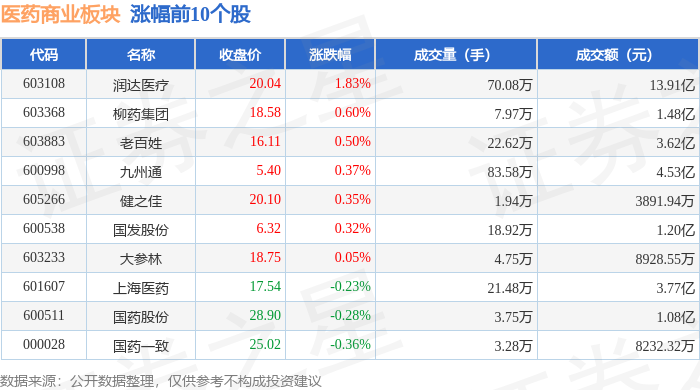
Market Overview - The pharmaceutical commercial sector experienced a decline of 2.19% on January 15, with Huaren Health leading the drop [1] - The Shanghai Composite Index closed at 4112.6, down 0.33%, while the Shenzhen Component Index closed at 14306.73, up 0.41% [1] Individual Stock Performance - Notable gainers included: - RunDa Medical (603108) with a closing price of 20.04, up 1.83% and a trading volume of 700,800 shares [1] - LiuYao Group (603368) closed at 18.58, up 0.60% with a trading volume of 79,700 shares [1] - LaoBaiXing (603883) closed at 16.11, up 0.50% with a trading volume of 226,200 shares [1] - Significant decliners included: - Huaren Health (301408) closed at 23.81, down 19.99% with a trading volume of 491,100 shares [2] - ShangYu PingMin (301017) closed at 18.50, down 13.75% with a trading volume of 373,900 shares [2] - YaoYiGou (300937) closed at 37.40, down 11.79% with a trading volume of 121,400 shares [2] Capital Flow Analysis - The pharmaceutical commercial sector saw a net outflow of 990 million yuan from institutional investors, while retail investors had a net inflow of 977 million yuan [2] - The table of capital flow indicates that: - LaoBaiXing (603883) had a net inflow of 46.10 million yuan from institutional investors [3] - JiuZhouTong (600998) had a net inflow of 40.43 million yuan from institutional investors [3] - RunDa Medical (603108) had a net inflow of 37.80 million yuan from institutional investors [3]




全文|刘姝威析股市大涨关键:营商环境重塑,让老百姓敢把钱搬进来
Xin Lang Cai Jing· 2026-01-15 04:58
Core Viewpoint - The Chinese stock market has begun to rise after years of stagnation around the 3000-point mark, driven by economic cycles and anti-corruption efforts [3][4][11] Economic Cycle - The new economic cycle, according to the Kondratiev wave theory, is set to start in 2025, with the new energy sector, particularly the automotive industry, as its driving force [3][9] - In 2025, China's automobile production and sales are projected to be the highest in the world, surpassing Japan [3][9] Anti-Corruption Efforts - Anti-corruption measures have improved the business environment in China, encouraging more enterprises, especially small and medium-sized enterprises, to register and operate [4][10] - The government has emphasized fair and rule-based market operations, with strict penalties for financial fraud, enhancing investor confidence [4][10] Market Sentiment - The public has observed a cleaner stock market environment, leading to increased willingness to invest savings from banks into the stock market [5][10] - The influx of capital into the stock market is attributed to the perception of a recovering Chinese economy, with significant investments from various sectors [4][10] Future Outlook - The "15th Five-Year Plan" period is expected to be driven by advancements in AI and technology, which are anticipated to significantly contribute to economic growth [11] - AI is viewed as a potential catalyst for the next technological revolution, with predictions that 2026 will mark the beginning of Artificial General Intelligence (AGI) [11]
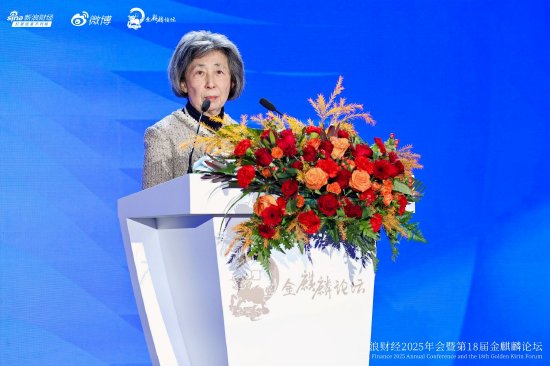
李玲详解“三明模式”:让医院“老百姓越健康越赚钱”而非“病人越多越赚钱”
Xin Lang Cai Jing· 2026-01-15 04:23
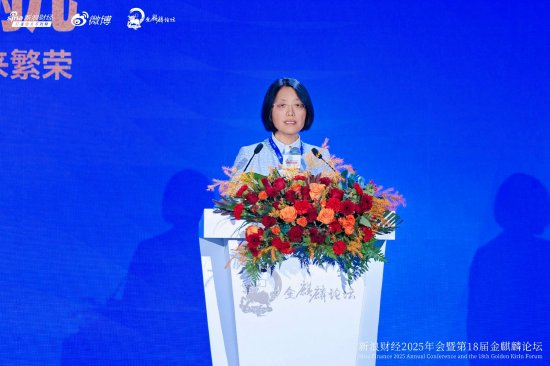
Group 1 - The core theme of the "2025 Sina Finance Annual Conference and the 18th Golden Unicorn Forum" is "Fifteen Five Opening, Economic New Voyage - Reshaping Growth Paradigms, Co-creating Future Prosperity" [1][12] - Li Ling, a prominent figure in the economic committee, emphasized that China is currently the world's strongest industrialized nation and has made significant progress in healthcare reform [3][14] - The total national health expenditure for 2024 is preliminarily estimated at 90,895.5 billion yuan, with government health spending at 24.9%, social health spending at 47.6%, and personal health spending at 27.5% [3][14] Group 2 - The aging population presents a significant challenge, necessitating a shift from treating diseases to preventing them [6][17] - The "Healthy China" national strategy is prioritized as it signifies the modernization of socialism, focusing on health rather than illness [7][18] - The government is integrating health into all policies, addressing various factors affecting health, including lifestyle, environment, and healthcare systems [7][18] Group 3 - The healthcare system is transitioning to a more integrated model, promoting a "health community" approach where hospitals work collaboratively rather than independently [7][19] - The "Sanming Model" is being promoted nationwide within four years, incentivizing healthcare providers to focus on disease prevention [7][19] - The aging population also presents opportunities for a new "health+" development paradigm, merging healthcare, wellness, and technology into a large health industry [8][19] Group 4 - The future health model includes a personal health code system managed by AI, ensuring comprehensive health management throughout an individual's life [10][21] - The "Healthy China" initiative is seen as a new development model and a significant contribution to global health, leveraging China's historical wisdom and modern technology [10][21] - The challenges faced by the U.S. in healthcare present an opportunity for China to lead in health solutions, integrating various advantages to contribute to global health [10][22]
携手知名便利店连锁企业,老百姓大药房加速推进多元生态布局
Quan Jing Wang· 2026-01-13 08:02
Core Insights - The integration of multiple business formats and diversified operations is essential for pharmaceutical retail companies to overcome growth bottlenecks and enhance core competitiveness [1][2][4] - The collaboration between Lao Bai Xing Pharmacy and 7-Eleven represents a significant step towards innovative business models in response to evolving consumer demands [2][3] Group 1: Business Model Innovation - Lao Bai Xing Pharmacy has launched a new store format that combines pharmacy and convenience store elements, enhancing customer experience and foot traffic [1][2] - The store features over 150 square meters of space, organized into distinct sections for pharmaceuticals, food, and daily necessities, maintaining the core functions of a pharmacy while incorporating convenience store attributes [1][2] Group 2: Strategic Partnerships - The partnership with 7-Eleven is part of a broader strategy to create a "15-minute convenient living circle," leveraging the strengths of both companies for mutual benefit [2][3] - Lao Bai Xing Pharmacy is also expanding its collaboration with Meiyijia, further broadening the "pharmacy + convenience store" model [2][3] Group 3: Dual-Track Integration Model - The newly introduced "dual-track 'pharmacy + 'all-domain integration model" focuses on two main directions: "+ pharmacy" and "pharmacy +" [3][4] - The "+ pharmacy" direction targets existing investors in convenience stores and supermarkets, allowing them to add "Lao Bai Xing Convenience Pharmacy" modules to their operations, focusing on the sale of Class B non-prescription drugs [3] - The "pharmacy +" direction involves optimizing the layout of selected standard franchise stores by incorporating well-known convenience store products and operational expertise, transforming traditional pharmacies into community health centers [3][4] Group 4: Future Outlook - Lao Bai Xing Pharmacy aims to redefine the pharmaceutical retail landscape by breaking industry boundaries and enhancing consumer service models through innovative thinking [4] - The ongoing implementation and optimization of the dual-track model, along with the addition of quality partners, are expected to solidify Lao Bai Xing Pharmacy's leading position in the industry [4]
老百姓涨2.12%,成交额1.41亿元,主力资金净流入505.48万元
Xin Lang Cai Jing· 2026-01-13 04:08
Group 1 - The stock price of Laobaixing increased by 2.12% on January 13, reaching 15.88 CNY per share, with a trading volume of 141 million CNY and a turnover rate of 1.19%, resulting in a total market capitalization of 12.051 billion CNY [1] - Year-to-date, Laobaixing's stock price has risen by 7.30%, with a 5-day increase of 5.03%, a 20-day increase of 2.98%, and a 60-day decrease of 1.79% [1] - The company primarily engages in the retail chain business of pharmaceuticals and health-related products, with revenue composition being 80.95% from Western and Chinese medicines, 12.11% from non-pharmaceuticals, and 6.94% from traditional Chinese medicine [1] Group 2 - As of October 31, Laobaixing had 63,700 shareholders, an increase of 1.94% from the previous period, with an average of 11,921 circulating shares per person, a decrease of 1.90% [2] - For the period from January to September 2025, Laobaixing reported a revenue of 16.07 billion CNY, a year-on-year decrease of 1.00%, and a net profit attributable to shareholders of 529 million CNY, down 16.11% year-on-year [2] Group 3 - Since its A-share listing, Laobaixing has distributed a total of 2.175 billion CNY in dividends, with 1.097 billion CNY distributed over the past three years [3] - As of September 30, 2025, the top ten circulating shareholders of Laobaixing included Hong Kong Central Clearing Limited, which held 7.7558 million shares, a decrease of 7.3246 million shares from the previous period [3]
2026年1月以后,不出意外的话,或将迎来4大降价潮,老百姓提前做好准备
Sou Hu Cai Jing· 2026-01-12 17:09
Core Viewpoint - The market is expected to experience a significant price drop in various sectors by 2026 due to increased competition, rising supply, and changing consumer behavior [1][5][7]. Group 1: Sectors Facing Price Drops - The home appliance industry is experiencing intense competition, leading to price reductions as traditional brands respond to online competitors and new brands attract consumers with lower prices [2][4]. - The food and fast-moving consumer goods sector is also seeing increased supply, prompting companies to lower prices to meet changing consumer preferences for cost-effective products [4][5]. - The rental market is shifting, with increased housing supply in many cities leading landlords to reduce rents to attract tenants, particularly in second and third-tier cities [4][8]. - The clothing and accessories industry is under pressure from high inventory levels, prompting brands to offer significant discounts to clear stock before the new year [4][10]. Group 2: Consumer Behavior and Market Dynamics - Consumers are becoming more rational and cautious, often comparing prices online and waiting for promotions, which pressures companies to lower prices to retain customers [5][7]. - The anticipated price drops are seen as beneficial for consumers, particularly for essential goods like food and household items, which could alleviate living costs for families [8][10]. - Companies are adjusting their strategies in response to the price drop trend, with some opting to lower prices to gain market share while others focus on improving quality to maintain price levels [10][11]. Group 3: Economic Implications - Price reductions can indicate both healthy market competition and potential economic challenges, reflecting a market adjustment rather than a definitive economic downturn [7][10]. - The government may view the price drop trend positively, as it can stimulate consumer spending and contribute to overall economic growth [10][11]. - While the current price drop trend presents opportunities for consumers, it is essential to approach purchases with discernment, ensuring that the items are genuinely needed and the price reductions are justified [5][10].
汇泉基金陈洪斌:必要时要给老百姓发钱,不能再有“不养懒人”的想法
Xin Lang Cai Jing· 2026-01-11 08:27
Core Viewpoint - The 2026 China Chief Economist Forum held in Shanghai emphasized the need for economic reforms to strengthen the country, focusing on monetary policy and the development of modern service industries [1][3]. Group 1: Economic Recommendations - The first recommendation is to provide financial support to the public when necessary, moving away from the outdated notion of "not supporting the lazy," as this mindset can hinder labor productivity, especially in the context of artificial intelligence advancements [4]. - The second recommendation is to lower interest rates, as there is a negative output gap. Adjusting interest rates is essential globally to prevent more severe economic issues that could restrict growth [4]. - The third recommendation is to significantly develop the modern service industry to ensure the livelihood of ordinary citizens [5].
医药商业板块1月9日涨1.32%,润达医疗领涨,主力资金净流出1.22亿元
Zheng Xing Xing Ye Ri Bao· 2026-01-09 08:54
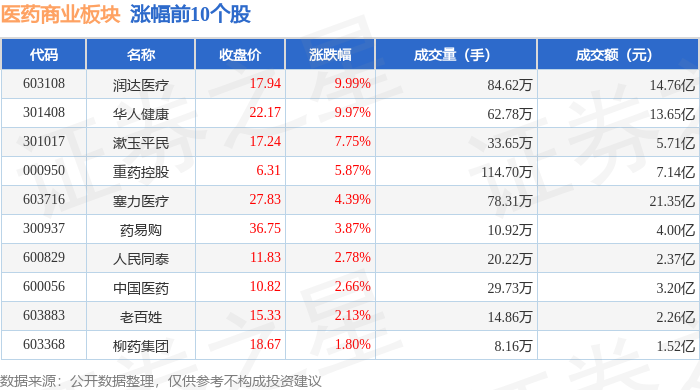
Market Performance - The pharmaceutical commercial sector increased by 1.32% on January 9, with RunDa Medical leading the gains [1] - The Shanghai Composite Index closed at 4120.43, up 0.92%, while the Shenzhen Component Index closed at 14120.15, up 1.15% [1] Top Gainers - RunDa Medical (603108) closed at 17.94, up 9.99% with a trading volume of 846,200 shares [1] - Huaren Health (301408) closed at 22.17, up 9.97% with a trading volume of 627,800 shares [1] - Shangyu Pingmin (301017) closed at 17.24, up 7.75% with a trading volume of 336,500 shares [1] Other Notable Stocks - Zhongyao Holdings (000950) closed at 6.31, up 5.87% with a trading volume of 1,147,000 shares [1] - Saily Medical (603716) closed at 27.83, up 4.39% with a trading volume of 783,100 shares [1] Market Capital Flow - The pharmaceutical commercial sector experienced a net outflow of 122 million yuan from institutional investors and 174 million yuan from speculative funds, while retail investors saw a net inflow of 296 million yuan [2] - The trading volume and turnover for various stocks indicate a mixed sentiment among different investor categories [2] Individual Stock Fund Flow - RunDa Medical had a net inflow of 2.30 billion yuan from institutional investors, while it faced a net outflow of 1.36 billion yuan from speculative funds [3] - Zhongyao Holdings saw a net inflow of 61.04 million yuan from institutional investors, with a net outflow of 62.93 million yuan from retail investors [3] - The overall fund flow indicates varying levels of confidence among different investor types in the pharmaceutical sector [3]