
LBX(603883)

Search documents
二手房跌不断,老百姓持币观望,稳住楼市成中国经济突围关键一步
Sou Hu Cai Jing· 2025-12-27 07:06
Group 1 - The core issue is that stabilizing the real estate market has become crucial for both individual wealth and the overall economy of the country [1][12] - The cooling of the second-hand housing market has led to declining prices, causing anxiety among families looking to sell and potential buyers to hesitate [1][3] - The sentiment of wealth depreciation has resulted in reduced consumer spending and investment decisions, impacting various industries connected to real estate [3][5] Group 2 - Many families in China have invested a significant portion of their savings in real estate, and the downturn has led to a consensus of asset depreciation [5][10] - The external economic environment has become challenging, with reduced foreign demand, making the domestic market increasingly important [7][8] - The government has initiated actions to support the real estate sector, including debt restructuring for large developers and ensuring timely delivery of properties to restore buyer confidence [10][12] Group 3 - The instability in the real estate market affects consumer confidence and corporate investment willingness, which are critical for economic growth [12] - The need for new policies and measures to stimulate the market is evident, including support for first-tier cities and the integration of technology in housing [10][12] - Addressing the real estate issue is essential for the broader economic recovery and development of new industries like high-end manufacturing and artificial intelligence [12]



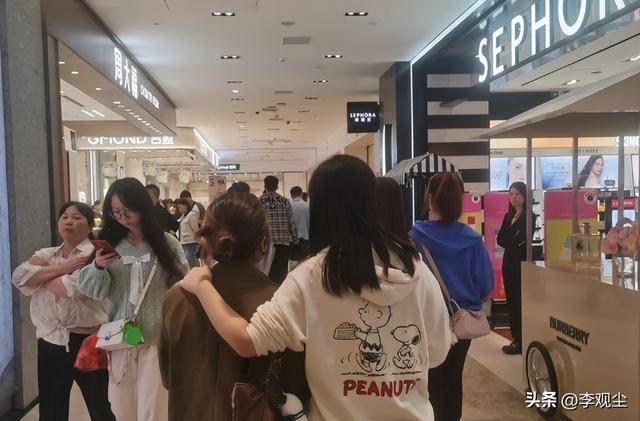
商场消费太烧钱,月薪2万也扛不住,普通老百姓都这样买东西
Sou Hu Cai Jing· 2025-12-26 17:38
Core Insights - The article highlights the increasing pressure of high consumer prices in shopping malls, making it difficult for even middle-income earners to afford basic items [2][5][41] - There is a noticeable shift in consumer behavior towards online shopping due to better price-performance ratios and convenience [14][29][43] Group 1: High Prices in Malls - Shopping mall prices have become unaffordable for many, with even middle-class individuals feeling the strain of high costs [5][10] - A significant price discrepancy exists between online and mall prices, with some items marked up by over 100% in physical stores [6][8] - High operational costs, including rent and employee wages in prime locations, contribute to the elevated prices in malls [6][8] Group 2: Shift to Online Shopping - Online shopping is becoming the preferred choice for consumers seeking better value, as it often offers lower prices due to direct sourcing from manufacturers [14][18] - Promotional activities, such as subsidies and coupons, further enhance the affordability of online purchases, making them more attractive to consumers [22][24] - The convenience of online shopping, including home delivery and easy return policies, aligns well with the needs of busy consumers [26][28] Group 3: Changing Consumer Mindset - There is a growing awareness among consumers regarding the importance of value over brand prestige, leading to more rational purchasing decisions [31][39] - Consumers are increasingly prioritizing product quality and practicality, rather than being swayed by high prices or brand names [35][41] - This shift in mindset is prompting brands to focus more on online channels and offer competitive pricing to meet consumer demands [37][43]
老百姓大药房娄底部分门店因骗保遭行政处罚,六家门店被解除医保协议
Jing Ji Guan Cha Wang· 2025-12-26 05:56
Core Viewpoint - The Loudi Medical Security Bureau has issued an administrative penalty against Laobaixing Pharmacy Chain Co., Ltd. for illegal activities related to purchasing medications under false identities, resulting in a loss to the medical insurance fund [1][2]. Group 1: Administrative Penalty Details - The penalty decision indicates that the pharmacy was found to have committed illegal activities involving false identity purchases during a flying inspection conducted from July 19 to July 20, 2025, covering the period from January 1, 2023, to June 30, 2025 [1][2]. - The total loss to the medical insurance fund due to these activities was determined to be RMB 1,472.82 [2][5]. - The pharmacy is required to return the lost medical insurance fund and pay a fine of RMB 2,945.64, which is double the amount lost, and is also ordered to suspend its special outpatient medical insurance fund settlement business for six months [2][5]. Group 2: Broader Context and Related Cases - The fraudulent activities at the Loundi pharmacy are not isolated incidents, as similar cases have been reported at other Laobaixing Pharmacy locations in Loundi [2][5]. - A report from the National Medical Insurance Administration on November 14 revealed that Laobaixing Pharmacy in Loundi was involved in cases of swapping health products for reimbursable medications and illegally using medical insurance funds [2][6]. - In a separate incident in June 2025, it was reported that several Laobaixing Pharmacy locations exchanged health products for reimbursable medications without verifying the identity of customers, leading to further investigations and penalties [6].
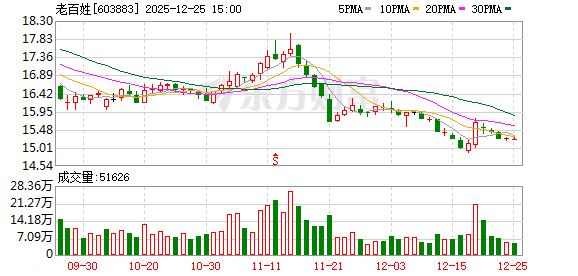
老百姓:关于归还临时补充流动资金的募集资金的公告
Zheng Quan Ri Bao· 2025-12-25 11:47
(文章来源:证券日报) 证券日报网讯 12月25日,老百姓发布公告称,公司已将用于临时补充流动资金的1亿元闲置募集资金全 部归还至专户,本次补流始于2025年10月28日,期限2个月,至此相关资金归还完毕。 ...
人民币连涨14个月!出口商亏掉数万利润,老百姓却意外享福利
Sou Hu Cai Jing· 2025-12-25 09:49
Group 1 - The recent appreciation of the Renminbi (RMB) against the US dollar has reached a 14-month high, with offshore RMB surpassing 7.02 and onshore RMB exceeding 7.03 [1][3] - The appreciation is driven by two main factors: external environmental changes and seasonal domestic demand, which have combined to initiate a sustained upward trend in the RMB [4][8] - The weakening of the US dollar, particularly after the Federal Reserve announced interest rate cuts, has diminished the dollar's attractiveness, leading to a relative appreciation of other currencies, including the RMB [6][8] Group 2 - The year-end demand for currency exchange has significantly contributed to the RMB's appreciation, as many companies need to convert USD to RMB for year-end payments [8][10] - The issuance of RMB-denominated bonds by foreign entities, such as Kazakhstan and Indonesia, indicates increasing international recognition of the RMB, supporting its long-term appreciation [12][14] - The RMB's appreciation has mixed effects: export companies face profit pressures, while import companies and consumers benefit from lower costs for foreign goods [16][22] Group 3 - Export companies are struggling with the rapid appreciation, as their USD-denominated orders yield less RMB upon conversion, impacting their profit margins [18][20] - In contrast, import companies and consumers enjoy lower prices for imported goods, making travel and overseas education more affordable [24][26] - The RMB's appreciation can help stabilize domestic prices and align with national strategies to boost consumption and economic growth [26][40] Group 4 - Market consensus suggests that the RMB will maintain a strong position in the short term, influenced by the ongoing weakness of the US dollar and year-end exchange demands [29][31] - The central bank is actively managing the exchange rate to prevent excessive volatility, making it challenging for the RMB to break through the 7.0 mark [31][33] - Companies are encouraged to adapt to these changes by utilizing hedging tools to mitigate risks associated with currency fluctuations [35][37] Group 5 - The ongoing appreciation of the RMB reflects broader trends in the global financial market and the internationalization of the currency [38][41] - Companies are advised to enhance their risk management capabilities and core competitiveness in response to currency fluctuations [40][41]
老百姓(603883) - 关于归还临时补充流动资金的募集资金的公告
2025-12-25 08:00
证券代码:603883 证券简称:老百姓 公告编号:2025-073 关于归还临时补充流动资金的募集资金的公告 本公司董事会及全体董事保证本公告内容不存在任何虚假记载、误导性陈述 或者重大遗漏,并对其内容的真实性、准确性和完整性承担法律责任。 重要内容提示: 老百姓大药房连锁股份有限公司 2025年12月25日,公司已归还10,000万元至募集资金专用账户,并将上述募 集资金的归还情况通知公司募集资金持续督导机构高盛(中国)证券有限责任公 司及保荐代表人。 | 本次归还募集资金金额(万元) | 10,000 | | --- | --- | | 尚未归还的募集资金金额(万元) | 0 | | 是否已归还完毕 | √是□否 | | 归还完毕的具体时间 | 2025年12月25日 | 特此公告。 截至 2025 年 12 月 25 日,公司已累计归还临时补充流动资金的闲置 募集资金人民币 10,000 万元。 一、募集资金临时补充流动资金情况 老百姓大药房连锁股份有限公司(以下简称"公司")于2025年10月28日召 开第五届董事会第十一次会议,审议通过了《关于使用部分闲置募集资金暂时补 充流动资金的议案》,同意公 ...
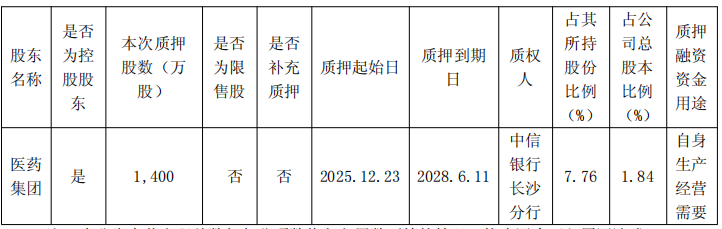
老百姓控股股东新增质押1400万股 总股本31%质押
Zhong Guo Jing Ji Wang· 2025-12-25 07:52
| 日期 | 证券代 | 证券简 质押笔 | 无限售股份质押数里 | 有限售股份质押数里 | A股总股本 | 质押比例 | | --- | --- | --- | --- | --- | --- | --- | | 唱 | | 都 载 | (万) | (万) | (万) | (%) | | 20251219 603883 | | 老自姓 8 | 23455.04 | 0.00 | 75889.02 | 30.91 | 中国经济网北京12月25日讯 老百姓(603883)(603883.SH)昨晚披露关于控股股东股票质押的公告称,公司控股股 东老百姓医药集团有限公司(以下简称"医药集团")持有公司股份数量为180,453,475股,占公司总股本比例为 23.78%;累计质押股份数量为114,140,000股(含本次质押),占其所持股份比例为63.25%,占公司总股本比例为 15.04%。 控股股东及一致行动人(医药集团与陈秀兰)合计持有公司股份数量为194,019,173股,占公司总股本比例为 25.57%;累计质押股份数量为114,140,000股(含本次质押),占其所持股份比例为58.83%,占公司总股本比 ...
百步一药店,奶茶店式圈地崩盘:70万连锁药房在关店潮中抢滩“卖健康”|2025中国经济年报
Hua Xia Shi Bao· 2025-12-25 03:54
Core Viewpoint - The domestic chain pharmacy industry is entering a period of negative growth, with a significant reduction in the number of pharmacies and a shift from rapid expansion to a focus on value enhancement and health services [2][3][11] Industry Overview - By Q1 2025, the total number of pharmacies in China is expected to fall below 700,000, with a net decrease of approximately 3,000 stores in a single quarter, indicating a widespread "store closure wave" [2] - The overall market size for pharmaceuticals is projected to reach 2.03 trillion yuan in 2024, but the growth rate is only 0.9%, with a forecasted decline to 1.97 trillion yuan in 2025 [2] Company Performance - Major chain pharmacies are experiencing divergent performance: Dazhenglin reported a net profit of 1.081 billion yuan in the first three quarters of 2025, up 25.97% year-on-year; Yifeng Pharmacy's net profit reached 1.225 billion yuan, a 10.27% increase; while Yixintang faced a decline with a net profit of 269 million yuan, down 8.17% [2] Store Closure Trends - Predictions indicate that the number of pharmacy closures in 2025 could reach between 50,000 and 100,000, marking a shift from the previous era of aggressive expansion to a focus on operational efficiency [3][4] - The industry is expected to return to a more reasonable scale of around 500,000 pharmacies, similar to levels seen in 2018 [4] Market Dynamics - The closure wave is driven by oversupply and increased regulatory pressures, with a significant rise in the proportion of non-pharmaceutical sales, which reached 34.6% in 2025, up 5.2 percentage points from 2024 [5] - The market share of the top ten pharmacy brands increased to 58% in Q3 2025, reflecting a growing concentration in the industry as smaller players exit [5] Business Model Evolution - The franchise model is becoming a key strategy for leading pharmacy chains to expand market share, with significant increases in franchise store openings reported [6] - The industry is transitioning from a focus on selling drugs to providing health services, with a notable shift towards a "sell health" approach [6][7] Professionalization and Service Enhancement - Professionalization is identified as a core development direction, with leading companies adopting innovative drug and DTP pharmacy models to enhance service delivery [7] - Community pharmacies are increasingly focusing on chronic disease management, with a significant percentage of patients expressing a desire for medication guidance and health management services [8] Diversification and Digital Transformation - Leading pharmacies are diversifying their offerings to include health-related products and services, transforming into comprehensive health experience hubs [9] - The integration of online and offline channels is accelerating, with significant growth in new retail segments and contributions from O2O channels [9] Future Outlook - Despite current challenges, industry experts believe that the long-term trend for the chain pharmacy sector remains positive, driven by supply-side adjustments and demand recovery [10] - The future of pharmacies is expected to focus on building a diversified health service ecosystem, aligning with national health strategies and enhancing both social and economic benefits [10][11]



商保创新药目录落地 老百姓如何受益?
Jin Rong Shi Bao· 2025-12-25 02:48
Core Viewpoint - The Commercial Health Insurance Innovative Drug Directory aims to provide a list of high-value innovative drugs that exceed basic medical insurance coverage, effective from January 1, 2026 [1][2]. Group 1: Overview of the Innovative Drug Directory - The directory includes 19 drugs focusing on three key areas: high-priced cancer treatments (5 Car-T cell therapy drugs), rare disease medications, and new targeted therapies for severe cancers [1]. - The directory is intended for reference by commercial health insurance and medical mutual aid systems, highlighting the importance of these drugs for patients with limited treatment options [1]. Group 2: Policy Implications - Drugs listed in the directory are not eligible for reimbursement under basic medical insurance, but the National Healthcare Security Administration has implemented a "three exclusions" policy to facilitate their use in hospitals [2]. - This policy alleviates concerns for hospitals regarding the use of innovative drugs, allowing for direct prescription and reimbursement through commercial insurance, thus bypassing previous complexities [2]. Group 3: Insurance Product Adaptation - Some commercial insurance products, such as certain惠民保 plans, have begun to incorporate drugs from the directory, offering increased reimbursement rates for hospital use of these drugs [2]. - Insurance companies are currently assessing how to integrate the directory's drugs into existing medical insurance products, with some already including specific innovative drugs as optional or mandatory coverage [3]. Group 4: Consumer Guidance - Consumers are advised to carefully review insurance contracts for coverage details, including specific drug lists, reimbursement rates, and any limitations on pharmacies or hospitals [4]. - Understanding the reimbursement process for innovative drugs is crucial, as it often involves specific purchasing locations, prescriptions from specialists, and prior authorization from insurance companies [4]. - Consumers should balance the cost of premiums with the level of coverage provided, considering personal health conditions and financial capabilities when deciding on insurance products that include innovative drug coverage [5].

我说变化丨“守住了老百姓心里的盼头”
Zhong Yang Ji Wei Guo Jia Jian Wei Wang Zhan· 2025-12-25 01:04
没过几天,镇干部、施工方和我被请到一起开会,巡察组的同志就坐在我旁边。补偿款怎么算?补的地 选在哪儿?修水坝按啥标准?问题被一一摆上台面。最终方案清清楚楚:按今年邻地租金标准补偿我 350元;将村东头0.42亩机动地划拨给我;水坝结构按设计图纸复原,来年开春由镇里验收。白纸黑字 按上红手印,我这颗悬了几个月的心终于踏实了。 巡察组撤点前专门来回访。我领他们到地头,新修的挡水坝把水拢得妥妥帖帖,再也不用担心稻子抽穗 时缺水了。补偿款早已到账,补地协议也在村务公开栏里张贴公示。 守着田却种不了地,你说这心里是啥滋味?去年秋收刚过,村里修挡水坝,施工队一铲子下去,把我家 0.42亩口粮田并入了集体灌溉渠。地没了,稻茬还在地里撅着,看着实在揪心。 为这事儿我没少费心。找村干部,答复是"等镇上协调";去镇里,他们摆手说"归水务局管";问水务 局,得到的回复是"责任得现场认定"……这事儿像皮球一样被踢来踢去快一年,我的心也渐渐凉了。 转机出现在巡察组进驻之后。今年6月份,我听说市委巡察组进驻我们镇了,拿着土地承包证就找上了 门。"推诿扯皮伤民心,这个问题我们必须督促解决。"当天下午,他们就带着测量仪下了地,泥巴糊了 半裤 ...