
GEM(002340)

Search documents
2026年1月23日稀土市场行情:氧化镨钕均价67.24万元/吨 本周看涨情绪25%看跌11%
Jin Rong Jie· 2026-01-23 10:52
Core Insights - The rare earth market is experiencing slight price adjustments, with specific products showing mixed trends in pricing [1] - Market sentiment indicates a majority of participants are neutral, with a slight increase in bullish sentiment compared to the previous week [1] - Factors influencing price movements include pre-holiday stockpiling by downstream magnetic material companies, logistics slowdowns due to the upcoming Spring Festival, and essential procurement by metal manufacturers [1] Price Summary - Praseodymium and Neodymium oxide average price is 672,400 CNY/ton, up by 800 CNY/ton [1] - Praseodymium and Neodymium metal average price is 810,100 CNY/ton, up by 500 CNY/ton [1] - Dysprosium oxide average price is 1,430,600 CNY/ton, down by 2,700 CNY/ton [1] - Terbium oxide average price is 6,314,500 CNY/ton, down by 10,100 CNY/ton [1] Market Sentiment - Last week, approximately 23% of market participants were bullish, 14% bearish, and 62% neutral, aligning with current market conditions [1] - This week, bullish sentiment has increased to 25%, while bearish sentiment has decreased to 11% [1] Influencing Factors - Price fluctuations are primarily driven by three factors: pre-holiday stockpiling by downstream companies, logistics slowdowns due to the Spring Festival, and essential procurement by metal manufacturers [1] - The current tight supply of praseodymium and neodymium oxide and metal suggests limited room for price corrections [1] - It is anticipated that mainstream product prices will continue to fluctuate before the holiday, with potential short-term price pressure due to traders liquidating inventory for cash before the holiday [1] Stock Performance - Selected rare earth permanent magnet concept stocks show varied performance: - Yujing Co., Ltd. (002943) latest price: 66.31 CNY, change: +0.01%, turnover: 176 million CNY [1] - Longhua Technology (300263) latest price: 10.54 CNY, change: +7.55%, turnover: 1.015 billion CNY [1] - Grinmei (002340) latest price: 9.66 CNY, change: +6.62%, turnover: 3.981 billion CNY [1] - Hengdian East Magnetic (002056) latest price: 21.85 CNY, change: +6.17%, turnover: 1.319 billion CNY [1] - Ashi Chuang (300706) latest price: 39.08 CNY, change: +5.71%, turnover: 572 million CNY [1]


金属镍概念涨4.20%,主力资金净流入这些股
Zheng Quan Shi Bao Wang· 2026-01-23 09:28
Group 1 - The metal nickel concept increased by 4.20%, ranking 9th among concept sectors, with 35 stocks rising, including Shengda Resources, Baiyin Nonferrous, and Tongling Nonferrous, which hit the daily limit [1] - Notable gainers in the nickel sector included Xingye Silver Tin, Zhongwei New Materials, and Xiangtan Electrochemical, which rose by 9.91%, 8.49%, and 8.34% respectively [1] - The sector saw a net inflow of 3.959 billion yuan, with 24 stocks receiving net inflows, and 11 stocks exceeding 100 million yuan in net inflows, led by Tongling Nonferrous with 630 million yuan [2][3] Group 2 - The top stocks by net inflow ratio included Weilan Lithium Chip, Xiamen Xinda, and Daoshi Technology, with net inflow ratios of 16.74%, 16.45%, and 14.92% respectively [3] - The top stocks in the nickel concept by net inflow included Tongling Nonferrous, Weilan Lithium Chip, and Huayou Cobalt, with respective net inflows of 630.46 million yuan, 501.51 million yuan, and 485.04 million yuan [3][4] - Stocks with significant declines included Blue Sky Technology, Boqian New Materials, and ST Hezhong, which fell by 1.46%, 0.89%, and 0.61% respectively [1][5]


石墨烯概念持续走强,中超控股等多股涨停
Xin Lang Cai Jing· 2026-01-23 03:03
Group 1 - The graphene concept continues to strengthen, with companies such as Yuzhong Sanxia A, Zhongchao Holdings, and ST Xinhua Jin hitting the daily limit up [1] - Other companies like Zhongtian Technology, Mannesmann, Dao's Technology, Water Holdings, Maigemit, and Greenmei also experienced gains [1]


格林美20260121
2026-01-22 02:43
Summary of the Conference Call for Greenme (格林美) Company Overview - Greenme operates primarily in three business segments: 1. Key metal resources, including nickel and cobalt business and material recycling 2. Power battery recycling, which also includes recycling of new energy vehicles 3. New energy material manufacturing, covering ternary precursors, cobalt tetroxide, and cathode materials [3][4] Nickel and Cobalt Business - The nickel resource project in Indonesia is in stable production, with Q4 nickel shipments around 30,000 tons and cobalt shipments approximately 3,000 tons, significantly contributing to profits [2][5] - The new 66,000-ton project is expected to commence production in the second half of 2026, with total MHP shipments projected to reach 170,000-180,000 tons by 2027 [2][5] - Current ownership of the existing 150,000-ton nickel project is about 50%-55%, which is expected to decrease to around 30% after the new project starts, with new shareholders like Echo Pro and Indonesian equity funds joining [2][6] - Nickel resources are primarily shipped in MHP form, sold at a 10% discount to market prices, with production costs estimated at $8,500-$9,000 per ton (excluding financing costs) [2][7] - Cobalt revenue is used to offset nickel production costs, with Q4 cobalt prices calculated at 400,000 RMB per ton, allowing for a cost offset of approximately $5,000 per ton of nickel [2][8] - Q4 average nickel price was approximately $15,000 per ton, leading to a profit of over $5,000 per ton after costs [2][9] Cost Management and Profitability - Greenme aims to reduce costs by $100-$200 per ton by 2025 and to achieve similar reductions in 2026 through raw material improvements, process optimization, and depreciation dilution [2][11] - Q1 production is expected to be around 36,000 tons, with optimistic profit expectations if nickel prices remain high at $17,000 per ton [2][12] - The company avoids using financial instruments for hedging, focusing instead on manufacturing profits [4][13] Tungsten Recovery Business - Tungsten recovery is projected to reach 7,000-8,000 tons in 2025 and potentially 10,000 tons in 2026, with a net profit of about 20,000 RMB per ton [4][16] - The tungsten business is expected to contribute approximately 140 million RMB in profits in 2026, based on a 70% ownership stake [4][18] Market Dynamics and Price Expectations - Nickel prices are expected to fluctuate between $16,000 and $20,000 per ton, with the Indonesian government likely to maintain a price floor [4][22] - The MHP discount coefficient has increased to 90%, with potential for further increases due to tightening cobalt supply [4][27] - The stainless steel market has limited impact on Greenme's business, as it primarily uses nickel iron rather than MHP [4][28] Future Outlook - The company anticipates a 20% increase in ternary precursor sales in 2026 and an additional 10,000 tons of cathode materials [4][35][32] - Greenme plans to list on the Hong Kong stock market in Q2 2026 to enhance its market performance [4][38] - The lithium battery recycling segment is expected to achieve significant profit growth, targeting tens of millions to potentially 100 million RMB in 2026 [4][37] - Overall, the nickel and cobalt market outlook remains positive, with expectations of price increases due to government policies and supply constraints [4][39]
格林美(002340) - 关于部分回购股份注销完成暨股份变动的公告
2026-01-21 08:46
证券代码:002340 证券简称:格林美 公告编号:2026-003 格林美股份有限公司 关于部分回购股份注销完成暨股份变动的公告 本公司及董事会全体成员保证信息披露的内容真实、准确、完整, 没有虚假记载、误导性陈述或重大遗漏。 2025年2月25日,公司首次通过回购专用证券账户以集中竞价交易方式回购 公司股份。截至2026年1月14日,公司通过回购专用证券账户以集中竞价交易方 式累计回购公司股份20,358,500股,占公司当时总股本的0.40%,最高成交价为 7.01元/股,最低成交价为5.85元/股,成交总金额为136,743,597元(不含交易费用), 本次回购股份方案已实施完毕。具体内容详见公司在指定信息披露媒体《中国证 券报》《证券时报》《上海证券报》《证券日报》和巨潮资讯网(www.cninfo.com.cn) 披露的《关于回购公司股份方案实施完毕暨回购实施结果的公告》(公告编号: 2026-002)。 二、本次部分回购股份注销情况 公司本次实际回购股份总量为 20,358,500 股,回购总金额为 136,743,597 元。 本次注销的回购股份数量为实际回购股份总量的 60%,即 12,21 ...
格林美:部分回购股份注销完成,总股本减少1221.51万股
Xin Lang Cai Jing· 2026-01-21 08:45
Core Viewpoint - The company announced a stock repurchase and cancellation of 12.2151 million shares, which represents 0.24% of the total shares before cancellation, with a total repurchase amount of 82.0462 million yuan [1] Group 1: Stock Repurchase Details - The company initiated its first stock repurchase on February 25, 2025, and as of January 14, 2026, it had repurchased a total of 20.3585 million shares, accounting for 0.40% of the total shares at that time, with a total transaction amount of 137 million yuan [1] - On January 20, 2026, the company completed the cancellation of 12.2151 million shares, reducing the total share capital from 5.116 billion shares to 5.103 billion shares [1] Group 2: Impact and Future Actions - The company stated that this repurchase will not have a significant impact on its operations and will proceed with the necessary procedures and disclosures [1]
格林美(002340) - 关于独立董事取得独立董事培训证明的公告
2026-01-21 08:00
证券代码:002340 证券简称:格林美 公告编号:2026-004 截至公司2025年第四次临时股东会通知发出之日,陈颖琪女士尚未取得深圳 证券交易所认可的独立董事资格证书,根据深圳证券交易所的有关规定,陈颖琪 女士已书面承诺参加最近一次独立董事培训并取得深圳证券交易所认可的独立 董 事 资 格 证 书 。 具 体 内 容 详 见 公 司 于 2025 年 8 月 25 日 在 巨 潮 资 讯 网 (www.cninfo.com.cn)披露的《格林美股份有限公司独立董事候选人关于参加 最近一次独立董事培训的承诺书》。 近日,公司收到独立董事陈颖琪女士的通知,陈颖琪女士已按照相关规定参 加了由深圳证券交易所举办的上市公司独立董事培训,并取得了由深圳证券交易 所创业企业培训中心颁发的《上市公司独立董事培训证明》。 特此公告! 格林美股份有限公司董事会 二〇二六年一月二十一日 格林美股份有限公司 关于独立董事取得独立董事培训证明的公告 本公司及董事会全体成员保证信息披露的内容真实、准确、完整, 没有虚假记载、误导性陈述或重大遗漏。 格林美股份有限公司(以下简称"公司")分别于2025年8月21日召开第七 届董事会 ...
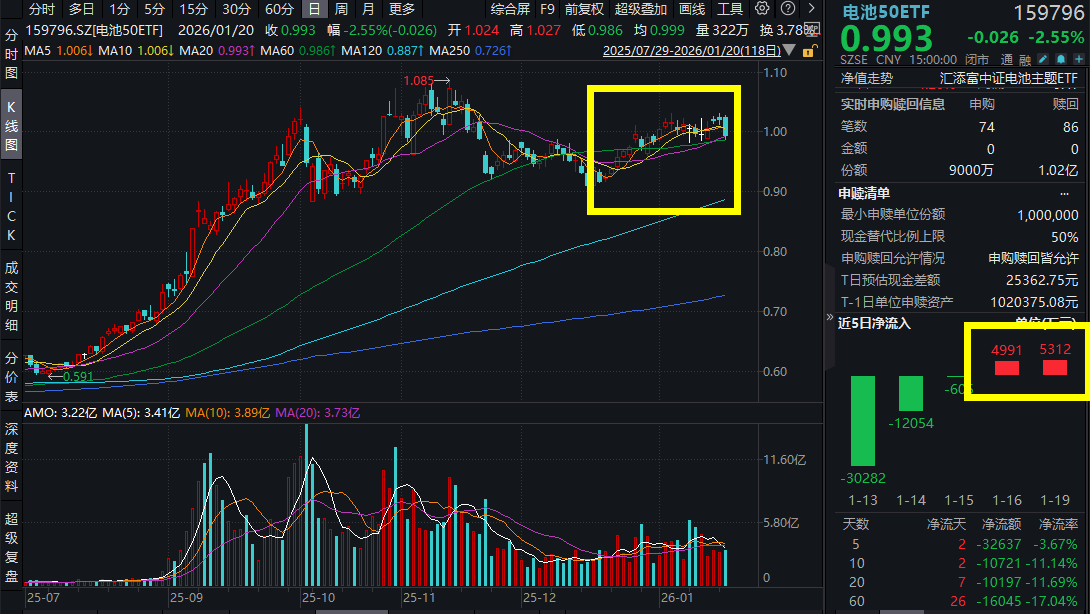
电池板块承压,阳光电源跌超5%,电池50ETF(159796)跌超2%,四连涨后首度回调,固态电池催化密集落地,产业化进程提速!
Xin Lang Cai Jing· 2026-01-20 11:44
Core Viewpoint - The A-share market experienced fluctuations with the battery sector under pressure, as evidenced by the decline of the Battery 50 ETF (159796) by 2.55% after four consecutive days of gains, with a trading volume of 322 million yuan [1]. Group 1: Market Performance - The Battery 50 ETF (159796) saw most of its constituent stocks decline, with significant drops including Sunshine Power down over 5%, and others like Xian Dao Intelligent and Multi-Fluorine down over 4% [3]. - The top ten constituent stocks of the Battery 50 ETF include major players such as Sunshine Power and Ningde Times, with varying declines in their stock prices [4]. Group 2: Project Announcements - On January 19, China Energy Construction announced the procurement results for a 153 MW battery storage project in South Africa, with Sunshine Power winning the bid for a total project capacity of 742.22 MWh and a contract value of 528 million yuan (approximately 0.86 yuan/Wh) [5]. Group 3: Industry Trends - The battery sector is expected to recover due to multiple catalysts, including a surge in demand for energy storage, rising material prices, and accelerated solid-state battery technology [6]. - Global demand for large-scale energy storage is projected to exceed expectations, with a forecasted growth of over 60% by 2026, driven by various market factors including the U.S. Inflation Reduction Act [7]. - Prices of upstream raw materials have generally increased, with battery-grade lithium carbonate rising by 64.4% to 157,000 yuan/ton, and lithium hydroxide up by 77.51% to 150,000 yuan/ton as of January 16, 2026 [8]. Group 4: Technological Developments - The solid-state battery sector is witnessing rapid advancements, with significant policy support and market catalysts enhancing industry prospects [9]. - Major automotive manufacturers are accelerating the integration of solid-state batteries, with companies like FAW Hongqi and GAC Group making substantial progress towards mass production by 2027 [9]. Group 5: Investment Opportunities - The Battery 50 ETF (159796) is positioned to benefit significantly from the energy storage sector, with a storage component of 18.7%, and a solid-state battery component of 45%, indicating strong growth potential [10]. - The ETF's focus on energy storage and power batteries, along with its low management fee of 0.15% per year, makes it an attractive investment option for capturing opportunities in the battery sector [16].




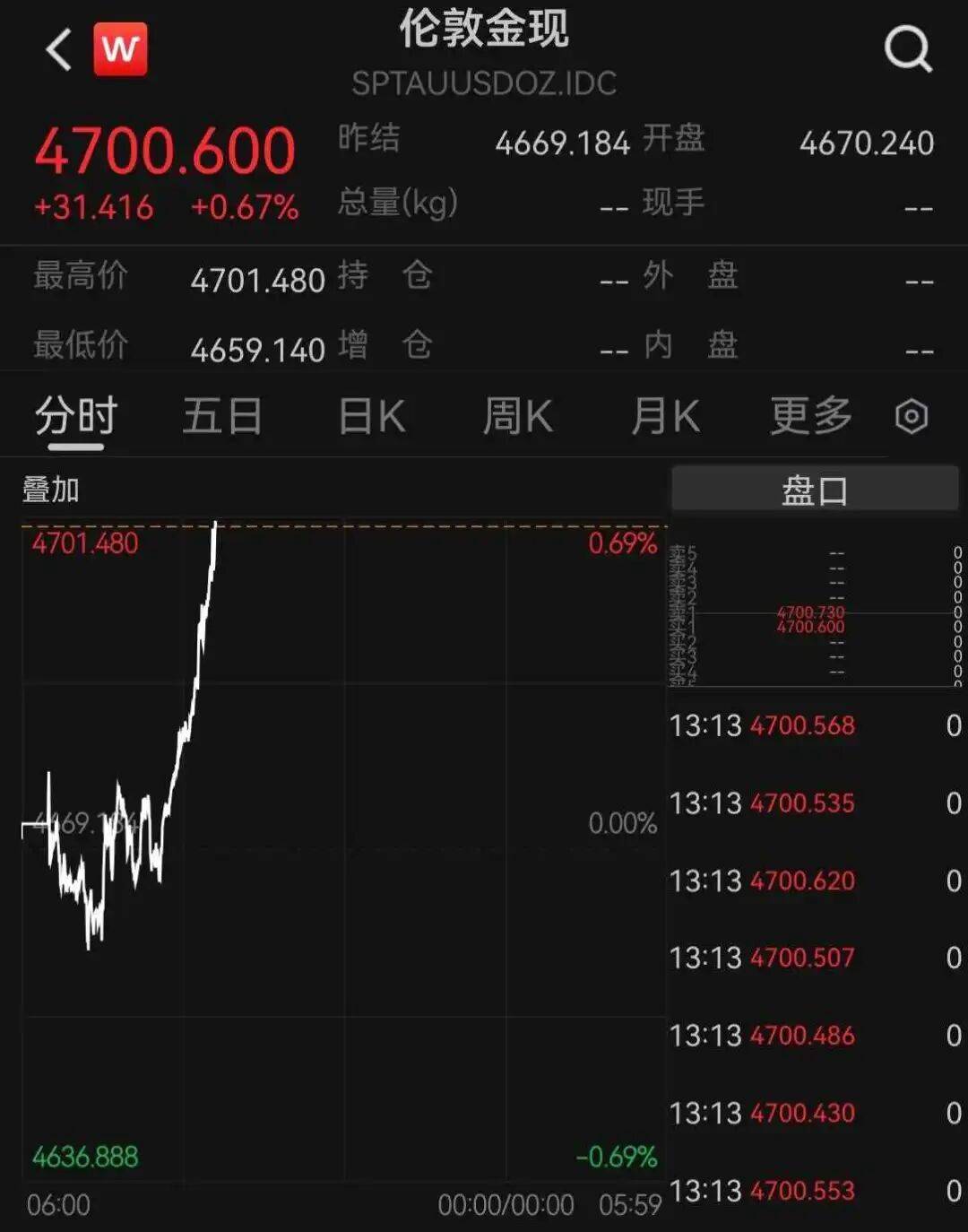
现货黄金,突破4700美元(黄金股梳理)
Sou Hu Cai Jing· 2026-01-20 09:39
Group 1: Gold Market Overview - In the first month of the new year, spot gold has increased by over 8%, rising more than $380 [1] - Major gold mining companies include Zijin Mining, Shandong Gold, and Zhongjin Gold, all of which have strong resource reserves and cost control capabilities [3] - Shandong Gold is noted for its high correlation with gold prices, indicating significant earnings elasticity [3] Group 2: Silver Market Overview - Silver resources are led by companies like Silver Mountain Mining, which has a silver reserve of 8,382 tons, ranking first in Asia [4] - Shengda Resources focuses on silver mining and refining, with 92% of its business in silver, showcasing strong profitability linked to silver prices [5] - Hunan Silver is the only listed company in China primarily focused on silver, with a full industry chain from mining to refining [7] Group 3: Platinum Group Metals - Companies like Zhongxin Metal and Guoyuan Platinum are involved in the recovery and production of platinum group metals, with significant future production expected [7] - The demand for palladium is anticipated to rise due to its use in automotive emissions control, benefiting companies that produce it as a byproduct [7] - GreenMei is a leader in the recycling of electronic and automotive waste, with a substantial capacity for recovering precious metals [7]




格林美涨2.09%,成交额13.18亿元,主力资金净流出42.88万元
Xin Lang Zheng Quan· 2026-01-19 02:42
Group 1 - The core viewpoint of the news is that Greeenmei's stock has shown significant growth in recent trading sessions, with a year-to-date increase of 10.89% and a 25.27% rise over the past 20 days [1] - As of January 19, Greenmei's stock price reached 9.27 yuan per share, with a total market capitalization of 47.42 billion yuan [1] - The company experienced a net outflow of 428,800 yuan in principal funds, with large orders accounting for 27.54% of buying and 24.24% of selling [1] Group 2 - Greenmei, established on December 28, 2001, and listed on January 22, 2010, specializes in the recycling of waste cobalt and nickel resources, as well as electronic waste [2] - The main revenue sources for Greenmei include ternary precursors (38.70%), nickel resources (15.73%), and cobalt oxide (12.28%) [2] - As of December 19, the number of shareholders decreased by 3.75% to 423,200, with an average of 12,016 circulating shares per person, an increase of 3.89% [2] Group 3 - Greenmei has distributed a total of 1.825 billion yuan in dividends since its A-share listing, with 1.002 billion yuan distributed in the last three years [3] - As of September 30, 2025, the second-largest circulating shareholder is Hong Kong Central Clearing Limited, holding 111 million shares, a decrease of 14.52 million shares from the previous period [3] - New shareholders include the Guangfa National Certificate New Energy Vehicle Battery ETF, which holds 52.76 million shares, and the Huatai-PineBridge CSI New Energy Vehicle Industry Index A, which holds 24.74 million shares [3]