
Hunan Dajiaweikang Pharmaceutical Industry (301126)

Search documents
达嘉维康:同嘉投资计划减持公司股份不超过约616万股
Mei Ri Jing Ji Xin Wen· 2026-02-06 11:39
Group 1 - The controlling shareholder of Dajia Weikang plans to reduce its stake by up to 6.16 million shares, representing 3% of the company's total share capital, within a specified period from March 10, 2026, to June 9, 2026 [1] - The current shareholding of the controlling shareholder is 9.8 million shares, which accounts for 4.77% of the total share capital [1] Group 2 - A central bank, which has been increasing its gold reserves for two consecutive years, announced plans to purchase an additional 150 tons of gold [2] - The central bank's target is to accumulate a total of 700 tons of gold [2]
达嘉维康:长沙同嘉投资拟减持不超3.00%股份
2 1 Shi Ji Jing Ji Bao Dao· 2026-02-06 11:24
Group 1 - The core point of the article is that Changsha Tongjia Investment Management Partnership, a concerted action party of the controlling shareholder and actual controller of Dajia Weikang, plans to reduce its holdings in the company by up to 6.162096 million shares, which represents 3.00% of the total share capital [1] - The reduction will take place within a three-month period from March 10, 2026, to June 9, 2026, following a 15 trading day period after the announcement [1] - The current shareholding of Changsha Tongjia is 9.8 million shares, accounting for 4.77% of the company's total share capital [1]
达嘉维康:股东长沙同嘉拟减持不超3%
Xin Lang Cai Jing· 2026-02-06 11:20
Core Viewpoint - The controlling shareholder and actual controller of Dajia Weikang, Wang Yiqing, along with the acting-in-concert party Changsha Tongjia Investment Management Partnership (Limited Partnership), plans to reduce their stake in the company by selling up to 616.21 million shares, representing no more than 3.00% of the total shares [1] Group 1 - The acting-in-concert party holds 9.8 million shares, accounting for 4.77% of the company [1] - The planned reduction will occur between March 10, 2026, and June 9, 2026, through centralized bidding and block trading methods [1] - The reduction will be limited to no more than 1% through centralized bidding over any continuous 90 natural days and no more than 2% through block trading [1]
达嘉维康(301126) - 关于控股股东、实际控制人的一致行动人减持股份的预披露公告
2026-02-06 11:14
证券代码:301126 证券简称:达嘉维康 公告编号:2026-002 湖南达嘉维康医药产业股份有限公司 关于控股股东、实际控制人的一致行动人 减持股份的预披露公告 公司控股股东、实际控制人的一致行动人长沙同嘉投资管理合伙企业(有限 合伙)保证向本公司提供的信息真实、准确、完整,没有虚假记载、误导性陈述 或重大遗漏。 本公司及董事会全体成员保证公告内容与信息披露义务人提供的信息一致。 特别提示: 湖南达嘉维康医药产业股份有限公司(以下简称"公司"或"达嘉维康")控股 股东、实际控制人的一致行动人长沙同嘉投资管理合伙企业(有限合伙)(以下 简称"同嘉投资")持有公司股份 9,800,000 股(占公司当前总股本比例 4.77%), 计划自本公告披露之日起 15 个交易日后的 3 个月内(即 2026 年 3 月 10 日至 2026 年 6 月 9 日)以集中竞价和大宗交易方式减持其持有的公司股份不超过 6,162,096 股(占公司总股本的 3.00%)。 公司于近日收到股东同嘉投资出具的《关于股份减持计划的告知函》,现将 有关情况公告如下: 5、减持期间:自本公告披露之日起 15 个交易日后的 3 个月内( ...
激进扩张反噬利润,达嘉维康陷入亏损深渊
Xin Lang Cai Jing· 2026-01-30 06:55
Core Viewpoint - Hunan Dajia Weikang Pharmaceutical Industry Co., Ltd. forecasts a significant revenue of 5.5 to 6 billion yuan for 2025, but expects a net loss of 250 to 300 million yuan, indicating a drastic decline in profitability due to aggressive expansion strategies [1][5]. Group 1: Rapid Expansion - Since its listing in 2021, the company has expanded from 121 stores in Hunan to 1,505 stores by mid-2025, representing an increase of over 11 times [6][7]. - The company has pursued a strategy of "direct operation + mergers + franchising," with acquisitions across regions, including Ningxia, Shanxi, Hainan, Beijing, and Anhui [7]. Group 2: Cost of Expansion - The aggressive cash acquisitions have resulted in a financial burden, with total acquisition costs reaching 1.315 billion yuan, of which 1.096 billion yuan is recorded as goodwill, accounting for over 60% of net assets [8]. - The company has acknowledged that the performance of acquired subsidiaries has not met expectations, leading to goodwill impairment provisions and a significant drop in profits [8]. - As of the end of Q3 2025, interest-bearing liabilities have risen to 3.478 billion yuan, while cash reserves are only 509 million yuan, highlighting short-term repayment pressures [8]. Group 3: Strategic Shift - With expansion no longer contributing to profit growth, the company must focus on resource integration, improving the profitability of existing stores, and alleviating debt pressure in 2026 [9]. - The high goodwill poses a risk, as continued underperformance of acquired companies may lead to further profit erosion [9]. - The competitive landscape in the pharmaceutical distribution industry and general pressure on gross margins add to the uncertainty of the company's ability to navigate the consequences of its expansion strategy [9]. Conclusion - The case of Dajia Weikang serves as a warning for companies that favor aggressive expansion: without effective integration and realization of synergies, high goodwill, debt, and cash flow issues can create a perilous situation [10].
九部门发文“救市”,从大扩张到大并购,70万家药房化解关店危机
Hua Xia Shi Bao· 2026-01-29 04:53
Core Viewpoint - The A-share pharmaceutical retail sector is experiencing a significant rebound, driven by a new policy aimed at promoting high-quality development in the industry, which is expected to help around 700,000 pharmacies currently facing challenges [2][3]. Group 1: Industry Trends - The pharmaceutical retail industry is undergoing a wave of closures, with a projected net closure of 39,000 stores in 2024, significantly higher than the 3.8% closure rate in 2023 [5][6]. - The market is witnessing a shift from passive closures to proactive consolidation, as the new policy addresses industry pain points and encourages mergers and acquisitions [2][3][9]. - The concentration of the market is increasing, with the top 10 companies expected to reach a market share of over 35% by 2026, moving towards the levels seen in mature markets [9]. Group 2: Financial Performance - Major players in the industry are facing declining revenues and profits, with companies like YaoYao and GuoDa Pharmacy reporting significant drops in net profits, highlighting the financial strain on the sector [4][5]. - Only one out of six major private listed chains, Yifeng Pharmacy, is expected to achieve positive net profit growth in 2024, indicating a narrowing profitability landscape [5][6]. Group 3: Policy Impact - The new policy aims to standardize and optimize the merger and acquisition process, reducing costs and time for major chains, thus facilitating industry consolidation [7][9]. - The policy encourages a shift from a focus on drug sales to a broader health service model, aligning with changing consumer demands and promoting diversification in product offerings [8][9]. Group 4: Future Outlook - The industry is expected to evolve from merely selling drugs to becoming comprehensive health service providers, enhancing efficiency and better meeting consumer needs [10][11]. - The ongoing transformation is anticipated to eliminate inefficient capacities and elevate industry standards, marking a transition to a new phase of value growth [11].





超3400只个股下跌
第一财经· 2026-01-27 07:37
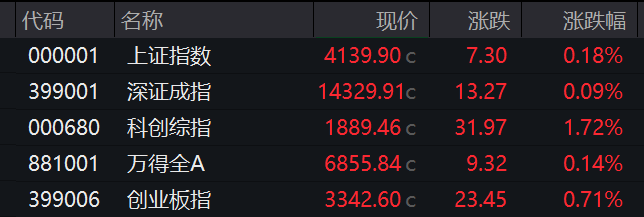
Market Overview - On January 27, A-shares saw all three major indices rise, with the Shanghai Composite Index up by 0.18%, the Shenzhen Component Index up by 0.09%, and the ChiNext Index up by 0.71%. The Sci-Tech Innovation Board Index increased by 1.72% [1][2]. Sector Performance - The gold sector experienced gains, while the semiconductor and AI computing industry chains showed strength, particularly in memory and CPO directions [4]. - The semiconductor sector saw significant increases, with stocks such as Dongxin Co., Shengke Communication-U, and Kangqiang Electronics hitting the daily limit [5]. Notable Stock Movements - Specific stocks that performed well include: - Dongxin Co. (688110) +20.00% at 153.23 - Shengke Communication-U (688702) +20.00% at 162.53 - Mingwei Electronics (688699) +16.67% at 63.68 - Nongsun Co. (688766) +14.85% at 255.23 - Hengle Co. (688416) +14.37% at 93.60 [6]. Declines in Other Sectors - The pharmaceutical retail sector faced adjustments, with stocks such as Shuyupingmin down over 8%, Dajia Weikang down over 8%, and Huaren Health down over 8% [7]. Trading Volume and Market Sentiment - The total trading volume in the Shanghai and Shenzhen markets was 2.89 trillion yuan, a decrease of 353.3 billion yuan from the previous trading day, with over 3,400 stocks declining [8]. Capital Flow - Main capital inflows were observed in sectors such as electronics, communications, machinery equipment, national defense, and non-ferrous metals, while there were outflows from power equipment, non-bank financials, pharmaceutical biology, food and beverage, and public utilities [9]. - Notable net inflows included: - Zhongji Xuchuang +3.413 billion yuan - Tianfu Communication +2.088 billion yuan - Dongxin Co. +2.005 billion yuan [10]. Analyst Insights - Huaxi Securities suggests that the "slow bull" trend in A-shares is likely to continue - CITIC Securities maintains a positive outlook on the AI industry trend, particularly in the optical communication sector - Huatai Securities indicates that oil prices may have entered a bottoming phase [11].





收盘丨创业板指探底回升涨0.71%,半导体板块涨幅居前
Di Yi Cai Jing· 2026-01-27 07:21
Market Overview - The total trading volume in the Shanghai and Shenzhen markets reached 2.89 trillion yuan, a decrease of 353.3 billion yuan compared to the previous trading day [4]. - On January 27, all three major A-share indices closed higher, with the Shanghai Composite Index rising by 0.18%, the Shenzhen Component Index by 0.09%, and the ChiNext Index by 0.71% [1]. Sector Performance - The semiconductor sector showed significant strength, with stocks like Dongxin Technology and Shengke Communication hitting the daily limit, both up by 20% [3]. - The AI computing industry chain also performed well, alongside gains in the storage and CPO sectors [2]. - Conversely, the coal, pharmaceutical retail, and commercial sectors experienced notable declines [2]. Individual Stock Movements - Notable gainers included Dongxin Technology (+20.00% to 153.23 yuan) and Shengke Communication (+20.00% to 162.53 yuan) [3]. - In the pharmaceutical sector, stocks such as Shuyuan Pingmin and Dajia Weikang saw declines exceeding 8% [4]. Fund Flow - Main funds saw a net inflow into sectors such as electronics, communications, machinery, defense, and non-ferrous metals, while experiencing net outflows from power equipment, non-bank financials, pharmaceuticals, food and beverage, and public utilities [6]. - Specific stocks with significant net inflows included Zhongji Xuchuang (34.13 billion yuan), Tianfu Communication (20.88 billion yuan), and Dongxin Technology (20.05 billion yuan) [7]. - Conversely, stocks like Ningde Times, Kweichow Moutai, and Cambrian Technologies faced net outflows of 10.11 billion yuan, 9.65 billion yuan, and 8.95 billion yuan, respectively [8]. Analyst Insights - Huaxi Securities suggests that the "slow bull" trend in A-shares is likely to continue [10]. - CITIC Securities expresses a clear outlook on the AI industry trend, maintaining a positive view on the optical communication sector [10]. - Huatai Securities indicates that oil prices may have entered a phase of bottoming and rebound [10].



发力多元化,达嘉维康预计2025年营收超过55亿元
Xin Lang Cai Jing· 2026-01-27 07:09
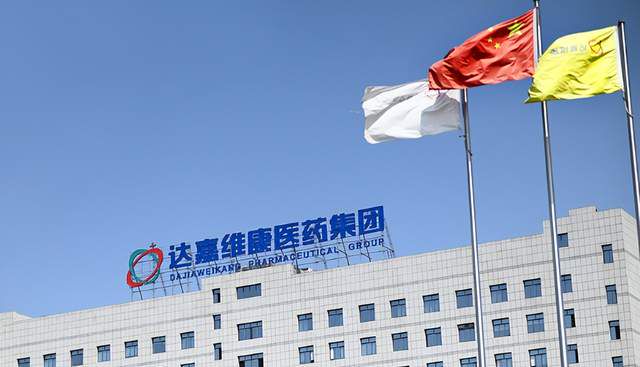
Core Viewpoint - Despite goodwill impairment in subsidiaries due to industry conditions, the company is committed to advancing its diversification strategy, effectively mitigating concentration risks and opening broader market opportunities for future growth [2][9]. Financial Performance - The company forecasts revenue of 5.5 billion to 6 billion yuan for 2025, with a projected net profit attributable to shareholders of -250 million to -300 million yuan [2][9]. - The chain pharmacy sector is expected to experience a temporary decline in performance due to macroeconomic changes, intensified competition, policy adjustments, and shifts in consumer habits [2][9]. Professional Pharmacy Advantages - The company has established a solid operational management system and high pharmaceutical service capabilities over its 20 years in the professional pharmacy sector [3][10]. - As a national 4A-level pharmaceutical logistics enterprise, the company enhances its retail business through effective logistics and supply chain management [3][10]. - The company operates 1,505 pharmacies nationwide, covering multiple provinces and cities, and continues to expand its network through a "direct + acquisition + franchise" model [3][10]. Diversification Strategy - The company is deepening industry chain cooperation and plans to diversify its pharmacy offerings, focusing on health food and personal care products to create patient-centered "health service hubs" [4][11]. - The company is actively pursuing diversification in the health industry, achieving progress in pharmaceutical manufacturing and regenerative medicine [5][12]. Regenerative Medicine Initiatives - In 2025, the company will collaborate with several institutions to establish a clinical research center for regenerative medicine, aiming to translate research outcomes into clinical applications and accelerate the development of Hunan's biopharmaceutical industry [5][12]. - The establishment of the center is supported by a 1 billion yuan special fund from Hunan Province to facilitate technology transfer and research breakthroughs [5][12]. Pharmaceutical Manufacturing - The company owns two pharmaceutical enterprises with a total of 63 drug approvals and 21 drug registration certificates, with 46 products included in the national medical insurance directory [6][13]. - The company is focusing on the development of innovative drugs, including original chemical drugs and traditional Chinese medicine, and has established key laboratories and technology centers [6][13]. Hospital Sector Developments - The company’s hospital, Dajia Jiacheng Hospital, has entered the medical beauty sector, which is expected to improve operational performance [6][13]. - The hospital has launched various beauty treatment projects and is poised to benefit from upcoming policies that relax market access for high-end medical services [6][13]. Strategic Goals - The company aims to strengthen its core competitiveness and profitability by enhancing management practices, talent development, and leveraging existing business synergies to seize opportunities in the healthcare industry [7][14].
达嘉维康(301126.SZ):预计2025年净亏损2.5亿元~3亿元
Ge Long Hui A P P· 2026-01-26 14:37
Group 1 - The company expects its operating revenue for 2025 to be between 550 million and 600 million yuan, with a net profit attributable to shareholders projected to be between -25 million and -30 million yuan, and the net profit after deducting non-recurring gains and losses also expected to be between -25 million and -30 million yuan [1] - The chain pharmacy industry is facing a decline in performance due to changes in the macro market environment, increased competition, industry policy adjustments, and shifts in consumer habits [1] - The actual operating performance of the acquired subsidiaries did not meet expectations due to the aforementioned industry environment, operational issues, and business integration challenges, leading the company to conduct impairment tests on goodwill and recognize significant impairment losses, which notably impacted current profits [1]