
AMD(AMD)

Search documents
Why Advanced Micro Devices (AMD) is a Top Growth Stock for the Long-Term
ZACKS· 2026-01-29 15:45
Taking full advantage of the stock market and investing with confidence are common goals for new and old investors, and Zacks Premium offers many different ways to do both.Featuring daily updates of the Zacks Rank and Zacks Industry Rank, full access to the Zacks #1 Rank List, Equity Research reports, and Premium stock screens, the research service can help you become a smarter, more self-assured investor.Zacks Premium includes access to the Zacks Style Scores as well. What are the Zacks Style Scores? The Z ...


AMD: Expensive For A Reason, Upgrade Before Earnings
Seeking Alpha· 2026-01-29 15:45
It appears that timing of my previous neutral AMD ( AMD ) thesis was quite good as the share price remained at approximately the same level since November while the S&P 500 IndexComing from an IT background, I have dived into the U.S. stock market seven years ago by managing portfolio of my family. Starting managing real money has been challenging for the first time, but long hours of mastering fundamental analysis of public companies paid off and now I feel very confident in my investment decisions. My han ...
NVDA, INTC and AMD Forecast – Chips Look to React on Thursday
FX Empire· 2026-01-29 15:24
Core Viewpoint - The content emphasizes the importance of conducting personal due diligence and consulting with competent advisors before making any financial decisions, particularly in relation to investments in cryptocurrencies and CFDs [1]. Group 1 - The website provides general news, personal analysis, and opinions, as well as materials from third parties for educational and research purposes [1]. - It explicitly states that the information should not be interpreted as a recommendation or advice for any financial actions, including investments or purchases [1]. - The content is not tailored to individual financial situations or needs, highlighting the necessity for users to exercise their own discretion [1]. Group 2 - The website includes information about complex financial instruments such as cryptocurrencies and CFDs, which carry a high risk of losing money [1]. - Users are encouraged to conduct their own research and fully understand the workings and risks of any financial instruments before investing [1]. - The website may feature advertisements and promotional content, and FX Empire may receive compensation from third parties related to such content [1].

Ahead of Advanced Micro (AMD) Q4 Earnings: Get Ready With Wall Street Estimates for Key Metrics
ZACKS· 2026-01-29 15:15
Wall Street analysts expect Advanced Micro Devices (AMD) to post quarterly earnings of $1.33 per share in its upcoming report, which indicates a year-over-year increase of 22%. Revenues are expected to be $9.67 billion, up 26.2% from the year-ago quarter.Over the past 30 days, the consensus EPS estimate for the quarter has been adjusted upward by 0.9% to its current level. This demonstrates the covering analysts' collective reassessment of their initial projections during this period.Before a company announ ...
Advanced Micro Devices’ (AMD) GPU Servers Gain Traction as Viable Competitor to Nvidia
Yahoo Finance· 2026-01-29 12:17
Meridian Funds, managed by ArrowMark Partners, released its “Meridian Contrarian Fund” fourth-quarter 2025 investor letter. A copy of the same can be downloaded here. U.S. equity markets experienced a quarter supported by optimism around potential monetary easing and caution related to economic growth and valuations. Early gains were driven by strong AI-related earnings and the US Federal Reserve’s rate cut in October, which improved expectations for financial conditions. However, market sentiment cooled l ...

AI军备竞赛进入白热化!Meta豪掷1350亿美元再创纪录,三星电子等硬件供应商迎来“黄金时代”
Sou Hu Cai Jing· 2026-01-29 07:27
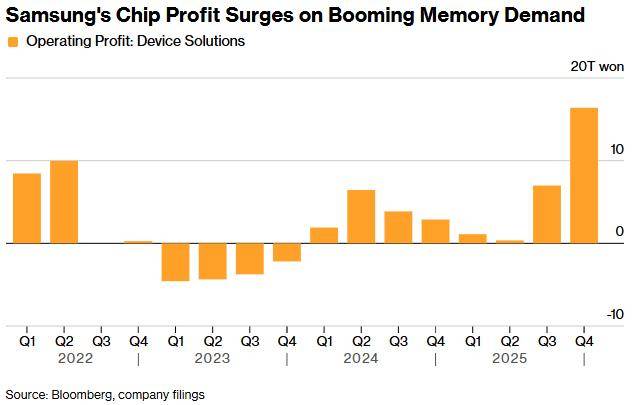
仅 Meta(META.US)一家公司就披露了今年高达 1350 亿美元的支出雄心——这是商业领域规模最大的计 划支出之一。其供应商也做出了相应回应:周四,SK 海力士表示计划"大幅增加"资本支出,三星也表 示将加大存储芯片生产能力的投入。 与此同时,只要公司能够展示出增长,投资者就会继续回报这种雄心。微软(MSFT.US)在披露云计算服 务增长放缓后,股价下跌了 6.1%,而 Meta 则上涨了 6.6%。 本周,一系列行业巨头公布的财报强调了市场对 AI 硬件的需求是多么旺盛,并且这种势头很可能会延 续到 2026 年。 Meta、微软以及亚马逊(AMZN.US)和 Alphabet(GOOGL.US)等同行超大规模云服务商,正在推动全球范 围内对芯片、服务器和计算机的采购浪潮,这点燃了全球硬件供应商的热情,尤其是在亚洲。 智通财经APP注意到,全球最大的科技公司表现出对 AI 支出毫不减弱的迹象,这一创纪录的浪潮正推 动着三星电子和 SK 海力士等硬件供应商的发展。尽管人们对于人工智能需求是否具有持久性,以及能 否支撑起如此巨额的资本支出仍持怀疑态度。 存储芯片制造商正将生产线转向利润丰厚的高带宽内存( ...




How Advanced Micro Devices, Inc. (AMD) Is Positioning Itself for AI Growth and Server Demand
Insider Monkey· 2026-01-29 07:08
Core Insights - Artificial intelligence (AI) is identified as the greatest investment opportunity of the current era, with a strong emphasis on the urgent need for energy to support its growth [1][2][3] Investment Opportunity - A specific company is highlighted as a potential investment opportunity, possessing critical energy infrastructure assets that are essential for meeting the increasing energy demands of AI data centers [3][7] - This company is not a chipmaker or cloud platform but is positioned to benefit significantly from the anticipated surge in electricity demand driven by AI technologies [3][6] Energy Demand and Infrastructure - AI technologies, particularly large language models like ChatGPT, are extremely energy-intensive, with data centers consuming as much energy as small cities [2] - The company in focus is involved in the U.S. LNG exportation sector, which is expected to grow under the current administration's energy policies [7] Financial Position - The company is noted for being debt-free and holding a substantial cash reserve, amounting to nearly one-third of its market capitalization, which positions it favorably compared to other energy firms burdened with debt [8] - It is trading at less than 7 times earnings, indicating a potentially undervalued investment opportunity in the context of its critical role in the energy sector [10] Market Trends - The article discusses the broader trends of onshoring and tariffs that are influencing the energy and AI sectors, suggesting that this company is well-positioned to capitalize on these developments [5][14] - The influx of talent into the AI sector is expected to drive continuous innovation and advancements, further solidifying the importance of energy infrastructure [12] Conclusion - The company is described as a "toll booth" operator in the AI energy boom, collecting fees from energy exports and benefiting from the growing demand for electricity in the AI landscape [4][5] - The overall message emphasizes the urgency for investors to act now to capitalize on the potential returns associated with this unique investment opportunity in the AI and energy sectors [13][15]
Why I Keep Buying More Shares of This Amazing Artificial Intelligence (AI) Chip Stock for 2026
The Motley Fool· 2026-01-29 05:45
Advanced Micro Devices has numerous catalysts in 2026.In today's video, I discuss recent updates affecting Advanced Micro Devices (AMD +0.28%) and other AI stocks. To learn more, check out the short video, consider subscribing, and click the special offer link below. *Stock prices used were the after-market prices of Jan. 20, 2026. The video was published on Jan. 20, 2026. ...

Advanced Micro Devices (AMD) Up More Than 60% in 6 Months, Here’s What You Need to Know
Yahoo Finance· 2026-01-28 17:17
Advanced Micro Devices, Inc. (NASDAQ:AMD) is one of the High-Flying Tech Stocks to Buy. Advanced Micro Devices, Inc. (NASDAQ:AMD) has gained more than 60% over the past 6 months. Recently, on January 23, Aletheia released a research note highlighting that the company’s server CPU business growth forecasts might be too conservative. Earlier, on January 21, Stacy Rasgon from Bernstein reiterated a Hold rating on the stock and raised the price target from $200 to $225. On January 5, Aletheia released its ...
Prediction: AMD Stock Will Soar on Feb. 3
Yahoo Finance· 2026-01-28 13:04
Core Viewpoint - AMD is positioned as an interesting player in the AI space, with its technology not yet matching Nvidia's but showing potential for growth, especially if Nvidia's pricing becomes a barrier for customers [1]. Company Performance - AMD's upcoming fourth-quarter results on February 3 will provide insights into its future direction and 2026 outlook, with management's five-year growth forecast appearing impressive [2]. - AMD's revenue is split approximately 50-50 between its data center and non-data center segments, which may limit its ability to capitalize on the current boom in computing infrastructure spending compared to Nvidia, which derives about 90% of its revenue from data centers [4]. Market Trends - Data center spending is projected to continue growing through at least 2030, with AMD forecasting a 60% compounded annual growth rate for its data center division during this period [5]. - In Q3, AMD's data center revenue grew by 22% year over year, indicating a significant gap between current performance and future growth expectations [5]. Future Outlook - Strong statements from management regarding the 2026 outlook and potential reacceleration of the data center division are anticipated, which could lead to a significant increase in stock value if guidance is positive [6].