AstraZeneca(AZN)

Search documents
AstraZeneca PLC (AZN) Gains After Successful Saphnelo Trial
Yahoo Finance· 2026-01-20 09:58
Group 1: Investment Potential - AstraZeneca PLC is ranked fourth in a list of the Top 10 Oncology Stocks to Buy Now, indicating strong investment interest in the company [1] - Barclays analyst James Gordon raised the price target for AstraZeneca from 14,000 GBp to 16,500 GBp, maintaining an Overweight rating on the shares, suggesting positive market sentiment [1] Group 2: Clinical Developments - AstraZeneca announced significant results from its Phase III TULIP‑SC trial of Saphnelo (anifrolumab) for systemic lupus erythematosus (SLE), with 56.2% of patients showing improvement compared to 37.1% in the placebo group, highlighting the drug's potential as a therapy for SLE [2] - The company is advancing cancer care through a robust late-stage oncology pipeline and innovative therapies, aiming to improve patient outcomes across various tumor types globally [3]

“中国不仅是全球战略市场,更是全球创新枢纽”——访阿斯利康全球执行副总裁尹思睿
Xin Hua She· 2026-01-20 09:27
Core Viewpoint - AstraZeneca views China as a critical global strategic market and innovation hub, highlighting the country's market size, business environment, and innovation capabilities as key factors attracting investment [2]. Group 1: Investment and Market Presence - AstraZeneca has invested over $5 billion in China since entering the market in 1993, establishing a comprehensive industry chain that includes research, production, and commercial operations [2]. - China has become AstraZeneca's second-largest market globally, significantly supporting the company's global research efforts and playing a vital role in the international pharmaceutical supply system [2]. Group 2: Research and Development - In the past four years, the number of drugs under research in China has doubled, with approximately one-third of global drug authorization transactions involving Chinese biopharmaceutical companies, indicating China's growing importance in global business expansion for multinational companies [3]. Group 3: Business Environment and Policy Support - A favorable business environment and a rich talent pool are crucial for multinational companies to invest, collaborate, and develop long-term in China [4]. - The "14th Five-Year Plan" signals China's commitment to high-level opening-up and presents new opportunities for economic growth, fostering confidence among multinational companies regarding China's long-term development prospects and business environment [4].

阿斯利康将从纳斯达克转板到纽交所直接上市
Xin Lang Cai Jing· 2026-01-20 07:37
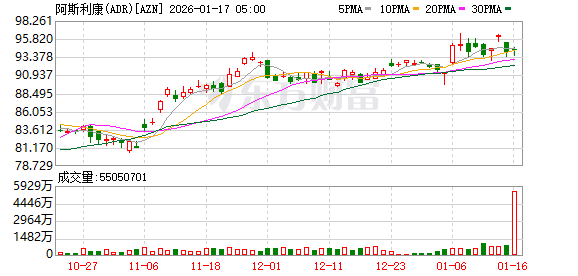
该公司的普通股和债券证券预计将于 2 月 2 日在纽约证券交易所开始交易,并继续使用"AZN"为股票代 码。 这一举措是经阿斯利康股东批准的一项计划的一部分,旨在统一公司的股票上市结构,使投资者能够在 伦敦证券交易所、纳斯达克斯德哥尔摩交易所和纽约证券交易所之间交易其普通股。 在统一结构实施后,阿斯利康将从交易 ADS(以 2 比 1 的比例代表其普通股)转向直接上市其每股 0.25 美元的普通股,从而简化其多市场交易设置。 英国制药巨头阿斯利康公司周二表示,将从纳斯达克交易所摘除其美国存托股票和债券,并于 2026 年 1 月 30 日股市收盘后完成其普通股和债券在纽约证券交易所的直接上市。 该公司的普通股和债券证券预计将于 2 月 2 日在纽约证券交易所开始交易,并继续使用"AZN"为股票代 码。 这一举措是经阿斯利康股东批准的一项计划的一部分,旨在统一公司的股票上市结构,使投资者能够在 伦敦证券交易所、纳斯达克斯德哥尔摩交易所和纽约证券交易所之间交易其普通股。 在统一结构实施后,阿斯利康将从交易 ADS(以 2 比 1 的比例代表其普通股)转向直接上市其每股 0.25 美元的普通股,从而简化其多市场交易 ...
阿斯利康:将完成纽交所直接上市 2月2日起开始交易
Jin Rong Jie· 2026-01-20 07:25
本文源自:金融界AI电报 阿斯利康1月20日宣布将自愿从纳斯达克退市,计划在纽交所完成其普通股和债券直接上市,普通股股 票代码仍为AZN。声明称,阿斯利康普通股和债券预计将于2月2日起在纽交所开始交易。 ...
AstraZeneca to delist from Nasdaq, join NYSE in February
Reuters· 2026-01-20 07:21
Core Viewpoint - AstraZeneca will delist its American Depositary Shares and debt securities from Nasdaq and will complete a direct listing of its ordinary shares and debt on the New York Stock Exchange, effective after market close on January 30, 2026 [1] Group 1 - The decision to delist from Nasdaq is part of AstraZeneca's strategy to streamline its listing process [1] - The direct listing on the New York Stock Exchange is expected to enhance the visibility and accessibility of AstraZeneca's shares to investors [1]
AstraZeneca’s Subcutaneous Saphnelo Shows Significant Disease Reduction in Landmark Lupus Trial
Yahoo Finance· 2026-01-19 12:49
Group 1 - AstraZeneca is considered one of the best long-term stocks to buy, with Barclays analyst James Gordon raising the price target from 14,000 GBp to 16,500 GBp while maintaining an Overweight rating [1] - AstraZeneca published positive results from the Phase III TULIP-SC trial, showing that subcutaneous administration of Saphnelo significantly reduces disease activity in systemic lupus erythematosus patients, which is crucial for the 3.4 million people globally affected by this condition [2] - The trial demonstrated that weekly 120 mg subcutaneous doses of Saphnelo were well tolerated, with a safety profile similar to the intravenous version, and the new formulation is currently under regulatory review in the US and Japan [3] Group 2 - AstraZeneca is a biopharmaceutical company involved in the discovery, development, manufacturing, and commercialization of prescription medicines [4]
中美创新药,必有一战
3 6 Ke· 2026-01-19 12:39
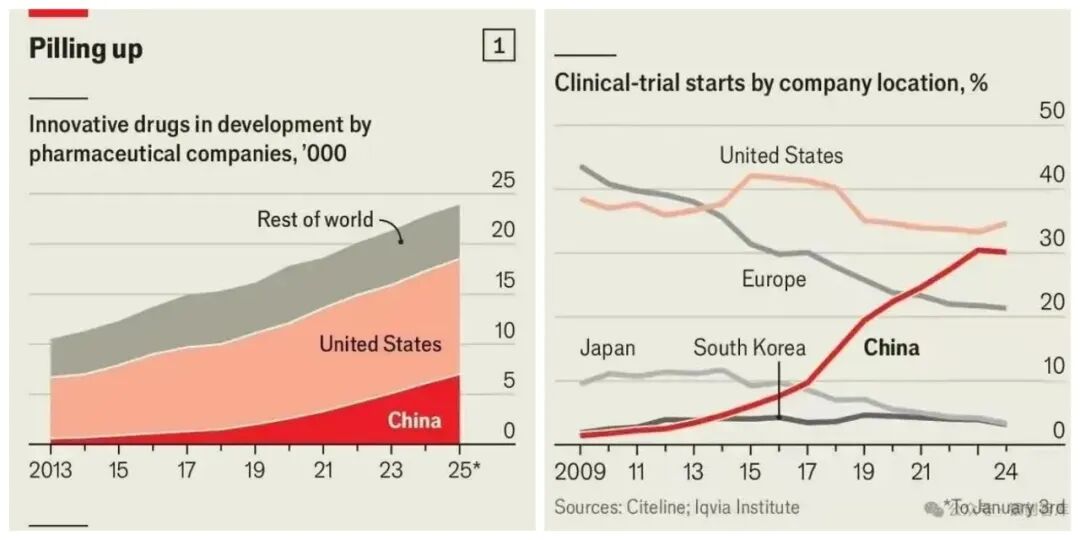
Core Viewpoint - The Chinese innovative drug sector is experiencing rapid growth, positioning itself as a global leader in drug development, with significant investments and collaborations from major pharmaceutical companies [2][8][30]. Group 1: Market Dynamics - The price of experimental monkeys has surged from 3,000 yuan to 100,000 yuan, indicating a high demand in the innovative drug sector [1]. - By 2025, China is projected to rank second globally in new drug clinical trials, with its pipeline accounting for 30% of the global total [2]. - In 2024, Chinese innovative drug companies completed 94 overseas licensing transactions, representing 44% of the national total, with over 100 transactions exceeding $100 billion in the first ten months of 2025 [6][30]. Group 2: Challenges in Traditional Pharmaceutical Sector - The generic drug sector is facing significant challenges, with a projected 5.5% decline in revenue for 2024 and over 30% of companies experiencing losses [5]. - Major pharmaceutical companies are increasingly collaborating with Chinese innovative drug firms to mitigate the risks associated with patent expirations, which could lead to a revenue gap exceeding $300 billion in the next five years [10][30]. Group 3: Advantages of Chinese Innovative Drugs - China offers a cost-effective and efficient environment for drug development, with clinical trial costs significantly lower than in the U.S. [20][21]. - The average time for clinical trial approvals in China has been reduced from 60 to 30 working days, and the average new drug application approval time has decreased to approximately 130 days [14]. - Chinese pharmaceutical companies are increasingly moving from "me-too" and "me-better" drugs to original innovations, with a notable increase in the number of innovative drug projects [27]. Group 4: Global Positioning and Future Outlook - Despite the rapid growth of Chinese innovative drugs, the overall market value of Chinese biotech companies remains significantly lower than their U.S. counterparts, capturing only 5% to 10% of global new drug revenues [30][31]. - Chinese companies are establishing commercial centers in global pharmaceutical hubs to enhance their commercialization capabilities, marking a shift towards becoming major players in the global market [37][38]. - The transition from biotech firms to large multinational pharmaceutical companies is seen as a critical step in the global battle for market share and innovation [38].


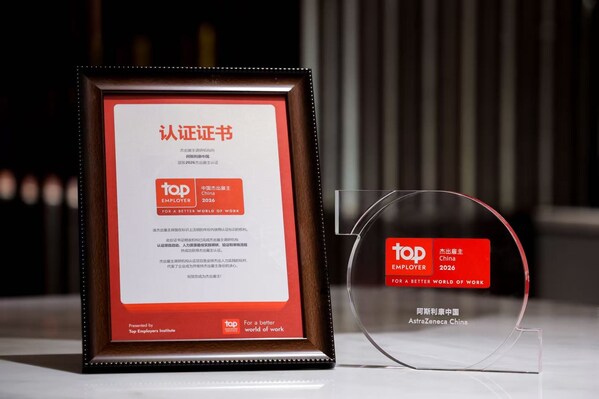
打造理想工作场所,阿斯利康连续十六年登榜“杰出雇主”
Zhong Guo Jin Rong Xin Xi Wang· 2026-01-19 07:39
Core Insights - AstraZeneca has been recognized as one of the "Top Employers in China" for the sixteenth consecutive year, ranking fourth on the list, reflecting its commitment to people-centric development and organizational culture [1][3]. Group 1: Organizational Commitment and Development - AstraZeneca emphasizes a people-first approach, focusing on organizational and cultural development to support its transformation and innovation in healthcare [3]. - The company aims to contribute to the "Healthy China 2030" strategy by nurturing industry talent and enhancing healthcare solutions for patients [3][8]. - AstraZeneca has introduced a new global strategic research center in Beijing, reinforcing its commitment to local innovation and global collaboration [4]. Group 2: Talent Strategy and Employee Development - The company has established a comprehensive talent development system that spans the entire career lifecycle, focusing on key capabilities and positions [5]. - AstraZeneca promotes a culture of lifelong learning, providing diverse learning tools and resources to support employee growth and adaptability [6]. - The company has implemented various talent training programs, including leadership development and cross-functional learning initiatives [5]. Group 3: Corporate Culture and Employee Engagement - AstraZeneca fosters an open, transparent, and inclusive corporate culture, driven by its core values of science, patient-centricity, and innovation [7]. - The "Speak Up" platform encourages two-way communication between employees and management, leading to over 20 policy and mechanism optimizations [7]. - The company offers competitive salaries and comprehensive benefits, including insurance coverage and generous paid leave policies, to create an ideal workplace [7].
CXO-多家公司年报预告超预期-JPM-大会亮点不断
2026-01-19 02:29
Summary of Conference Call Records Industry Overview - The conference call primarily discusses the biopharmaceutical industry, focusing on several key companies and their projected performance for 2025 and beyond. The overall sentiment reflects a robust growth trajectory within the sector. Key Companies and Their Projections 1. WuXi AppTec (药明康德) - Expected revenue for 2025 is 454.56 billion CNY, a year-on-year increase of 15.84% - Adjusted net profit is projected to be 149.57 billion CNY, up 41.33%, with total net profit reaching 191.51 billion CNY, a 102.65% increase [2] - The company has 24 GLP-1 drug candidates, with 15 in Phase II and III clinical trials, indicating strong pipeline growth [4] 2. Kanglong Chemical (康龙化成) - Anticipates revenue between 138.72 billion CNY and 142.4 billion CNY, reflecting a growth of 13%-16% - Adjusted net profit is expected to be between 17.68 billion CNY and 18.48 billion CNY, a growth of 10%-15% [2] 3. Sunway Pharma (阳光诺和) - Projected revenue between 1.192 billion CNY and 1.37 billion CNY, a growth of 10.57%-27.15% - Expected net profit between 190 million CNY and 229 million CNY, a growth of 7.69%-29.23% [2] 4. AstraZeneca (阿斯利康) - Focused on cardiovascular, ADC, next-generation IO, and cell therapy TCE areas - Key clinical data readouts expected in 2026, which may impact market dynamics [5] 5. Gilead Sciences (吉利德) - Key projects include Cloud Native Top two ADC, expected to show promising data in TNBC treatment and potential approval in the second half of the year [8] - Anticipates significant changes in the first-line triple-negative breast cancer market due to the SG molecule [8] 6. DZD Pharma (迪哲医药) - DZD6,008 shows significant efficacy in non-small cell lung cancer (NSCLC) with an ORR of 60% and PFS exceeding 10 months [3][16] Clinical Trials and Data Readouts - Multiple companies, including Gilead, AstraZeneca, and others, are set to release important clinical trial data in 2026, which could reshape competitive dynamics in the NSCLC market [16] - AstraZeneca's ADC project 18.2 is expected to have significant clinical data readouts in 2026, with a focus on large-scale Phase III trials [7] Strategic Collaborations and Market Expansion - WuXi Biologics (药明生物) has signed a strategic cooperation memorandum with Qatar Free Zone Authority to expand into the Middle East market [4] - The conference highlighted the increasing participation of Chinese companies in the global pharmaceutical market, particularly in the dual-antibody and ADC sectors [22] Emerging Trends and Innovations - The industry is witnessing a shift towards L2.0 and ADC combinations, which are expected to become the next wave of drug development [17][18] - The importance of speed and mechanism synergy in new drug development was emphasized, indicating that early-stage projects have a higher success rate [18] Conclusion - The biopharmaceutical industry is poised for significant growth, with several companies reporting strong projections and innovative clinical developments. The upcoming clinical data releases in 2026 are anticipated to have a substantial impact on market dynamics and competitive positioning within the sector.




AbelZeta Announces Remaining China Rights to GPC3 Armored CAR-T Therapy to be Acquired by AstraZeneca
Prnewswire· 2026-01-19 00:30
Core Insights - AstraZeneca has agreed to acquire AbelZeta's 50% share of the China development and commercialization rights to C-CAR031, granting AstraZeneca sole rights to develop, manufacture, and commercialize C-CAR031 globally, with potential payments to AbelZeta totaling up to $630 million [1][2] Group 1: Company Overview - AbelZeta Pharma, Inc. is a global clinical-stage biopharmaceutical company focused on developing innovative cell-based therapeutic products, with operations in Rockville, Maryland, and Shanghai, China [6] - The company is dedicated to creating bespoke treatments that utilize the body's immune system to combat hematological malignancies, inflammatory and immunological diseases, and solid tumors [6] Group 2: Product Information - C-CAR031 is an autologous CAR-T therapy targeting Glypican 3 (GPC3), currently under investigation for treating Hepatocellular carcinoma (HCC) and other solid tumors [4] - The therapy is designed using AstraZeneca's armoring platform, which enhances its efficacy against solid tumors with high unmet medical needs [3] Group 3: Market Context - Hepatocellular carcinoma (HCC) is the most common form of primary liver cancer, accounting for approximately 75% of all cases, with a poor prognosis for advanced-stage patients [5] - The incidence of HCC in China is projected to reach around 344,500 cases by 2024, indicating a growing market for effective treatments [5]