
Ford Motor(F)

Search documents
5 Things To Know: November 7, 2025
Youtube· 2025-11-07 12:00
Group 1 - Take-Two Interactive's shares are falling due to the delay of Grand Theft Auto 6, which was initially scheduled for release this fall and has faced multiple delays [1] - Airbnb's shares are rising after reporting mixed third-quarter results and providing upbeat revenue guidance [1] - Affirm's shares are jumping after the company beat earnings and revenue expectations [1] Group 2 - The CEO of Affirm, Max Levchin, will be interviewed on Squawk on the Street, indicating significant interest in the company's performance [2] - Block, a fellow fintech company, is experiencing a decline in shares after missing both earnings and revenue expectations for the fourth consecutive quarter [2] Group 3 - Ford is reportedly considering discontinuing the electric version of its F-150 pickup truck, with expectations of declining EV sales following the expiration of government tax credits [3]


5 Things To Know: November 7, 2025
CNBC Television· 2025-11-07 12:00
Stock Performance - Take-Two Interactive shares are falling due to the delayed release of Grand Theft Auto 6 [1] - Airbnb shares are rising following mixed third-quarter results but positive revenue guidance [1] - Affirm shares are jumping after exceeding earnings and revenue expectations [1] - Block shares are significantly lower after missing earnings and revenue expectations for the fourth consecutive quarter [2] Industry Trends - The fintech sector is experiencing volatility, with some firms exceeding expectations while others are underperforming [1][2] - EV sales are expected to decline following the expiration of government tax credits [3] Company Strategy - Ford is reportedly considering discontinuing the electric version of its F-150 pickup truck [3]


Ford Could Scrap F-150 Lightning Pickup Truck Despite Being Best-Seller: Report - Ford Motor (NYSE:F)
Benzinga· 2025-11-07 08:01
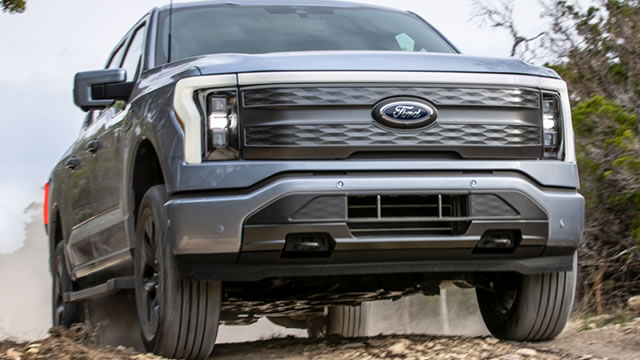
Core Insights - Ford Motor Co. is considering the possibility of discontinuing the production of the F-150 Lightning EV pickup truck due to low demand [2] - The company has paused production at its Rouge facility in Michigan, prioritizing more profitable gas and hybrid F-Series trucks [3] - Ford is facing challenges with an aluminum shortage following a fire at Novelis' Oswego facility, impacting production capabilities [4] Group 1: Production Decisions - Executives at Ford are discussing the potential end of F-150 Lightning production, with a dealer stating that "the demand is just not there" [2] - The F-150 Lightning was previously the best-selling EV pickup truck in the U.S., with 23,034 sales recorded in 2025 [3] Group 2: Operational Challenges - Ford has paused F-150 Lightning production to focus on gas and hybrid models, which are more profitable and require less aluminum [3] - The aluminum shortage is exacerbated by a major fire at Novelis' facility, which has rendered 40% of the plant inoperable [4] Group 3: Recall and Market Position - Ford's recalls for 2025 have reached 134, with CEO Jim Farley viewing these recalls as a significant near-term opportunity for the company [5] - The company is performing well on Momentum, Value, and Quality metrics, while also showing satisfactory Growth [5]
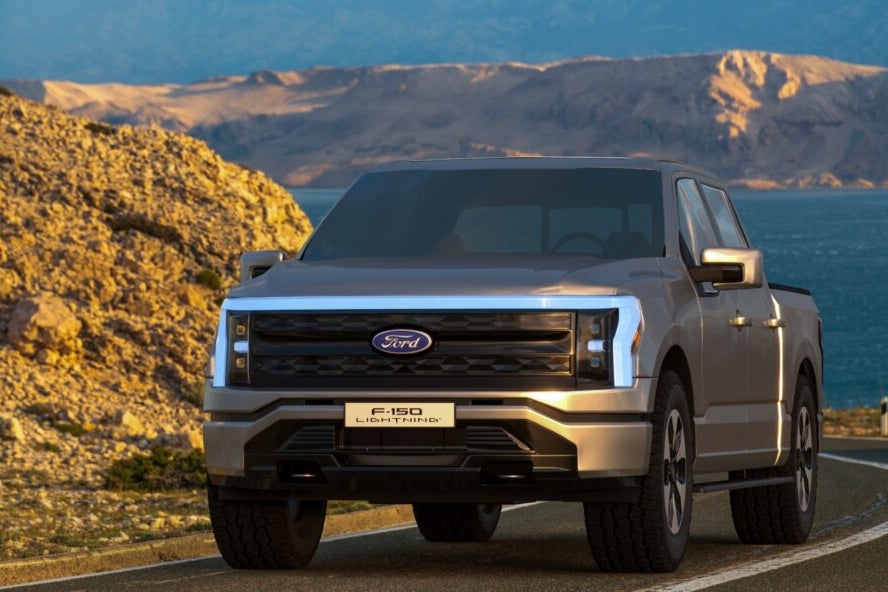
福特(F.US)电动战略急转弯:或弃守Lightning旗舰车型F-150转向“小而廉“
智通财经网· 2025-11-07 03:30
Core Insights - Ford is considering halting production of its all-electric F-150 Lightning pickup truck, although no final decision has been made yet [1] - The F-150 Lightning set a sales record in Q3 and remains the best-selling electric pickup in the U.S. [1] - A fire at an aluminum plant, a key supplier for the F-150 models, has led Ford to indefinitely idle the production of the Lightning at its Michigan plant [1] - Ford's CEO, Jim Farley, indicated that the U.S. electric vehicle market will be "far smaller than previously expected," focusing on vehicles suitable for short commutes [1] Sales Performance - Ford's electric vehicle sales dropped by 24.8% last month, with F-150 Lightning sales down 17.2% in October, selling only 1,543 units, which is about 2.3% of total F-Series truck sales for the month [2] - The expiration of the $7,500 federal tax credit has significantly reduced demand for battery electric models [2] Market Dynamics - The shift in U.S. policy under President Trump away from "electric vehicle mandates" is prompting automakers to reassess their plans [2] - Competitors like Stellantis and General Motors have also scaled back their plans for large electric vehicles [2]
Ford reportedly considers ending production of all-electric F-150 Lightning
CNBC· 2025-11-06 21:00
Core Viewpoint - Ford Motor is considering ending production of its all-electric F-150 Lightning pickup truck due to increasing losses and challenging market conditions for electric vehicles (EVs) [1][2]. Group 1: Production and Sales - The F-150 Lightning is currently the best-selling electric pickup truck in the U.S., achieving record sales in Q3 despite competition from models like CyberTruck and Rivian [3]. - Ford has paused production of the Lightning due to supply chain disruptions caused by a fire at Novelis, a key supplier [4]. - Sales of the F-150 Lightning this year through October are approximately 24,577 units, remaining level compared to the previous year, with total sales since its launch in 2022 being less than 100,000 units [5]. Group 2: Financial Performance - Ford's EV operations, including the Lightning, have incurred billions of dollars in losses annually in recent years [6]. - The U.S. EV market is facing significant regulatory changes, including the elimination of consumer credits of up to $7,500 for EV purchases, which may impact sales [6]. Group 3: Industry Context - The discussions regarding the F-150 Lightning's future come after Stellantis decided to halt plans for an all-electric Ram 1500 pickup and General Motors scaled back its electric truck plans [7].
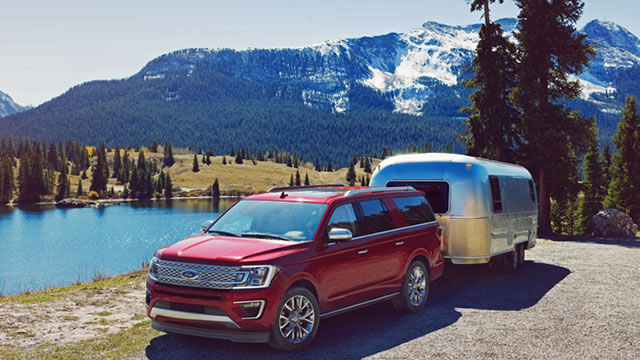
Ford's electric F-150 could be the first victim of the recent EV slowdown
MarketWatch· 2025-11-06 20:54
Core Insights - The F-150 Lightning, launched in 2022, is likely to be one of the first and most prominent victims of the current slowdown in the electric vehicle (EV) market affecting automakers this year [1] Group 1 - The F-150 Lightning represents a significant model in the EV segment for the automotive industry [1] - The slowdown in the EV market is impacting various car manufacturers, indicating broader industry challenges [1]
Ford may scrap money-losing F-150 electric truck: report
New York Post· 2025-11-06 20:07
Core Insights - Ford is considering discontinuing the electric version of the F-150 pickup truck due to production challenges and a focus on gas and hybrid models [1][4] - Production of the F-150 Lightning electric pickup has been paused at the Dearborn, Michigan plant following a fire at a supplier's aluminum factory [2] - The Detroit automakers, including Ford, GM, and Stellantis, are scaling back their ambitious electric vehicle plans in favor of gasoline-powered models [5][6] Company-Specific Summaries - Ford executives are evaluating the future of the electric F-150 Lightning, with reports indicating a potential scrapping of the model [1][4] - The company has paused production of the F-150 Lightning due to supply chain disruptions caused by a fire at a supplier's facility, although they maintain good inventory levels [2] - Ford's leadership, alongside competitors GM and Stellantis, is shifting focus from electric vehicles to traditional gasoline-powered models as part of a broader industry trend [5][6]
Ford execs reportedly discuss ending the F-150 Lightning
TechCrunch· 2025-11-06 20:02
Core Insights - Ford is contemplating discontinuing its flagship electric pickup truck, the F-150 Lightning, following production challenges and a strategic shift towards hybrid and gas-engine models [1] - The decision to idle F-150 Lightning production was influenced by a fire at aluminum supplier Novelis' factory, which has impacted Ford's production capabilities [1] Group 1: Product and Market Performance - The F-150 Lightning was introduced in 2021 with a base price of $40,000, but actual costs for most customers have been significantly higher [2] - Despite being one of the top-selling electric trucks in the U.S., Ford has struggled to sell more than a few thousand units per quarter [3] - The electric truck market has faced challenges, exacerbated by the end of the federal EV tax credit and regulatory rollbacks on emissions standards [3]
X @Bloomberg
Bloomberg· 2025-11-06 19:42
Ford is considering scrapping the electric version of its F-150 pickup truck, the Wall Street Journal reported, citing people familiar with the matter https://t.co/jkFZFcmFYi ...
Ford considers scrapping F-150 EV truck, WSJ reports
Reuters· 2025-11-06 19:34
Core Insights - Ford executives are contemplating the discontinuation of the electric version of the F-150 pickup truck, as reported by the Wall Street Journal, citing sources familiar with the situation [1] Company Analysis - The potential scrapping of the electric F-150 indicates a significant strategic shift for Ford, which has heavily invested in electric vehicle development [1] - This decision could reflect broader challenges in the electric vehicle market, particularly for traditional automakers transitioning to electric models [1] Industry Context - The electric vehicle market is facing increasing scrutiny and competition, which may impact the viability of certain models, including Ford's electric F-150 [1] - The move could signal a reevaluation of electric vehicle strategies among major automotive manufacturers as they adapt to market demands and technological advancements [1]
