J&J(JNJ)

Search documents
宗馥莉十一前已辞职:因商标使用“不合规”,决定经营自己的品牌“娃小宗”;张一鸣近年首次公开亮相;贾国龙回应西贝更换门头丨邦早报
创业邦· 2025-10-11 00:08
Group 1 - Zong Fuli has resigned from her positions as Chairman and General Manager of Wahaha Group, effective September 12, due to trademark compliance issues and plans to focus on her own brand "Wah Xiaozong" [3] - Core member Yan Xuefeng of Wahaha Group, previously under investigation, has returned to work after being cleared of allegations [3] - ByteDance founder Zhang Yiming made a public appearance for the first time in years, launching the Shanghai Xuhui Zhichun Innovation Center aimed at nurturing talent in computer science and AI [3] Group 2 - Qualcomm is under investigation by China's market regulator for allegedly failing to report its acquisition of Autotalks, potentially violating antitrust laws [5] - Xibei's founder responded to the logo change at a specific location, stating it is a small-scale trial and will not be implemented nationwide [5] Group 3 - ByteDance announced a new employee support policy providing up to 7.2 million yuan in transitional subsidies for employees laid off due to organizational adjustments [7] - DJI's recent price cuts on multiple products have led to controversy, with some stores in Shenzhen offering price difference refunds for purchases made during a specific period [7] - AI company Zhipu has denied rumors of layoffs before its IPO, stating it has nearly 50 job openings available [7] Group 4 - The ongoing trademark dispute between Jia Duo Bao and Wang Laoji has escalated, with both parties claiming ownership of the overseas Wang Laoji trademark [7] - Ding Tai Fung announced the closure of its WeChat store and has already shut down over ten physical locations due to brand operational adjustments [7] Group 5 - Former CBO of Zeekr, Guan Haitao, confirmed his departure from the company for personal reasons [10] - Pop Mart's Halloween series blind boxes sold out quickly, with one hidden variant seeing a price increase of over 13 times its original price [10] Group 6 - Zheng Qinwen has been named the first global brand ambassador for Bawang Tea [11] - TIME magazine's annual list of 300 best inventions includes products from companies like Huawei, BYD, and Apple [11] Group 7 - Great Wall Motors is adjusting its direct sales channels, with the Tank brand being phased out in favor of the Wey brand [16] - Meituan's community supermarket "Happy Monkey" is set to open its first northern store in Yanjiao, Hebei, on October 17 [16] Group 8 - Standard Chartered China has completed its first domestic RMB aircraft financing loan of 1 billion yuan for China Eastern Airlines [19] - Blue Sky Aviation has secured several million yuan in angel financing to develop its eVTOL products [20] Group 9 - Leapmotor has released teaser images for its luxury flagship SUV D19, set to debut on October 16 [21] - IDC reported that Lenovo holds a 25.5% market share in the global PC market, leading with 19.4 million units shipped [23]






Why Protagonist Therapeutics Stock Skyrocketed by Almost 30% Today
The Motley Fool· 2025-10-10 23:07
Core Viewpoint - Protagonist Therapeutics is experiencing significant takeover speculation, particularly regarding a potential acquisition by Johnson & Johnson, which has led to a notable increase in its stock price despite a generally down market [1][2]. Group 1: Acquisition Speculation - The Wall Street Journal reported that Johnson & Johnson is in discussions to acquire Protagonist Therapeutics, although details of the negotiations remain scarce [2]. - Protagonist and Johnson & Johnson are already collaborating on a drug aimed at treating immune disorders, which positions Johnson & Johnson as a familiar partner in the biotech's operations [3]. Group 2: Stock Performance - Protagonist's share price surged by 29.8% in a single day, contributing to a year-to-date increase of over 70% due to positive clinical trial results for its pipeline drugs [1][4]. - The significant rise in Protagonist's stock price occurred on a day when the S&P 500 index fell by almost 3%, highlighting the strength of the biotech's market performance amidst broader market declines [1]. Group 3: Company Responses - Neither Protagonist nor Johnson & Johnson has commented on the acquisition speculation, which is typical in the early stages of such discussions [5].

5 Dividend Kings For Generations Of Passive Income
Yahoo Finance· 2025-10-10 23:00
Core Insights - The article discusses the concept of Dividend Kings, which are companies that have increased their dividends for over 50 consecutive years, highlighting their resilience and consistent growth in dividends [4] Group 1: Dividend Kings Overview - Dividend Kings are companies that have a long history of increasing dividends, making them attractive for long-term income investors [4][7] - The article emphasizes the importance of selecting companies with a positive consensus from analysts, focusing on stability and growth potential [1][2] Group 2: Company Profiles AbbVie Inc. (ABBV) - AbbVie reported a revenue increase of approximately 3.7% to $56.33 billion, but net income declined by 12% to around $4.28 billion, resulting in a basic EPS of $2.40 for 2024 [12] - The forward dividend payout is $6.56, with a yield of 6.56% and a payout ratio of 59.92% [13] - Analysts rate AbbVie as a Moderate Buy with a score of 4.21 out of 5, indicating a potential upside of 21.38% from its current price [14][15] Johnson & Johnson (JNJ) - Johnson & Johnson's revenue rose roughly 4.3% to $88.82 billion, but net income declined nearly 60% due to a discontinued operation, resulting in a basic EPS of $5.84 [18] - The forward dividend payout is $5.20, yielding 5.2% with a payout ratio of 49.88% [20] - Analysts rate JNJ as a Moderate Buy with a score of 4.04 out of 5, suggesting an upside potential of 11.5% [21][22] Lowe's Companies (LOW) - Lowe's revenue declined 3% to $83.67 billion, with net income down approximately 10% to $6.96 billion, leading to a basic EPS of $12.25 [26] - The forward dividend is $4.80, yielding 4.80% with a payout ratio of 38.46% [28] - Analysts rate Lowe's as a Moderate Buy with a score of 4.21 out of 5, with a potential upside of 38.5% [29][30] Abbott Laboratories (ABT) - Abbott's revenue increased by 4.5% to $41.95 billion, and net income surged 134% to $13.4 billion, resulting in a basic EPS of $7.67 [33] - The company has declared 399 consecutive quarterly dividends and has increased its payout for 51 consecutive years, with a current yield of 1.77% [34] - Analysts rate Abbott as a Strong Buy with a score of 4.43, indicating a potential upside of 19.2% [36] Coca-Cola Company (KO) - Coca-Cola's revenue for FY'24 was just over $47 billion, up 2.8%, while net income declined slightly by 0.8%, with a basic EPS of $2.47 [38] - The forward dividend is $2.04 annually, yielding just over 3%, with a 21.25% increase in dividends over the past five years [40] - Analysts rate Coca-Cola as a Strong Buy with a score of 4.76, suggesting an upside potential of 28% [40]


Cramer's week ahead: Earnings season kicks off with reports from big banks
CNBC· 2025-10-10 22:57
Core Insights - Wall Street is entering earnings season with reports from major financial institutions such as Wells Fargo, Goldman Sachs, Citigroup, Bank of America, Morgan Stanley, and JPMorgan expected [1] - Despite a significant sell-off on Friday, there is an expectation that the market's multi-year rally is not over [1] Earnings Reports - Earnings season begins on Tuesday with Blackrock, Wells Fargo, and Goldman Sachs reporting; all three have performed well this year and are not heavily impacted by the trade war [3] - Johnson & Johnson and Domino's Pizza will also report on Tuesday, with expectations for Johnson & Johnson to have the best quarter in its sector, while Domino's may miss estimates [4] - On Wednesday, Bank of America, Morgan Stanley, and Abbott Laboratories will report; Morgan Stanley has shown positive results recently, and Abbott is considered reliable [4] - Thursday will see earnings from Taiwan Semiconductor, CSX, and Charles Schwab, with positive figures expected from Taiwan Semiconductor, which supplies chips to Nvidia and AMD [6] - American Express and SLB will report on Friday; American Express shares typically decline post-earnings, while SLB management is known for transparency [7] Market Context - The week is complicated by a sharp decline in Treasury yields, which usually indicates better economic conditions ahead, but current sentiment is negative [2] - Salesforce's annual conference begins on Monday, and clarity on President Trump's new tariffs on China is anticipated, following threats of a significant increase in tariffs on Chinese imports [2]



US FDA adds boxed warning to J&J, Legend Biotech's cancer therapy
Reuters· 2025-10-10 22:36
Core Viewpoint - The U.S. Food and Drug Administration has approved labeling changes for Johnson & Johnson and Legend Biotech's blood cancer therapy, which now includes a boxed warning for a potentially fatal side effect [1] Group 1 - The FDA's approval indicates a significant regulatory update for the blood cancer therapy developed by Johnson & Johnson and Legend Biotech [1] - The inclusion of a boxed warning highlights the seriousness of the potential side effects associated with the therapy, which may impact its market perception and usage [1]


Johnson & Johnson recommends shareholders reject “mini-tender” offer by Tutanota
Businesswire· 2025-10-10 20:20
NEW BRUNSWICK, N.J.--(BUSINESS WIRE)--Johnson & Johnson (NYSE: JNJ) today announced that it has received notice of an unsolicited mini-tender offer by Tutanota LLC, a limited liability company established pursuant to the laws of the Island of Nevis to purchase up to 500,000 shares of Johnson & Johnson common stock at a price of $145.00 per share in cash. Tutanota's offer price of $145.00 per share was well below the closing price of Johnson & Johnson common stock on September 26, 20. ...

Johnson & Johnson (NYSE: JNJ) Sees New Price Target and FDA Approval Boost
Financial Modeling Prep· 2025-10-10 20:06
Core Insights - Johnson & Johnson (JNJ) is focusing on expanding its pharmaceutical portfolio through potential acquisition opportunities, specifically Protagonist Therapeutics [2][6] - The company is set to report strong third-quarter earnings, with expected earnings of $2.76 per share and revenue of $23.76 billion, indicating growth from the previous year [3][6] - The FDA has approved JNJ's Simponi for children with ulcerative colitis, which has positively impacted the stock price and reflects the company's commitment to addressing unmet medical needs [4][6] Stock Performance - As of the latest trading, JNJ is priced at $191.29, showing a slight increase of 0.21, with a market capitalization of approximately $460.69 billion [5] - The stock has experienced fluctuations between a low of $190.31 and a high of $192.06 on the trading day, with a yearly high of $192.1 and a low of $140.68 [5] Analyst Insights - RBC Capital has set a new price target for JNJ at $209, suggesting a potential increase of approximately 9.26% from the current trading price [1][6]
Trump's China threat slams stocks — plus, our best and worst of the 3-year bull market
CNBC· 2025-10-10 18:47
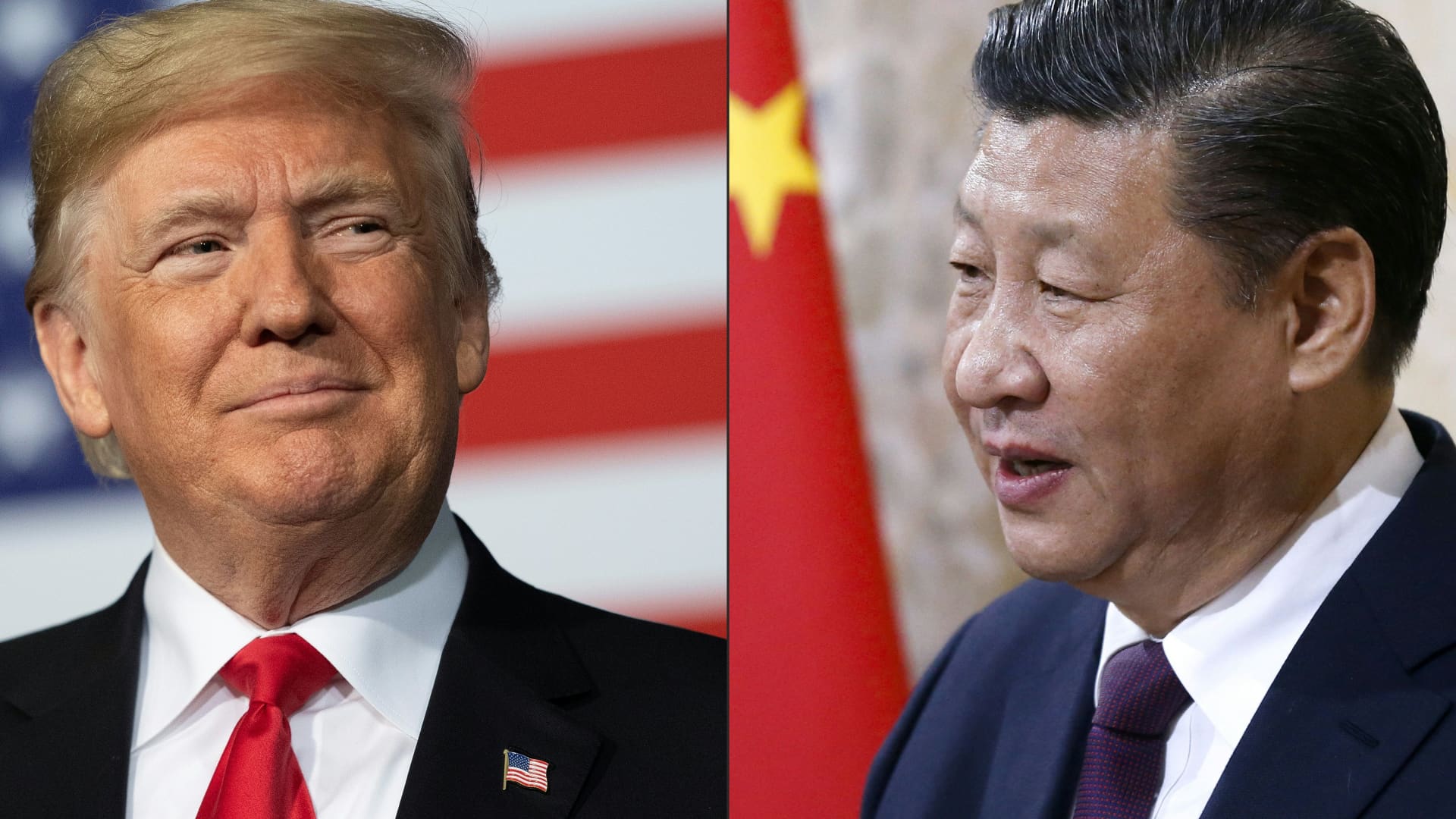
Market Overview - Stocks experienced a sell-off as President Trump threatened a "massive" tariff increase on China, particularly concerning rare earth minerals, which surprised the market given recent improvements in trade relations [1] - The S&P 500 index was down 1.9% and the Nasdaq fell approximately 2.6%, marking the first 1% drop for the S&P 500 since August 1 [1] Company Performance - Nvidia emerged as the best performer in the Investing Club portfolio, soaring approximately 1,527% over the three-year bull market [1] - Other top performers included Broadcom, which increased more than 665%, Meta Platforms with a gain of almost 458%, and CrowdStrike, which rose over 224% [1] - The bottom performers included Bristol Myers Squibb, down more than 36%, Nike, down nearly 26%, and both Danaher and Starbucks, each down nearly 9% [1] Upcoming Earnings - The third-quarter earnings season is set to begin, with over 30 S&P 500 companies scheduled to report next week [1] - Major banks such as Goldman Sachs, Wells Fargo, JPMorgan, and Citigroup will kick off earnings reports on Tuesday, along with BlackRock and Johnson & Johnson [1] - Other notable companies reporting next week include Abbott Laboratories, Bank of America, Morgan Stanley, American Express, CSX, Charles Schwab, SLB, and Prologis [1]


Friday File: It’s Official, Now We’ve REALLY Reached $4,000 Gold (and $50 Silver)
Stockgumshoe· 2025-10-10 18:30
Group 1: Quarterly Earnings Reports - Major companies like Pepsi, Delta, and Levi have started reporting quarterly results, indicating the health of the global consumer [1] - A significant wave of earnings reports from mega-banks and other key players such as ASML, Taiwan Semiconductor, and Johnson & Johnson is expected next week [1] - The busiest period for Q3 earnings is anticipated in the last week of October, with a heavy reporting schedule from mid-October through mid-November [1] Group 2: Gold Market Insights - Gold futures have recently surpassed $4,000/oz for the first time, generating widespread discussion in financial news [2] - Various financial institutions, including Goldman Sachs, have made bullish forecasts for gold prices, with predictions reaching as high as $4,900/oz by the end of next year [3] - The current volatility in gold prices is seen as a reflection of broader market conditions, with many stocks performing well due to various narratives, including advancements in AI and government spending [4]

RTW Investments' Rod Wong: Expect more deals in biotech space
Youtube· 2025-10-10 17:21
Core Insights - The biotech sector is experiencing a significant recovery, with the XBI biotech ETF on track for its best year since 2020, driven by recent acquisitions and improving fundamentals [1][3]. - Johnson & Johnson is reportedly looking to acquire Protagonist Therapeutics, indicating ongoing consolidation in the biotech industry [1][2]. Industry Trends - There has been a recent uptick in mergers and acquisitions (M&A) within the biotech space, with expectations for further consolidation due to a more favorable regulatory environment and stabilized interest rates [2][3]. - The biotech sector has shown a recovery from previous lows, with year-to-date performance in the high teens, aligning closely with the NASDAQ and slightly outperforming the S&P [5][6]. Market Dynamics - The biotech sector has historically not underperformed for more than one year consecutively, suggesting a potential for growth following a period of distress [6]. - The current market is characterized by low valuations combined with improving fundamentals, setting the stage for a new growth cycle driven by late-stage and commercial-stage companies with successful products [6][7]. Investment Outlook - The focus for the next growth cycle is expected to shift from small, innovative companies to established firms with blockbuster products that are self-sustaining and high-growth [6][7]. - There is a belief that the trend of companies staying private for too long has negatively impacted the sector, as premature public offerings may have hindered growth opportunities [7].