Merck(MRK)

Search documents
未知机构:JPM展望2026哪些MNC带来信息增量和国内映射-20260120
未知机构· 2026-01-20 02:25
Summary of Conference Call Notes Industry Overview - The conference call primarily focuses on the pharmaceutical industry, specifically highlighting key players such as Merck and Takeda. Key Points from Merck - Merck emphasizes the continuity of its product pipeline, with SKB264 identified as a next-generation core product [1] - The report highlights the performance focus, aiming for multiple blockbuster products to be launched, which is expected to completely offset the patent cliff of Keytruda (K drug) [1] - SKB264 is anticipated to have several overseas Phase III clinical trial data disclosures starting in 2027, with CNPV expected to significantly accelerate the commercialization approval process [1] Key Points from Takeda - Takeda introduces several core products: - Oveporexton (TAK-861) for Type 1 Narcolepsy (NT1) is expected to receive approval in H2 2026 [1] - Rusfertide (TAK-121) for Polycythemia Vera (PV) is also projected to be approved in H2 2026 [1] - Zasocitinib (TAK-279) for psoriasis is anticipated to gain approval in H1 2027 [1] Additional Important Information - The information presented is a summary of publicly available data from JPM and does not constitute specific investment advice [1]


中美创新药,必有一战
3 6 Ke· 2026-01-19 12:39
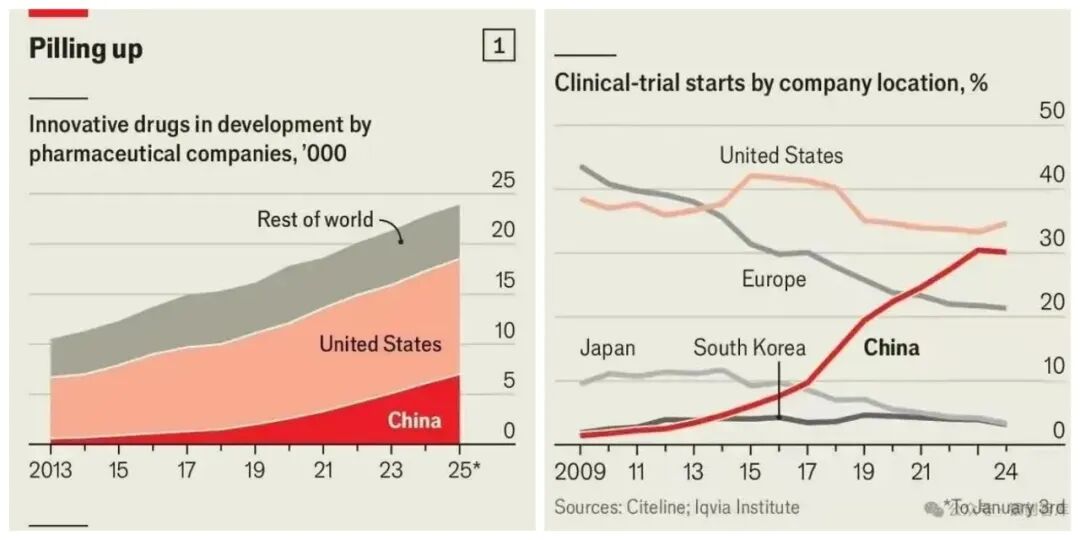
Core Viewpoint - The Chinese innovative drug sector is experiencing rapid growth, positioning itself as a global leader in drug development, with significant investments and collaborations from major pharmaceutical companies [2][8][30]. Group 1: Market Dynamics - The price of experimental monkeys has surged from 3,000 yuan to 100,000 yuan, indicating a high demand in the innovative drug sector [1]. - By 2025, China is projected to rank second globally in new drug clinical trials, with its pipeline accounting for 30% of the global total [2]. - In 2024, Chinese innovative drug companies completed 94 overseas licensing transactions, representing 44% of the national total, with over 100 transactions exceeding $100 billion in the first ten months of 2025 [6][30]. Group 2: Challenges in Traditional Pharmaceutical Sector - The generic drug sector is facing significant challenges, with a projected 5.5% decline in revenue for 2024 and over 30% of companies experiencing losses [5]. - Major pharmaceutical companies are increasingly collaborating with Chinese innovative drug firms to mitigate the risks associated with patent expirations, which could lead to a revenue gap exceeding $300 billion in the next five years [10][30]. Group 3: Advantages of Chinese Innovative Drugs - China offers a cost-effective and efficient environment for drug development, with clinical trial costs significantly lower than in the U.S. [20][21]. - The average time for clinical trial approvals in China has been reduced from 60 to 30 working days, and the average new drug application approval time has decreased to approximately 130 days [14]. - Chinese pharmaceutical companies are increasingly moving from "me-too" and "me-better" drugs to original innovations, with a notable increase in the number of innovative drug projects [27]. Group 4: Global Positioning and Future Outlook - Despite the rapid growth of Chinese innovative drugs, the overall market value of Chinese biotech companies remains significantly lower than their U.S. counterparts, capturing only 5% to 10% of global new drug revenues [30][31]. - Chinese companies are establishing commercial centers in global pharmaceutical hubs to enhance their commercialization capabilities, marking a shift towards becoming major players in the global market [37][38]. - The transition from biotech firms to large multinational pharmaceutical companies is seen as a critical step in the global battle for market share and innovation [38].




CXO-多家公司年报预告超预期-JPM-大会亮点不断
2026-01-19 02:29
Summary of Conference Call Records Industry Overview - The conference call primarily discusses the biopharmaceutical industry, focusing on several key companies and their projected performance for 2025 and beyond. The overall sentiment reflects a robust growth trajectory within the sector. Key Companies and Their Projections 1. WuXi AppTec (药明康德) - Expected revenue for 2025 is 454.56 billion CNY, a year-on-year increase of 15.84% - Adjusted net profit is projected to be 149.57 billion CNY, up 41.33%, with total net profit reaching 191.51 billion CNY, a 102.65% increase [2] - The company has 24 GLP-1 drug candidates, with 15 in Phase II and III clinical trials, indicating strong pipeline growth [4] 2. Kanglong Chemical (康龙化成) - Anticipates revenue between 138.72 billion CNY and 142.4 billion CNY, reflecting a growth of 13%-16% - Adjusted net profit is expected to be between 17.68 billion CNY and 18.48 billion CNY, a growth of 10%-15% [2] 3. Sunway Pharma (阳光诺和) - Projected revenue between 1.192 billion CNY and 1.37 billion CNY, a growth of 10.57%-27.15% - Expected net profit between 190 million CNY and 229 million CNY, a growth of 7.69%-29.23% [2] 4. AstraZeneca (阿斯利康) - Focused on cardiovascular, ADC, next-generation IO, and cell therapy TCE areas - Key clinical data readouts expected in 2026, which may impact market dynamics [5] 5. Gilead Sciences (吉利德) - Key projects include Cloud Native Top two ADC, expected to show promising data in TNBC treatment and potential approval in the second half of the year [8] - Anticipates significant changes in the first-line triple-negative breast cancer market due to the SG molecule [8] 6. DZD Pharma (迪哲医药) - DZD6,008 shows significant efficacy in non-small cell lung cancer (NSCLC) with an ORR of 60% and PFS exceeding 10 months [3][16] Clinical Trials and Data Readouts - Multiple companies, including Gilead, AstraZeneca, and others, are set to release important clinical trial data in 2026, which could reshape competitive dynamics in the NSCLC market [16] - AstraZeneca's ADC project 18.2 is expected to have significant clinical data readouts in 2026, with a focus on large-scale Phase III trials [7] Strategic Collaborations and Market Expansion - WuXi Biologics (药明生物) has signed a strategic cooperation memorandum with Qatar Free Zone Authority to expand into the Middle East market [4] - The conference highlighted the increasing participation of Chinese companies in the global pharmaceutical market, particularly in the dual-antibody and ADC sectors [22] Emerging Trends and Innovations - The industry is witnessing a shift towards L2.0 and ADC combinations, which are expected to become the next wave of drug development [17][18] - The importance of speed and mechanism synergy in new drug development was emphasized, indicating that early-stage projects have a higher success rate [18] Conclusion - The biopharmaceutical industry is poised for significant growth, with several companies reporting strong projections and innovative clinical developments. The upcoming clinical data releases in 2026 are anticipated to have a substantial impact on market dynamics and competitive positioning within the sector.




Sun Pharma looks to rise in US with $10 billion Organon buy
The Economic Times· 2026-01-18 22:30
Core Viewpoint - Sun Pharmaceutical Industries Ltd is evaluating the acquisition of US-based Organon for approximately $10 billion, which would be a transformative deal for Sun and the largest cross-border acquisition in the Indian pharmaceutical sector [1][19]. Company Overview - Sun Pharma has a current market cap of $45 billion and reported FY25 revenue of Rs 52,041 crore ($6.19 billion) with an EBITDA of Rs 15,300 crore ($1.82 billion), reflecting a 17.3% increase [11][19]. - Organon, spun out from MSD in 2021, has a market cap of $2.28 billion and reported total revenue of $1.60 billion for Q3 2025, with a full-year revenue guidance of $6.20 billion [10][19]. Financial Position - Organon has inherited $9.5 billion in debt and had $8.9 billion in debt at the end of Q2 2025, while Sun Pharma's total debt is negligible at Rs 2,362 crore [2][14][19]. - The combined pro forma leverage post-acquisition is expected to be 2.5x net debt to EBITDA, adjusted against Sun's cash reserves of approximately Rs 20,000 crore [14][19]. Market Dynamics - The global biosimilar market is dominated by eight major corporations, accounting for about 70% of sales, with Sun Pharma looking to expand its presence in this area [15][19]. - Sun Pharma has an established portfolio of about 12 branded products and is actively developing at least six innovative drugs, including a weight-loss drug in early testing [16][19]. Strategic Rationale - The acquisition of Organon is seen as a strategic move to enhance Sun Pharma's capabilities in women's health and biosimilars, areas with high margins and less competition [17][19]. - Sun Pharma has a proven track record of successfully acquiring and turning around companies facing financial challenges, making it a suitable match for Organon [13][19].

巨亏百亿!智飞生物代理HPV疫苗从躺赢变成躺输,谁为股民买单?
Xin Lang Cai Jing· 2026-01-18 13:34
Group 1 - Cervical cancer is likely to be the first cancer to be eradicated in human history, primarily caused by high-risk HPV, and widespread vaccination can potentially eliminate it in the near future [1][34] - The development of the HPV vaccine is significantly attributed to Chinese scientists, particularly Dr. Zhou Jian and Professor Ian Frazer, who collaborated to synthesize the vaccine over 25 years [1][34] Group 2 - In 2006, the first HPV vaccine was administered, marking a significant milestone in the fight against cervical cancer [3][36] - The vaccine was introduced to China in 2017, with Zhifei Biological Products Co., Ltd. as the exclusive distributor, leading to a surge in demand and revenue [6][39] Group 3 - Zhifei Biological's revenue skyrocketed from over 400 million in 2017 to 529 billion in 2023, reflecting the growing market for HPV vaccines [8][41] - However, the company is now facing significant losses, with a projected annual loss of 107-137 billion for 2025, primarily due to a "minimum purchase" agreement with Merck [5][38][49] Group 4 - The agreement with Merck requires Zhifei to purchase over 980 billion worth of HPV vaccines by the end of 2026, regardless of sales performance, which has become a financial burden [50][52] - The introduction of domestic competitors has led to a price war, significantly impacting Zhifei's sales and profitability [12][46][47] Group 5 - The company's inventory turnover days have reached approximately 980 days, indicating potential issues with unsold stock and the need for inventory impairment provisions [28][62] - Zhifei's self-research efforts have been insufficient, with revenues from self-developed products only reaching 10 billion in 2024 and 5 billion in the first half of 2025, highlighting a lack of diversification [30][64]



Wall Street's Most Accurate Analysts Give Their Take On 3 Health Care Stocks Delivering High-Dividend Yields - CVS Health (NYSE:CVS), GSK (NYSE:GSK)
Benzinga· 2026-01-16 13:40
Core Viewpoint - In turbulent market conditions, investors are increasingly attracted to dividend-yielding stocks, which typically feature high free cash flows and substantial dividend payouts [1] Group 1: High-Yielding Stocks in Healthcare Sector - Merck & Co Inc (NYSE:MRK) has a dividend yield of 3.06%. UBS analyst Trung Huynh maintains a Buy rating and raises the price target from $105 to $130, while Citigroup analyst Geoff Meacham maintains a Neutral rating and increases the price target from $95 to $110. Merck is reportedly in talks to acquire Revolution Medicines Inc. for $28 to $32 billion [3] - CVS Health Corp (NYSE:CVS) has a dividend yield of 3.27%. Truist Securities analyst David Macdonald maintains a Buy rating and raises the price target from $95 to $98, while UBS analyst Kevin Caliendo also maintains a Buy rating and increases the price target from $96 to $97. CVS Health plans to hold a conference call on February 10, 2026, to discuss fourth-quarter financial results [5] - GSK plc (NYSE:GSK) has a dividend yield of 3.47%. Barclays analyst James Gordon downgraded the stock from Equal-Weight to Underweight, while Jefferies analyst Michael Leuchten upgraded it from Hold to Buy. Summit Therapeutics announced a clinical trial collaboration with GSK to evaluate ivonescimab in combination with GSK's B7-H3 antibody drug conjugate [8]



Why Merck's 32% Rally Isn't Enough to Change the Bearish View
ZACKS· 2026-01-15 14:31
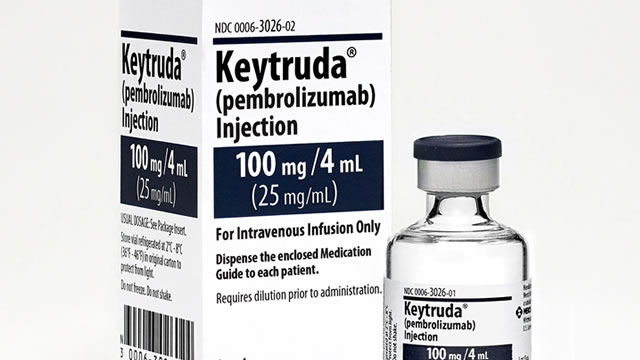
Core Insights - Merck's stock has increased by 32.3% over the past three months, indicating strong bullish momentum as it trades above its 50-day and 200-day simple moving averages [1] - Keytruda, Merck's leading drug, accounts for over 50% of its pharmaceutical sales, generating $23.3 billion in sales during the first nine months of 2025, an 8% year-over-year increase [2][3] - The company is facing challenges with declining sales of Gardasil, which fell by 40% due to weak demand in China, and is expected to see further declines in 2025 [13][14] Keytruda's Performance and Strategy - Keytruda's sales are benefiting from increased uptake in early-stage non-small cell lung cancer and continued momentum in metastatic indications [3] - Merck is pursuing innovative strategies to sustain Keytruda's growth, including new immuno-oncology combinations and a subcutaneous formulation approved by the FDA [4][5] - The company is also developing a personalized mRNA therapeutic cancer vaccine in collaboration with Moderna, which is currently in pivotal phase III studies [4] Pipeline and M&A Activities - Merck's phase III pipeline has nearly tripled since 2021, positioning the company to launch around 20 new vaccines and drugs in the coming years, including Capvaxive and Winrevair [7] - Recent acquisitions, such as Cidara Therapeutics for $9.2 billion and Verona Pharma for approximately $10 billion, are expected to enhance Merck's product offerings and revenue potential [11][12] Financial Performance and Valuation - Merck's shares have risen 10.3% over the past year, but the stock is still viewed as underperforming compared to the industry, trading at a price/earnings ratio of 13.15, lower than the industry average of 17.86 [19][22] - Earnings estimates for 2026 have decreased from $9.23 to $7.94 per share, attributed to costs from recent M&A activities [25] Challenges and Market Outlook - Merck's reliance on Keytruda raises concerns about its ability to diversify its product lineup ahead of the drug's patent expiration in 2028 [16] - Competitive pressures are increasing, particularly from dual PD-1/VEGF inhibitors that may challenge Keytruda's market position [17][18] - Short-term investors may be cautious due to ongoing challenges with Gardasil and the potential impact of competition on Keytruda [29]
JPM 2026:AI破局,肥胖引爆,巨头血战新王座
Xin Lang Cai Jing· 2026-01-15 14:15
Core Insights - 2026 is identified as a pivotal year for transformation and output in the global biopharmaceutical industry, with major companies revealing strategic developments at the JMP conference [1] - The industry is experiencing extreme differentiation, with ADC and GLP-1 seen as key growth engines for the next five years, while mRNA, siRNA, and RLT are transitioning from concepts to clinical norms [1][9] - The BD strategies are becoming more precise, with 2025's small-scale acquisitions starting to yield results, and the logic behind mergers and acquisitions in 2026 expected to diversify [1] Hot Track Dynamics: Dual Drivers of Technology Iteration and Indication Expansion - ADC remains a leading player in the oncology sector, with Merck advancing multiple ADC assets through collaboration with Daiichi Sankyo [12] - BeiGene views ADC as a core technology and is actively promoting drug accessibility globally [12] - Eli Lilly has completed several ADC-related transactions to enhance its capabilities in cancer treatment [12] Weight Management Market Transition - The weight management market is shifting from simple weight loss to comprehensive management of metabolic syndrome, with Eli Lilly focusing on AI-driven drug discovery and direct patient engagement [14] - Roche's acquisition of Carmot Therapeutics enhances its pipeline with new metabolic therapies [14] - Sanofi is expanding the indications for its core asset Dupixent and advancing its autoimmune pipeline [14] Key Corporate Strategic Planning: Core Track Deepening and Platform Layout - Eli Lilly's strategy focuses on obesity and AI-driven drug development, with a projected investment of up to $1 billion in collaboration with NVIDIA [15] - Pfizer aims to maximize core transaction value and apply AI across its business chain, targeting a $150 billion market in obesity by 2030 [15] - Amgen is accelerating the integration of biotechnology and AI, with a focus on rare diseases and partnerships in China [16] BD Trends: Core Logic of Track Reinforcement and Ecological Synergy - The pharmaceutical industry is seeing a concentration of mergers and acquisitions in ADC and bispecific antibodies, with major companies acquiring key assets and technology platforms [17] - Big Pharma is shifting from scale expansion to pipeline restructuring to avoid revenue cliffs due to upcoming patent expirations [18] - The focus is on mid-stage assets with immediate Phase 3 potential, which are expected to have a premium advantage over early-stage assets [18] Industry Outlook - The biopharmaceutical industry is entering an "innovation harvest period" from 2026 to 2030, with GLP-1 drugs evolving into comprehensive metabolic management platforms [19] - The market for GLP-1 receptor agonists in China is projected to reach approximately 38.3 billion yuan by 2030 [19] - The commercialization of cutting-edge therapies is approaching a "singularity," with advancements in cell and gene therapies and RNA therapies expected to overcome production and reimbursement challenges [19][20]


Is Merck Stock A Trap At $110?
Forbes· 2026-01-15 14:10
Core Viewpoint - Merck's stock experienced a significant increase of over 10% following management's optimistic projections regarding their next-generation drugs, which are expected to generate $70 billion by the mid-2030s, surpassing previous estimates [2] Financial Performance - Merck's current stock price is approximately $110 per share, closely aligning with the fair value estimate of $109, indicating that much of the positive news is already priced in [4] - Revenue growth has been sluggish, with a 3-year average growth rate of 2.9% annually, and only a 1.7% increase over the past 12 months from $63 billion to $64 billion [8] - The most recent quarter showed a growth of 3.7% compared to the previous year [8] - Operating margin stands at 34.9%, net income margin at 29.6%, and operating cash flow margin at 26.6%, showcasing strong profitability [9] Growth Prospects - Management's assertion that new drugs will offset the Keytruda patent cliff is viewed with skepticism, as it does not guarantee net growth beyond Keytruda's projected $34 billion revenue in 2026 [5][12] - The potential for double-digit growth is considered optimistic given the significant revenue challenges ahead [5] Financial Health - Merck's financial health is robust, with a P/E ratio of 14.1 compared to 24.2 for the S&P 500, and a price-to-free cash flow ratio of 20.6 versus 21.6 for the index [7] - The company has a debt-to-equity ratio of only 15.4%, lower than the S&P's 19.9%, and a cash-to-assets ratio of 14.1% compared to 7.2% for the index [16] Market Position and Risks - The expiration of the Keytruda patent around 2028 poses a significant risk, as it represents a major revenue source for Merck [12] - Historical performance during market downturns has been mixed, with Merck sometimes suffering more than the broader market [11] - Comparisons with other pharmaceutical companies indicate varying outcomes in managing patent cliffs, with Merck's future trajectory uncertain [13] Conclusion - Merck receives a "Moderate" overall rating, with concerns about the Keytruda dependency and limited growth prospects leading to a cautious investment outlook [14] - Alternative investments in companies like Eli Lilly, AbbVie, or Johnson & Johnson are suggested due to better growth prospects and proven management of patent cliffs [15]