Merck(MRK)

Search documents
X @Bloomberg
Bloomberg· 2025-07-29 10:36
Merck is slashing $3 billion from its annual spending as it braces for off-brand competition to its cancer drug Keytruda, the best-selling medicine in the world https://t.co/paQo9bLw7J ...

默沙东(MRK.N)2025年Q2营收158.1亿美元,去年同期161.12亿美元,市场预期158.94亿美元。
news flash· 2025-07-29 10:34
默沙东(MRK.N)2025年Q2营收158.1亿美元,去年同期161.12亿美元,市场预期158.94亿美元。 ...
默沙东二季度销售额158.1亿美元,预估157.7亿美元。二季度经调整后每股收益2.13美元,上年同期2.28美元。
news flash· 2025-07-29 10:34
二季度经调整后每股收益2.13美元,上年同期2.28美元。 默沙东二季度销售额158.1亿美元,预估157.7亿美元。 ...
Merck plans $3 billion cost cuts by end of 2027, narrows full-year outlook
CNBC· 2025-07-29 10:31
Core Viewpoint - Merck & Co. is implementing a $3 billion cost-cutting initiative by the end of 2027 to reinvest in new product launches and its drug pipeline, in response to upcoming revenue losses from the patent expiration of Keytruda in 2028 and external pressures such as tariffs on pharmaceuticals [1][2][3]. Cost-Cutting and Restructuring - The multi-year optimization initiative aims to redirect investments from mature business areas to new growth drivers, facilitating portfolio transformation and innovation-driven growth [3]. - A new restructuring program has been approved, which will eliminate certain administrative, sales, and research and development positions, reduce global real estate, and pare back the manufacturing network, expected to generate around $1.7 billion in annual cost savings by the end of 2027 [4]. - The total pretax costs related to the restructuring program are estimated to be approximately $3 billion, with a $649 million charge recorded in the second quarter [5]. Financial Performance - In the second quarter, Merck's revenue fell short of Wall Street estimates for the first time since April 2021, reporting $15.81 billion compared to the expected $15.89 billion [5][10]. - The company posted a net income of $4.43 billion, or $1.76 per share, down from $5.46 billion, or $2.14 per share, in the same period last year [9]. - Adjusted earnings per share for the second quarter were $2.13, which may not be directly comparable to estimates of $2.01 [11]. Sales and Guidance - While Keytruda sales grew, Merck faced challenges with Gardasil sales in China, leading to a halt in shipments until at least mid-2025 due to high inventories and soft demand [6][7]. - Merck has narrowed its full-year guidance for 2025 adjusted earnings to between $8.87 and $8.97 per share and revenue expectations to between $64.3 billion and $65.3 billion [8].

从“扫货”管线到争当IPO基石:外资加码中国创新药
Di Yi Cai Jing· 2025-07-29 10:31
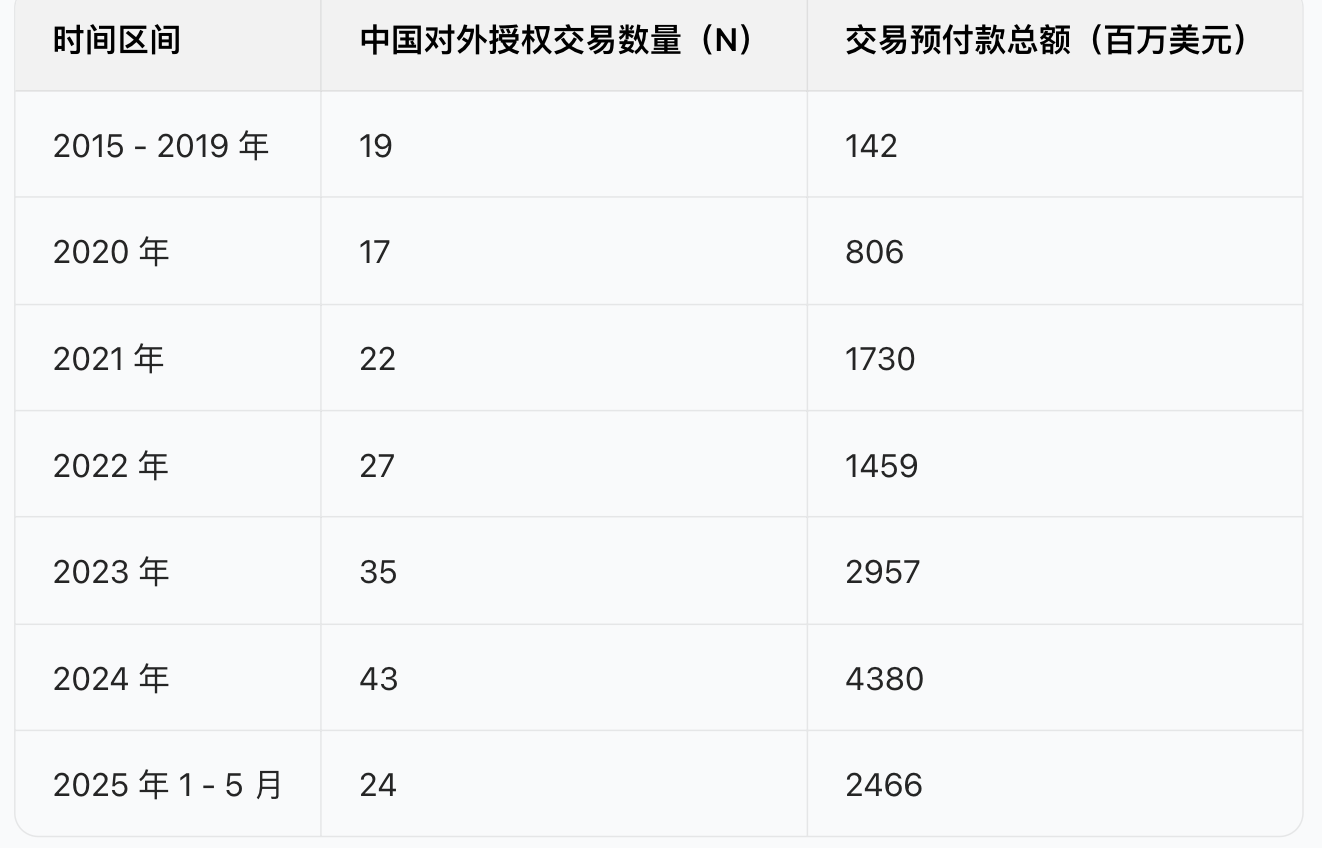
Core Insights - The Chinese pharmaceutical industry is experiencing a resurgence after three years of stagnation, driven by high-value licensing deals from multinational pharmaceutical companies [1][2] - There is a significant interest from overseas investors in Chinese biopharmaceutical companies, with a notable increase in licensing agreements and IPO activities [2][8] - The trend of "licensing out" Chinese drug candidates to foreign companies is becoming more common, providing Chinese firms with milestone payments and a share of sales revenue [4][6] Group 1: Market Dynamics - As of mid-July, approximately 288 companies are waiting for IPOs in Hong Kong, many of which are biopharmaceutical firms seeking to list under the 18A rule [1][8] - The Hong Kong medical sector has seen a 54% increase this year, significantly outperforming the MSCI China Index, which rose by 17% [8] - The average price-to-earnings (PE) ratio for the sector is around 30 times, placing it in the 15th percentile of its valuation range over the past five years [8] Group 2: Investment Trends - U.S. investment banks are playing a crucial role in facilitating these licensing deals and IPOs, with cornerstone investors contributing 42% of IPO financing this year, two-thirds of which comes from overseas [1][12] - The trend of U.S. pharmaceutical companies seeking to lower costs through partnerships with Chinese firms is expected to continue, especially in light of U.S. drug pricing policies [2][6] Group 3: Licensing Agreements - The number of licensing transactions from China has increased significantly, with 35 deals in 2023 and projected to reach 43 in 2024, alongside a total upfront payment of $2.957 billion in 2023 [3][6] - Notable licensing agreements include Akeso's ivonescimab, which was licensed to Summit Therapeutics for a total value of $5 billion, marking one of the largest overseas licensing deals in Chinese biopharmaceutical history [7][6] Group 4: Future Outlook - Chinese biopharmaceutical companies are increasingly able to produce globally recognized clinical data, particularly in competitive fields like oncology and immunology [2][6] - The shift from merely selling drug pipelines to achieving global commercialization is essential for the future growth of Chinese pharmaceutical companies [13][15] - There is a need for Chinese firms to enhance their innovation capabilities and international execution to compete effectively on a global scale [14][15]




Got $1,000? 3 High-Yield Healthcare Stocks to Buy and Hold Forever
The Motley Fool· 2025-07-29 00:05
Group 1: High-Yield Healthcare Stocks - Johnson & Johnson, Medtronic, and Merck are highlighted as high-yield stocks in the healthcare sector, offering yields up to 3.9% [1] - The average yield for healthcare stocks is around 1.8%, making these companies attractive options for dividend investors [1] Group 2: Johnson & Johnson - Johnson & Johnson is recognized as a Dividend King, having increased its dividend for 63 consecutive years, the longest streak in the healthcare sector [2] - The current dividend yield for Johnson & Johnson is 3.1%, which is above the healthcare average and within its historical high range [3] - The company is facing a significant class action lawsuit related to talcum powder, which may impact its stock performance in the short term [4] Group 3: Medtronic - Medtronic has a strong dividend history, having increased its dividend for 48 consecutive years, and currently offers a yield of approximately 3.1% [6] - The company is experiencing slowed growth due to a lack of new product introductions, but management is working to address this by refocusing on key business areas [7] - Medtronic's current dividend yield is historically high, presenting an opportunity for long-term investors [8] Group 4: Merck - Merck is one of the largest pharmaceutical companies globally, with a dividend yield of around 3.9% [9][10] - The company has faced challenges due to the nature of drug patents and the time it takes to develop new products, but it has managed to maintain a growing dividend over time [10][11] - Investing in Merck is seen as a long-term strategy for dividend investors, despite the uncertainty of when the next blockbuster drug will be developed [11] Group 5: Overall Investment Perspective - The three companies—Johnson & Johnson, Medtronic, and Merck—are characterized as well-run businesses in the complex healthcare sector, providing investors with reliable dividend yields and strong financial histories [12][13] - These companies allow investors to benefit from industry expertise without needing to be healthcare specialists themselves [13]



Will These 5 Pharma/Biotech Bigwigs Surpass Q2 Earnings Forecasts?
ZACKS· 2025-07-28 15:31
Industry Overview - The second-quarter 2025 reporting cycle for the Medical sector is commencing, with most firms expected to release earnings results in the next two weeks, primarily consisting of pharma/biotech and medical device companies [1] - The earnings season for the drug and biotech sector began in mid-July, highlighted by Johnson & Johnson's strong performance, which exceeded earnings and sales estimates, leading to raised revenue and earnings expectations for the year [1] Company Performance - Novartis surpassed second-quarter earnings and revenue estimates, driven by a year-over-year increase in sales of key drugs, prompting an upward revision of its annual guidance for core operating income [2] - Roche experienced solid growth in the first half of 2025, with high demand for key drugs offsetting declines in legacy drug sales [2] - As of July 23, 15% of companies in the Medical sector, representing 27.2% of the sector's market capitalization, reported quarterly earnings, with 88.9% outperforming earnings estimates and 100% beating revenue estimates [3] - Overall, second-quarter earnings for the Medical sector are projected to increase by 0.9%, while sales are expected to rise by 7.9% compared to the previous year [3] Upcoming Earnings Reports - Merck, AstraZeneca, Bristol Myers, AbbVie, and Moderna are scheduled to release their quarterly results this week [4] - Merck has a strong earnings track record, beating estimates in the last four quarters with an average surprise of 3.82% [5] - AstraZeneca has a mixed earnings history, beating estimates in three of the last four quarters, with an average surprise of 4.24% [8] - Bristol Myers has consistently beaten earnings estimates, with an average surprise of 20.16% over the last four quarters [11] - AbbVie has also maintained a strong track record, beating estimates in the last four quarters with an average surprise of 2.55% [13] - Moderna has an excellent earnings history, with an average surprise of 31.60% in the last four quarters [15] Sales Drivers - Merck's growth in the second quarter is likely attributed to increased sales of its cancer drug Keytruda, driven by additional indications and patient demand [7] - AstraZeneca's sales are expected to be bolstered by strong demand for its cancer and diabetes medications [10] - Bristol Myers' revenue may be impacted by declines in legacy drug sales, but growth products are expected to partially offset this decline [12] - AbbVie's revenue is anticipated to be driven by strong sales of key drugs and contributions from newer products [14] - Moderna's revenues are expected to be influenced by sales of its COVID-19 vaccine, Spikevax, while the focus is shifting to updates on its broader pipeline [16]


Sell Merck Stock Ahead Of Its Upcoming Earnings?
Forbes· 2025-07-28 11:25
Core Viewpoint - Merck & Co., Inc. is expected to report earnings on July 29, 2025, with historical trends indicating a tendency for negative one-day returns following earnings announcements, which could provide insights for event-driven traders [2][3]. Earnings Expectations - Analysts predict earnings of $2.03 per share on revenue of $15.87 billion for the upcoming quarter, reflecting a decrease from $2.28 per share and $16.11 billion in revenue from the same quarter last year [3]. - The anticipated decline in sales is attributed to challenges faced by Gardasil in China, despite growth in Keytruda sales [3]. Financial Performance - Merck has a market capitalization of approximately $212 billion and generated $64 billion in revenue over the past twelve months, with operating profits of $20 billion and a net income of $17 billion [4]. Historical Earnings Reaction - Over the last five years, Merck's stock has shown negative one-day returns 60% of the time following earnings announcements, with a median drop of -2.1% and a maximum decline of -9.8% [2][6]. - In the last three years, the proportion of positive one-day returns increased to 50%, with a median of 1.7% for positive returns and -2.1% for negative returns [6]. Post-Earnings Return Strategy - Traders may consider establishing positions before earnings announcements based on historical probabilities, and evaluate the relationship between immediate and medium-term returns post-announcement [5][7]. - Correlation data indicates that understanding the relationship between short-term and medium-term returns can guide trading strategies, particularly if 1D and 5D returns show strong correlation [7]. Peer Influence - The performance of peers can impact Merck's post-earnings reactions, with historical data suggesting that pricing may begin ahead of the earnings announcement [8].

Merck Q2 Earnings in the Cards: Buy, Sell or Hold Ahead of Results?
ZACKS· 2025-07-25 13:31
Core Viewpoint - Merck is set to report its second-quarter 2025 earnings on July 29, with consensus estimates for sales at $15.77 billion and earnings per share (EPS) at $1.99, reflecting a decline in earnings estimates over the past month [1][6]. Earnings Estimates and Trends - The current EPS estimate for Q2 is $1.99, down from $2.03 30 days ago, indicating a downward trend in earnings expectations [2]. - The average earnings surprise over the last four quarters is 3.82%, with the last quarter showing a surprise of 3.26% [3]. Factors Influencing Upcoming Results - Keytruda, Merck's leading cancer drug, is expected to drive top-line growth in Q2, with sales estimates for Keytruda at $7.90 billion [5][7]. - Other drugs like Lynparza and new products such as Capvaxive are anticipated to contribute positively to pharmaceutical sales [6][14]. Performance of Specific Products - Sales of Keytruda are likely boosted by its uptake in early-stage non-small cell lung cancer and continued demand in metastatic indications [7]. - The HPV vaccine Gardasil is expected to see mixed results, with lower demand in China but increased sales in other markets [10]. - Generic competition is impacting sales of certain products, such as Bridion, while new drugs like Winrevair and Capvaxive are showing promising sales growth [11][13]. Valuation and Market Performance - Merck's shares have underperformed the industry and the S&P 500, with a year-to-date loss of 13.9% [16][22]. - The company's price/earnings ratio of 9.05 is lower than the industry average of 15.25, suggesting potential attractiveness from a valuation perspective [17]. Strategic Developments - Merck's acquisition of Verona Pharma for approximately $10 billion is expected to enhance its cardio-pulmonary pipeline [21][23]. - Despite the strength of Keytruda, there are concerns regarding the company's reliance on this drug and the need for diversification [20][24]. Long-Term Outlook - While Merck faces challenges such as declining sales for Gardasil in China and potential competition for Keytruda, the company is expected to maintain strong sales until Keytruda's patent expiration in 2028 [26][27]. - Long-term investors are encouraged to stay invested, while short-term investors may consider selling due to immediate challenges [27].
U.S. Keytruda Market Research Report 2025 | Merck's Keytruda Faces Challenges as Patent Expiry Approaches in 2028 - Forecast to 2033
GlobeNewswire News Room· 2025-07-25 09:25
Core Insights - The U.S. Keytruda market is projected to decline from an estimated size of USD 17.87 billion in 2024 at a CAGR of 3.12% from 2025 to 2033 due to challenges such as patent expiration and biosimilar competition [1][2] - Keytruda, developed by Merck & Co., is a significant player in oncology, particularly for lung cancer, melanoma, and urothelial carcinoma, but faces pricing pressures despite rising cancer incidence [2][3] - Merck is addressing access barriers through a new subcutaneous formulation expected in 2025, which aims to enhance treatment convenience and maintain market share [3][4] Market Dynamics - The market is supported by Keytruda's use in both monotherapy and combination regimens, with expanding indications in neoadjuvant and adjuvant settings [3] - Clinical trials, such as KEYNOTE-689, have demonstrated improved survival outcomes, contributing to increased adoption [3] - The incidence of cancer in the U.S. is estimated at 2 million new cases in 2024, indicating a growing patient population despite market challenges [2] Competitive Landscape - The market faces competition from emerging biosimilars following Keytruda's expected patent expiration in 2028, which could impact market dynamics [1][2] - Innovations such as biomarker-driven approaches and new combination therapies are being explored to enhance Keytruda's effectiveness [4] - Merck is also investigating new applications for Keytruda, including colorectal cancer, to mitigate risks associated with market competition [4] Future Outlook - The U.S. remains the leading market for Keytruda due to its advanced healthcare infrastructure, but future growth will be influenced by competitive and economic pressures [4] - Ongoing clinical evaluations and the introduction of new formulations are expected to play a crucial role in sustaining market activity despite anticipated declines [1][3]