Northrop Grumman(NOC)

Search documents
Navigating Volatility: How Defense ETFs' Dip Offers Long-Run Opportunity
ZACKS· 2025-11-05 17:01
Core Insights - Major defense ETFs experienced a decline at the start of November 2025, with SPDR S&P Aerospace & Defense ETF (XAR) slipping approximately 2.6% and iShares U.S. Aerospace & Defense ETF (ITA) dropping 1.9% over two trading sessions [1][2] - Despite the recent pullback, defense ETFs are considered attractive for long-term investors due to sustained increases in government defense spending, technological advancements, and geopolitical tensions [5][6] Market Dynamics - The recent slump in Defense ETFs is attributed to short-term market mechanics and broader industry-specific concerns, including inflationary pressures, labor shortages, and the ongoing U.S. government shutdown [3][4] - Negative sentiment in segments like commercial aerospace can weigh on the entire fund, even if core defense holdings remain resilient [3] Industry Outlook - Global defense spending reached a record $2.46 trillion in 2024, driven by deteriorating security environments and heightened threat perceptions, particularly in Europe and MENA [5][6] - The aerospace and defense manufacturing sector is expected to maintain a strong pace, with increased investments in advanced weapon systems and emerging technologies [6] Company Performance - Prominent defense contractors such as Lockheed Martin, General Dynamics, Boeing, and Northrop Grumman reported strong earnings in their third-quarter results, indicating robust underlying business health supported by solid product demand [7] - These companies have a strong backlog, suggesting solid revenue growth prospects, making the recent ETF dips likely a short-lived matter [7] Investment Opportunities - Current dips in defense ETFs present attractive buying opportunities for long-term investors, with specific ETFs highlighted for their growth potential: - SPDR S&P Aerospace & Defense ETF (XAR) has $4.71 billion in assets under management and has surged 46.5% year to date [8][9] - Invesco Aerospace & Defense ETF (PPA) has a net asset value of $155.40 and gained 36.1% year to date [10] - iShares U.S. Aerospace & Defense ETF (ITA) has net assets worth $12.37 billion and gained 46.6% year to date [11]



Northrop Grumman to Participate in the Baird 2025 Global Industrial Conference
Globenewswire· 2025-11-05 14:00
Core Viewpoint - Northrop Grumman Corporation will participate in the Baird 2025 Global Industrial Conference on November 12, 2025, with a presentation by CEO Kathy Warden [1] Company Overview - Northrop Grumman is a leading global aerospace and defense technology company, providing pioneering solutions that equip customers with necessary capabilities for global connectivity and protection [2] Forward-Looking Statements - The conference presentation may include forward-looking statements as defined by the Private Securities Litigation Reform Act of 1995, which are subject to risks and uncertainties [3]
UBS Reiterates Bullish View on Grumman Corp. (NOC), Cites Robust Multi-Year Growth Outlook
Yahoo Finance· 2025-11-04 20:47
Core Insights - Northrop Grumman Corporation (NYSE:NOC) is recognized as one of the top 8 defense stocks, with UBS raising its price target to $770 from $769 while maintaining a Buy rating [1] - UBS highlights a robust multi-year growth outlook for Northrop Grumman, citing potential upside from contracts related to the B-21 program, the Golden Dome project, and the F/A-XX program [2] - The company is actively pursuing new U.S. Air Force contracts for the B-21 program, supported by a $4.5 billion budget reconciliation bill passed by Congress [3] - Northrop Grumman is competing with Boeing for the Navy's next stealth fighter, the F/A-XX, with a contract announcement expected soon from the Pentagon [4] - Bernstein has also raised its price target for Northrop Grumman to $696 from $674, following a strong third-quarter earnings report with an EPS of $7.67, exceeding estimates of $6.44 [5] - Northrop Grumman is one of the largest defense contractors globally, involved in advanced systems across aeronautics, space, defense electronics, and mission solutions [6]
Nothing Can Stop Defense Stocks Right Now
Schaeffers Investment Research· 2025-11-04 18:13
Core Insights - The defense sector has completed its earnings reports, revealing strong performance and optimistic long-term outlooks for major contractors [1][5]. Group 1: Earnings Performance - Major defense contractors reported earnings beats, with all companies including RTX Corp, Lockheed Martin, Northrop Grumman, and General Dynamics raising their full-year outlooks [5]. - The earnings reactions varied, with RTX gaining 7.7%, Lockheed Martin declining by 3.2%, and Kratos Defense rising by 8.3% [6]. Group 2: Backlogs and Budgets - Backlogs for defense companies are at or near record-high levels, indicating strong future revenue potential and stability [2]. - The total U.S. national defense budget for FY 2024 is $874 billion, with a proposed budget for FY 2026 exceeding $1 trillion, suggesting ample funding for defense contractors [3]. Group 3: Market Dynamics - The ongoing geopolitical tensions, including the Russia-Ukraine conflict and tensions between China and Taiwan, are contributing to a favorable environment for defense contractors [4]. - Despite the overall positive performance of the sector, Lockheed Martin is struggling to maintain its year-to-date performance, with many analysts holding "hold" or worse ratings [8]. Group 4: Investment Opportunities - The iShares U.S. Aerospace & Defense ETF and Global X Defense Tech ETF have seen significant year-to-date gains of 70% and 82%, respectively, providing diversified exposure to the sector [15]. - The drone market is highlighted as a speculative opportunity, with a projected value of $29.8 billion by 2030, indicating potential for growth in this segment [16].


KTOS vs. NOC: Which Defense Tech Stock Is the Smarter Buy?
ZACKS· 2025-10-30 17:26
Core Insights - Rising global security threats are leading to increased defense spending, attracting investor interest in major defense companies like Kratos Defense & Security Solutions, Inc. (KTOS) and Northrop Grumman (NOC) [1][10] - Both companies are focusing on autonomous defense technology and military drones, which enhance intelligence collection, reduce human risk, and improve operational efficiency [1][2] Company Overview: Kratos Defense (KTOS) - Kratos Defense specializes in high-performance, jet-powered unmanned aerial target drone systems, serving the U.S. Air Force, Navy, Army, and foreign defense agencies [3] - The company has secured multiple contracts and strategic partnerships, enhancing its position in the global unmanned aerial systems (UAS) market [3][10] - Current projects include the development of various target drones such as Thanatos, Apollo, Athena, and Air Wolf, alongside a new fifth-generation jet drone expected to fly in the first half of 2026 [4][5] Company Overview: Northrop Grumman (NOC) - Northrop Grumman is well-positioned in high-priority defense categories, including defense electronics, unmanned aircraft, and missile defense [6] - The company has a diverse portfolio that includes stealth bombers, space systems, and advanced networking capabilities, showcasing its leadership in military technology [7] - Key projects include the B-21 Raider stealth bomber and MQ-4C Triton, highlighting its expertise in strategic unmanned and semi-autonomous platforms [7] Financial Performance Comparison - Kratos Defense's earnings per share (EPS) estimates for 2025 remain unchanged, while a 1.41% increase is noted for 2026 [9] - Northrop Grumman's EPS estimates have increased by 2.44% for 2025 but decreased by 0.10% for 2026 [12] - Kratos Defense ended Q2 2025 with cash and cash equivalents of $784 million and long-term debt of $233 million, indicating strong financial stability [13] - Northrop Grumman's cash and cash equivalents decreased to $1.96 billion, with long-term debt rising to $15.16 billion, suggesting a weaker solvency position [13] Valuation and Debt Position - Kratos Defense has a forward Price/Sales (P/S F12M) multiple of 10.11, while Northrop Grumman's is 1.91, making NOC more attractive from a valuation perspective [15] - Kratos Defense's total debt to capital ratio is 7.97%, significantly better than Northrop Grumman's 48.67% [16] Stock Performance - Over the past three months, Kratos Defense shares have risen by 54.2%, compared to a modest 1.5% increase for Northrop Grumman [17] Investment Outlook - Kratos Defense is positioned for high growth due to emerging defense trends and expanding budgets for autonomous systems, while Northrop Grumman benefits from long-term defense contracts [18] - The current preference is for Kratos Defense due to its superior price performance, strong long-term earnings growth, and better financial stability compared to Northrop Grumman [19]


Aerospace & Defense ETFs in Focus This Earnings Season
ZACKS· 2025-10-23 16:40
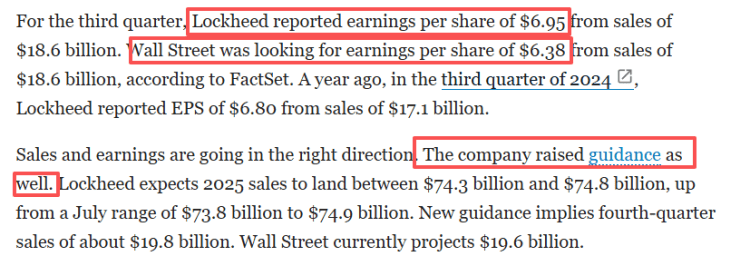
Industry Overview - The Aerospace & Defense industry is experiencing a significant uptrend, with the S&P Aerospace & Defense Select Industry Index increasing by 43.23% year to date, outperforming the S&P 500's gain of 13.90% in the same period [1]. Demand Drivers - Ongoing conflicts in the Middle East and the prolonged Russia-Ukraine war have led to increased demand for missiles and fighter jets, boosting sales for defense contractors [2]. Supply Chain Challenges - Persistent supply chain disruptions, exacerbated by the Trump administration's trade policies, have negatively impacted production efficiency and delayed backlog execution across the industry [2]. Company Earnings Highlights Northrop Grumman - Northrop Grumman reported third-quarter 2025 earnings of $7.67 per share, exceeding the Zacks Consensus Estimate of $6.49 by 18.2%. Total sales were $10.42 billion, missing the estimate of $10.72 billion by 2.8%, but up 4.3% from $10 billion in the same quarter last year [4][6]. - The company is expected to participate in bids for the U.S. administration's $175 billion Golden Dome missile defense system, which could support long-term revenue growth [5]. - Northrop Grumman's total backlog increased to $91.45 billion at the end of Q3 2025, up from $89.74 billion at the end of Q2 2025 [6]. RTX Corporation - RTX Corporation reported third-quarter 2025 adjusted EPS of $1.70, beating the Zacks Consensus Estimate of $1.42 by 19.7%, and improving 17.2% from $1.45 in the same quarter last year [7]. - Third-quarter sales reached $22.48 billion, surpassing the estimate of $21.48 billion by 4.6% and increasing 11.9% from $20.09 billion in Q3 2024 [8]. - RTX's backlog for Q1 2025 was reported at $217 billion [8]. Lockheed Martin - Lockheed Martin reported third-quarter 2025 adjusted earnings of $6.95 per share, exceeding the Zacks Consensus Estimate of $6.33 by 9.8%, and up 2.2% from $6.80 in the previous year [10]. - Net sales were $18.61 billion, beating the estimate of $18.56 billion by 0.3% and increasing 8.8% from $17.10 billion in the year-ago quarter [11]. - Lockheed Martin's backlog as of September 28, 2025, was $179.07 billion, up from $176.04 billion at the end of 2024 [12]. Investment Opportunities - The aerospace and defense industry maintains an optimistic outlook, with rising military spending expected to continue due to the current geopolitical climate [13]. - Investors may consider various Aerospace – Defense ETFs, including iShares U.S. Aerospace & Defense ETF (ITA), Invesco Aerospace & Defense ETF (PPA), SPDR S&P Aerospace & Defense ETF (XAR), Global X Defense Tech ETF (SHLD), and U.S. Global Technology and Aerospace & Defense ETF (WAR) [14]. - XAR is noted as the cheapest option for annual fees at 0.35%, making it suitable for long-term investing [14]. - SHLD is highlighted as the most liquid option with a one-month average trading volume of about 1.38 million shares, ideal for active trading strategies [15].

The Top 3 AI-Focused Defense Stocks to Put on Your Radar
MarketBeat· 2025-10-23 14:08
Core Insights - The defense sector is shifting focus from traditional hardware to technological advancements in AI, unmanned systems, and space, driven by a new era of warfare [1][2][19] - Government spending is increasingly directed towards AI and autonomy, with over $13 billion allocated in the proposed Fiscal Year 2026 Department of Defense budget [3] Lockheed Martin - Lockheed Martin is evolving to integrate AI and autonomous capabilities into its platforms, enhancing their role in a networked battlefield [4] - The F-35 Lightning II fighter jet exemplifies this strategy, functioning as a data-processing hub, contributing to a 12% sales increase in the Aeronautics division to $7.3 billion in Q3 2025 [5][6] - Lockheed Martin reported Q3 2025 sales of $18.6 billion and a record backlog of $179 billion, raising its full-year guidance and increasing share repurchase authorization [6][8] Northrop Grumman - Northrop Grumman is positioned as a leader in advanced systems, notably as the prime contractor for the B-21 Raider stealth bomber, which is designed for a high-tech battlespace [9][10] - The company reported a 14% sales increase in its Defense Systems segment, although it missed revenue expectations in Q3 2025 [10][11] - Northrop Grumman's market capitalization is around $85.6 billion, reflecting its strategic focus on autonomous and deterrent systems [12] RTX Corporation - RTX Corporation, through its Raytheon segment, is developing critical technologies for modern warfare, including sensors and smart munitions [13][15] - The Raytheon segment saw a 10% sales increase, driven by demand for air defense systems and missiles, with Q3 2025 revenue of $22.5 billion [15][17] - RTX's stock surged over 8% following strong earnings, reflecting investor confidence in its role in the defense ecosystem [18] Investment Considerations - The future of defense investing is centered on companies that excel in AI and software-defined capabilities, marking a shift from traditional production metrics [20][21] - Investors should monitor contract awards in AI programs and R&D spending on digital technologies to identify potential leaders in the defense sector [22]
These Analysts Boost Their Forecasts On Northrop Grumman Following Strong Q3 Earnings
Benzinga· 2025-10-22 15:25
Core Insights - Northrop Grumman Corporation reported strong third-quarter 2025 earnings, with earnings per share (EPS) of $7.67, an increase from $7.00 a year earlier, and exceeding analyst estimates of $6.46, driven by robust segment operating performance [1] - Quarterly sales increased by 4% year over year to $10.423 billion, up from $9.996 billion, although slightly below Wall Street's estimate of $10.712 billion [1] Financial Guidance - For full-year 2025, Northrop Grumman narrowed its revenue outlook, now expecting sales between $41.7 billion and $41.9 billion, down from a prior range of $42.05 billion to $42.25 billion, and below the analyst consensus of $42.17 billion [2] - The company raised its Mark-to-Market (MTM) adjusted EPS guidance to a range of $25.65 to $26.05 per share, up from the previous range of $25.00 to $25.40, and above the Street estimate of $25.41 per share [3] Management Commentary - CEO Kathy Warden highlighted the strong third-quarter performance, achieving financial objectives for mid-single-digit growth, expanding segment margins, and increasing cash flows year over year, leading to an increase in 2025 EPS guidance [4] Analyst Reactions - Following the earnings announcement, analysts adjusted their price targets for Northrop Grumman, with BTIG analyst Andre Madrid maintaining a Buy rating and raising the price target from $630 to $680, and Susquehanna analyst Charles Minervino maintaining a Positive rating and raising the price target from $650 to $690 [5][8]

Earnings live: Netflix stock dives, AT&T, GE Vernova, and Hilton rise as Tesla earnings loom
Yahoo Finance· 2025-10-22 12:09
Earnings Overview - Earnings season is gaining momentum with major companies like Tesla, Netflix, General Motors, and Ford reporting results this week [1][3] - As of October 17, 12% of S&P 500 companies have reported results, with analysts expecting an 8.5% increase in earnings per share for Q3, marking the ninth consecutive quarter of positive earnings growth but a slowdown from the 12% growth in Q2 [1][2] Sector Performance - A diverse range of sectors is represented in the earnings reports, including airlines, toy manufacturers, and telecom providers, with consumer spending updates expected from companies like Procter & Gamble and Deckers Outdoors [4] - Companies such as GE Vernova reported a 55% increase in orders to $14.6 billion, driven by its power and electrification equipment division, despite profits being below expectations [8][9] Company-Specific Highlights - Hilton reported adjusted earnings of $2.11 per share, exceeding expectations, while revenue per available room (RevPAR) declined 1.1% year-over-year [11][12] - AT&T surpassed subscriber estimates due to strong demand for bundled services and iPhone promotions, leading to a nearly 2% rise in stock [13][14] - Intuitive Surgical's stock surged 15% after beating earnings estimates, driven by strong demand for surgical robots [15] - Texas Instruments' stock fell 7% following a weaker-than-expected Q4 outlook, with projected sales of $4.22 billion to $4.58 billion [16][17] - Capital One reported a 23% increase in total net revenue to $15.4 billion, with earnings per share of $4.83, surpassing expectations [19][20] - Philip Morris experienced an 8% drop in stock after reporting a 3.2% decline in cigarette shipments, although smokeless product shipments increased by 16.6% [21][22][23] - 3M raised its annual earnings outlook after reporting sales of $6.3 billion, slightly above estimates, with adjusted earnings per share of $2.19 [24][25] - Halliburton's stock rose over 5% after reporting adjusted earnings of $0.58 per share, exceeding estimates despite a revenue decline to $5.6 billion [26][27] - GE Aerospace's stock increased over 2.5% after reporting a 26% revenue growth to $11.3 billion and raising its full-year EPS forecast [30][31] Market Sentiment - Bank of America noted that 76% of S&P 500 companies reporting so far have exceeded earnings expectations, indicating a stronger-than-usual earnings season [42][43] - Ally Financial reported better-than-expected consumer health, with earnings per share of $1.18, surpassing estimates [45][46]


闪评丨美军火商财报飘红 白宫“和平”人设崩塌
Sou Hu Cai Jing· 2025-10-22 11:24
Group 1 - The core viewpoint of the articles highlights that global conflicts have significantly boosted the profits of American arms manufacturers, with companies like Lockheed Martin, Northrop Grumman, and Raytheon Technologies reporting strong financial results in their third-quarter earnings [1][3][6] - Lockheed Martin reported third-quarter sales of $18.6 billion, an 8.8% year-over-year increase, and earnings per share of $6.95, exceeding market expectations of $6.38 [1] - Northrop Grumman's earnings per share reached $7.67, surpassing the expected $6.46, while Raytheon Technologies saw a revenue increase of 11% to $22.5 billion, exceeding market predictions of $21.27 billion [3] Group 2 - The driving force behind the robust profits of American defense giants is attributed to the current global turmoil, ongoing military conflicts, and a general increase in military spending and arms races [3] - The U.S. military budget has been on the rise in recent years, with pressure on allied nations to increase their defense spending and purchase American weapons, as many allies lack the capability to independently secure their defense [3] - The geopolitical competition among major powers has created a favorable environment for U.S. defense companies to market their products effectively, leading to substantial profits [3] Group 3 - The strong financial performance of defense giants may enhance their lobbying power and influence in U.S. domestic politics and policy-making [7] - Defense companies play a crucial role in the U.S. economy, impacting employment and voter tendencies in various states, which facilitates their lobbying efforts to influence both domestic and foreign policies [7] - This influence contributes to a militarized approach in U.S. policy-making, making it challenging to adopt peaceful resolutions to international issues [7] Group 4 - The contrast between the U.S. government's portrayal as a "peace maker" and the booming arms sales is notable, as external crises often stem from policies that respond to defense industry demands [8] - The militarization of U.S. foreign policy has become evident, with the defense industry significantly shaping the country's international actions, leading to a perception of the U.S. as a more aggressive actor rather than a peace promoter [8] - The label of "peace maker" is seen as a political narrative that does not align with the reality of U.S. actions, which often exacerbate global conflicts [8]