
Pfizer(PFE)

Search documents
Treasury Yields Falls as Weak Payrolls Fuel Rate-Cut Bets | Closing Bell
Youtube· 2025-10-01 21:44
Group 1: Pharmaceuticals - The pharmaceutical sector is experiencing a significant rally, with the group up approximately 5% following reports that the president is delaying pharmaceutical tariffs to negotiate drug prices [2][13][14] - Pfizer has benefited from this positive sentiment, as fears of aggressive drug pricing policies have subsided after a deal with the White House [13][14] - Other drug makers are also expected to benefit from the current market conditions and negotiations [14] Group 2: Market Performance - Major indices in the U.S. closed at record highs, with the S&P 500 closing around 6711, the Nasdaq composite up 95 points, and the Dow Jones Industrial average up 43 points [6][7] - Despite the overall positive market performance, more stocks in the S&P 500 were down than up, indicating mixed sentiment among investors [7][8] - The healthcare sector, along with technology, contributed significantly to the market's upward movement [8] Group 3: Corporate Earnings and Trends - Nike's stock rose by approximately 6.25% after reporting first-quarter revenue that exceeded analyst expectations, driven by a focus on specific sports [12] - Corteva's shares fell by 9.1% after announcing plans to separate into two independent companies, raising concerns about increased volatility in its pesticide business [17][18] - Peloton's stock decreased by 3.7% following price increases on hardware and membership fees, leading to investor concerns about potential churn [20][21] Group 4: Bond Market and Interest Rates - The bond market is reflecting a downward trend in yields, with a notable decrease of seven basis points on the two-year yield and five basis points on the ten-year yield [22] - Market expectations indicate a high probability of at least one rate cut by the Federal Reserve at the end of October and another in December [22][23] Group 5: Consumer Trends - There is a growing consumer preference for specialty egg varieties, which are considered more sustainable, impacting traditional egg pricing dynamics [18] - Amazon is expanding its presence in the food sector with the launch of a private label food brand, indicating a strategic push into grocery and food delivery [28][29]



Pfizer (PFE) Soars on Tariff Exemption, Landmark US Govt Deal
Yahoo Finance· 2025-10-01 21:36
Group 1 - Pfizer Inc. has seen a significant stock price increase, rising 6.83% to close at $25.48, following the announcement of its exemption from a 100% tariff on pharmaceutical imports by the US government [1][4] - The company has reached a landmark agreement with the US government to lower prescription drug costs for American patients, ensuring that drug prices are comparable to those in other developed countries [2] - Pfizer will participate in a direct purchasing platform, TrumpRx.gov, allowing American patients to purchase medicines at discounts of up to 85% and an average of 50% on select treatments [3] Group 2 - The agreement with the US government exempts Pfizer from the impending 100% tariff on pharmaceutical imports, effective October 1 [4]
Why Pfizer Stock Trounced the Market Today
Yahoo Finance· 2025-10-01 21:08
Key Points Investors continued to be positive on the pharmaceutical giant following a deal reached with the government. Among other benefits, it will have a reprieve from potential tariffs on its industry. 10 stocks we like better than Pfizer › Still basking in the glow of a likely advantageous deal it signed with the government the previous day, Pfizer's (NYSE: PFE) stock was extremely healthy on Hump Day. That positive sentiment was boosted by a positive analyst take, to the point where Pfizer's ...
Stocks Rally as Weak US Jobs News Reinforces Fed Rate Cut Hopes
Yahoo Finance· 2025-10-01 20:45
Economic Indicators - US MBA mortgage applications fell by -12.7% in the week ended September 26, with the purchase mortgage sub-index down -1.0% and the refinancing sub-index down -20.6% [1] - The September ISM manufacturing index rose +0.4 to a 7-month high of 49.1, exceeding expectations of 49.0 [6] - The September ADP employment change unexpectedly fell by -32,000, marking the largest decline in 2.5 years, while August was revised lower to -3,000 from +54,000 [5] Market Reactions - Stocks initially moved lower due to the US government shutdown, but later recovered, with the S&P 500 and Nasdaq 100 reaching new all-time highs [2][4] - The dollar index fell to a one-week low, while gold prices climbed to a record high amid risk-off sentiment [2] - Rising corporate earnings expectations are a bullish backdrop for stocks, with over 22% of S&P 500 companies providing guidance for Q3 earnings that are expected to beat analysts' expectations [8] Sector Performance - Pharmaceutical stocks rallied, with AstraZeneca closing up more than +9% and Eli Lilly up more than +8%, driven by hopes from Pfizer's deal with the US government [15] - Chipmakers and AI-infrastructure stocks also saw gains, with Super Micro Computer closing up more than +9% and Micron Technology up more than +8% [16] - Grocery retailers declined after Amazon announced a new private-label food brand, leading to Dollar Tree and Dollar General closing down more than -4% and -3% respectively [22] Upcoming Economic Data - Weekly initial unemployment claims are expected to increase by +7,000 to 225,000, and August factory orders are expected to rise by +1.4% month-over-month [9] - September nonfarm payrolls are anticipated to increase by +51,000, with the unemployment rate expected to remain unchanged at 4.3% [9]


Pfizer's Art Of The Deal
Forbes· 2025-10-01 20:30
Core Viewpoint - Pfizer has reached a deal with the Trump administration to cut drug prices, which is perceived as beneficial for the company, leading to a 16% increase in its stock price since the announcement [1][6]. Group 1: Financial Impact - The deal is not expected to significantly impact Pfizer's financial metrics, as noted by analysts, with less than 5% of its $64 billion annual revenue coming from Medicaid [2][6]. - Pfizer has committed to $70 billion for U.S. research, development, and capital projects over the next few years, though it is unclear how much of this is new funding [4]. Group 2: Agreement Details - Pfizer will reduce prices on primary care drugs for Medicaid patients and adhere to "Most Favorite Nation" pricing for new products, ensuring U.S. prices are not higher than in other wealthy countries [3][4]. - The deal includes an exemption from a potential 100% tariff on drugs for three years, which could have significantly affected Pfizer's operations given its global manufacturing presence [4][5]. Group 3: Market Perception - Analysts view the deal as a strategic win for Pfizer, providing regulatory stability without substantial downside risk [5][6]. - The agreement is seen more as a public relations move rather than a substantial change in drug pricing dynamics, with other pharmaceutical companies likely to consider similar strategies [7].

特朗普接再挥关税大棒,今日生效,辉瑞被豁免,美联储三把手发声
Sou Hu Cai Jing· 2025-10-01 19:45
Group 1: Tariff Impacts on Industries - Trump's announcement of a 100% tariff on imported pharmaceuticals has raised concerns among global pharmaceutical companies, particularly as Pfizer received a three-year exemption, leading to questions about preferential treatment [1] - The new tariffs on heavy trucks (25%), kitchen cabinets (50%), and furniture (30%) are expected to significantly increase costs for American consumers, with some estimates suggesting that home renovation costs could rise by 30% due to the tariffs on imported cabinets [2][3] - The service industry, particularly Hollywood, is facing unprecedented challenges with a proposed 100% tariff on films, which could drastically reduce box office revenues and increase ticket prices [2][3] Group 2: Market Reactions and Adjustments - Pharmaceutical companies are reacting to the tariff situation, with executives from Merck and Johnson & Johnson frequently visiting Washington to discuss their concerns over the tariff exemptions granted to Pfizer [3][5] - The furniture market is experiencing turmoil, with manufacturers in Vietnam and China recalculating costs due to the new tariffs, and some retailers adjusting prices to reflect the anticipated increases [4][5] - The wood market is also affected, with Canadian softwood lumber producers facing additional tariffs, leading to production cuts and increased prices for American builders [3][6] Group 3: Federal Reserve's Position - The Federal Reserve is navigating a complex situation where tariffs could push inflation higher, yet current inflation pressures are reported to be lower than expected, complicating monetary policy decisions [3][4] - Fed officials are divided on the need for further rate cuts, with some advocating for a more aggressive approach while others express concerns about the fragile labor market [2][5] - The Fed's upcoming meetings are set against the backdrop of new tariffs, with potential implications for employment and inflation forecasts [6]
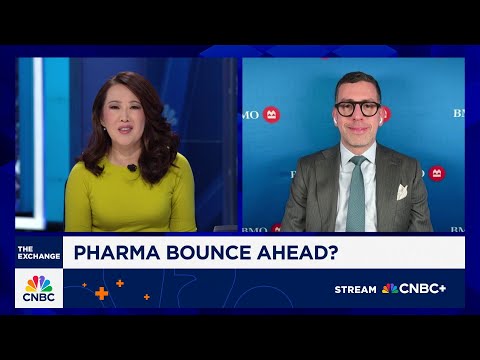
Too early to say if cloud over pharma stocks has fully lifted, says BMO's Seigerman
CNBC Television· 2025-10-01 18:24
Healthcare the second worst performer this year with pharma names under pressure. Those valuations also nearing 15-year lows. And that combined with increased clarity on the Trump administration's drug pricing efforts has us wondering whether the sector now offers investors value or if it's still a value trap.Joining us now to discuss is Beimo Capital Markets, Evan David Seagerman. Evan, great to have you with us. >> Thank you for having me.It feels like what we learned from the Fiser announcement yesterday ...
The Trump Market: Where Tariffs and Deals Dance a Volatile Tango
Stock Market News· 2025-10-01 18:00
Group 1: Pharmaceutical Industry - The U.S. administration reached a deal with Pfizer, where the company agreed to lower some drug prices and invest $70 billion in U.S. manufacturing and R&D in exchange for a three-year exemption from proposed tariffs on imported prescription drugs [2][4] - Pfizer's stock surged by 6.83% to close at $25.48 on September 30, 2025, with trading volume reaching over 153 million shares, nearly 3.5 times its usual average [3] - Other pharmaceutical companies, including Johnson & Johnson and Eli Lilly, also saw stock price increases following the announcement, indicating a positive market sentiment towards the sector [3] Group 2: Tariff Impacts on Various Industries - President Trump announced a 100% tariff on foreign-made films, which initially caused a slight dip in U.S. studio stocks, but they rebounded quickly, indicating investor adaptation to such announcements [5][6] - A 10% import tax on softwood lumber and new 25% tariffs on heavy trucks were introduced, with Ford Motor Co. initially seeing a stock increase but later facing criticism from its CEO regarding the tariffs' negative impact on future investments [7] - The overall market reaction to these tariffs has been mixed, with some sectors experiencing volatility while others showed resilience [6][7] Group 3: Government Shutdown Effects - The U.S. government entered a partial shutdown on October 1, 2025, which raised concerns about delays in critical economic data releases [8][9] - Market reactions were varied, with initial declines in stock futures but a surprising resilience in major indices by midday, showcasing the market's ability to absorb political uncertainty [10][11] - Analysts suggested that the impact of the shutdown would be limited unless prolonged, indicating a potential for short-term volatility rather than long-term consequences [12] Group 4: Overall Market Sentiment - The recent events illustrate the "Trump effect" on financial markets, where policy announcements create immediate but often unpredictable market reactions [13][14] - Companies like Pfizer are navigating a landscape where tariff threats can lead to strategic opportunities, while other industries are left to assess the long-term implications of sudden protectionist measures [13][14] - The market has shown a remarkable tolerance for political volatility, oscillating between dips and rebounds, indicating an adaptation to the current political climate [14]

Pfizer (PFE): A Healthcare Giant Offering Steady Dividend Income
Yahoo Finance· 2025-10-01 17:09
Group 1 - Pfizer Inc. is recognized as one of the 10 highest dividend-paying stocks in the S&P 500 [1] - The company has made significant acquisitions to enhance its drug pipeline, including a $43 billion acquisition of Seagen and a $4.9 billion purchase of Metsera [2] - Pfizer has a strong track record of dividend payments, having raised its payouts for 15 consecutive years, with a current quarterly dividend of $0.43 per share and a dividend yield of 7.24% as of September 27 [3] Group 2 - The products from Metsera are aimed at the growing GLP-1 market, although it is too early to determine their success in clinical trials [3] - Pfizer's core business fundamentals suggest that the stock may be attractive for long-term investment [3]