Sanofi(SNY)

Search documents
北京计算机教授 拿下180亿医药大单
2 1 Shi Ji Jing Ji Bao Dao· 2026-01-08 05:57
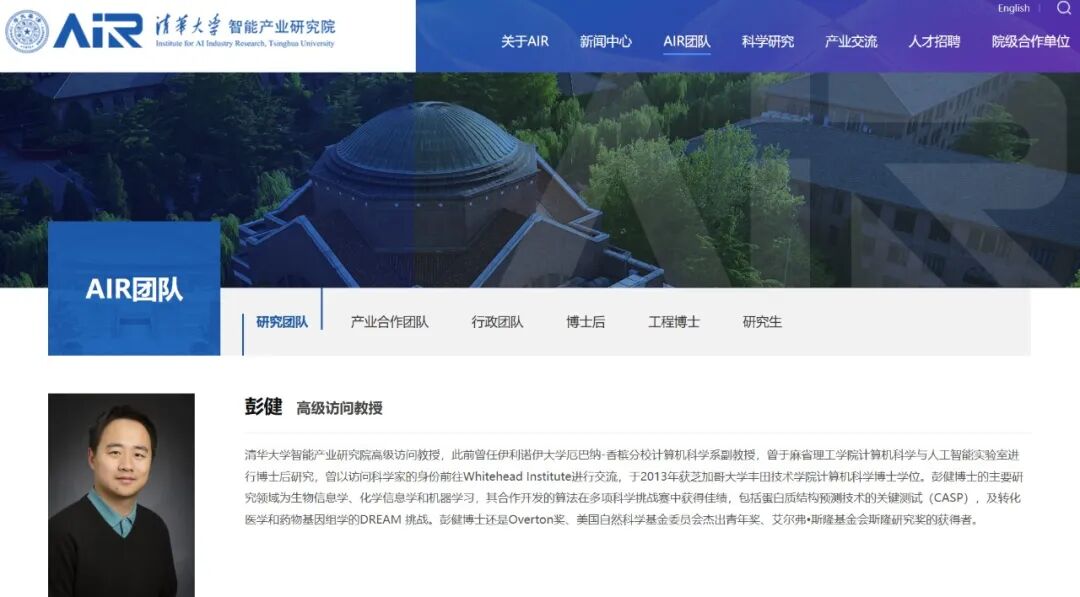
Core Insights - A Chinese biotech startup, Huasheng Zhiyao, has secured a strategic partnership with Sanofi, potentially worth up to $2.56 billion (approximately 180 billion RMB) for the development of innovative drugs targeting autoimmune and inflammatory diseases [1][5][4] Group 1: Partnership Details - The collaboration involves Huasheng Zhiyao's overseas entity, Earendil Labs, which will apply its discovery platform to a wide range of autoimmune disease targets [2] - The agreement includes an upfront payment of up to $160 million, along with milestone payments, with a total potential value reaching $2.56 billion [5] - This partnership marks a significant upgrade from a previous $1.845 billion agreement made nine months prior, which focused on two bispecific antibody drugs [3][5] Group 2: Company Background and Technology - Huasheng Zhiyao, incubated by Tsinghua University's AI Industry Research Institute, specializes in AI-driven biotherapy development [1][9] - The company has established two key technology platforms: protein prediction and high-throughput biology, aimed at enhancing drug discovery efficiency [11] - Earendil Labs has 19 projects in development, with 15 already advancing to the IND (Investigational New Drug) stage, indicating rapid progress in drug development [10] Group 3: Leadership and Vision - The CEO, Peng Jian, emphasizes the potential of AI in the biopharmaceutical field and believes in the integration of computational and experimental methods to model diseases and test drugs [8][13] - The co-CEO, Zhu Zhenping, has extensive experience in drug development and has previously held senior positions at major pharmaceutical companies, contributing to the credibility and expertise of the team [19][20][21] - The company aims to reshape protein therapy discovery using next-generation AI, accelerating the path from target identification to drug development [9]


BrightInsight's Patient App, developed with Sanofi, shows positive impact in patient treatment adherence and persistence
Globenewswire· 2026-01-07 13:30
Core Insights - BrightInsight, in collaboration with Sanofi and Regeneron, has developed a Patient App aimed at improving adherence and persistence for a key biologic therapy, demonstrating a positive impact on patient engagement and treatment consistency [1][2][3] Industry Challenges - Adherence to self-injected therapies remains a significant challenge in the pharmaceutical industry, with adherence rates as low as 50% and a notable drop-off in persistence, where 35% to 63% of patients discontinue therapy within the first year [2] Product Impact - The Patient App has been adopted by over 25,000 patients, indicating its relevance and user-friendliness. Analysis of data from over 6,000 patients shows that users of the app have a 4% lower discontinuation rate and improved adherence after one year compared to non-users [2] Partnership Expansion - Based on positive user feedback and measurable results, Sanofi is expanding its partnership with BrightInsight into key international markets, leveraging the BrightInsight Platform for further development across its specialty care portfolio [3][4] Company Commitment - Sanofi is dedicated to enhancing the patient experience through scalable digital solutions, and the collaboration with BrightInsight has resulted in measurable improvements in therapy adherence and persistence [4] About BrightInsight - BrightInsight is recognized as a leading platform for compliant digital health solutions in the biopharma sector, assisting life sciences companies in digital transformation and providing technology to develop and scale digital solutions effectively [5]


Enable Injections Announces $30 Million Investment from Sanofi to Accelerate Manufacturing Capabilities
Globenewswire· 2026-01-06 12:30
Core Insights - Enable Injections, Inc. has received a $30 million investment from Sanofi to enhance its manufacturing capabilities and support commercial growth of the enFuse® On-Body Delivery System [1][2] Company Overview - Enable Injections is a healthcare innovation company based in Cincinnati, focused on developing the enFuse® On-Body Delivery System, which aims to improve patient treatment experiences by delivering large volumes of medications subcutaneously [6][7] - The enFuse system is designed to provide convenient administration of large-volume injectable therapies, particularly in oncology [2][6] Investment and Financials - The recent $30 million investment follows a history of financial support from Sanofi, which previously led a $50 million Series B round in 2018 and participated in a $215 million Series C financing in January 2022 [4] - Enable has also received backing from other institutional investors and organizations, including Cincinnati Children's Hospital Medical Center and Ohio Innovation Fund [4] Manufacturing and Expansion Plans - Enable announced plans for a 90,000 square foot Manufacturing Center of Excellence in Springdale, Ohio, to bolster in-house manufacturing capabilities [5] - The company is committed to enhancing its corporate headquarters in Evendale, Ohio, as part of its commercialization efforts [5] Clinical Trials and Regulatory Status - The enFuse system has been utilized in clinical studies for Sanofi's Sarclisa, with ongoing regulatory reviews for its use in specific formulations [3][7] - The technology received its first combination product U.S. FDA approval in 2023 and has obtained marketing authorizations from several international regulatory bodies [7]

赛诺菲:瑞达普在华获批 一年四次给药降低80%甘油三酯水平与急性胰腺炎发生风险
Zheng Quan Shi Bao Wang· 2026-01-06 11:34
Core Viewpoint - Sanofi announced the approval of its innovative drug, Risdiplam (Praluent), by the National Medical Products Administration (NMPA) for lowering triglyceride levels in adult patients with familial chylomicronemia syndrome (FCS) [1] Group 1: Drug Approval and Indication - Risdiplam is the first small interfering RNA (siRNA) drug targeting the innovative APOC3 (apolipoprotein C-III) mRNA [1] - The drug is indicated for use in conjunction with dietary control to manage triglyceride levels in FCS patients [1] Group 2: Clinical Efficacy - Risdiplam can reduce fasting triglyceride levels by 80% compared to baseline in FCS patients [1] - The incidence of acute pancreatitis is reduced by 80% compared to placebo [1] - The drug requires administration only four times a year, addressing the current lack of treatment options for FCS in China [1]
MFN谈判接近尾声,14家药企达成协议
Haitong Securities International· 2026-01-06 05:46
Investment Rating - The report assigns an "Outperform" rating for the pharmaceutical industry [1]. Core Insights - On December 19, the U.S. government announced agreements with 14 pharmaceutical companies, including major players like Amgen, Gilead, and Novartis, to implement Most-Favored-Nation (MFN) pricing, which includes price reductions for certain medications and increased domestic investment [6][17]. - The agreements entail a commitment of at least $150 billion in domestic production investments from the participating companies [18]. - Price reductions are primarily focused on Medicaid and direct sales channels, which are expected to have a limited impact on overall revenue for the companies involved [19]. Summary by Sections MFN Negotiations - The MFN negotiations are nearing completion, with 14 pharmaceutical companies reaching agreements with the government, covering aspects such as Medicaid price reductions and international pricing alignment for new drugs [6][17]. - The agreements include provisions for lowering costs of chronic disease medications and implementing MFN pricing for all listed innovative drugs [18]. Impact on Tariffs and Market Reaction - The MFN agreements provide a three-year exemption from tariffs, alleviating previous uncertainties regarding trade policies affecting the pharmaceutical industry [14][19]. - Following the announcement, the XBI index rose by 2.85%, indicating a neutral to optimistic market reaction to the agreements [11]. Specific Measures and Commitments - Companies are required to lower costs for chronic disease medications, including those for type 2 diabetes and rheumatoid arthritis, through direct sales channels [6][18]. - The agreements also stipulate that companies will donate active pharmaceutical ingredients to a strategic reserve to reduce reliance on foreign sources [7][18].


FDA Accepts SNY Filing for Expanded Use of T1D Drug in Young Children
ZACKS· 2026-01-05 16:26
Core Insights - Sanofi's Tzield (teplizumab) has received FDA acceptance for a regulatory filing to expand its use in type 1 diabetes (T1D) for individuals aged one year and older, with a priority review and a decision expected by April 29, 2026 [1][7] Group 1: Drug Approval and Impact - If approved, Tzield will be the first disease-modifying therapy to delay the onset of stage 3 T1D in children aged one year and older with stage 2 disease, currently approved for patients aged eight and older [2] - The regulatory filing is supported by positive interim data from the ongoing phase IV PETITE-T1D study, which evaluates Tzield in children under eight diagnosed with stage 2 T1D [3][7] Group 2: Company Performance and Acquisition - Sanofi's shares have declined by 2% over the past year, contrasting with the industry's growth of 19% [4] - Tzield was added to Sanofi's portfolio in 2023 following the acquisition of Provention Bio for $2.9 billion, with the drug originally developed by MacroGenics [6] Group 3: Market Strategy - A regulatory filing for Tzield is also under review in the European Union, seeking approval to delay the onset of stage 3 T1D in patients aged eight and older diagnosed with stage 2 of the disease, with marketing planned under the brand name Teizeild [6][8]
美国 MFN 协议点评:MFN 谈判接近尾声,14 家药企达成协议
GUOTAI HAITONG SECURITIES· 2026-01-05 14:07
Investment Rating - The report assigns an "Overweight" rating for the pharmaceutical industry, indicating a projected performance that exceeds the Shanghai and Shenzhen 300 Index by more than 15% [6][23]. Core Insights - The U.S. government has reached a Most Favored Nation (MFN) price agreement with 14 pharmaceutical companies, which includes provisions for price reductions and a three-year tariff exemption, resulting in a limited overall impact on revenue [2][10]. - The agreement involves nine major pharmaceutical companies committing to invest at least $150 billion in domestic production in the U.S. and implementing MFN pricing for all listed innovative drugs [9][10]. - The MFN agreement primarily affects Medicaid and direct-to-patient sales channels, which represent a small portion of the companies' overall revenue [16][17]. Summary by Sections MFN Negotiations - As of December 19, 14 pharmaceutical companies have reached agreements with the U.S. government, with nine major firms including Amgen, Bristol-Myers Squibb, and Gilead participating [8][10]. - The agreements include measures to lower costs for chronic disease medications and increase domestic investment [9][10]. Price Reduction Measures - The agreement mandates price reductions for chronic disease medications, including those for diabetes and rheumatoid arthritis, through the TrumpRx platform, which offers discounts of 50%-85% [8][9]. - The MFN pricing requirement applies to all innovative drugs, affecting not only Medicaid but also commercial insurance and cash-paying patients [9][10]. Market Reaction - Following the announcement of the MFN agreement, the XBI index rose by 2.85%, indicating a neutral to optimistic sentiment among investors regarding the policy's implications [13][16]. - Stock price changes for the involved companies showed mixed reactions, with some experiencing slight increases on the announcement day [14][15].


Sanofi Says FDA Agrees to Review Diabetes Drug Age Range
WSJ· 2026-01-05 06:40
Core Viewpoint - The company announced that the regulator has accepted a priority review to potentially expand the age range for its Tzield type-1 diabetes drug to include children as young as one year old [1] Group 1 - The priority review indicates a significant step towards making the Tzield drug available for younger patients [1]
Press Release: Sanofi’s Tzield accepted for priority review in the US for young children with stage 2 type 1 diabetes
Globenewswire· 2026-01-05 06:00
Core Viewpoint - The FDA has accepted a supplemental biologic license application for Tzield to expand its age indication to children as young as one year old, aiming to delay the onset of stage 3 type 1 diabetes in patients diagnosed with stage 2 T1D [1][2]. Group 1: FDA Review and Study Data - The priority review of Tzield highlights the urgent need for innovative therapies to prevent the progression of T1D, particularly in young patients [2]. - The application is supported by positive interim one-year data from the ongoing PETITE-T1D phase 4 study, which evaluates Tzield's safety and pharmacokinetics in young children [1][4]. - The target action date for the FDA's decision on the application is April 29, 2026 [1]. Group 2: Study Details - The PETITE-T1D study is a phase 4, single-arm, non-randomized, open-label trial designed to assess Tzield in children under eight years diagnosed with stage 2 T1D, characterized by the presence of T1D-related autoantibodies and dysglycaemia [4][12]. - The study has enrolled 23 participants, with a treatment regimen consisting of an intravenous infusion of Tzield once daily for 14 consecutive days, and individual follow-up may last up to 26 months [5]. Group 3: Tzield Overview - Tzield (teplizumab-mzwv) is a CD3-directed monoclonal antibody and the first disease-modifying therapy for autoimmune T1D, initially approved in the US in November 2022 for patients aged eight and older [6]. - The therapy is also approved in several countries, including China, the UK, Canada, and others, for delaying the onset of stage 3 T1D in the same population [6]. - If approved for younger patients, Tzield would be the first therapy to delay the onset of stage 3 T1D in children aged one and older diagnosed with stage 2 T1D [8].

Press Release: Sanofi's Tzield accepted for priority review in the US for young children with stage 2 type 1 diabetes
Globenewswire· 2026-01-05 06:00
Core Viewpoint - The FDA has accepted a supplemental biologic license application for Tzield to expand its age indication to children as young as one year old, aiming to delay the onset of stage 3 type 1 diabetes in patients diagnosed with stage 2 T1D [1][2]. Group 1: FDA Review and Study Data - The FDA's priority review highlights the urgent need for innovative therapies like Tzield, which may prevent the progression of T1D by delaying the loss of insulin production [2][3]. - The application is supported by positive interim one-year data from the ongoing PETITE-T1D phase 4 study, which evaluates Tzield's safety and pharmacokinetics in young children [1][4]. - The target action date for the FDA's decision on the application is April 29, 2026 [1]. Group 2: Study Details - The PETITE-T1D study is a phase 4, single-arm, non-randomized, open-label trial designed to assess Tzield's safety and pharmacokinetics in children under eight years diagnosed with stage 2 T1D [4]. - The study has enrolled 23 participants, with a treatment regimen consisting of an intravenous infusion of Tzield once daily for 14 consecutive days, and individual follow-up may last up to 26 months [5]. Group 3: Tzield Overview - Tzield (teplizumab-mzwv) is a CD3-directed monoclonal antibody and the first disease-modifying therapy for autoimmune T1D, initially approved in the US in November 2022 for patients aged eight and older [6]. - Tzield is also approved in several countries, including China, the UK, Canada, and others, for delaying the onset of stage 3 T1D in the same population [6]. - If approved for younger patients, Tzield would be the first therapy to delay the onset of stage 3 T1D in children aged one and older diagnosed with stage 2 T1D [8].