
Visa(V)

Search documents
Visa 首开外卡 Apple Pay 通道,中国跨境支付“无感”升级
Jin Rong Shi Bao· 2026-01-16 02:15
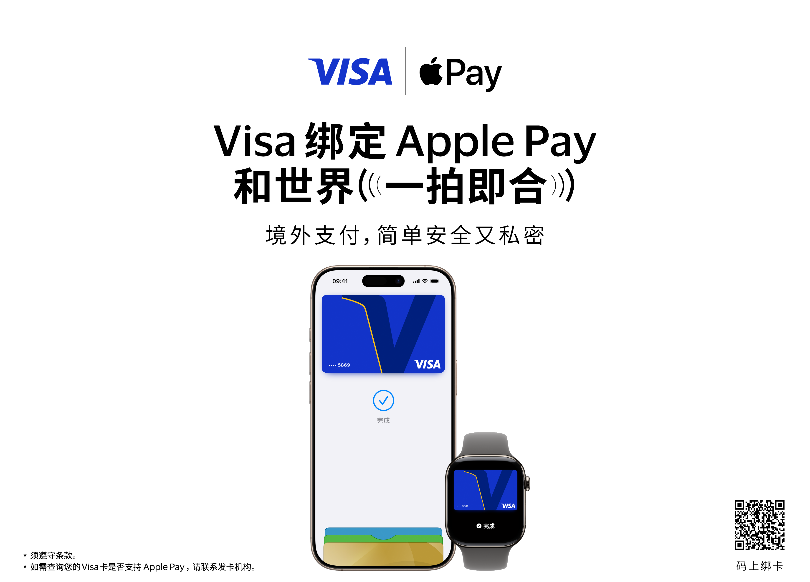
Core Insights - Visa has partnered with Apple to allow Chinese cardholders to link their Visa cards to Apple Pay for seamless payments abroad, marking a significant advancement in cross-border payment solutions [1][3][12] Group 1: Payment Innovation - Visa is the first foreign card organization to enable this payment channel, facilitating a "frictionless" cross-border payment experience for Chinese consumers [3][12] - The collaboration with Apple allows users to bind their Visa cards to Apple Pay, enhancing payment convenience across various scenarios, including in-store, mobile apps, and online [1][4] - The initial launch supports eight major banks in China, with plans to expand to more banks in the future [3][4] Group 2: User Experience - Users can complete payments by simply tapping their iPhone or Apple Watch, utilizing Face ID or Touch ID for authentication, which streamlines the payment process [4][5] - The integration of Apple Pay with Visa allows users to enjoy the same rewards and benefits as with physical cards, including exclusive discounts and offers [5][6] Group 3: Security Measures - Visa's payment tokenization technology enhances security by replacing real card numbers with unique device account numbers, minimizing the risk of fraud [6][7] - The system ensures that real card numbers are not stored on devices or transmitted to merchants, providing an additional layer of protection for users [6][7] Group 4: Market Commitment - Visa's initiative reflects its nearly 40-year commitment to the Chinese market, evolving from a payment network provider to a key player in the modernization of China's payment industry [8][9] - The company has played a crucial role in the development of China's payment infrastructure, facilitating international payment solutions and enhancing cross-border commerce [9][10] Group 5: Future Developments - Visa plans to continue its innovation in payment solutions, including upgrades to dual-branded credit cards and the expansion of contactless payment methods in public transportation [10][11] - The company aims to achieve 100% payment tokenization in e-commerce transactions, further reducing fraud rates and enhancing user trust [7][11]


Visa宣布支持中国消费者Apple Pay绑卡,推动中外经贸和人文交流
Huan Qiu Wang Zi Xun· 2026-01-16 02:14
Core Insights - Visa has announced support for Chinese cardholders to link their cards with Apple Pay, enhancing payment options for overseas transactions [1] - The collaboration aims to provide a secure and convenient payment experience for users, leveraging Visa's tokenization technology [2] Group 1: Company Initiatives - Visa is committed to offering diverse payment options for Chinese cardholders, reflecting the growing demand for mobile payment solutions [1] - The initial participating banks include major institutions such as Industrial and Commercial Bank of China, Bank of China, and Agricultural Bank of China, with plans to expand to more banks [1] Group 2: Technology and Security - The core of Visa's service upgrade is the payment tokenization technology, which ensures that real card numbers are not stored on devices or servers, reducing the risk of data breaches and fraud [2] - This technology allows for a seamless payment experience, enabling contactless transactions and simplifying the payment process for users [2] Group 3: Market Commitment - Visa has been rooted in the Chinese market for nearly 40 years and is committed to increasing its investment in the region [2] - The company aims to leverage its unique advantages in consumer payments to support trade and cultural exchanges between China and the global market [2]
P/E Ratio Insights for Visa - Visa (NYSE:V)
Benzinga· 2026-01-15 22:00
Core Viewpoint - Visa Inc. shares are currently trading at $327.45, reflecting a short-term decline of 0.52% and a 5.28% drop over the past month, while showing a 2.54% increase over the past year, indicating mixed short-term performance but positive long-term trends [1] Group 1: P/E Ratio Analysis - The price-to-earnings (P/E) ratio is a critical metric for long-term shareholders to evaluate Visa's market performance against historical earnings and industry standards [3] - Visa's P/E ratio is lower than the aggregate P/E of 42.47 for the Financial Services industry, suggesting that the stock may be undervalued despite potential concerns about future performance [4] - A low P/E ratio can indicate undervaluation but may also reflect weak growth prospects or financial instability, emphasizing the need for a comprehensive analysis of financial health [7]

Visa, Mastercard and Revolut Lose UK Battle Over Interchange Fees
PYMNTS.com· 2026-01-15 16:35
Core Viewpoint - The High Court in London upheld the U.K. Payment Systems Regulator's authority to impose a cap on cross-border interchange fees, despite opposition from Visa, Mastercard, and Revolut [2][5]. Group 1: Regulatory Developments - The U.K. Payment Systems Regulator (PSR) proposed a cap on interchange fees in 2023 due to a significant increase in these fees post-Brexit, which rose more than fivefold for cross-border online payments [3]. - The PSR's findings indicated that interchange fees charged by Mastercard and Visa to U.K. businesses accepting payments from the European Economic Area (EEA) are likely too high, suggesting the market is not functioning effectively [5]. Group 2: Financial Impact - Interchange fees for online transactions between the European Union and the U.K. were increased by Visa and Mastercard to 1.15% for debit cards and 1.5% for credit cards from 2021 to 2022 [4]. - Visa and Mastercard, while not directly collecting interchange fees, are affected by the price caps as these fees incentivize banks to utilize their services [5]. Group 3: Industry Response - Visa and Mastercard have publicly disagreed with the PSR's findings, arguing that imposed controls on interchange fees do not reflect the current market realities and could negatively impact the value derived from card payments [5]. - Revolut, while involved in the legal challenge, declined to comment on the ruling [3].

BVNK, Visa Partner to Enable Payments with Stablecoin Integration
Crowdfund Insider· 2026-01-15 15:27
Core Insights - BVNK has partnered with Visa to integrate stablecoin capabilities into Visa's payment network, enhancing Visa Direct which processes over $1.7 trillion in transactions annually [1][4] - The collaboration allows Visa Direct users to pre-fund payouts using stablecoins, facilitating direct transfers to digital wallets and addressing the demand for efficient payment solutions [2][9] - The initiative aims to reduce operational friction and improve cross-border transfer efficiency, with plans for international expansion based on customer feedback [3][10] Company Developments - BVNK processes over $30 billion in stablecoin payments annually and serves as a key provider of stablecoin-powered financial tools for enterprises [1][6] - Visa Ventures previously invested in BVNK in May 2025, establishing a foundation for deeper integration and collaboration [3] - The partnership is expected to unlock new revenue streams for businesses in various sectors and enhance cash flow management [9] Industry Trends - The integration of stablecoins into Visa's network is seen as a significant step towards modernizing payment systems and promoting financial inclusion [5][10] - There is a growing interest in blockchain-based financial instruments that offer stability tied to traditional assets while utilizing decentralized ledgers [8] - As regulatory landscapes evolve, this partnership may lead to a hybrid future where fiat and digital currencies coexist, reshaping the global payments ecosystem [10]
“首刷”大战一触即发!中国发行的Visa信用卡,首次登陆Apple Pay
券商中国· 2026-01-15 14:27
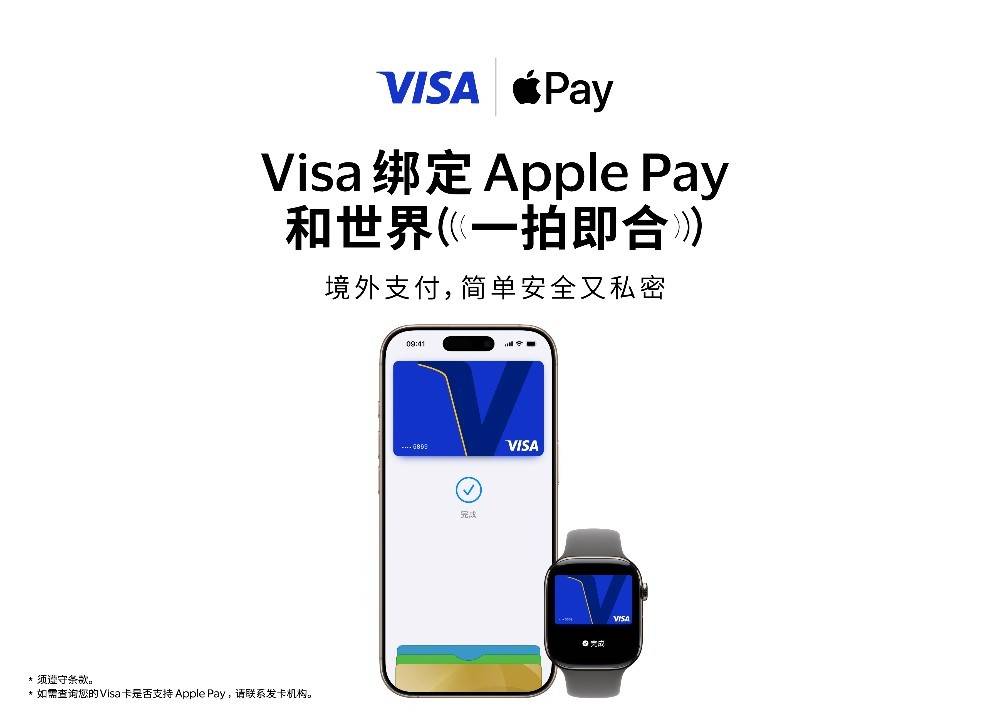
Core Viewpoint - Visa has announced support for Chinese-issued Visa cards to be linked to Apple Pay, breaking the previous exclusivity of UnionPay cards in China [1][2][3] Group 1: Initial Banks and Partnerships - The first eight banks to support this initiative include Industrial and Commercial Bank of China, Bank of China, Agricultural Bank of China, Bank of Communications, China Merchants Bank, CITIC Bank, Ping An Bank, and Industrial Bank [2] - Visa is also collaborating with Shanghai Pudong Development Bank, China Construction Bank, Minsheng Bank, and China Everbright Bank for future support [2] Group 2: Consumer Benefits and Promotions - Consumers can now use Apple Pay with Visa cards for contactless payments abroad, eliminating the need to carry a physical Visa card [2][4] - Various promotional activities have been launched by the initial banks to attract customers, including cashback offers and incentives for using Apple Pay with Visa cards [4][5] - For example, China Merchants Bank offers a 1% cashback on all overseas transactions made with Apple Pay linked Visa cards, while Ping An Bank provides a $5 cashback for transactions over $5.01 [4][5] Group 3: Technological Advancements - Visa has emphasized its investment in data and payment security, introducing payment tokenization services to enhance security in cross-border transactions [6][8] - Payment tokenization removes sensitive information during online or mobile shopping, significantly reducing fraud risks [6] - The integration of Visa cards with Apple Pay allows for the application of payment tokenization in more overseas payment scenarios, improving convenience and security for cardholders [6][7] Group 4: Security Features - When a China Merchants Bank Visa card is linked to Apple Pay, the actual card number is not stored on the device or Apple's servers, enhancing security [8] - A unique Device Account Number is generated and encrypted for secure storage, ensuring that payment information is protected [8]


Visa宣布支持中国消费者 Apple Pay绑卡
Sou Hu Cai Jing· 2026-01-15 13:29
Core Insights - Visa announced support for Chinese cardholders to link their Visa cards to Apple Pay, enabling payments in various scenarios such as overseas merchants, mobile apps, and online websites. Currently, 79% of global offline transactions are made via contactless payments [1]. Group 1: Company Strategy - Visa's China President, Yin Xiaolong, emphasized the growing demand for mobile payment solutions and the company's commitment to providing diverse payment options for Chinese cardholders, ensuring a secure payment experience regardless of location [4]. - Visa is increasing investments in data and payment security, launching tokenization services for cross-border applications, and collaborating with Apple and financial institutions to enhance mobile payment experiences for Chinese consumers [4]. Group 2: Technical Details - Apple Pay allows consumers to make contactless payments by double-clicking the side button on their iPhone or Apple Watch, with security verification through Face ID, Touch ID, or device password, ensuring transaction security [5]. - When adding a Visa card, the actual card number is not stored on the device or Apple's servers. Instead, a unique device account number generated by Visa's tokenization technology is encrypted and securely stored in the device's secure element [5].
英国最高法院驳回数字银行Revolut、Visa及万事达就手续费上限发起的诉讼
Xin Lang Cai Jing· 2026-01-15 12:11
Core Viewpoint - The lawsuit initiated by digital banks Revolut, Visa, and Mastercard against the proposed cap on international transaction fees in the UK has failed, affirming the authority of the Payment Systems Regulator (PSR) to impose price limits on cross-border interchange fees, which have significantly increased since Brexit [2][7]. Group 1: Regulatory Developments - The High Court in London ruled that the PSR has the right to set price caps on cross-border interchange fees charged by Visa and Mastercard to banks, which have seen a more than fivefold increase since Brexit [2][3]. - The PSR proposed a price cap in response to complaints from retailers about high fees charged by Visa and Mastercard, aiming to protect UK businesses from excessive charges [4][9]. - The specific standards and implementation date for the price cap have not yet been determined by the PSR, which is set to be merged into the Financial Conduct Authority (FCA) [3][7]. Group 2: Financial Impact - Between 2021 and 2022, Mastercard and Visa raised the online transaction cross-border interchange fees between the UK and the European Economic Area, with debit card fees increasing from 0.2% to 1.15% and credit card fees from 0.3% to 1.5% [8][9]. - The PSR estimated that the increase in fees has led to an additional annual expenditure of £150 million to £200 million for UK businesses [9]. Group 3: Industry Reactions - The proposed cap has faced opposition from banks and fintech companies in Europe that rely heavily on fee income, arguing that it could lead to losses on every transaction due to operational costs exceeding the allowed fee limits [5][10]. - Fintech companies, unlike traditional banks, do not have large-scale lending capabilities and are more dependent on payment fees, making them particularly vulnerable to the proposed regulations [5][10]. - The emergence of digital wallets like Apple Pay and Google Pay has increased infrastructure costs for these companies, further complicating the financial landscape post-Brexit [10].
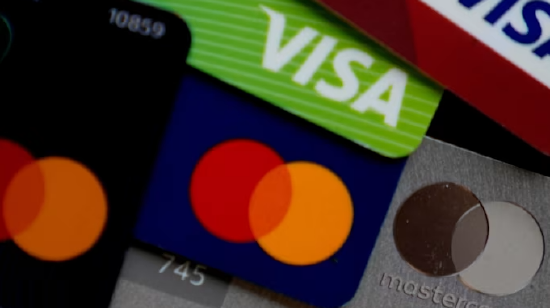
5 of the Safest Growth Stocks You Can Confidently Buy for 2026
The Motley Fool· 2026-01-15 09:06
Core Viewpoint - Wall Street's bull market continues with significant growth potential in select companies, despite the overall market being historically expensive [1][2][3] Group 1: Market Overview - The S&P 500 index increased by 16% in 2025, marking three consecutive years of at least 15% growth [1] - Historical trends indicate that the market tends to decline by 20% or more when it becomes expensive, as it currently is [2] Group 2: Investment Opportunities - Growth companies are identified as safe investment options for 2026, despite the market's high valuation [3] Group 3: Visa and Mastercard - Visa and Mastercard are highlighted as top growth stocks due to their focus on payment processing rather than lending, making them resilient during economic downturns [4][5] - Visa's cross-border payment volume increased by 13% in fiscal 2025, while Mastercard's grew by 15%, indicating strong international growth potential [9] Group 4: Pinterest - Pinterest's global monthly active users reached 600 million, with a 5% increase in average revenue per user (ARPU) during the September quarter [10][11][12] - The company has a strong balance sheet with $2.67 billion in cash and no debt, representing nearly 15% of its market cap [13] Group 5: Okta - Okta is positioned as a key player in cybersecurity, with a 17% growth in remaining performance obligations, indicating strong future revenue potential [18] - The company's forward P/E ratio is near an all-time low, suggesting an attractive valuation for investors [19] Group 6: Meta Platforms - Meta Platforms boasts an average of 3.54 billion daily active users across its apps, allowing it to command premium ad prices [22] - The company has $44.5 billion in cash and generated $79.6 billion in net cash from operations in the first nine months of 2025, providing ample resources for growth initiatives [24]



国内持卡人可绑定信用卡至苹果支付 首批 8 家银行率先上线
Jin Rong Jie· 2026-01-15 08:27
Core Insights - Visa has officially announced support for Chinese cardholders to link their Visa cards to Apple Pay, enabling convenient payments in various scenarios such as overseas merchants, mobile applications, and online websites [1] - The global trend shows that 79% of offline transactions are completed through contactless payment methods [1] Group 1: Company Strategy - Visa aims to provide diverse payment options for Chinese cardholders, enhancing their payment experience globally [1] - The collaboration with Apple is a significant step in Visa's long-term commitment to the Chinese market, focusing on data and payment security [1] Group 2: Partnerships and Implementation - Initial banks supporting this service include major institutions such as Industrial and Commercial Bank of China, Bank of China, Agricultural Bank of China, and others [1] - Visa and Apple are working with additional banks like Shanghai Pudong Development Bank and China Construction Bank to advance system integration, with features expected to roll out in phases [1]