
Visa(V)

Search documents
@持卡人,Visa支持中国消费者Apple Pay绑卡
Sou Hu Cai Jing· 2026-01-15 07:18
Core Insights - Visa has announced support for Chinese cardholders to link their Visa cards to Apple Pay, enabling payments in various scenarios such as overseas merchants, mobile apps, and online websites [1][4] - Currently, 79% of global offline transactions are conducted via contactless payment methods [1] Group 1: Payment Process - Users can add their Visa card to Apple Pay by opening the Wallet app on their iPhone, tapping the plus sign, and following the prompts to link to their bank app [4] - Once the card is added to devices like iPhone, Apple Watch, and iPad, users can immediately start using Apple Pay [4] - Each Apple Pay transaction requires security verification through Face ID, Touch ID, or device password, ensuring secure payment processing [1] Group 2: User Benefits and Promotions - Cardholders will continue to enjoy the same rewards and benefits as with their physical cards, with Visa introducing initial binding promotions and discounts for travel and overseas living scenarios [4] - The first batch of supporting banks includes major institutions such as Industrial and Commercial Bank of China, Bank of China, Agricultural Bank of China, and others, with more banks expected to join in the future [4]


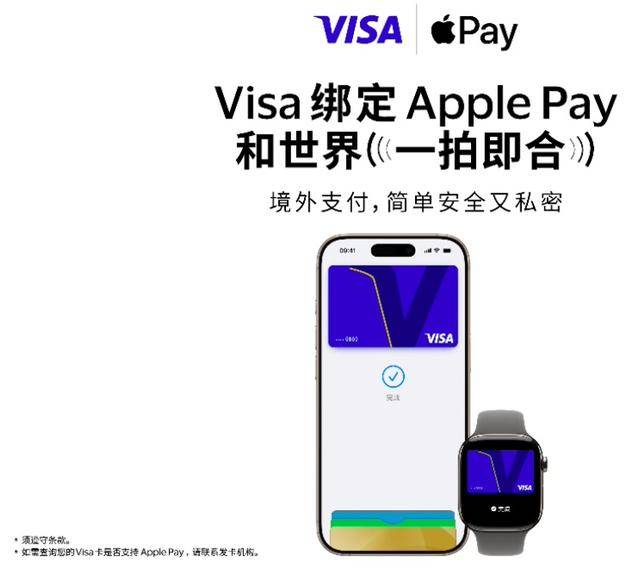
率先破局!Visa支持中国持卡人Apple Pay绑卡支付,首批8家银行
Di Yi Cai Jing· 2026-01-15 06:25
Group 1 - Visa has become the first international card organization to support Apple Pay card binding for Chinese cardholders, enabling more convenient payments [1] - The initial rollout includes support from eight banks, including Industrial and Commercial Bank of China and China Bank, with more banks expected to join later [1][2] - The collaboration aims to enhance cross-border payment convenience for Chinese consumers, allowing them to use Apple Pay for contactless payments abroad [2][4] Group 2 - The card binding process is simplified, allowing users to add their Visa cards to Apple Wallet without manual entry, and some banks offer instant card issuance and binding [3] - Visa has invested in payment security, introducing tokenization services to ensure safer transactions, particularly in cross-border scenarios [4][5] - Over 50% of e-commerce transactions within Visa's global ecosystem have adopted payment tokenization, significantly reducing fraud rates [5] Group 3 - Security measures include the use of a unique device account number that is encrypted and stored securely, ensuring that actual card numbers are not stored on devices or servers [6][7] - In case of device loss, Visa can immediately deactivate the digital account number upon request from Apple or financial institutions [6] - The introduction of this service is seen as a significant step for dual-branded cards, enhancing the payment experience for cardholders both domestically and internationally [8]

Apple Pay支持绑定Visa卡!有银行“即办即绑即用”
2 1 Shi Ji Jing Ji Bao Dao· 2026-01-15 05:50
Core Insights - Apple and Visa announced support for Visa cards issued in mainland China to be linked to Apple Pay, enhancing mobile payment options for users [1] - The initiative aims to address the mobile payment needs of existing cardholders, particularly for cross-border transactions and frequent travelers [2] Group 1: Market Context - The current mobile payment landscape in China is dominated by QR code payments, with lower acceptance of "tap-to-pay" methods like Apple Pay [3] - Visa reported that 79% of global offline transactions come from "tap-to-pay" solutions, indicating a significant gap in domestic adoption compared to international markets [2] Group 2: User Experience and Security - When a credit card is linked to Apple Pay, the actual card number is not stored on the device or Apple's servers, enhancing security through tokenization [3] - The system generates a unique device account number that is encrypted and stored securely, ensuring safe transactions for users [3] Group 3: Operational Details - Users can add their Visa cards to Apple Pay via the Wallet app or directly through their bank's app, enabling immediate use on compatible devices [4] - Some banks, like China Merchants Bank, are innovating with an "instant activation" process, allowing users to apply for and use Visa cards without waiting for physical cards [4] Group 4: Future Outlook - The support for Visa card linking is expected to attract new user groups and increase usage scenarios for Apple Pay, contingent on the growth of Apple's user base and outbound consumption demand [5] - Future integration of more international payment networks is anticipated, with existing technological infrastructure supporting such developments, although regulatory compliance remains a key challenge [5]




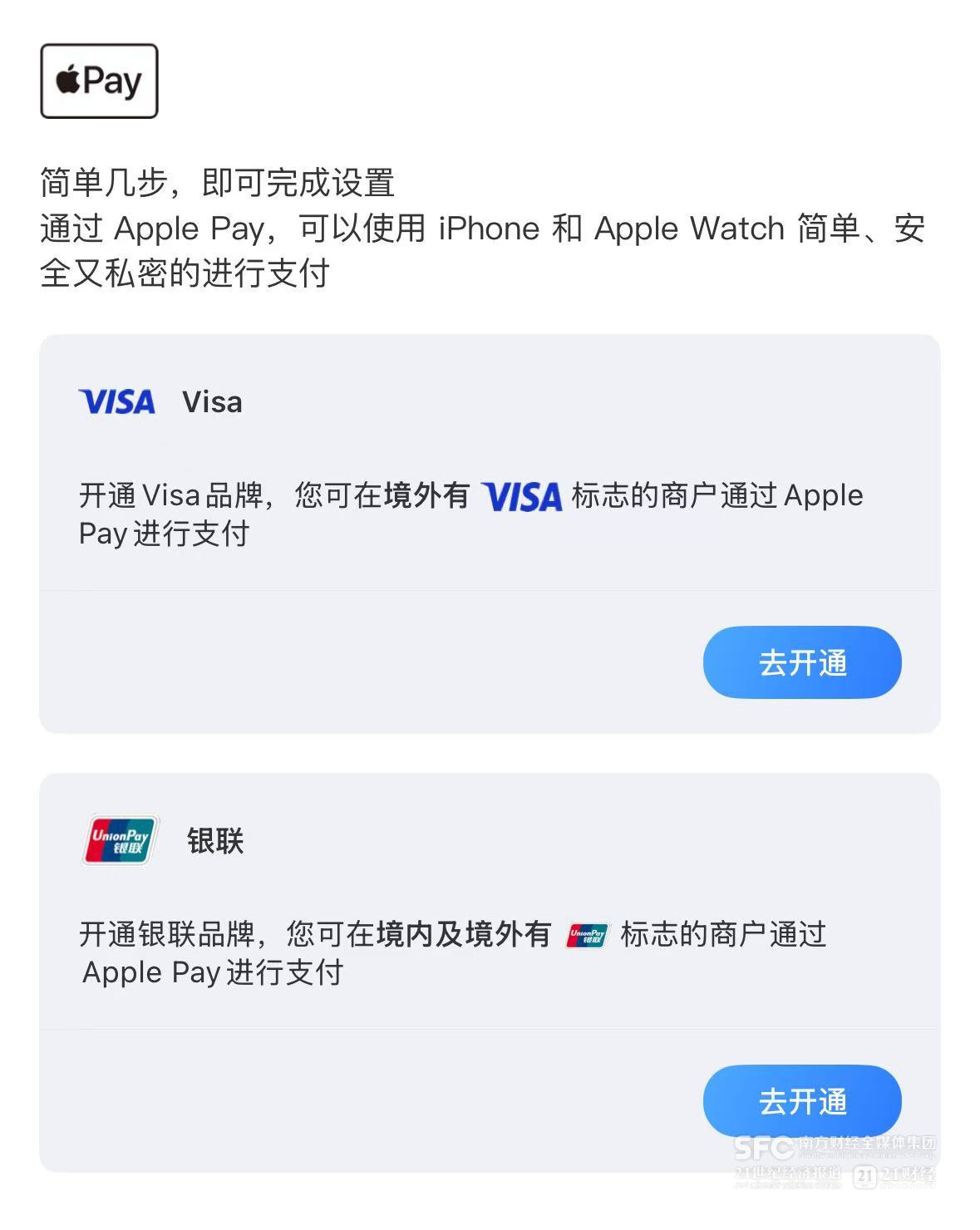
Visa支持中国持卡人Apple Pay绑卡支付 率先破局背后有何考虑?
Di Yi Cai Jing· 2026-01-15 05:26
Core Insights - Visa has become the first international card organization to support Apple Pay card binding for Chinese cardholders, enhancing payment convenience [1] - The collaboration aims to facilitate cross-border payments, allowing users to make contactless payments abroad using Apple Pay with Visa cards [2][4] - Visa's payment tokenization technology is a key security feature that enhances the safety of mobile payments and e-commerce experiences [4][5] Group 1: Visa and Apple Pay Collaboration - Visa supports both single and dual-branded cards for Apple Pay binding, with initial backing from eight major banks in China [1] - The partnership is expected to expand, with additional banks like Shanghai Pudong Development Bank and China Construction Bank joining in the future [1] - This collaboration marks a significant shift as Apple Pay previously only supported UnionPay cards in China [1][7] Group 2: Payment Convenience and Security - The integration allows for seamless in-store payments abroad, requiring only a double-click of the side button on the device for authentication [2] - Each transaction is secured through Face ID, Touch ID, or device password, ensuring a secure payment process [2] - Visa's tokenization service removes sensitive card information during transactions, significantly reducing fraud risk [4][5] Group 3: Market Impact and Future Developments - Visa aims to enhance the payment experience for cardholders both domestically and internationally, with plans to upgrade existing dual-branded cards by 2025 [8] - The company has achieved over 50% of e-commerce transactions utilizing payment tokenization, with a goal of reaching 100% [5] - Visa's global network connects approximately 1.75 million merchants across over 220 countries, serving more than 4.9 billion cardholders [8]
Visa支持中国消费者Apple Pay绑卡,8家银行率先支持
Jin Rong Jie· 2026-01-15 05:18
Core Insights - Visa announced support for Chinese cardholders to link their Visa cards to Apple Pay, enabling payments in various scenarios including overseas merchants, mobile apps, and online websites. Currently, 79% of global offline transactions are made via contactless payments [1] - Visa's China President emphasized the growing demand for mobile payment solutions and the company's increased investment in data and payment security, introducing tokenization services for cross-border applications [1] Group 1 - Visa will collaborate with Apple to support Chinese cardholders in linking Visa cards to Apple Pay for payments in multiple scenarios [1] - The initial banks supporting this feature include major Chinese banks such as ICBC, Bank of China, and others, with more banks expected to join in the future [1] - The global trend shows that 79% of offline transactions are now contactless, indicating a significant shift towards mobile payment solutions [1] Group 2 - Consumers can make contactless payments using Apple Pay by double-clicking the side button and verifying their identity, ensuring transaction security through Face ID, Touch ID, or device passcode [2] - Apple Pay allows for faster and more convenient payments in overseas mobile apps and online websites without the need to create accounts or repeatedly enter personal information [2]
招商银行信用卡支持消费者将 Visa 卡绑定 Apple Pay,让境外支付体验更便捷、更安全
Jing Ji Guan Cha Wang· 2026-01-15 04:27
Core Viewpoint - China Merchants Bank (CMB) has announced support for binding its Visa credit card to Apple Pay, enhancing the payment experience for cardholders both domestically and internationally [1] Group 1: Payment Functionality - CMB credit cardholders can use Apple Pay for payments at various locations, including physical stores, mobile apps, and online websites, facilitating convenient transactions for Chinese travelers abroad [1] - The payment process is simplified, requiring only two button presses on the iPhone or Apple Watch for in-store payments, ensuring a contactless experience [1] - Online payments can be made quickly without the need to create accounts or repeatedly enter personal information [1] Group 2: Security and Privacy - Apple Pay emphasizes security and privacy, with actual card numbers not stored on devices or Apple servers; instead, a unique Device Account Number is generated and securely stored [2] - The secure element chip is designed specifically for safe storage of payment information, adhering to industry standards [2] Group 3: Easy Setup - Adding the CMB Visa credit card to Apple Pay is straightforward, requiring users to open the Wallet app on their iPhone and follow prompts to add the card [3] Group 4: Instant Use for International Payments - CMB has introduced a feature allowing cardholders to apply for a Visa international credit card through the mobile app, enabling immediate activation and use with Apple Pay while traveling [5] Group 5: Rewards and Benefits - Cardholders retain the same rewards and benefits as with the physical card, plus exclusive offers for using Apple Pay, including 1% cashback on overseas transactions [6] - Additional benefits include a currency exchange subsidy and various promotions for travel and international living scenarios [6]

Visa支持中国持卡人Apple Pay绑卡支付,首批8家银行
第一财经· 2026-01-15 04:16
Core Viewpoint - Visa has become the first international card organization to support Apple Pay card binding for Chinese cardholders, enhancing the convenience of cross-border payments [3]. Group 1: Impact on Cross-Border Payments - The integration allows for easier offline payments, enabling Chinese consumers to make contactless payments abroad by simply double-clicking the side button on their iPhone or Apple Watch [4]. - For mobile and online payments, consumers can use Apple Pay in foreign apps or websites without needing to create accounts or repeatedly enter personal information [4]. - Visa cardholders will continue to enjoy the same rewards and benefits as with physical cards, along with exclusive offers for first-time binding and travel-related scenarios [4]. Group 2: Card Binding Process - Cardholders can add their Visa cards to Apple Wallet without manually entering card numbers, either through the bank's app or directly via Apple Wallet [5]. - Some banks already support instant issuance of Visa cards and immediate binding for immediate use [5]. Group 3: Payment Tokenization Service - Visa has increased investment in data and payment security, launching a tokenization service that enhances security for cross-border transactions [6]. - Tokenization removes sensitive information during online or mobile shopping, reducing fraud risk and data breaches [6]. - Since December 2016, all financial institutions in China have been required to implement payment tokenization technology [6]. Group 4: Security Measures - When adding a Visa card to Apple Pay, the actual card number is not stored on the device or Apple's servers; instead, a unique device account number is generated and securely stored [10]. - In case of device loss, Visa can immediately disable the digital account number stored on the device [10]. - The Apple Secure Element is designed to securely store payment information, enhancing the overall security of the payment process [11]. Group 5: Market Position and Future Developments - Visa has been promoting the application of payment tokenization for over a decade, with over 50% of e-commerce transactions in its global ecosystem now utilizing this technology [8]. - Visa aims to achieve 100% payment tokenization, having prevented $1.1 billion in fraud losses in the fiscal year 2025 [8]. - Visa's payment network spans over 220 countries and regions, connecting approximately 175 million merchants and serving over 4.9 billion cardholders [11].

苹果拓展境外支付功能,Visa支持中国持卡人Apple Pay绑卡
Xin Lang Cai Jing· 2026-01-15 03:54
Core Viewpoint - Apple Pay expands its cross-border payment capabilities, allowing Chinese cardholders to link Visa cards to the service for international transactions [1] Group 1: Expansion of Apple Pay - Apple announced the expansion of Apple Pay's cross-border payment support on January 15 [1] - Visa supports Chinese cardholders in linking Visa cards to Apple Pay for payments at various international merchants, mobile apps, and online websites [1] Group 2: Supported Banks - Cardholders with Visa credit cards issued by Industrial and Commercial Bank of China, Bank of China, Agricultural Bank of China, Bank of Communications, China Merchants Bank, CITIC Bank, Ping An Bank, and Industrial Bank can add their cards to the Apple Wallet app for cross-border payments [1] - These banks have collaborated with China UnionPay to support Apple Pay's cross-border payment feature [1] - Additional banks, including Shanghai Pudong Development Bank, China Construction Bank, China Minsheng Bank, and China Everbright Bank, are expected to support this feature in the coming months [1]
8家银行首批上线,Visa支持中国消费者Apple Pay绑卡
Bei Jing Shang Bao· 2026-01-15 03:40
Core Insights - Visa announced a partnership with Apple to support Chinese cardholders in linking Visa cards to Apple Pay for payments in various scenarios abroad, including at physical merchants, mobile apps, and online websites [1] - Currently, 79% of global offline transactions are conducted through contactless payment methods [1] Group 1: Payment Features - Consumers can make contactless payments using Apple Pay by double-clicking the side button on their iPhone or Apple Watch, allowing for seamless transactions without opening any other apps [1] - Each Apple Pay transaction requires security verification through Face ID, Touch ID, or device password, with the verification result sent to the issuing bank in encrypted form [1] - Apple Pay allows users to make faster payments in overseas mobile apps or online websites without the need to create accounts or repeatedly enter personal and payment information [1] Group 2: Supported Banks - The initial banks supporting this feature include Industrial and Commercial Bank of China, Bank of China, Agricultural Bank of China, Bank of Communications, China Merchants Bank, CITIC Bank, Ping An Bank, and Industrial Bank [1] - Visa is collaborating closely with additional banks such as Shanghai Pudong Development Bank, China Construction Bank, Minsheng Bank, and China Everbright Bank to roll out these features in the future [1][2] Group 3: Additional Support - On January 15, CITIC Bank announced support for linking its Visa credit and debit cards to Apple Pay, enabling cardholders to make payments anywhere abroad where merchants accept Visa contactless payments [2]
Visa支持中国持卡人Apple Pay绑卡支付,率先破局背后有何考虑?
Di Yi Cai Jing Zi Xun· 2026-01-15 03:37
Core Insights - Visa has become the first international card organization to support Apple Pay card binding for Chinese cardholders, enhancing payment convenience [1] - The collaboration aims to facilitate cross-border payments, allowing users to make contactless payments abroad using Apple Pay with Visa cards [2][4] - Visa's payment tokenization technology is a key security feature that enhances the safety of mobile payments and e-commerce experiences [4][5] Group 1: Visa and Apple Pay Collaboration - Visa supports both single and dual-branded cards for Apple Pay binding, with initial support from eight banks including Industrial and Commercial Bank of China and China Bank [1] - The collaboration is expected to expand as Visa and Apple work with additional banks like Shanghai Pudong Development Bank and China Construction Bank [1] - This partnership marks a significant shift as Apple Pay previously only supported UnionPay cards in China [1] Group 2: Payment Convenience and Security - Users can make offline payments by simply double-clicking the side button on their devices, allowing for a seamless payment experience without opening any apps [2] - Each transaction is secured through Face ID, Touch ID, or device password, with a dynamic security code sent to the issuing bank for authorization [2] - Visa offers cardholders the same rewards and benefits as physical cards, along with exclusive promotions for first-time users and travel-related scenarios [2] Group 3: Tokenization and Security Measures - Visa's payment tokenization service removes sensitive card information during online or mobile transactions, significantly reducing fraud risk [4][5] - Over 50% of e-commerce transactions within Visa's ecosystem have adopted payment tokenization, with a goal of reaching 100% [5] - The fraud rate for transactions using Visa payment tokens has decreased by over 35%, preventing an estimated $1.1 billion in losses for the fiscal year 2025 [5] Group 4: Future Developments and Market Reach - Visa's payment network spans over 220 countries and regions, connecting approximately 175 million merchants and serving over 4.9 billion cardholders [7] - The collaboration with Apple Pay is seen as a revitalization of dual-branded cards, enhancing the payment experience for users traveling abroad [7] - Visa plans to upgrade existing "Visa + UnionPay" dual-branded credit cards to improve user experience both domestically and internationally by 2025 [7]